Selling a business without proper legal documentation is like walking a tightrope blindfolded. Most DIY sellers either overpay for attorney fees or risk serious legal problems by cutting corners.
Legal document templates give you a middle ground. At Unbroker, we’ve seen countless sellers protect themselves and close deals faster by using ready-to-use forms tailored to their situation.
Why DIY Sellers Need Legal Document Templates
Selling a business without proper legal documentation is like walking a tightrope blindfolded. Most DIY sellers either overpay for attorney fees or risk serious legal problems by cutting corners.
Legal document templates provide a middle ground. Ready-to-use forms written by licensed attorneys protect you and help you close deals faster without the traditional legal bill.
The Real Cost of Traditional Legal Help
Hiring a business attorney to draft sales documents costs an average of $980 on a flat fee basis. For DIY sellers working with limited budgets, these costs eat into profit margins before the sale even closes.
Templates eliminate this expense entirely while still providing legally sound documents. The real advantage isn’t just cost savings-it’s speed. A customized template takes 30 minutes to complete compared to weeks of back-and-forth with an attorney. Every week of delay means another week your business sits in limbo, your buyer gets cold feet, or competing offers emerge.
You Control Every Clause and Term
When you rely on an attorney, you depend on their availability and their interpretation of what matters in your deal. Templates shift this power to you. You control every clause, every term, and every contingency without paying hourly rates for revisions.
Templates guide you through state-specific requirements and tax implications via simple questions, then automatically populate your answers into compliant documents. You avoid generic language that might not reflect your actual business situation. You can create multiple versions quickly to test different deal structures with potential buyers-something that would cost thousands with traditional legal help. Confidentiality provisions, payment schedules, and representations all bend to your needs, not your attorney’s standard approach.
What Comes Next in Your Documentation Strategy
With cost and control handled, the next step involves understanding which specific documents your sale actually requires. Different transactions demand different paperwork, and selecting the right forms determines whether your deal stays on track or hits unexpected obstacles.
Essential Legal Documents for Business Sales
The Purchase Agreement: Your Deal’s Foundation
A purchase agreement forms the backbone of any business sale, and it must address far more than just price. This document specifies payment terms, contingencies, earnout provisions, and what happens if the buyer uncovers undisclosed liabilities after closing. Most DIY sellers underestimate how detailed this section must be.
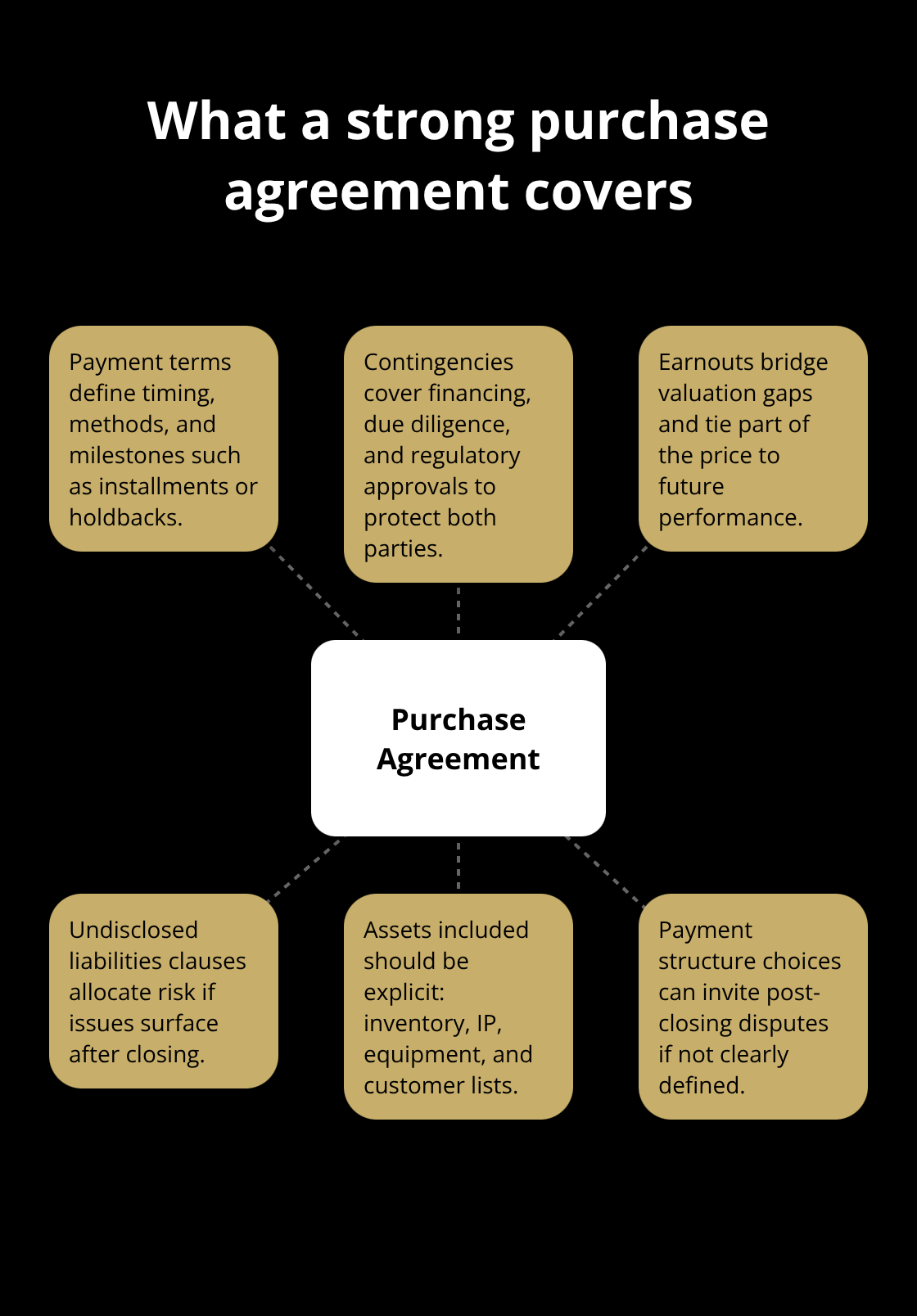
The agreement should clarify whether the sale includes inventory, customer lists, intellectual property, and equipment, or if certain assets remain with you. Payment structure matters enormously-a lump sum at closing feels straightforward but exposes you to buyer disputes months later when they claim the business underperformed. Earnouts allow buyers and sellers to disagree on the valuation of the target company but still manage to agree on a transaction, which often attracts more buyers willing to pay higher prices.
State-specific requirements vary significantly. California requires different disclosure language than Texas or New York, and templates that adapt to your state ensure compliance without hiring an attorney to review every clause. Templates automatically adjust for your jurisdiction’s legal requirements, saving you weeks of back-and-forth with legal professionals.
Seller Disclosures and Representations: Transparency Protects You
Seller disclosures and representations protect the buyer legally but also shield you from future litigation. These documents typically require you to list any completed repairs, information about natural hazards, property defects, missing essentials, and land-use limitations. Transparency here prevents buyers from claiming fraud after closing and demanding refunds or damages. You control what information you disclose and how you frame it, which means you can address potential red flags proactively rather than having them discovered later.
The specificity of these documents determines whether disputes arise post-closing. A vague statement about “normal business operations” invites buyer claims of misrepresentation, while detailed disclosures about actual conditions create a clear record of what you told them before they signed.
Non-Disclosure Agreements and Confidentiality Clauses: Protecting Your Secrets
Non-disclosure agreements and confidentiality clauses restrict what the buyer can do with sensitive information if the deal falls apart. These prevent buyers from sharing your customer lists, financial data, or operational methods with competitors. The NDA should specify how long confidentiality obligations last-typically two to five years-and what happens if information gets disclosed accidentally versus intentionally. You need this protection because failed negotiations still expose your business vulnerabilities to potential competitors.
Ready-to-use templates include state-specific language for all three document types, automatically adjusting for your jurisdiction’s legal requirements. The templates guide you through straightforward questions about your business, then populate the answers into legally sound documents you can customize further. This approach takes hours instead of weeks and costs a fraction of attorney fees while ensuring your sale documentation matches legal standards in your state.
Customization Without the Legal Bill
Templates eliminate the need to pay hourly rates for revisions while still providing documents tailored to your specific transaction. You control every clause, every term, and every contingency without depending on an attorney’s availability or their interpretation of what matters in your deal. You can create multiple versions quickly to test different deal structures with potential buyers-something that would cost thousands with traditional legal help. Confidentiality provisions, payment schedules, and representations all bend to your needs, not a standard attorney template.
The real advantage isn’t just cost savings-it’s speed combined with control. A customized template takes 30 minutes to complete compared to weeks of back-and-forth with an attorney. Every week of delay means another week your business sits in limbo, your buyer gets cold feet, or competing offers emerge.
Moving Forward With Confidence
With the right documents in place, you’ve addressed the legal foundation of your sale. The next challenge involves actually using these templates correctly-knowing which sections matter most for your situation, what customizations protect you best, and when professional legal review still makes sense despite the added cost.
How to Use Templates Effectively and Safely
Customize Templates to Match Your Specific Business
Templates save time and money, but only if you customize them to your business instead of treating them as generic forms. Start by identifying what makes your sale unique. Are you selling equipment and intellectual property but keeping the building? Does the buyer need training from you post-closing? Will you finance part of the purchase? These specifics change which template sections matter most and what language protects you.
Templates guide you through questions about your business structure, assets included, payment terms, and state requirements, then populate your answers into the document. Don’t skip these questions or answer them vaguely. The more specific your answers, the more accurately the template reflects your actual deal. A seller who rushes through customization ends up with a document that doesn’t address their situation, leaving gaps that buyers exploit later.
Review Documents Thoroughly Before Signing
Read the completed document section by section before anyone signs anything. Read every clause aloud to yourself, not silently. You’ll catch awkward language and unclear terms that your brain skips over when reading silently. Check that all placeholder fields actually filled with your information-missing details create ambiguity that courts interpret against whoever drafted the document.
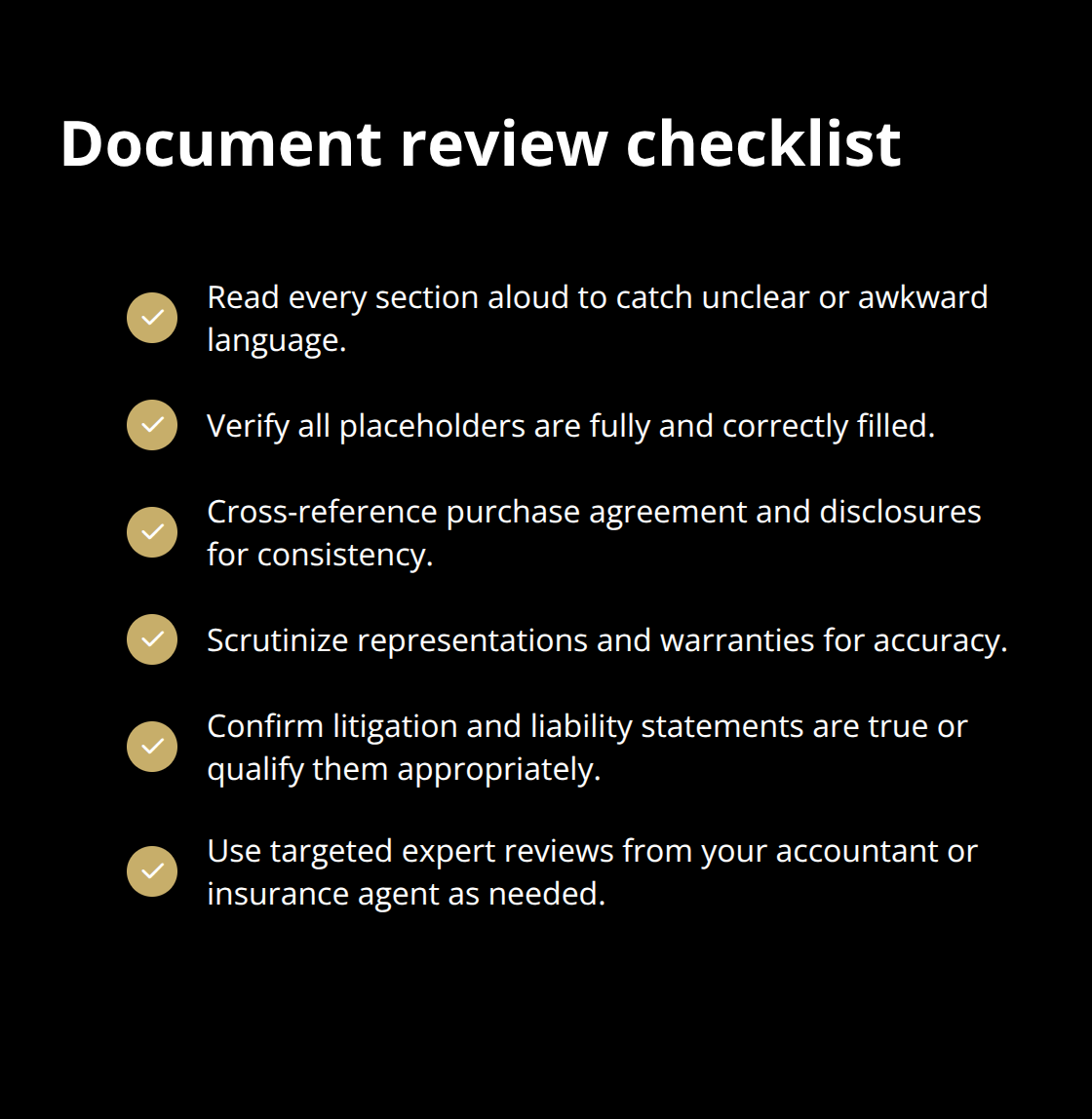
Cross-reference the purchase agreement with your disclosure documents to ensure consistency. If you stated in the purchase agreement that inventory transfers at closing, your disclosure documents shouldn’t contradict that or list inventory separately. Inconsistencies give buyers ammunition to claim fraud and demand refunds months later. Spend time on the representations and warranties section specifically. This is where you make factual claims about your business, and any statement you make here can become a basis for post-closing disputes.
If you claim the business has no pending litigation, that claim must be accurate or you face liability. If you’re uncertain about any fact, either verify it or revise the language to reflect what you actually know. Some sellers have their accountant review the financial sections and their insurance agent review liability provisions. That targeted review costs far less than full attorney review and catches material errors.
Know When Professional Legal Review Makes Sense
Professional legal review actually makes sense despite the added cost in several situations. If your deal involves earnout provisions, seller financing, or complex asset allocation, an attorney’s review of your customized template takes two to three hours instead of weeks of drafting from scratch. That review costs $500 to $1,500 and prevents expensive mistakes.
If you’re selling in a state unfamiliar to you or your business operates in multiple jurisdictions, legal review ensures your templates comply with local requirements. If the buyer’s attorney substantially revises the documents, have your attorney review those changes before signing. Some buyers intentionally insert unfavorable language hoping sellers won’t notice. An attorney catches these shifts quickly. Templates work best when you treat them as your foundation rather than your final answer.
Conclusion
Legal document templates eliminate the friction that stops most DIY sellers from protecting themselves properly. You’ve seen how templates cut attorney costs from thousands of dollars to nearly nothing, how they let you customize every term without hourly billing, and how they speed up your entire sales process. The real payoff comes when you actually use them-reading carefully, customizing thoroughly, and knowing when a quick attorney review still makes financial sense.
Proper documentation protects both you and your buyer. When your purchase agreement, seller disclosures, and confidentiality clauses are clear and specific, disputes shrink dramatically. Buyers feel confident because they understand exactly what they’re getting, and you feel protected because you’ve documented what you disclosed and what you promised. This clarity keeps deals from falling apart over misunderstandings that better paperwork could have prevented.
We at Unbroker built our platform around this reality. Most DIY sellers need more than just legal document templates-they need guidance, buyer access, and support through the entire sales process. Our Full Service option handles the entire sale for a 6% success fee, paid only when your business sells.