Selling a business means handling dozens of legal documents, and most sellers get this wrong. The good news is that document templates included in your sales toolkit can save you months of back-and-forth with lawyers.
At Unbroker, we’ve seen how the right templates protect your interests while keeping the process moving. This guide shows you which documents matter most and how to customize them for your specific situation.
Which Documents Protect Your Sale
The Purchase Agreement: Your Foundation
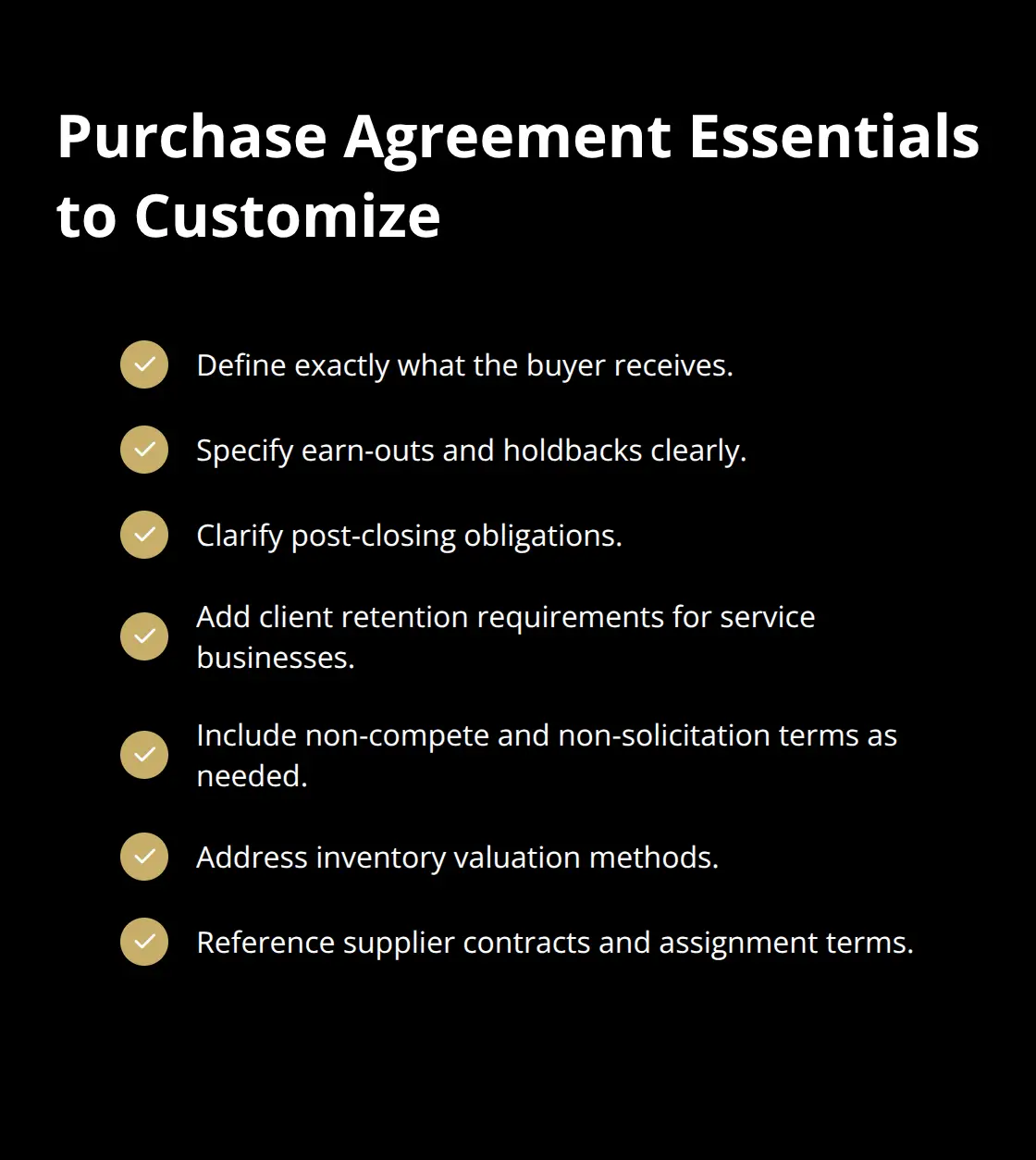
The purchase agreement is where most sellers fail. This document sets the price, payment terms, representations, and warranties-and it’s where disputes explode after closing. A weak purchase agreement leaves you exposed to claims about undisclosed liabilities, customer concentration, or revenue misstatement. The agreement must define what the buyer receives, specify any earn-outs or holdbacks, and clarify post-closing obligations. Most sellers use generic templates that miss industry-specific risks. If you’re selling a service business, the agreement needs clauses about client retention and non-compete terms. If you’re selling a product company, it should address inventory valuation and supplier contracts.
Non-Disclosure Agreements and Confidentiality
Non-disclosure agreements protect your confidentiality before a buyer reviews your financials. Without an NDA, you risk a competitor learning your revenue, margins, customer list, or operational details. The NDA should restrict how the buyer uses information, define what counts as confidential, and specify consequences for breach. This step prevents sensitive data from spreading to parties who have no legitimate interest in your business.
Financial Documentation: The Due Diligence Foundation
Financial disclosure documents-including tax returns, profit-and-loss statements, balance sheets, and customer contracts-form the foundation of due diligence. Many sellers submit incomplete financial records, which slows the process and raises red flags. Sellers who standardize their documentation with templates close faster because buyers move through due diligence without requesting missing pieces. Your financial documents should cover at least three years of history and explain any unusual items or one-time expenses.
Asset Documentation: Preventing Post-Closing Disputes
Asset documentation, such as equipment lists, intellectual property records, and lease agreements, prevents disputes about what transfers to the buyer. Sellers often overlook depreciation schedules or fail to list software licenses, which creates friction during closing. Include a detailed schedule of all assets, their condition, and their fair market value to eliminate ambiguity. When you prepare these schedules upfront, the buyer moves faster through verification and the closing process accelerates.
Customizing these documents to match your business type and sale structure determines whether the transaction stays on track or derails in the final stages.
How to Customize Templates for Your Business Sale
Identify What Makes Your Business Unique
Generic templates fail because they don’t account for your specific business structure, industry risks, or deal mechanics. A SaaS company selling for an earn-out needs different language than a manufacturing business with inventory transfers. Start by identifying what makes your business unique: recurring revenue models, customer concentration, proprietary technology, or regulatory compliance requirements. Your purchase agreement template must address these specifics or you’ll face post-closing disputes over representations and warranties. If a significant portion of your revenue comes from a small number of customers, that customer concentration risk needs explicit language about survival periods and indemnification caps. If you license software, the agreement must clarify which licenses transfer and which require buyer approval. Templates from generic legal sites miss these details because they’re built for average cases, not your situation.
Align Financial Sections with Your Actual Numbers
The financial sections require the same precision as your purchase agreement. Your templates should match your accounting method, whether you use cash or accrual accounting, and reflect how you’ve calculated EBITDA or other metrics the buyer will use for valuation. If you’ve deducted owner expenses that won’t continue post-sale, your templates should document this adjustment clearly so there’s no dispute during due diligence.
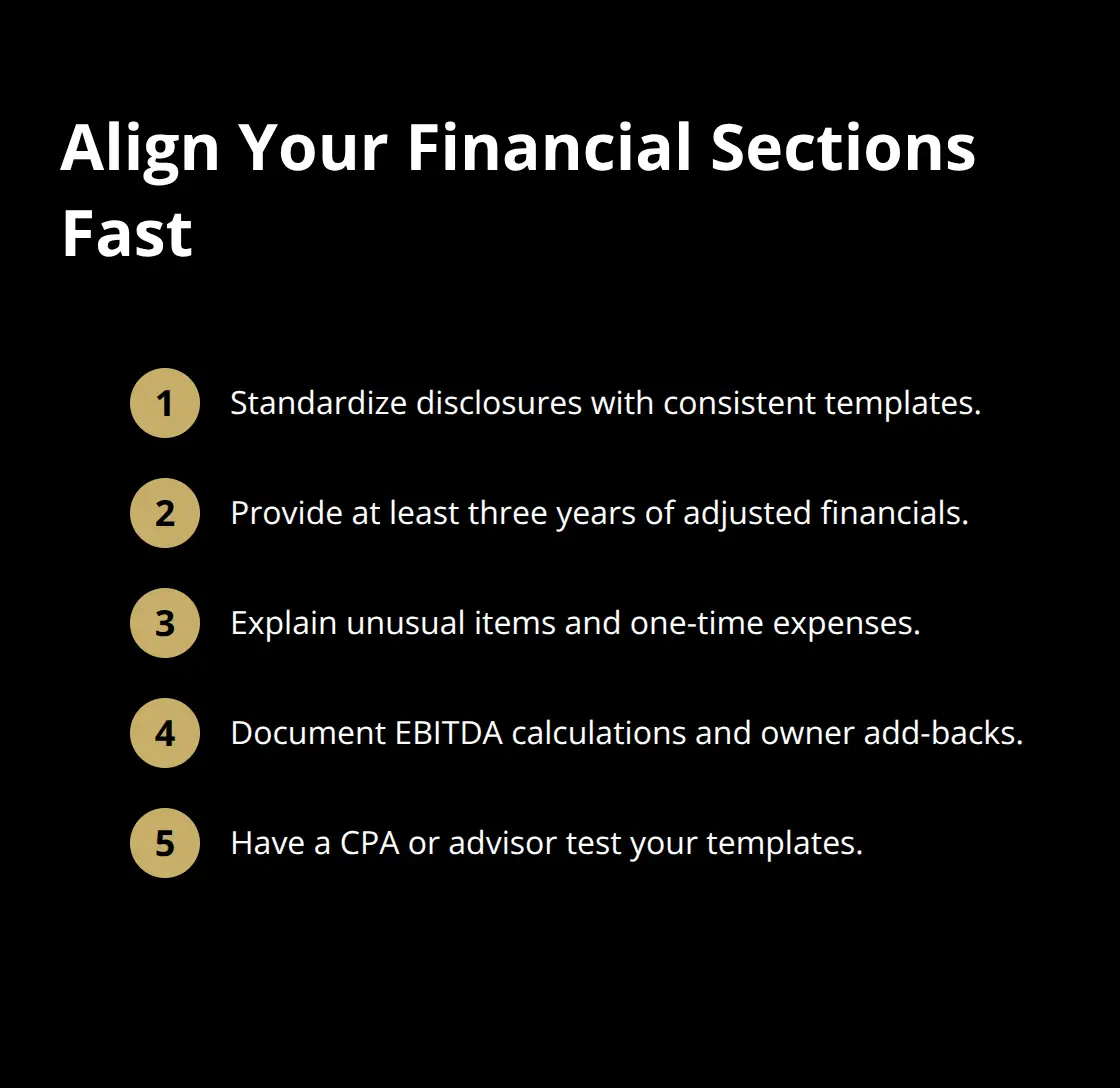
Include a schedule showing three years of adjusted financials with explanations for any unusual items or one-time costs. Test your customized templates with a financial advisor or accountant before sending them to a buyer. They’ll catch inconsistencies between your financial documentation and your representations in the purchase agreement, preventing embarrassing corrections later.
Document Assets and Intellectual Property with Precision
Asset schedules demand equal attention because they’re where sellers create expensive closing delays. List every physical asset, software license, domain name, and customer contract with fair market values. If equipment has been fully depreciated but still operates, note its actual condition and replacement cost so the buyer understands what they’re receiving. Intellectual property presents the biggest customization challenge because generic templates often skip it entirely. Your templates must specify which patents, trademarks, trade secrets, or proprietary processes transfer to the buyer and which don’t. Include documentation of when these assets were created, who owns them, and whether any third parties have claims.
Tailor Payment Terms to Your Deal Structure
Non-compete and non-solicitation terms vary dramatically by industry and business model. A service business selling to a competitor needs strict non-compete language; a product company might focus more on customer non-solicitation. Your templates should reflect what you’re actually willing to agree to, not what a generic form suggests. Payment terms and earn-out language and post-closing disputes require customization based on buyer confidence and your leverage. If the buyer wants performance-based payments, your templates must define exactly how they’ll measure success, when they’ll pay, and what happens if they miss those metrics. Clear earn-out language minimizes conflict.
Start with Your Deal Structure, Not a Generic Template
The fastest way to customize templates is identifying your deal structure first, then selecting or modifying templates that match it. Don’t start with a template and force your business into it. Instead, list your unique characteristics: industry, customer concentration, revenue model, asset types, and any regulatory requirements. Then find or build templates that address those specifics. Many sellers waste weeks negotiating templates with lawyers when they could have customize templates for your business sale themselves in days. The customization process accelerates when you involve your accountant early because they understand your financial statements and can ensure templates match your actual numbers. If you’ve never prepared detailed asset schedules or adjusted financial statements, do that before customizing any template. You can’t customize financial sections accurately without understanding your own numbers first. Sellers who customize templates thoroughly close faster on average than those who use generic documents, which is why the next step involves understanding the mistakes that derail most sellers during this process.
Common Mistakes Sellers Make with Legal Documents
Using Outdated or Incomplete Templates
Most sellers grab templates from the first legal website they find, assume they’re current, and send them to a buyer without reviewing what’s actually inside. This mistake costs thousands in delays and renegotiations. Templates published years ago miss recent legal changes, industry-specific protections, and deal structures that have become standard. A non-disclosure agreement template from 2020 might lack provisions for digital asset protection or remote access controls that matter in today’s business environment. Worse, generic templates skip entire sections relevant to your sale. A service business template won’t address software licensing. A manufacturing template won’t cover customer concentration risks specific to your industry.
Sellers who don’t verify template completeness against their actual business structure create gaps that buyers’ lawyers immediately flag, triggering requests for additional documentation and revised language. This back-and-forth adds weeks to timelines and signals to the buyer that you’re unprepared, which weakens your negotiating position. The fix requires spending two hours comparing your business characteristics against each template section and confirming every relevant clause exists before customization begins.
Omitting Critical Protections and Clauses
The second critical mistake is omitting protections that matter most in post-closing disputes. Representation and warranty clauses define what you’re claiming about your business, and weak language here destroys sellers financially. Many templates include generic representations about asset ownership and financial accuracy but skip industry-specific protections like customer retention guarantees, regulatory compliance certifications, or supplier relationship continuity.
If your business depends on three major contracts, your templates must explicitly represent that these contracts are in good standing and transferable without renegotiation. If regulatory approvals are required for the buyer to operate your business, your representations must specify exactly which approvals you’ve obtained and which the buyer assumes. Templates that lack these specifics leave you liable for post-closing claims about issues you could have documented upfront.
Neglecting Professional Legal Review
The third mistake compounds these problems: sellers customize templates themselves without legal review, then wonder why disputes emerge after closing. Your accountant can verify financial sections match your actual numbers, but only an attorney experienced in business sales can spot missing indemnification caps, inadequate survival periods for representations, or problematic earn-out definitions.
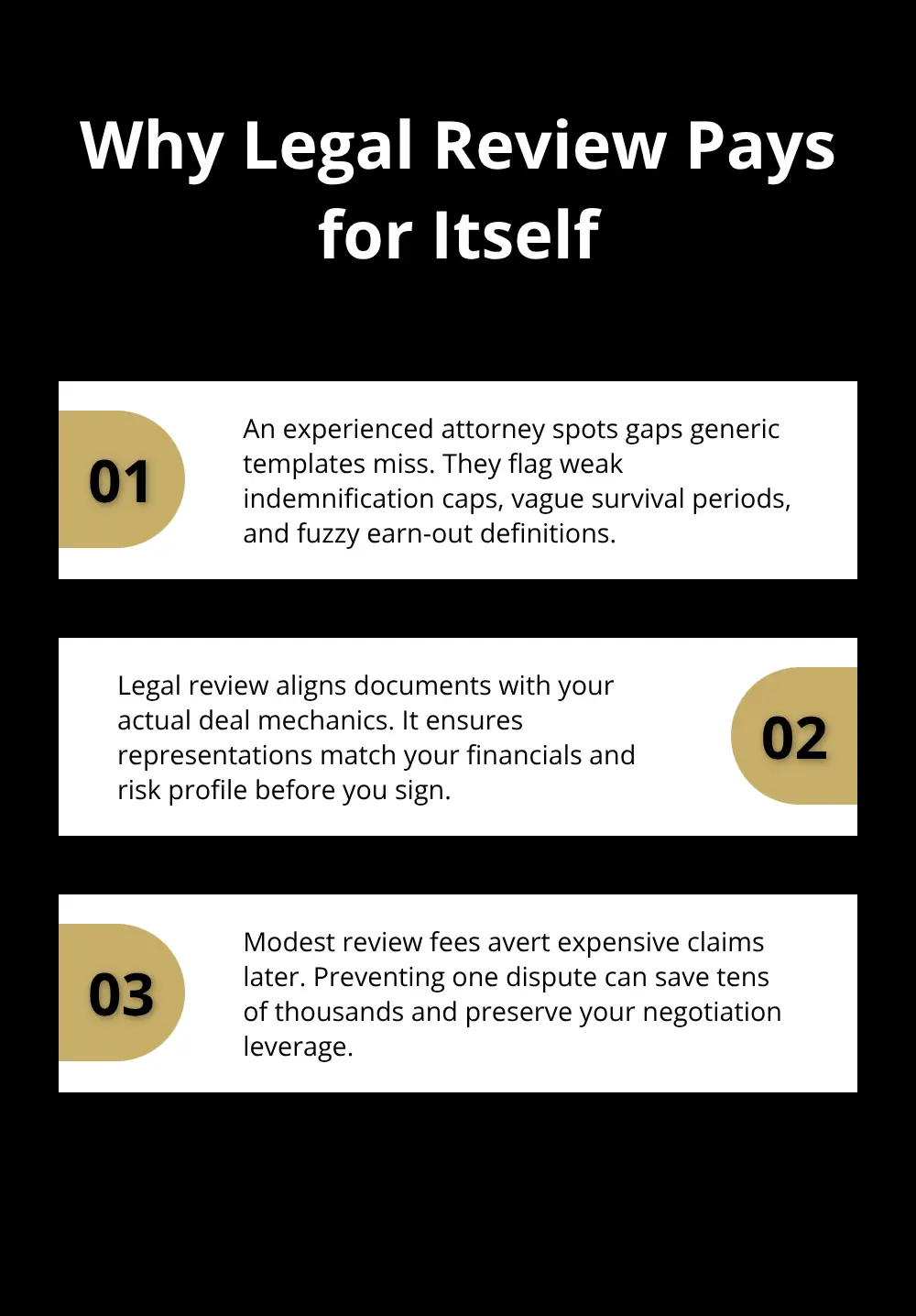
Legal review costs for simple document reviews might range from $500–$1,000, and this investment prevents tens of thousands in post-closing claims. Sellers who skip this step consistently pay more in disputes than they would have spent on legal guidance before signing.
Final Thoughts
Selling a business without proper documentation leaves you exposed to disputes that cost far more than the time you save by skipping this step. The templates you customize determine whether you close quickly or spend months fighting over details that should have been clarified upfront. A seller who spends three days customizing document templates included in their sales toolkit to reflect their industry, financial reality, and unique risks closes faster than one who uses generic forms and triggers endless revision cycles with the buyer’s legal team.
The financial protection comes from specificity and precision. When your purchase agreement, financial documentation, and asset schedules match your actual business structure, post-closing disputes shrink dramatically. Buyers move through due diligence without requesting missing pieces, your representations survive scrutiny because thorough documentation backs them, and the indemnification caps you negotiate actually hold up because your templates defined exactly what you were claiming about your business.
Your next step is identifying which documents matter most for your specific sale, then customizing templates to match your business before sending anything to a buyer. Start with your deal structure, not a generic form, involve your accountant to verify financial sections match your actual numbers, and have an attorney review the customized templates before they reach the buyer. At Unbroker, we provide ready-to-use document templates so sellers can prepare their documentation efficiently while accessing expert support when they need it.