Selling a business at the right moment can mean the difference between a mediocre exit and a windfall. The exit timing clues you need are hiding in your market conditions, financial metrics, and personal circumstances.
At Unbroker, we’ve seen founders leave millions on the table by selling too early or waiting too long. This guide shows you exactly what to watch for.
When Should You Sell Your Business
Market conditions matter far more than most founders realize, yet most wait for obvious signals that never arrive. The truth is that peak conditions are brief windows, and recognizing them requires knowing exactly what to monitor. High buyer demand typically emerges during economic expansions when interest rates remain manageable and capital flows freely to acquisitions.
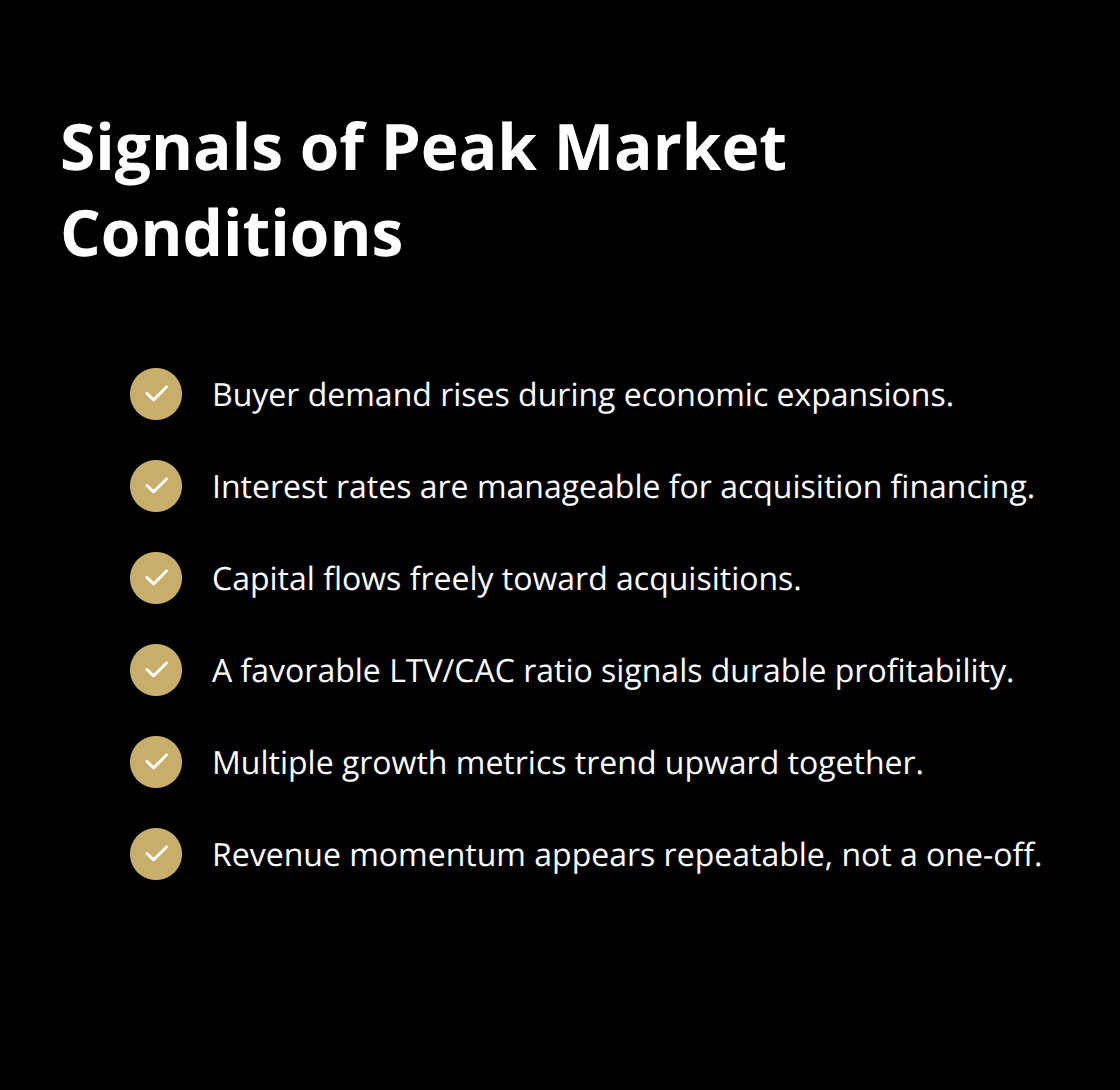
According to data from Salesforce, a favorable customer lifetime value to customer acquisition cost ratio indicates durable profitability and supports higher exit multiples-which means buyers will pay more for your business when they see predictable, sustainable revenue streams. When multiple growth metrics trend upward together (year-over-year sales growth, quarter-over-quarter expansion, and month-over-month momentum all moving in the same direction), you’re looking at a stronger, more valuable sale opportunity. This alignment signals to buyers that your growth isn’t a fluke but a repeatable pattern they can rely on.
How Sales Metrics Reveal Your True Value
Conversion rates matter significantly; HubSpot research shows that improving your conversion rate lifts the valuation multiple buyers will offer. Low churn rates signal durable recurring revenue and reduce post-sale risk, which directly boosts buyer confidence in your future cash flow stream. Win rates above 35% demonstrate that your sales process is effective and your product resonates with the market.
Why Timing Around Interest Rates Matters
Financing availability dramatically shifts buyer behavior. When interest rates drop, acquisition activity accelerates because the cost of borrowing capital decreases, making larger deals economically viable. Track your industry’s M&A activity through sources like your industry association or business databases; if deal volume climbs and valuations expand, you’re in a buyer’s market. Industry valuations peak during growth cycles, not at the tail end. If comparable companies in your space trade at 6x EBITDA today but traded at 4x two years ago, that’s your signal to move forward, not wait for another jump.
Revenue Concentration and Buyer Confidence
The longer you hold, the more likely you are to catch a downturn. Revenue diversity also strengthens your position during favorable conditions. If 60% of your revenue comes from three customers, buyers will discount your valuation; if your top ten customers represent only 40% of revenue, you command premium pricing because the buyer sees less risk. Consistent financial performance over the past 12–36 months demonstrates stability that buyers reward with higher multiples. This customer concentration issue becomes your next critical focus as you prepare your business for sale.
The Metrics That Predict Your Exit Price
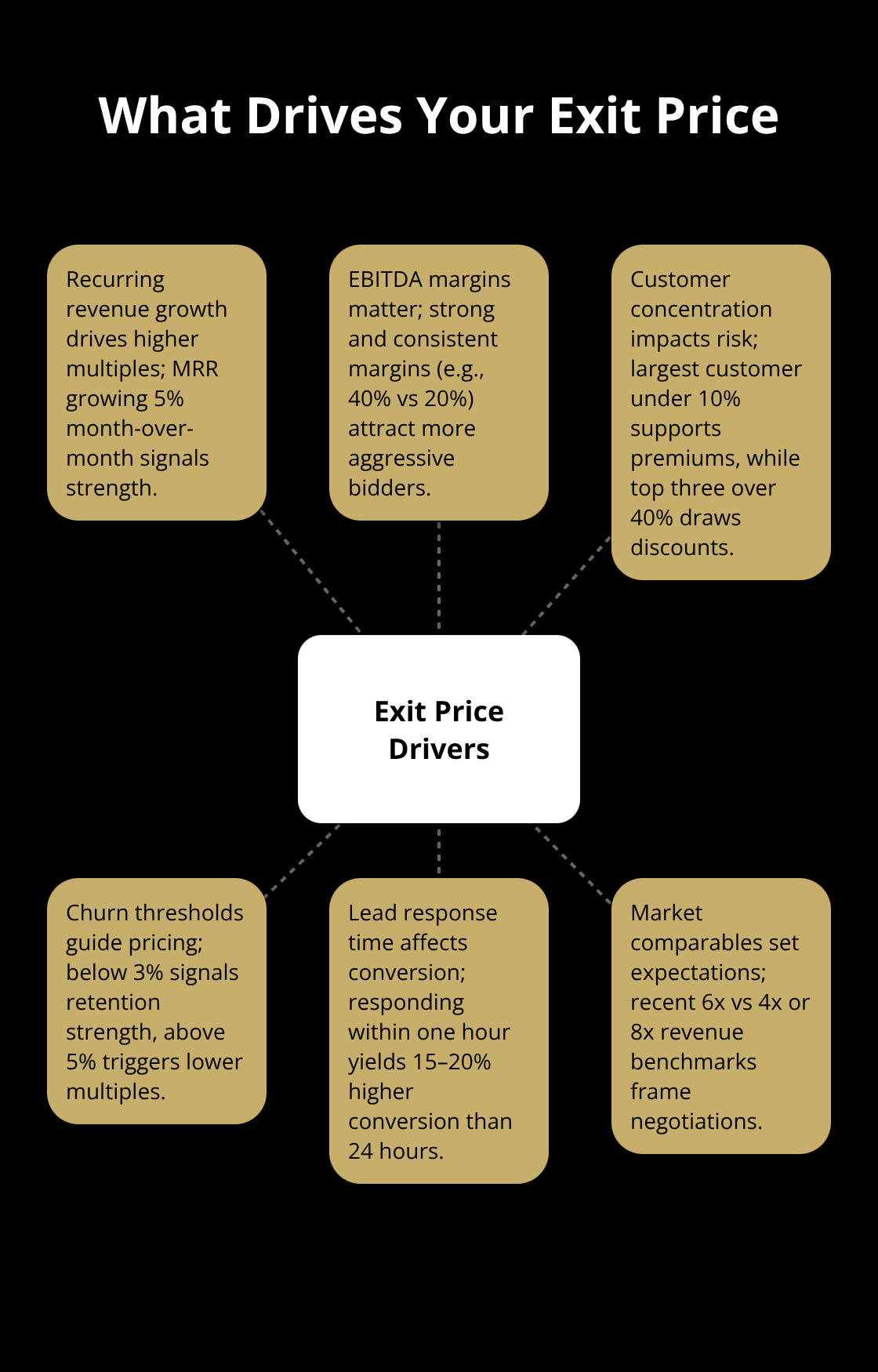
Your financial metrics are the language buyers speak, and they’re far more predictive than market sentiment or gut feeling. Track monthly recurring revenue separately from one-time sales because recurring revenue commands higher multiples-often 2x to 3x higher than transactional revenue. If your MRR grows 5% month-over-month, that’s a signal worth paying attention to; if it stays flat or declines, hold off on selling until you reverse the trend.
Profit margins matter equally. A business generating 40% EBITDA margins attracts more aggressive bidders than one at 20%, even if both have identical top-line revenue.
Buyers calculate what they’ll pay based on normalized EBITDA-your trailing twelve months of earnings before interest, taxes, depreciation, and amortization. If your margins have been inconsistent, spend the next 6–12 months stabilizing them before approaching the market.
Customer Concentration and Valuation Discounts
Track your customer concentration ruthlessly. When your top three customers represent more than 40% of annual revenue, buyers immediately apply a concentration discount, sometimes reducing your valuation by 15–25%. Conversely, a customer base where your largest customer represents less than 10% of revenue significantly strengthens your negotiating position and justifies premium pricing.
The Metrics Buyers Scrutinize Most Closely
Churn rate keeps buyers awake at night. If your monthly churn rate above 5%, buyers see a business that leaks customers faster than it can replace them, and they’ll offer lower multiples to compensate for that risk. A churn rate below 3% signals a product customers genuinely value and retain, which translates directly into higher valuations.
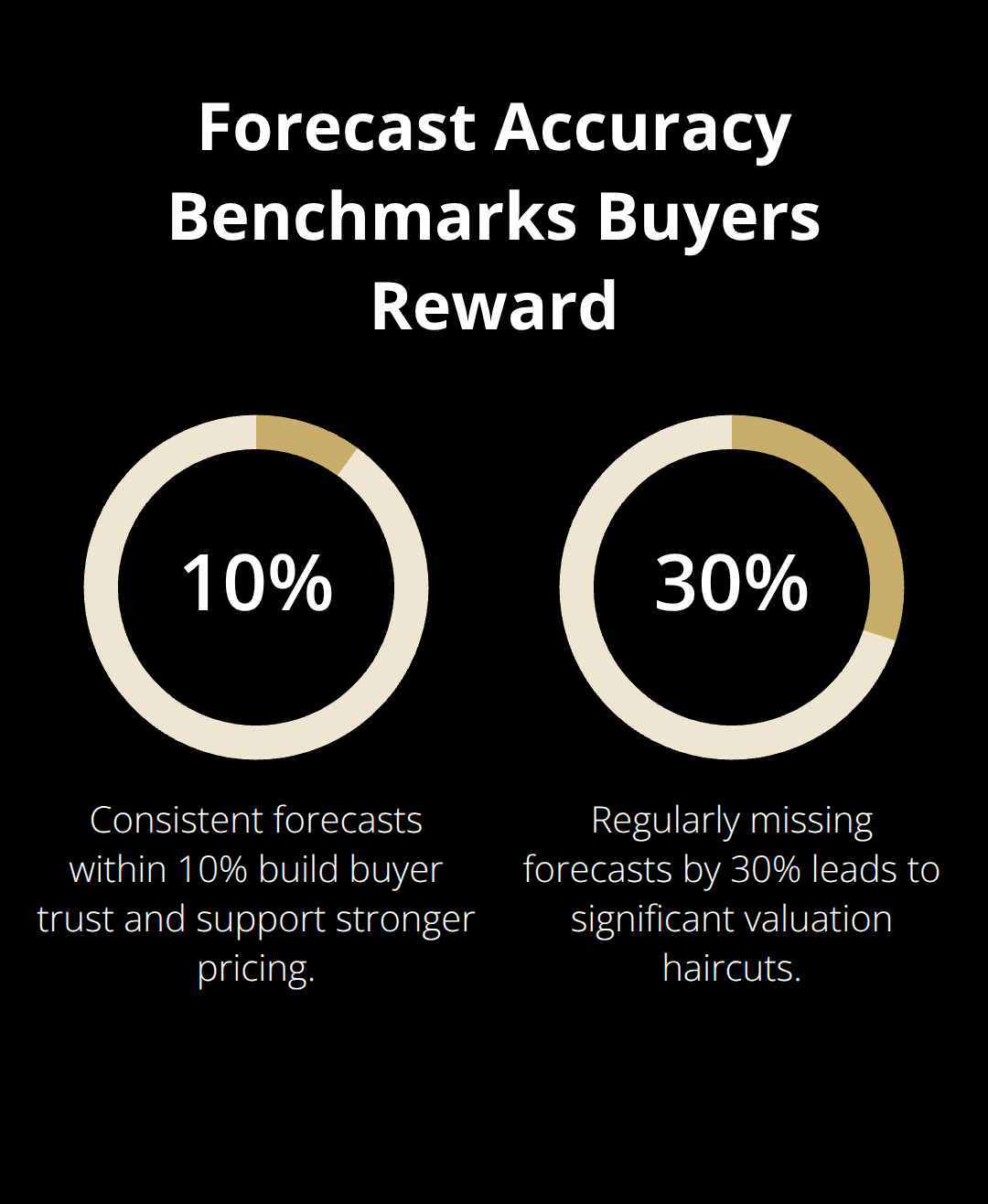
Win rate in your sales process tells a different story-anything above 35% demonstrates your sales team closes opportunities efficiently, and that repeatability attracts premium pricing. Forecast accuracy matters more than most founders realize. If your sales team consistently forecasts revenue within 10% of actual results, buyers trust your revenue projections and price accordingly. Miss your forecast by 30% regularly, and buyers will demand significant haircuts to their offer.
Benchmarking Against Industry Standards
Compare your business against public comps in your industry. If similar companies trade at 8x revenue multiples and yours should too, that’s your baseline negotiating position. If you’re trading at 5x while comparables justify 8x, that gap represents real money left on the table-and fixing it before sale is worth the effort.
Lead response time directly impacts deal velocity. Companies that respond to inbound inquiries within one hour see lead response time conversion rates 15–20% higher than those responding within 24 hours. That speed compounds into larger pipelines, predictable revenue, and higher exit valuations. These operational metrics reveal whether your business runs like a well-oiled machine or struggles with inefficiencies that buyers will penalize during negotiations.
Personal and Strategic Reasons for Timing Your Exit
Founder Burnout and Recovery Strategies
Founder burnout is real, and it clouds judgment about exit timing in ways that financial metrics never will. Your fatigue is legitimate, but it’s also expensive. We’ve watched founders sell at 4x EBITDA because they’re exhausted, only to watch the buyer flip the business eighteen months later at 7x after modest operational improvements. If you’re burning out, the answer isn’t to rush a sale at whatever price materializes-it’s to take a structured break, hire operational leadership to reduce your daily load, or set a firm exit date 18–24 months out and stick to it. This approach gives you time to recover while letting market conditions improve and your business metrics strengthen.
Aligning Life Goals With Financial Reality
Life goals matter equally. Founders planning major purchases like real estate or early retirement often force sales on artificial timelines that leave value behind. Instead, structure your exit around your actual cash needs. If you need $2 million in liquidity but your business could sell for $4 million in two years, negotiate a seller note or earnout that covers your immediate needs while preserving upside participation. This approach keeps your business in the market longer when conditions favor higher valuations, and it aligns your personal timeline with financial reality rather than against it.
Building Leadership Depth for Premium Valuations
Succession planning directly impacts your sale price, and most founders underestimate this leverage. Buyers pay significant premiums for businesses with proven leadership depth when a strong management team operates independently of the founder. If you’re the only person who understands your customer relationships or product roadmap, fix that now before approaching buyers. Document processes, train your operations manager to handle customer calls, and build a visible leadership team that functions without you.
Recognizing Market Disruption and Competitive Threats
If your industry is shifting-if technology is disrupting your competitive position or your market is consolidating around larger players-delaying a sale becomes increasingly risky. Market disruption can reduce revenue expectations and lower market multiples, which decreases business value. The moment your business shows signs of market disruption, that’s when moving quickly matters more than waiting for perfect conditions. This doesn’t mean rushing into a bad deal, but it does mean accelerating your timeline if your competitive advantages are eroding rather than strengthening.
Final Thoughts
Exit timing clues live in your financial metrics, market conditions, and personal readiness-not in crystal balls or market predictions. Your revenue growth, customer retention, and profit margins tell the real story about whether now is your moment. When your MRR climbs consistently, your churn stays below 3%, and your EBITDA margins strengthen, you hold a business that buyers will compete for.
Market conditions matter equally, and they shift faster than most founders expect. If interest rates favor acquisition financing, your industry valuations have expanded, and buyer activity accelerates, that window won’t stay open indefinitely. Personal readiness compounds this advantage: if you’ve built a management team that functions without you, documented your processes, and diversified your customer base, you’ve eliminated the discounts that buyers apply to founder-dependent businesses. Market disruption erodes competitive advantages, so waiting becomes increasingly expensive once your position weakens.
Audit your business against the metrics we’ve covered and identify where you stand. If your metrics are solid and market conditions favor sellers, the time to act is now. We at Unbroker help founders navigate this exact moment with transparent pricing and expert guidance-our platform connects you with qualified buyers while eliminating the high brokerage fees that drain value from your sale. Visit Unbroker to explore how we can help you sell your business for what it’s actually worth.