Selling your business without a broker is possible, but it requires strategy and preparation. At Unbroker, we’ve seen business owners successfully navigate this path by understanding what it takes.
This DIY sale guide walks you through the exact steps needed to prepare, market, and close a deal on your own terms.
Why Business Owners Choose DIY Sales
Selling a business without a broker means keeping more money in your pocket. A traditional broker typically charges between 5% and 10% of the sale price, which on a $500,000 business sale could equal $25,000 to $50,000 in fees. Many business owners reject these costs and the lack of transparency that comes with traditional brokerage relationships. The appeal of DIY selling is straightforward: you control the process, you set the timeline, and you avoid paying someone else’s commission. However, this freedom comes with real responsibility. You’ll need to handle marketing, due diligence, legal documentation, and negotiations yourself or hire professionals to help. The timeline for a DIY sale typically ranges from six to eighteen months, depending on your industry, business size, and market conditions. Smaller, simpler businesses often sell faster, while larger operations with complex revenue streams take considerably longer. You should expect to spend significant time on the sale process if you’re doing it yourself, which is why many DIY sellers work with part-time support rather than attempting everything alone.
Control Versus Convenience
The main difference between DIY and full-service brokers is control versus convenience. A broker handles everything but takes a significant cut and often pushes you toward outcomes that maximize their commission rather than your interests. With DIY selling, you decide which marketing channels to use, how to present your business, and when to accept an offer. This control matters because you know your business better than anyone else. You understand your customer relationships, your operational strengths, and the real reasons someone should buy. Full-service brokers rely on templates and standard pitches that work across multiple businesses, which often undersells what makes your operation unique. The downside is that you’ll face obstacles brokers handle routinely. Due diligence requests can feel overwhelming. Buyers often have unrealistic expectations about what information you should provide and when. You’ll need to respond to tire-kickers who waste your time, and you’ll face legal complexity around representations, warranties, and liability that most business owners have never encountered. Many DIY sellers find that professional support for specific tasks (like legal templates or negotiation guidance) fills this gap without requiring a full-service broker.
How Long Does a DIY Sale Actually Take
A DIY sale takes longer than most owners expect. Most successful deals can take anywhere from 12 to 18 months to close. DIY sales often extend beyond this range because you’re learning as you go. The first two to three months involve preparation, which means organizing financial records, creating a compelling business profile, and determining the right price. The next three to four months focus on marketing and finding qualified buyers, which requires consistent effort across multiple channels. Negotiation and due diligence typically consume another three to six months, depending on how seriously interested buyers pursue the deal.
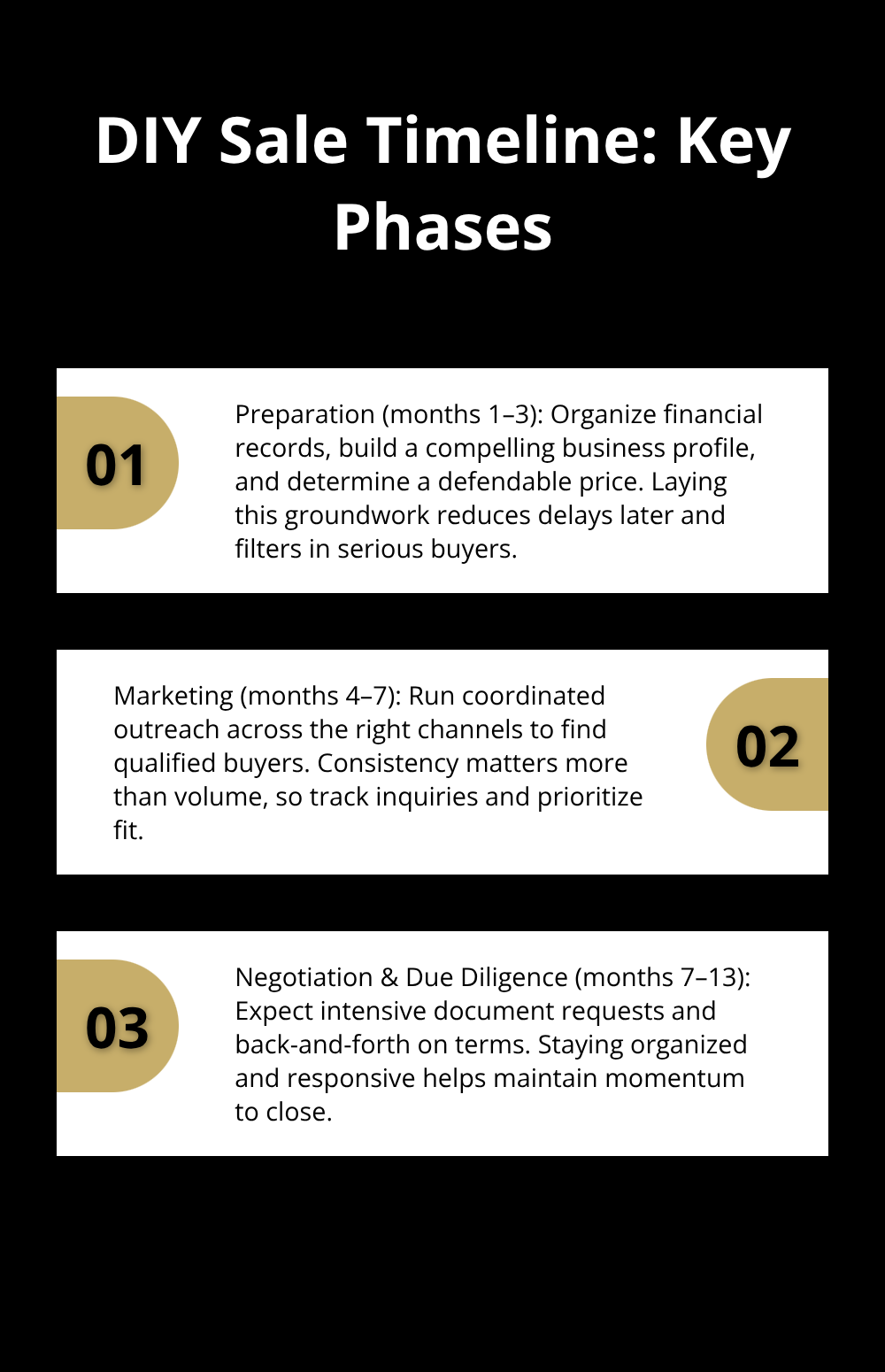
A critical mistake many DIY sellers make is underestimating how much time negotiations consume. Buyers will request financial statements, tax returns, customer contracts, employee records, and operational documentation. You’ll need to respond to questions about everything from lease terms to pending legal issues. This phase separates casual inquiries from serious buyers, but it’s exhausting. Set realistic expectations now: if you need the money in three months, DIY selling isn’t the right path. If you can wait nine to eighteen months and invest significant personal effort, you can save substantial money while maintaining control over your business’s future.
What Comes Next in Your Preparation
The real work starts once you commit to selling. You’ll need to organize your financial records, create a business profile that attracts serious buyers, and price your business correctly. Each of these steps requires attention to detail and honest assessment of your operation.
Preparing Your Business for Sale
Organize Your Financial Records First
Serious buyers won’t look twice at a business with messy finances. You need to organize your financial data before you start marketing, which means gathering three years of tax returns, profit and loss statements, balance sheets, and bank statements. These documents form the foundation of everything that follows. Organizing your financial data streamlines the selling process and allows you to fully demonstrate the true value to potential buyers.
Start by reconciling your accounts. If your bookkeeping has been loose, hire an accountant to clean things up now rather than later. Buyers expect consistency between your tax returns and your claimed revenue. Discrepancies raise red flags and tank deals. Beyond basic financials, compile customer contracts, supplier agreements, lease terms, and any outstanding loans or liabilities. Buyers want to understand exactly what they’re inheriting.
Document Your Customer and Employee Details
Create a spreadsheet showing your top customers, their annual spending, contract lengths, and renewal dates. If three customers represent 60 percent of revenue, buyers need to know this immediately. Similarly, document your employee situation: salaries, benefits, contracts, and any pending disputes. These details affect the purchase price and the buyer’s ability to secure financing.
Don’t hide problems. A buyer who discovers undisclosed liabilities later will either back out or demand a price reduction that hurts you far more than disclosing the issue upfront.
Build a Compelling Business Profile
A business profile that attracts the right buyers requires more than listing your revenue. Your profile should tell a story about why your business works and why someone should buy it. Focus on your competitive advantages, customer retention rates, and operational systems rather than generic descriptions.
If you’ve built repeatable processes that don’t depend entirely on you, emphasize this. Buyers fear businesses where the owner is irreplaceable. Document your pricing strategy, your marketing channels, and your profit margins clearly. Use realistic language. Avoid claiming growth potential that you haven’t demonstrated. Instead, highlight what you’ve actually built.
Price Your Business Correctly
Pricing your business correctly is where most DIY sellers stumble. The common mistake is anchoring on what you need the money for rather than what the business is actually worth. Valuation depends on your industry, revenue, profitability, growth rate, and customer concentration. A service business with high owner dependence typically sells for two to four times annual profit. A product-based business with recurring revenue might command five to seven times profit.
Use multiple valuation methods. Calculate your earnings before interest, taxes, depreciation, and amortization (EBITDA), then apply an industry multiple. Cross-check this against comparable business sales in your sector. The EBITDA multiple valuation method uses the formula: EBITDA = Net Profit + Interest + Taxes + Depreciation + Amortization. Price too high and you’ll receive no offers. Price too low and you’ll leave money on the table.
Consider hiring a business appraiser for $1,500 to $3,000 to validate your number. This cost pays for itself if it prevents you from accepting an offer $20,000 below market value. Once you’ve established your price and prepared your financial records, you’re ready to market your business and attract qualified buyers who will take your sale seriously.
Finding and Marketing to Real Buyers
Qualified buyers require a different approach than general marketing. Most DIY sellers waste months attracting tire-kickers who lack serious intent or financing capability. You need a systematic strategy that filters for genuine buyers from the start.
Start With Your Network
Your existing network provides your warmest leads. Reach out to former employees, industry contacts, suppliers, and customers who might know someone looking to buy. These referrals move faster because trust already exists. People who already know your business understand its value without extensive explanation.
Next, list your business on platforms where actual buyers search. BizBuySell and Flippa attract serious acquisition-minded entrepreneurs, though BizBuySell charges listing fees around $300 to $500. Facebook Marketplace and LinkedIn work for smaller operations, but they attract more casual browsers. The key is understanding which platforms your target buyer actually uses.
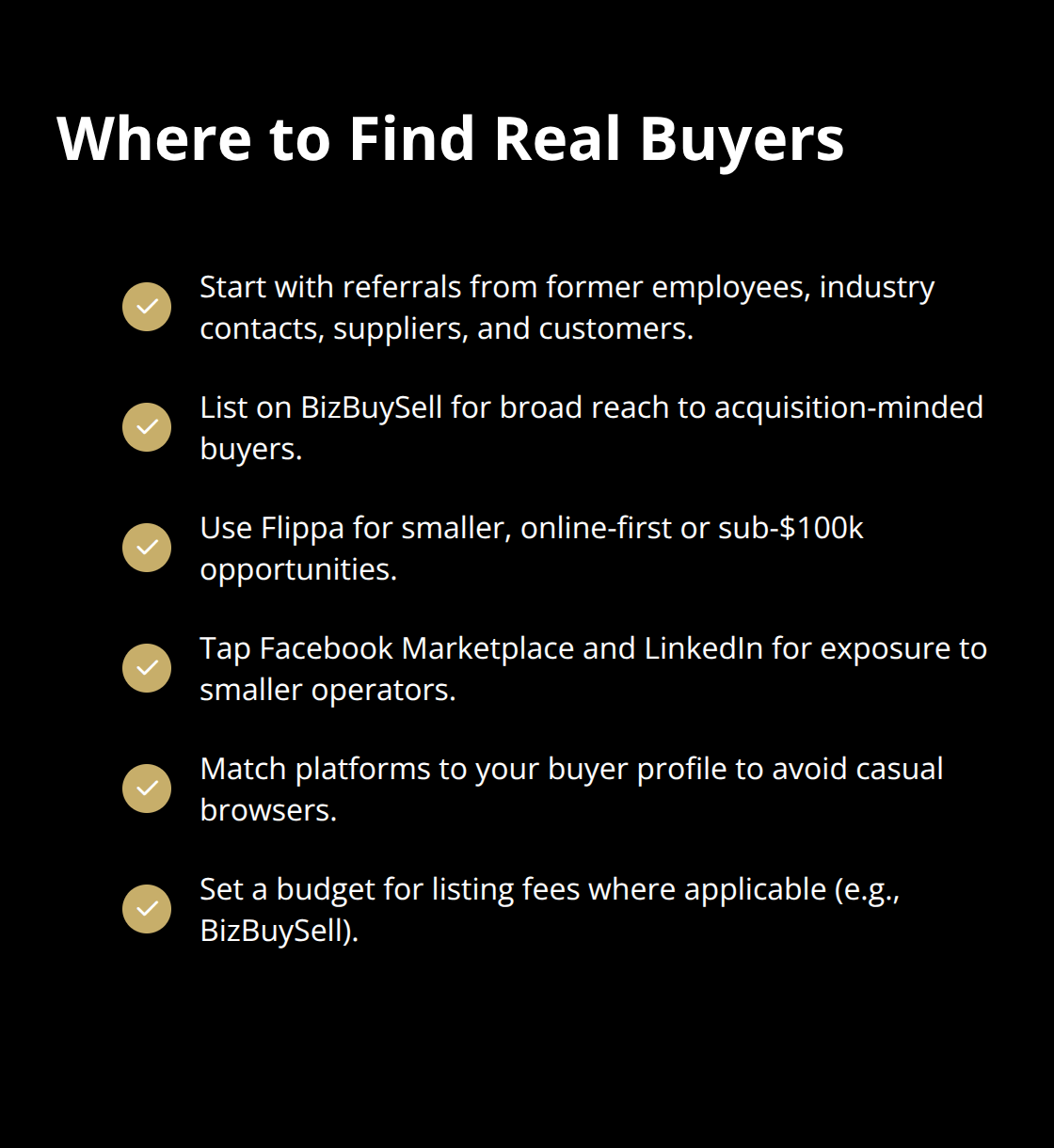
A service business selling for under $100,000 performs better on Flippa, while a $500,000 manufacturing operation belongs on industry-specific sites where established buyers congregate.
Create Marketing Materials That Sell
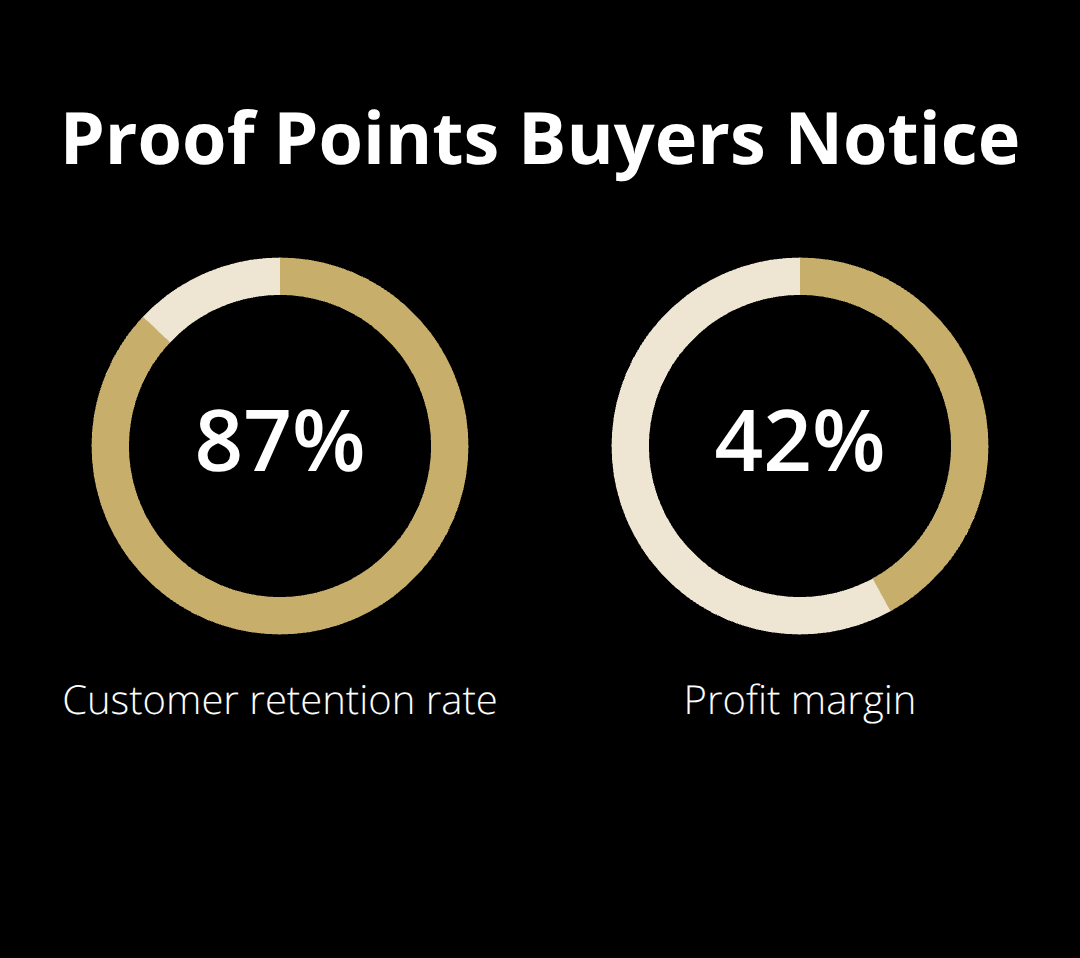
Your marketing materials matter more than most DIY sellers realize. Create a one-page executive summary highlighting revenue, profit, customer concentration, and growth trends. Include high-quality photos of your operation, your team, and customer testimonials if available. Avoid generic language like growth potential or scalable model. Instead, show actual numbers: 87 percent customer retention, $15,000 monthly recurring revenue, or 42 percent profit margin. Buyers evaluate concrete facts, not promises.
When you receive inquiries, qualify immediately. Ask about their acquisition experience, their timeline, their financing situation, and why they want to buy your specific business. Buyers with vague answers or unrealistic timelines waste your time. A serious buyer can explain their plan clearly and move quickly through initial conversations.
Negotiate From a Position of Strength
Negotiation is where most DIY sellers leave money on the table. Setting an asking price without a proper valuation can lead to leaving money on the table or overpricing your business, which can deter buyers. Once you have a qualified buyer, establish your non-negotiables upfront. Decide what you absolutely need: the sale price, the payment structure, whether you’ll stay involved post-sale, and what representations and warranties you’ll provide. Many DIY sellers accept lower prices to close faster, but this decision costs real money.
If a buyer offers 20 percent below your asking price without strong justification, push back. Ask what specific factors justify the reduction. Maybe they discovered customer concentration risk or operational inefficiency you hadn’t disclosed, which is valid. But if they’re simply anchoring low, your response should be firm. Counter at 90 percent of your ask and explain why. Avoid splitting the difference immediately, which trains buyers that you’ll keep negotiating down.
Structure the Deal Correctly
Payment structure matters as much as sale price. A buyer offering $400,000 over three years at 5 percent interest is worth less than $350,000 paid in cash at closing. Calculate the net present value of any deferred payment deal. Most importantly, obtain legal review of any purchase agreement before signing. DIY sellers often skip this to save money, then discover they’ve agreed to representations that expose them to liability years after the sale. A business attorney charges $2,000 to $5,000 to review a purchase agreement, which is cheap insurance against a $50,000 dispute later.
Throughout negotiation, stay emotionally detached. You’ve built something valuable, but the buyer doesn’t care about your effort or attachment. They care about cash flow, growth potential, and risk. Frame every conversation around their concerns, not your accomplishments. This approach closes deals faster and at better terms because you’re addressing what actually matters to them.
Final Thoughts
Selling your business without a broker saves money, but only if you execute the process correctly. This DIY sale guide emphasizes three critical realities: organize your finances before marketing, price based on actual valuation not emotion, and qualify buyers ruthlessly to avoid wasting months on tire-kickers. The most common mistake DIY sellers make is underestimating timeline and effort-you’ll spend six to eighteen months on this process, not three.
Pricing wrong represents your second major risk. Too high and you receive no offers; too low and you leave tens of thousands on the table. Accepting the first offer without negotiation compounds this error. Buyers expect pushback, and if you accept their opening bid immediately, they’ll wonder if they offered too much. Stay disciplined throughout: organize financial records now, obtain a professional valuation, list on platforms where serious buyers actually search, qualify every inquiry, and negotiate from a position of strength.
After you find a buyer and close the deal, transition planning matters enormously. Buyers need your help implementing systems, introducing them to key customers, and training staff. The smoother this handoff, the better your reputation and the more likely the buyer completes final payments if you’ve structured a deferred deal. If this process feels overwhelming, we at Unbroker offer transparent alternatives for sellers who want expert guidance without traditional broker fees.