Selling a business shouldn’t cost you 6–10% in broker commissions or drag on for 12+ months. Traditional brokers have controlled the market for decades, but a platform for business sale changes everything.
At Unbroker, we’ve seen firsthand how outdated methods leave money on the table and create unnecessary delays. Modern platforms cut through the complexity with transparent pricing, faster timelines, and real control over your sale.
Why the Old Guard Costs You Money
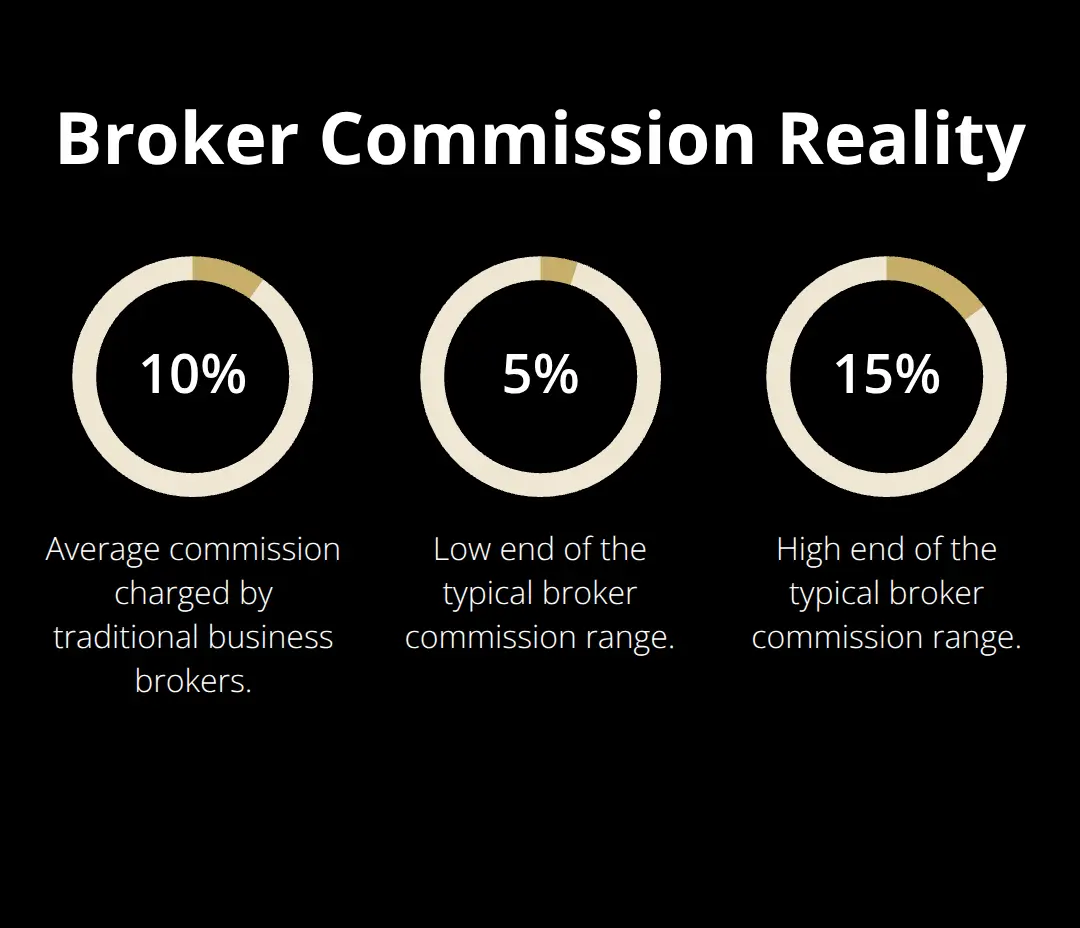
Traditional business brokers operate on a model that hasn’t fundamentally changed in decades-they take 5% to 15% commission, with an average around 10% of the final sale price. On a $500,000 sale, that’s $30,000 to $50,000 gone before you see a dime.
Worse, these fees are rarely transparent upfront. Brokers often bury additional costs in fine print: listing fees, marketing charges, transaction fees, and earnout administration costs that stack up during the process. The timeline compounds the problem. A typical brokered sale takes 90–180 days from listing to close, sometimes stretching longer if negotiations stall. During this waiting period, you manage two jobs-running your business and shepherding the sale forward-while the broker controls the pace and information flow. You don’t know which buyers are serious, what offers are coming, or why negotiations are moving slowly. This opacity breeds frustration and often leads to accepting lower offers just to end the uncertainty.
The Commission Trap Nobody Talks About
Most business owners underestimate the true cost of traditional brokers because commissions are presented as a percentage of the sale price rather than as an absolute number. On a $1 million sale, 7% doesn’t sound unreasonable until you realize you’re losing $70,000. That money could fund your next venture, seed a retirement account, or cover unexpected life expenses. Some brokers also charge success fees only if they find the buyer, meaning they have zero incentive to help you negotiate better terms or maximize deal value. A 2024 analysis of small business sales showed that businesses sold through brokers without competitive bidding processes averaged lower multiples than those marketed to multiple qualified buyers simultaneously. The difference: access to more informed, motivated buyers drives price competition and better outcomes. Platform-based sales use transparent success-fee structures-like Unbroker’s 6% success fee, paid only when the business sells-that align the platform’s interests with yours.
Speed Matters More Than You Think
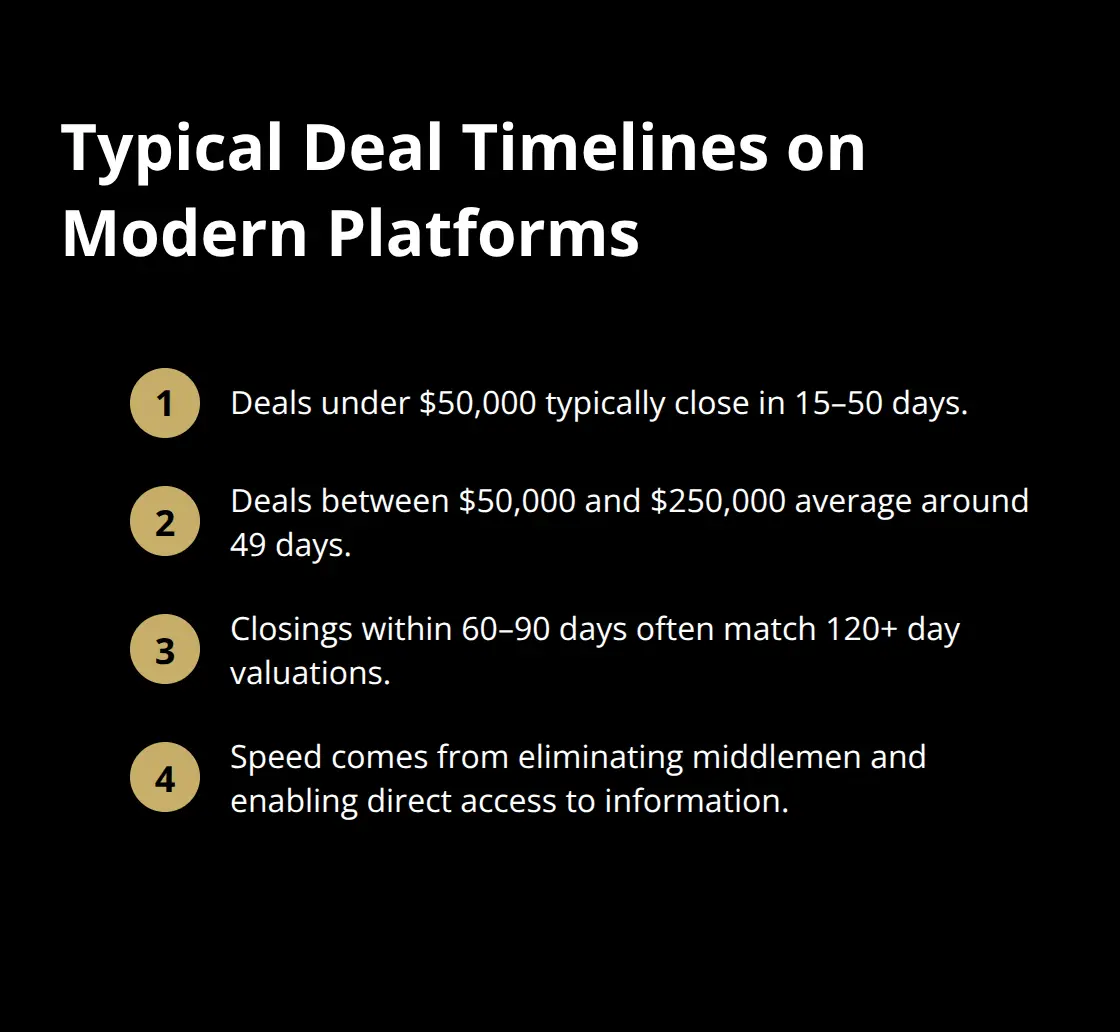
When a business sits on the market for six months, it sends a signal to buyers that something is wrong. Active, motivated buyers assume the owner is desperate or the business has hidden problems. The psychological cost of delay often outweighs the broker’s promise of finding the perfect buyer. Research from transaction data shows that businesses closing within 60–90 days typically sell at valuations comparable to those taking 120+ days, but with far less stress and lower carrying costs. If you’re financing part of the sale or managing working capital during the transition, every additional month costs real money. Digital platforms compress timelines by automating marketing, matching buyers to your business profile instantly, and providing integrated tools for LOIs, due diligence, and closing documents. Flippa reports typical timelines of 15–50 days for deals under $50,000 and around 49 days for deals between $50,000 and $250,000. That speed comes from eliminating middlemen and giving both parties direct access to information.
Negotiation Power Shifts When You’re Informed
Traditional brokers control the narrative. They decide which buyers see your business, what information gets shared, and when. This asymmetry favors the broker’s timeline, not yours. You might never know that a buyer was willing to pay more but the broker discouraged them from bidding higher, or that multiple offers existed but the broker presented them sequentially instead of creating a competitive auction. Transparent platforms show you exactly what’s happening: how many qualified buyers viewed your listing, what questions they asked, and what offers came in. This visibility lets you make informed decisions rather than trusting a broker’s judgment about what’s best for you. When you can see buyer interest directly, you gain leverage to negotiate better terms, higher prices, or more favorable contingencies. Some platforms provide AI-driven valuation tools that show you how your business compares to thousands of similar sales across multiple countries, giving you data to back up your asking price rather than relying on a broker’s hunches.
What Modern Platforms Change
Modern platforms eliminate the middleman and put control back in your hands. You access buyer interest in real time, see which prospects are serious, and understand exactly what drives negotiations. Lower fees (whether flat or percentage-based) mean you keep significantly more of the sale proceeds. Faster timelines reduce the stress of a prolonged sale and lower your carrying costs.
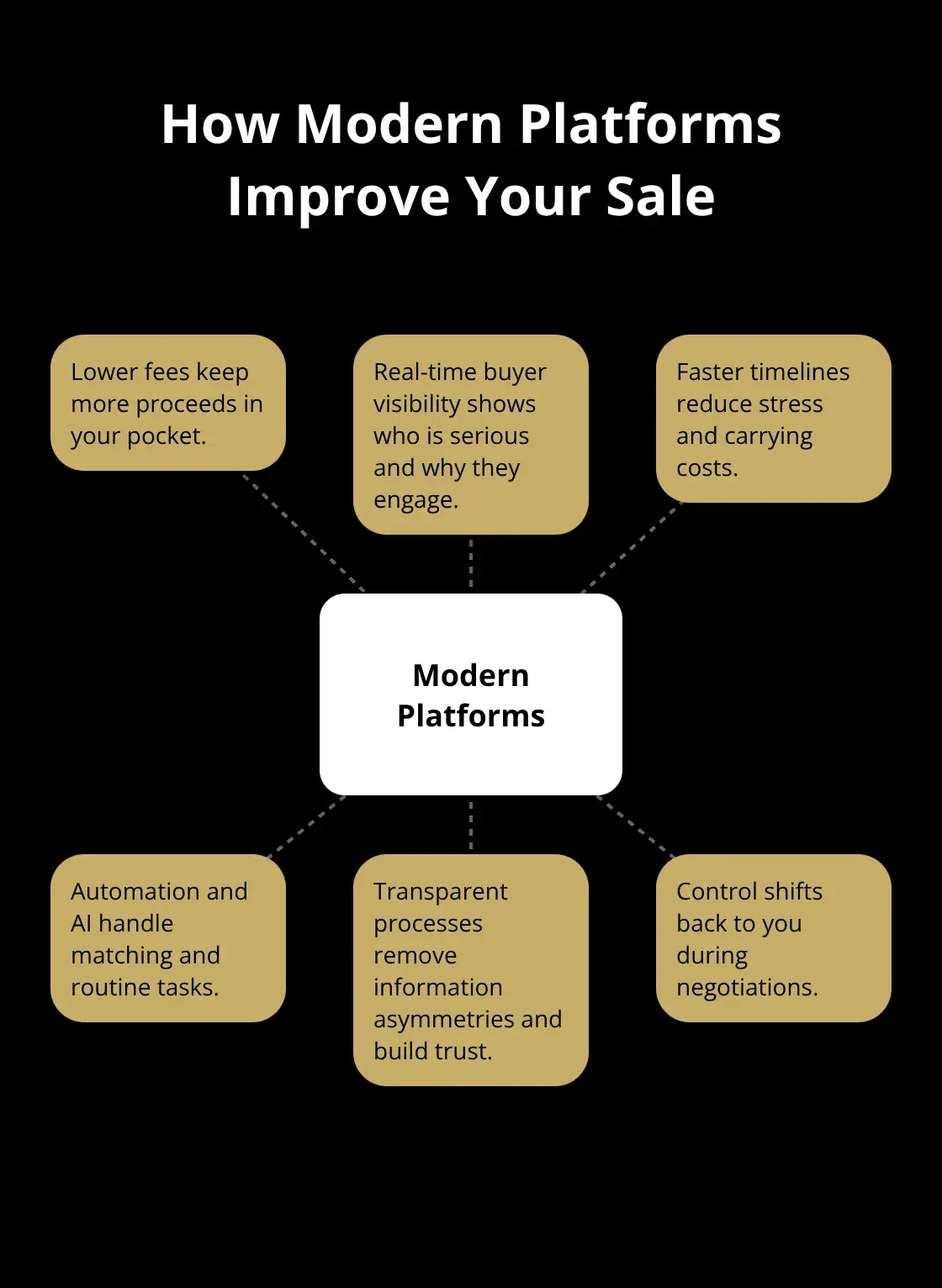
These shifts don’t happen by accident-they result from technology that automates routine tasks, AI that matches buyers to your business, and transparent processes that remove information asymmetries. The next section explores how these platforms actually work and what separates a hands-off service from a DIY option.
How Modern Platforms Work Differently
Modern platforms strip away the broker’s information monopoly and replace it with technology that works for you, not against you. The core difference is structural: instead of paying someone 10% to control your sale, you pay a transparent fee and gain direct visibility into buyer interest, valuation data, and negotiation progress. Flippa, a major online business marketplace, processes over 12,000 deals annually with approximately 40,000 weekly active buyers and $73 billion in active buyer liquidity. These numbers matter because they show real market depth. When your business reaches qualified buyers instantly through AI matching rather than waiting for a broker to make phone calls, the sale timeline compresses dramatically. Flippa reports that deals under $50,000 close in 15–50 days, while deals between $50,000 and $250,000 average around 49 days. That speed exists because the platform automates the busywork: listing validation, buyer screening, and document management all happen digitally. You see exactly which buyers viewed your listing, what questions they asked, and how serious they are based on their engagement. This transparency eliminates the guessing game. Traditional brokers present offers one at a time, which kills buyer competition and suppresses your final price. Platforms create visibility for multiple interested parties simultaneously, forcing buyers to compete on terms and valuation rather than assuming they have exclusive negotiating power.
What Transparent Pricing Actually Means
Transparent pricing isn’t marketing speak-it’s a structural change. In this model, the marketplace operator earns a percentage or flat fee from each sale, which means the platform has no incentive to push you toward a lower offer or rush you into a bad deal. Compare this to the traditional 10% commission: on a $500,000 sale, you’d owe $50,000 to a broker. With Unbroker’s 6% success fee, paid only when the business sells, you’d owe $30,000 on that same sale-keeping an extra $20,000 in your pocket. This alignment matters enormously. The platform’s success depends on your satisfaction and repeat business, not on extracting maximum fees from your specific transaction. Hidden fees vanish because there’s nowhere to hide them. No listing fees, no marketing charges buried in fine print, no surprise transaction costs at closing. You know the cost before you start, which lets you calculate your actual net proceeds and make informed decisions about whether to accept an offer.
AI Matching Finds Serious Buyers Faster
AI-driven buyer matching works by comparing your business profile against thousands of buyer criteria simultaneously, flagging qualified matches in minutes rather than weeks. Flippa’s matching system connects sellers to buyers across 193 countries, with 67 percent of transactions crossing borders. This global reach matters because it expands your addressable market dramatically. A niche SaaS business or content site that might struggle to find local buyers has access to international acquirers who specifically seek that type of asset. The matching engine doesn’t just blast your listing to everyone-it targets buyers with capital, relevant acquisition experience, and demonstrated interest in your business category. This filtering reduces tire-kickers and focuses negotiations on serious prospects. Once matched, integrated tools handle LOIs, APAs, and due diligence documents without requiring you to coordinate between lawyers, accountants, and the buyer’s team.
Data-Backed Valuations Replace Broker Hunches
Data-backed valuations compare your business to comparable sales, giving you pricing based on the selling prices of similar companies rather than hunches. You see how your revenue multiple, growth rate, and profitability stack against similar sold businesses in your industry and geography, which grounds your asking price in reality and strengthens your negotiating position when buyers question your valuation. This information advantage shifts power to you. Instead of trusting a broker’s estimate, you walk into negotiations armed with concrete benchmarks from thousands of comparable transactions. Buyers respect data-driven pricing because it signals that you’ve done your homework and won’t accept lowball offers based on vague reasoning. The valuation tools also highlight which metrics matter most for your business type-some buyers prioritize recurring revenue, others focus on customer acquisition cost or retention rates. Understanding these drivers lets you present your business in the most compelling way to each prospect.
Direct Access Changes Everything
When you see buyer interest in real time, you gain leverage that traditional brokers actively suppress. You know how many qualified prospects viewed your listing, what questions they asked, and whether multiple offers exist simultaneously. This visibility lets you make informed decisions rather than trusting a broker’s judgment about what’s best for you. You can spot patterns in buyer feedback, adjust your pitch if needed, and recognize when you have genuine competition for your asset. Multiple serious offers create natural price pressure-buyers know they’re competing and adjust their bids accordingly. This competitive dynamic rarely happens in traditional brokered sales because brokers present offers sequentially to maintain control and justify their fees. Platforms that show you everything eliminate this information asymmetry and put negotiating power back where it belongs: with you. The next section explores how to choose between a hands-off service and a DIY option, each suited to different seller preferences and timelines.
Full Service or DIY: What Fits Your Situation
Selling a business demands time, expertise, and emotional detachment-three things most owners struggle to balance while running operations. The choice between full-service and DIY models determines not just your workload, but your final proceeds and peace of mind.
Full-Service Platforms Handle the Heavy Lifting
Full-service platforms market your business to their buyer network, screen prospects, negotiate terms, manage due diligence, and guide you to closing. You show up for key decisions and sign documents. The trade-off is cost and less direct control. On a $500,000 sale, transparent platforms charge significantly lower fees than traditional brokers’ 5–10% commissions-a difference that keeps tens of thousands of dollars in your pocket instead of going to intermediaries. This model works best if you lack bandwidth, want expert negotiation support, or prefer someone else to manage the sales process while you focus on the business. The platform handles marketing, buyer qualification, and document logistics so you avoid the administrative burden.
Assisted Sales Put You in Control
Assisted sales flip the script. You maintain control of the listing, pricing, and negotiation decisions while accessing expert support when needed. This approach suits owners who want hands-on involvement, understand their business’s value, and have time to engage actively. You respond to buyer inquiries directly, shape the narrative around your business, and make final calls on offers. The monthly fee structure removes pressure to close quickly just to stop paying commissions-your cost stays the same whether you sell in 30 days or 6 months.
Three Factors Drive Your Decision
The practical choice hinges on three factors: your available time, your negotiating confidence, and your tolerance for administrative work. If you manage daily operations and cannot afford distractions, full-service makes sense-the fee is cheap insurance against a poorly managed sale that costs you $100,000 in lost valuation. If you have already prepared your financials, know your business’s comparable multiples, and want to steer negotiations personally, assisted sales let you control outcomes while tapping expert resources when questions arise.
Speed Advantages Apply to Both Models
Flippa’s data shows that deals under $50,000 close in 15–50 days, meaning even DIY sellers can reach closing quickly if their business is sale-ready. The speed argument often favors platforms over brokers regardless of service level-both full-service and assisted options compress timelines because they eliminate broker gatekeeping and use AI matching to reach qualified buyers instantly. One critical difference: full-service platforms negotiate on your behalf, which can mean higher final prices if the team has strong deal-making skills, but may also mean accepting terms you would have rejected if you had seen the negotiation unfold. Assisted models let you reject lowball offers immediately and counter aggressively because you participate in the room.
Transparent Pricing Eliminates Surprises
Neither approach includes hidden fees-both promise transparent pricing upfront. Traditional brokers often layer on listing fees, marketing charges, and transaction costs that surprise sellers at closing. Platforms eliminate that opacity, so you know your total cost before you commit. Choose full-service if you value certainty, expert guidance, and time savings. Choose assisted if you value control, want to stay deeply involved, and have the bandwidth to manage buyer conversations. Either way, you pay a fraction of what traditional brokers extract, and you gain visibility into a buyer network that actually exists rather than trusting a broker’s word that serious interest exists.
Final Thoughts
Traditional brokers extract 5–10% of your sale price while stretching timelines to 90–180 days, leaving you powerless to influence negotiations or understand buyer interest. A platform for business sale reverses this dynamic entirely-you pay transparent fees upfront, close in weeks instead of months, and keep substantially more money when the deal closes. On a $500,000 sale, this difference translates to $25,000 to $50,000 that stays in your pocket instead of vanishing into broker commissions.
Control shifts to you when you see buyer interest in real time, understand your valuation against comparable sales, and participate directly in negotiations. You spot genuine competition and leverage that advantage to push for higher offers, recognize lowball bids immediately and counter aggressively, and make informed decisions backed by data rather than broker hunches. Speed compounds these benefits-closing in 49 days instead of 120+ days cuts carrying costs while signaling confidence to buyers.
We at Unbroker built our platform on transparent pricing, AI-driven buyer matching, and access to serious acquirers without hidden fees or broker gatekeeping. Whether you choose full-service or assisted selling, you get a straightforward path to selling your business for what it’s worth. The question isn’t whether to sell smarter-it’s whether you’re ready to keep the money that brokers have been taking for decades.