Knowing what your business is worth matters. Whether you’re planning to sell, seeking investment, or simply want to understand your financial position, the right business valuation method makes all the difference.
At Unbroker, we’ve seen too many small business owners guess at their company’s value instead of using proven approaches. This guide walks you through three core business valuation methods-asset-based, income-based, and market-based-so you can pick the one that fits your situation.
Asset-Based Valuation for Small Businesses
What Assets Actually Count in Your Business’s Value
Asset-based valuation starts with a straightforward question: what would you receive if you liquidated everything today? For small businesses, this method works by calculating net asset value by subtracting liabilities from total assets to arrive at net asset value. Most small business owners underestimate their intangible assets, which often represent significant value in a company’s worth. Tangible assets like equipment, inventory, and real estate appear on your balance sheet easily. But intangible assets-your customer relationships, brand reputation, intellectual property, and operational systems-actually drive ongoing profits. A plumbing contractor with 20-year customer relationships and a recognizable brand is worth far more than the value of their trucks and tools alone. Many small business owners focus only on physical assets because they’re visible and documented, but ignoring goodwill and client loyalty leaves significant value on the table when negotiations begin.
When Asset-Based Valuation Makes Sense
Asset-based valuation works best for asset-heavy businesses like manufacturing, real estate holdings, or equipment rental companies where tangible assets represent the primary value driver. It also applies well when a business is struggling or unprofitable, since you’re valuing what you own rather than what you earn. If your business carries significant real estate (whether you own the building outright or lease it), separating the property value from the operating business becomes essential. Property appraisals with long-term, stable tenant agreements can substantially boost overall deal value. However, asset-based valuation falls short for service-based businesses, software companies, or any operation where recurring revenue and client relationships matter far more than equipment. This method also ignores growth potential and future earnings, making it less useful when selling a healthy, profitable business to a buyer seeking income.
Calculating Real Net Asset Value
To calculate net asset value accurately, list every asset your business owns-equipment, inventory, accounts receivable, real estate, intellectual property, and cash-then subtract all liabilities including loans, accounts payable, and lease obligations. The tricky part is assigning realistic values to each asset. Equipment depreciates faster than your tax returns suggest, and inventory sitting on shelves may be worth significantly less than cost. An independent appraisal for real estate provides more accuracy than relying on purchase price or market estimates, since property value directly impacts the final number.
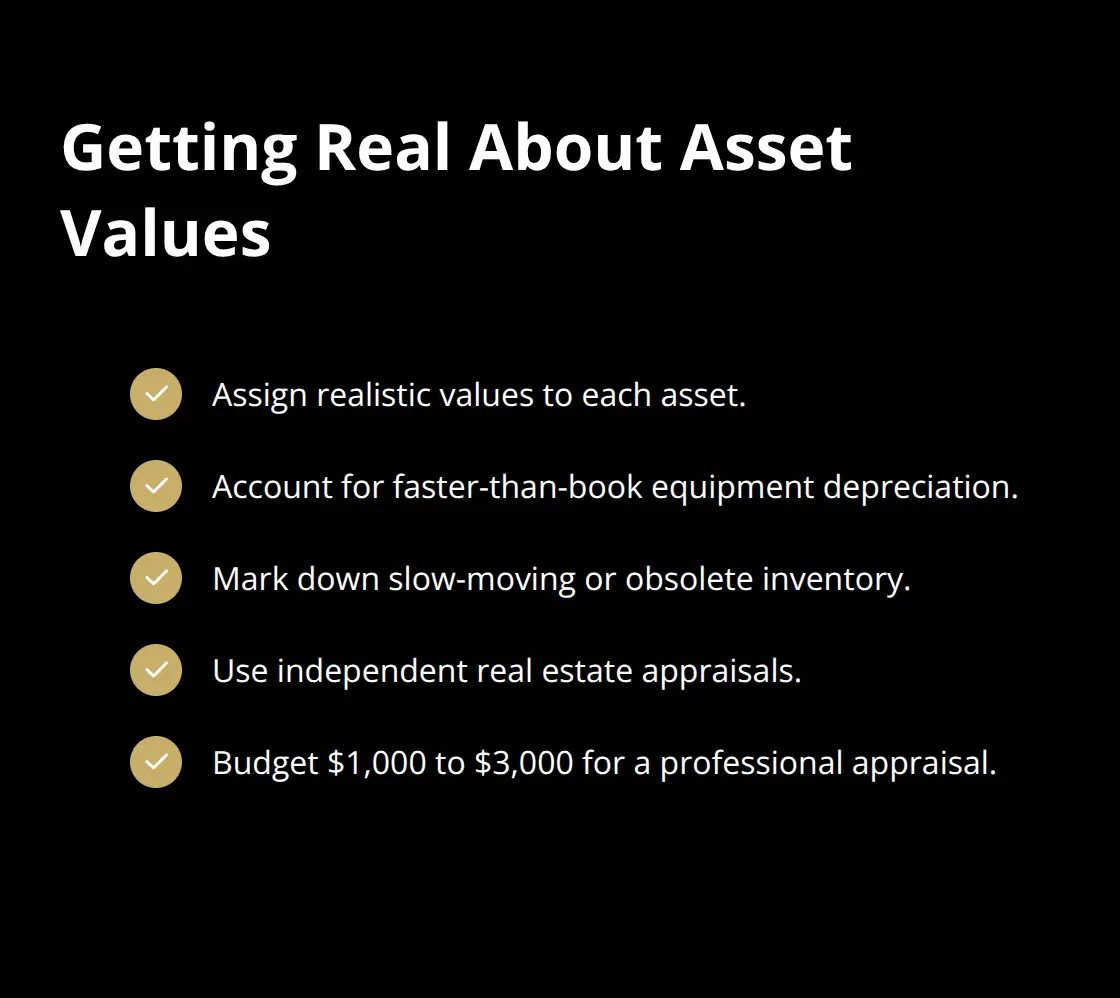
For intangible assets like customer lists or proprietary processes, consider what a competitor would pay to acquire them or estimate the cost to rebuild them from scratch. Many owners add back depreciation as part of earnings calculations, so clarify whether your accountant included or excluded it. If you’re planning to sell, a professional appraiser will value key assets; this investment typically costs $1,000 to $3,000 but provides defensible numbers that buyers and lenders will accept without pushback.
Moving Beyond Physical Assets
Asset-based valuation provides a floor value for your business, but it rarely captures the full picture. Income-based methods take a different approach-they focus on what your business actually earns rather than what it owns. This shift in perspective reveals why two businesses with identical assets can have vastly different values in the marketplace.
Income-Based Valuation Methods
SDE: The Standard for Small Businesses
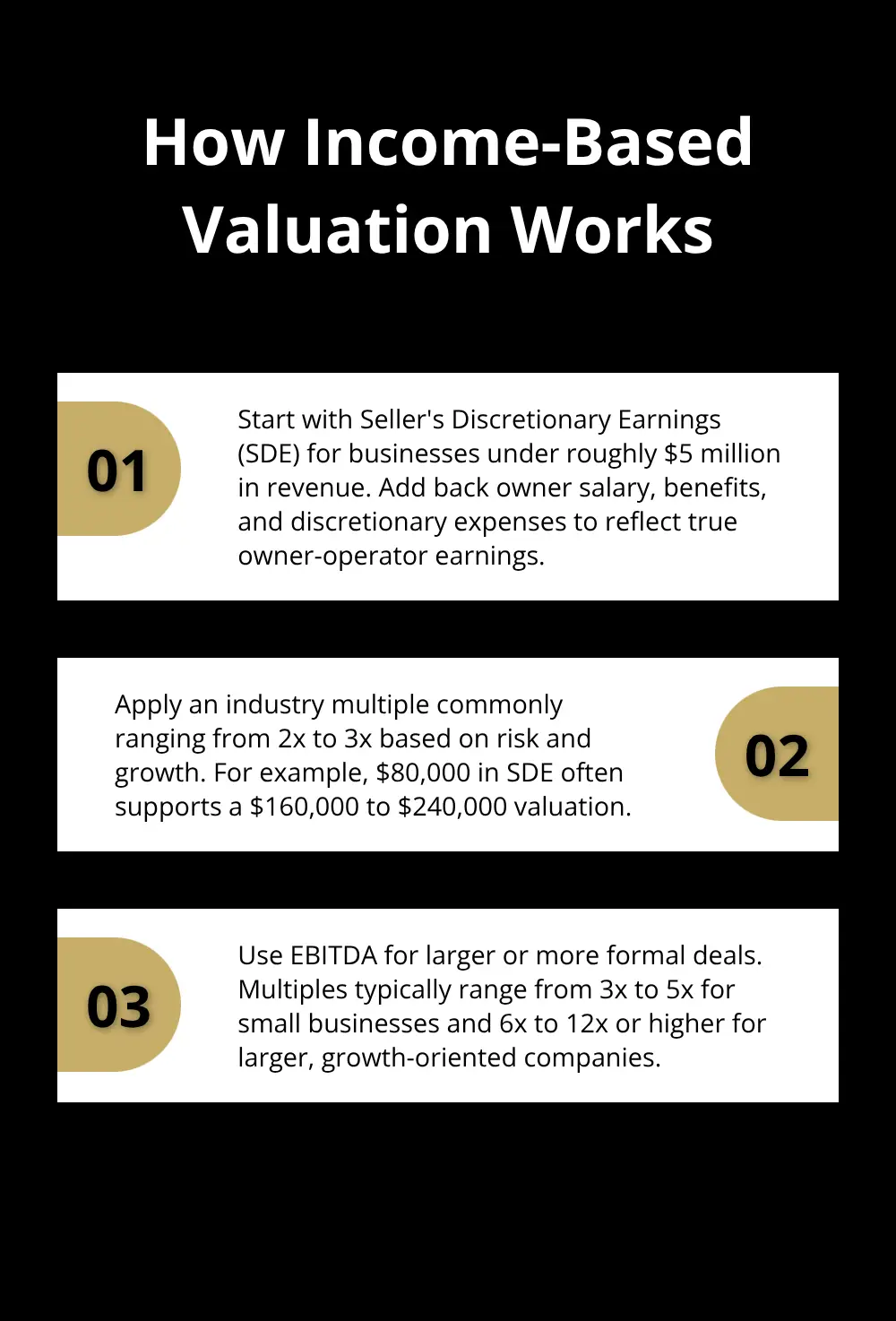
Income-based valuation shifts focus from balance sheet assets to actual earnings power. This approach recognizes a fundamental truth: a buyer cares about the money your business generates, not the equipment sitting in the warehouse. For small businesses under roughly $5 million in revenue, Seller’s Discretionary Earnings (SDE) serves as the standard starting point. SDE takes your net profit and adds back the owner’s salary, benefits, and discretionary expenses like vehicle payments or travel costs that a new owner wouldn’t necessarily maintain. This adjustment reflects true earnings available to an owner-operator.
Once you calculate SDE, you apply an industry-specific multiple, commonly ranging from 2x to 3x depending on risk and growth potential. A plumbing business with $80,000 in SDE might sell for $160,000 to $240,000 using this method. The exact multiple varies by industry; grocery stores typically command around 2.6x seller’s earnings, while other retail operations may fall lower.
Why Revenue Multiples Mislead
Revenue multiples tempt business owners because the numbers are larger and easier to calculate, but they mislead for small businesses. Two companies with identical $500,000 in annual revenue can have vastly different profitability due to cost structure and discretionary spending. One might generate $60,000 in actual owner earnings while the other produces only $20,000. Using a revenue multiple ignores this critical difference entirely, potentially overvaluing a business with thin margins.
EBITDA for Larger Operations
EBITDA-based valuation works similarly to SDE but applies primarily to larger businesses or more formal transactions. EBITDA stands for earnings before interest, taxes, depreciation, and amortization. Unlike SDE, EBITDA doesn’t adjust for owner compensation; instead, it assumes a professional management team draws a market-rate salary. For businesses generating $200,000 or more in annual EBITDA, EBITDA multiples typically range from 3x to 5x for small businesses and 6x to 12x or higher for larger, growth-oriented companies, though multiples vary significantly by industry and growth trajectory.
Discounted Cash Flow Analysis
Discounted cash flow analysis takes a different approach entirely by projecting future earnings over a specific period, typically 5 to 10 years, then discounting those future dollars to present value. This method requires assumptions about growth rates, risk levels, and a discount rate reflecting the cost of capital. A business expecting 5% annual growth with a 10% discount rate will produce a lower valuation than one with identical current earnings but 15% projected growth. The strength of discounted cash flow lies in capturing growth potential; the weakness is that small changes in your growth assumptions dramatically swing the final value.
Building Accurate Historical Data
For historical accuracy, use at least three to four years of financial statements to establish realistic trends. If your business experienced pandemic disruptions or other abnormal periods, normalize those years to reflect expected ongoing performance. A restaurant that temporarily closed in 2020 should show adjusted 2020 earnings that reflect normal operating conditions, not the actual shutdown period. Many owners make the mistake of using only the most recent year, which can distort valuation if that year was unusually strong or weak. Professional valuations cost $1,500 to $5,000 depending on complexity but provide defensible numbers for lending, investment, or sale negotiations that simple online calculators cannot match. Market-based approaches offer yet another lens for understanding your business’s value by comparing it directly to similar companies that have recently sold.
Market-Based Valuation Approaches
Why Comparable Sales Fall Short for Small Businesses
Market-based valuation compares your business to similar companies that have recently sold. The logic seems straightforward: if a pizza restaurant down the street sold for $300,000, yours should be worth roughly the same. In reality, this approach reveals why small business valuation remains far more art than science. Statistics Canada reports just over 1 million small businesses operate across Canada, yet comparable sales data remains scarce. The problem compounds because Canada has 923 distinct industries, and most small business ownership transfers happen privately without public disclosure. Unlike residential real estate, where you can find dozens of comparable home sales in your neighborhood, you might locate only two or three similar business sales in your entire region over a five-year period. Even identical-looking businesses differ dramatically in profitability, customer base quality, location appeal, and growth trajectory. Two restaurants on the same street can produce vastly different earnings due to management skill, menu positioning, or lease terms. This scarcity of reliable comparables explains why online business calculators often produce wildly inaccurate estimates-they lack the granular data needed to account for business-specific differences.
Industry Benchmarks and Rules of Thumb
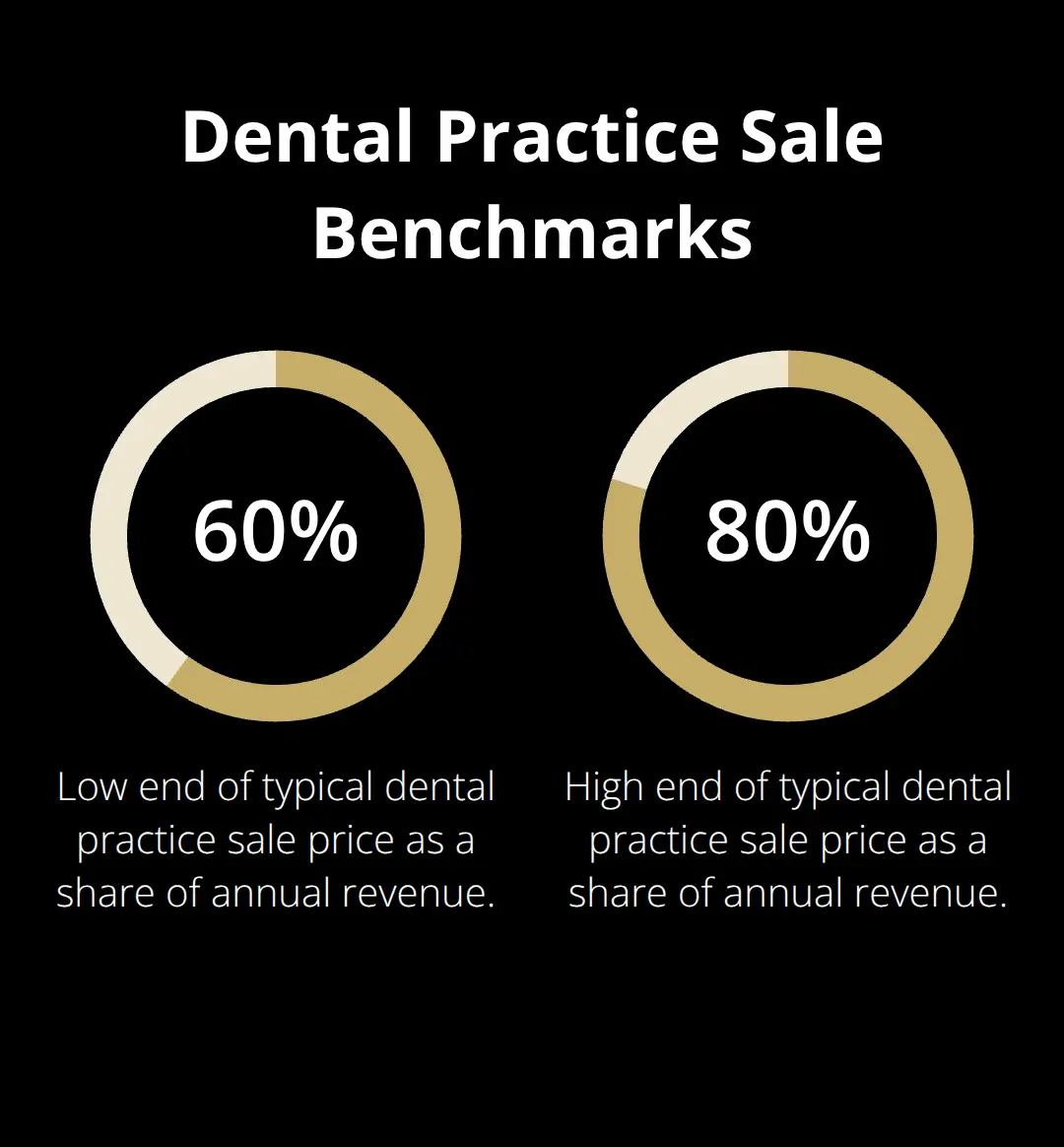
Industry benchmarks and rules of thumb fill this data gap, though imperfectly. Common multiples cite 3x to 5x EBITDA for small businesses, or 5x to 6x earnings, or 1x to 2x sales depending on the source and sector. Grocery stores typically command around 2.6x seller’s earnings according to industry research, while other retail operations may fall considerably lower. These benchmarks come from sources like the US-based Business Reference Guide and Pratt’s Stats, which compile hundreds of business types, though most remain US-centric and may not translate well to Canadian market dynamics. Rules of thumb work best for professional practices-accounting firms, dental offices, financial planning practices-where value centers on the client book and recurring revenue rather than physical assets or equipment. A dental practice selling for 60% to 80% of annual revenue reflects the value of established patient relationships and ongoing treatment plans. For most other businesses, however, rules of thumb mislead because they often emphasize revenue over profitability, potentially overvaluing a high-revenue, low-margin operation.
Adjusting for Business-Specific Factors
The critical adjustment step involves comparing your specific business against the benchmark by accounting for differences in growth rate, management quality, customer concentration, lease terms, and employee retention risk. A business with three major customers faces higher valuation risk than one with diversified revenue, justifying a lower multiple. Similarly, a business dependent on the owner’s personal involvement commands less value than one with established management systems that function without the founder. Location quality, lease duration, and tenant stability (if you own real estate) significantly impact the final valuation. A business with a five-year lease at below-market rates holds more value than one facing lease renewal at market prices. Professional valuations provide defensible market-based conclusions that simple online tools cannot, especially when comparable sales data proves limited or when you prepare for institutional financing or investment discussions.
Final Thoughts
Choosing the right business valuation method depends entirely on your situation and what you plan to do next. Asset-based valuation works when physical assets dominate your business value or when profitability is weak, while income-based methods like SDE and EBITDA multiples suit most small business owners because they reflect what buyers actually care about: earnings power. Market-based approaches provide context by showing what similar businesses have sold for, though reliable comparable data remains scarce for small operations, and the strongest valuations combine all three approaches rather than relying on a single method.
Most business owners make predictable mistakes when applying business valuation methods. Using revenue multiples instead of earnings-based approaches consistently overvalues businesses with thin margins, while relying on only one year of financial data distorts the picture when that year was unusually strong or weak. Ignoring intangible assets like customer relationships and brand reputation leaves significant value uncaptured, and failing to normalize for abnormal periods (such as pandemic disruptions) produces unrealistic numbers that lenders and buyers will reject.
Professional valuations typically cost $1,500 to $5,000 but provide numbers that hold up during financing, investment discussions, or sale negotiations far better than online calculators. If you’re preparing to sell, working with a business broker who understands your industry and local market adds credibility to your valuation while connecting you to qualified buyers, and we at Unbroker help small business owners sell with transparent pricing and expert support through our Full Service and Assisted Business Sale options.