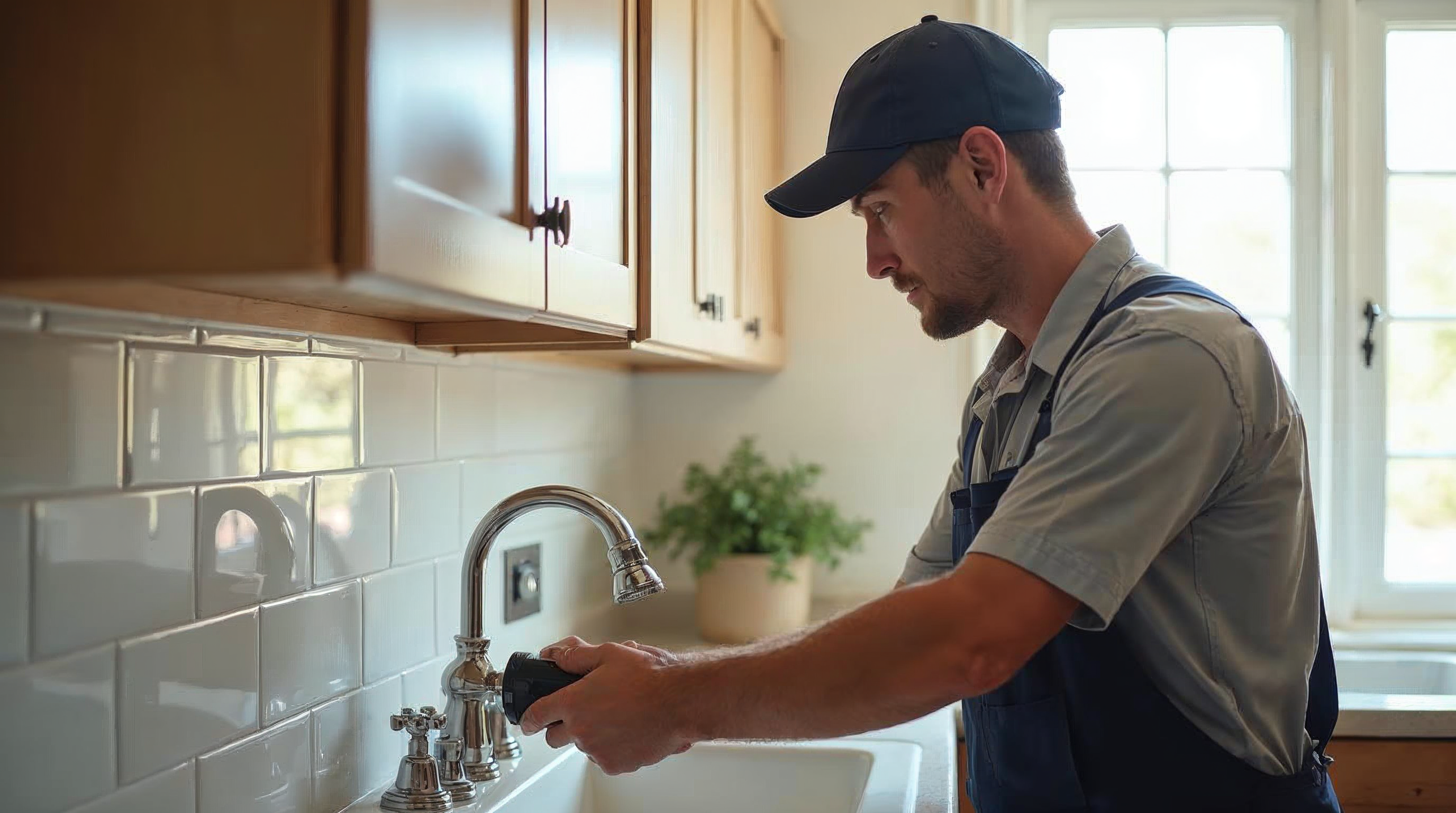
Selling a home-based business requires a different approach than selling a traditional company. The buyers, the market dynamics, and the valuation methods all shift when your office is your living room.
At Unbroker, we’ve seen countless home business owners leave money on the table because they didn’t understand what makes their operation valuable to buyers. This guide walks you through the exact strategies that work.
Why Buyers Want Home-Based Businesses
Home-based businesses attract a specific breed of buyer, and understanding what they value helps you position your sale correctly. These buyers seek lean, profitable ventures that require minimal overhead and operate from anywhere. A June 2025 U.S. Bank survey found that 37% of small-business owners plan to sell within the next 12 months, and a significant portion of those sales involve home-based operations. The appeal is straightforward: lower overhead, fewer staff complications, and the ability to scale without expensive infrastructure.
The Economics of Low Overhead
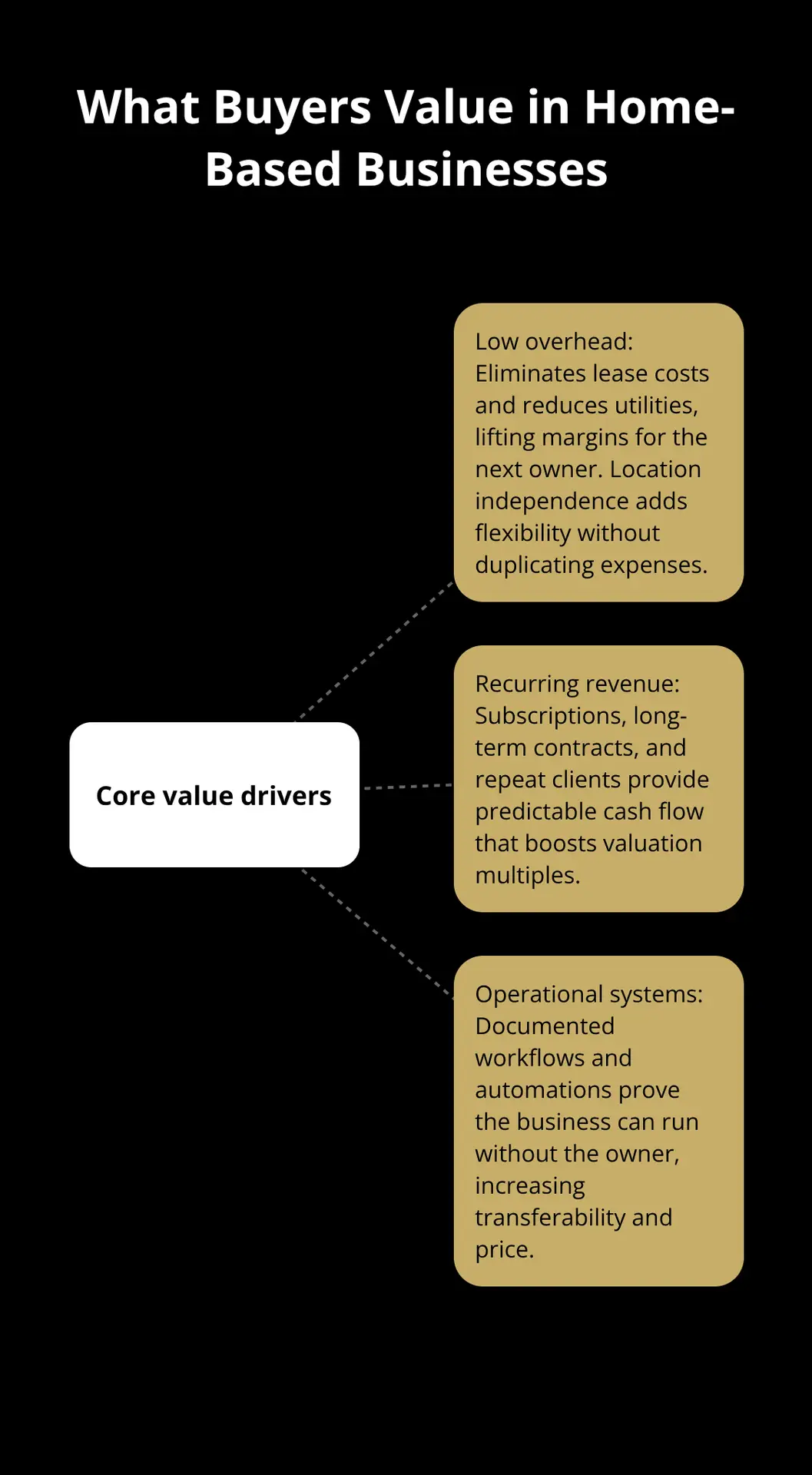
Buyers pay close attention to what stays on the balance sheet after the sale. When you run from home, you eliminate commercial lease payments, minimize utilities tied to the business, and avoid the need for a separate reception area or parking lot. These cost reductions mean higher profit margins for the next owner, which directly translates to a higher valuation multiple. If your home business generates $80,000 in annual profit with virtually no fixed location costs, a buyer sees that $80,000 as almost entirely transferable to their pocket. Compare this to a retail storefront with $80,000 profit but $24,000 in annual rent, and you understand why home-based operations command attention. The absence of location dependency also matters; the buyer can relocate the business, operate it remotely, or run multiple locations without duplicating expensive overhead.
Recurring Revenue and Established Customer Relationships
Buyers strongly prefer businesses with repeatable income over one-off project work. If your home business relies on a steady stream of recurring clients, subscription revenue, or long-term contracts, you have a significant advantage in the sale. A backlog of work or established recurring demand sells far more easily than a string of isolated projects. Document your customer retention rate, average customer lifetime value, and the percentage of revenue from repeat clients. If 60% of your revenue comes from clients you’ve worked with for more than two years, that becomes a major selling point. Buyers view this stability as proof that the business will continue generating income without your daily involvement. The more you can show that customers are locked in through contracts, recurring service schedules, or strong relationships, the higher your valuation will be. This is why you should invest time now in systematizing how you acquire and retain customers, because that system becomes an asset the buyer purchases.
Systems and Transferability
The single biggest factor determining whether a buyer sees your home business as an opportunity or a burden is whether it can run without you. If the business depends entirely on your skills, your relationships, or your daily effort, buyers will treat the purchase as buying a job rather than buying a scalable asset. Document the essential workflows now: quote templates, customer follow-up sequences, supplier lists, invoicing procedures, and the complete path from initial inquiry to paid invoice. Automation tools like Zapier or n8n can turn owner-dependent tasks into lightweight, transferable processes that require minimal ongoing attention. A practical test answers the question: if you left tomorrow, would the business continue to generate money? If the answer is no, you have work to do before selling. If the answer is yes, you’re sitting on a genuinely attractive asset. Buyers understand that some owner involvement during transition is normal, but they pay significantly more for businesses that demonstrate they can operate independently.
These three factors-low overhead, recurring revenue, and operational systems-form the foundation of what makes a home business valuable. The next step involves pricing that value correctly, which requires understanding how buyers calculate what they’re willing to pay.
What Home Businesses Actually Sell For
Understanding Seller’s Discretionary Earnings
The valuation methods that work for traditional businesses often miss what makes a home operation valuable. Seller’s Discretionary Earnings, or SDE, is the metric that matters most for home businesses. SDE starts with your pretax profit and adds back expenses that won’t continue after the sale-your salary, vehicle payments, travel costs, one-time purchases, or charitable donations. If you earned $60,000 in pretax profit last year but paid yourself $40,000 in salary plus $8,000 in vehicle expenses that a new owner wouldn’t need, your actual SDE is $108,000. This is what buyers use to calculate price.
Most home-based businesses sell for SDE multiples between 2 and 4, depending on how much the business relies on you. A business generating $80,000 in SDE with strong systems and recurring revenue might command a 3.5 multiple, valuing the business at $280,000. The same business without documented processes or customer contracts might only fetch a 2 multiple, or $160,000. The gap between these scenarios isn’t theoretical-it’s the difference between walking away with a life-changing payday and leaving six figures on the table.
How Location and Market Demand Shape Your Multiple
Your location and market demand shape which multiple applies to your specific business. A virtual assistant business in a saturated market with thousands of competitors nationwide operates differently than a specialized bookkeeping service in a region with limited qualified providers. Research what similar home businesses have sold for by checking available transaction data across industries. This research reveals the realistic range for your business type and helps you avoid overpricing or undervaluing your operation.
Quantifying Intangible Assets
Intangible assets represent 40 to 60 percent of your sale price-your brand reputation, customer relationships, documented client lists, and the systems you’ve built. If you’ve built genuine brand recognition through a strong online presence, consistent customer testimonials, or a recognizable portfolio, that becomes quantifiable value. A freelancer with 200 active clients and documented retention rates of 85 percent has more intangible asset value than a freelancer with 50 sporadic clients.
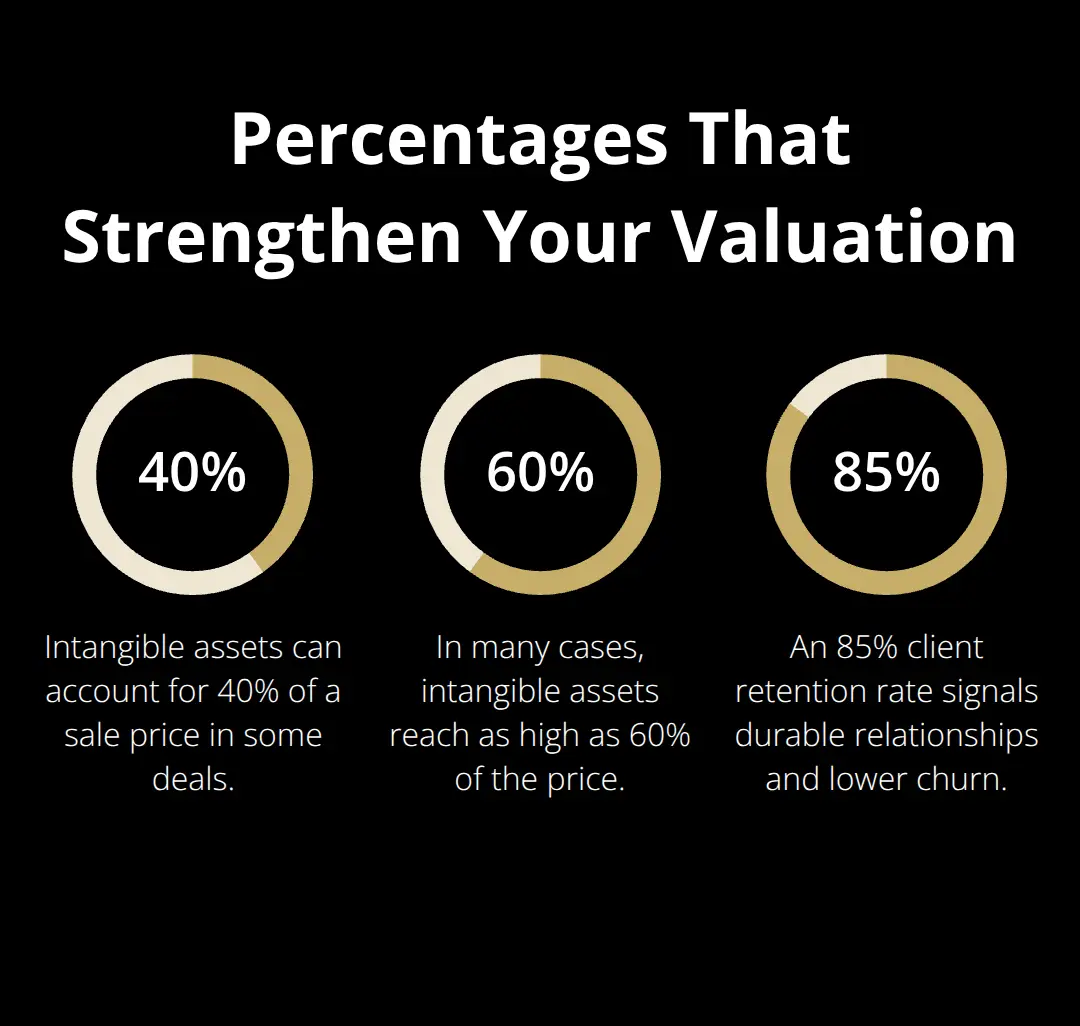
Document everything now: customer acquisition costs, average customer lifetime value, churn rates, and how long customers typically stay. These metrics directly influence what a buyer will pay. The more you can prove that your customers are sticky and your revenue is predictable, the higher your multiple climbs. Buyers pay premiums for businesses where they can confidently project next year’s income based on historical data and documented customer relationships.
Understanding your SDE and the factors that drive your multiple prepares you to market your business effectively. The next step involves presenting these numbers and systems to potential buyers in a way that justifies your asking price.
Presenting Your Home Business to Buyers
Selling a home business means competing against the perception that you’re offloading a side hustle rather than transferring a valuable asset. Buyers need to see documented proof that your operation generates real money, operates independently, and will continue performing after you step away. Start with a one-page executive summary that leads with your SDE figure and the multiple you’re asking for. If your business generates $100,000 in SDE and you’re pricing it at $320,000, that’s a 3.2 multiple-clearly stated upfront. Include your average customer lifetime value, retention rate, and the percentage of revenue from repeat clients. If 70 percent of your revenue comes from clients who’ve been with you for over a year, that number belongs in the first section where a buyer will see it immediately.
Lead with Numbers That Matter
Most buyers spend less than five minutes on initial materials, so front-load the strongest numbers. Follow the executive summary with your documented systems: quote templates, client onboarding checklists, invoicing workflows, and customer communication sequences. These documents prove that someone other than you can execute the work. Include screenshots of your automation setup if you use tools like Zapier to handle follow-ups or scheduling. Buyers understand that all home businesses require some owner involvement initially, but they’ll pay significantly more if they can visualize the transition happening smoothly.
Build Trust Through Customer Documentation
Create a customer list showing names, contract values, and relationship length-anonymized if needed for confidentiality. If you have 40 active clients with an average annual value of $2,500 and most contracts renew automatically, that’s a $100,000 revenue foundation that a buyer can see clearly. This documentation transforms abstract claims about customer loyalty into concrete evidence that revenue will persist after the sale.
Showcase Your Digital Presence
Digital presence matters more for home businesses than traditional brick-and-mortar operations because it’s the only storefront potential buyers can visit. Your website should prominently display client testimonials, case studies with specific results, and your service process broken down into clear steps. If you’re selling a virtual assistant business, show before-and-after productivity metrics from client work. If you offer bookkeeping services, display screenshots of organized financial dashboards you’ve created. Buyers want to see the actual output of your work, not just descriptions of what you do.
Post consistently on LinkedIn or Instagram in the months before selling-not to promote the sale, but to demonstrate that you’ve built an audience and credibility. A freelancer with 2,000 LinkedIn followers and regular engagement on posts has tangible proof of market presence that transfers value to a buyer. Include your social media follower counts and average engagement rates in your marketing materials.
Organize Financial Records for Due Diligence
When presenting to potential buyers, provide a clean financial package: tax returns, P&L statements, and a month-by-month breakdown of the last 12 months showing revenue consistency. Highlight any growth trend, even modest ones. A business growing 8 percent year-over-year signals stability to buyers.
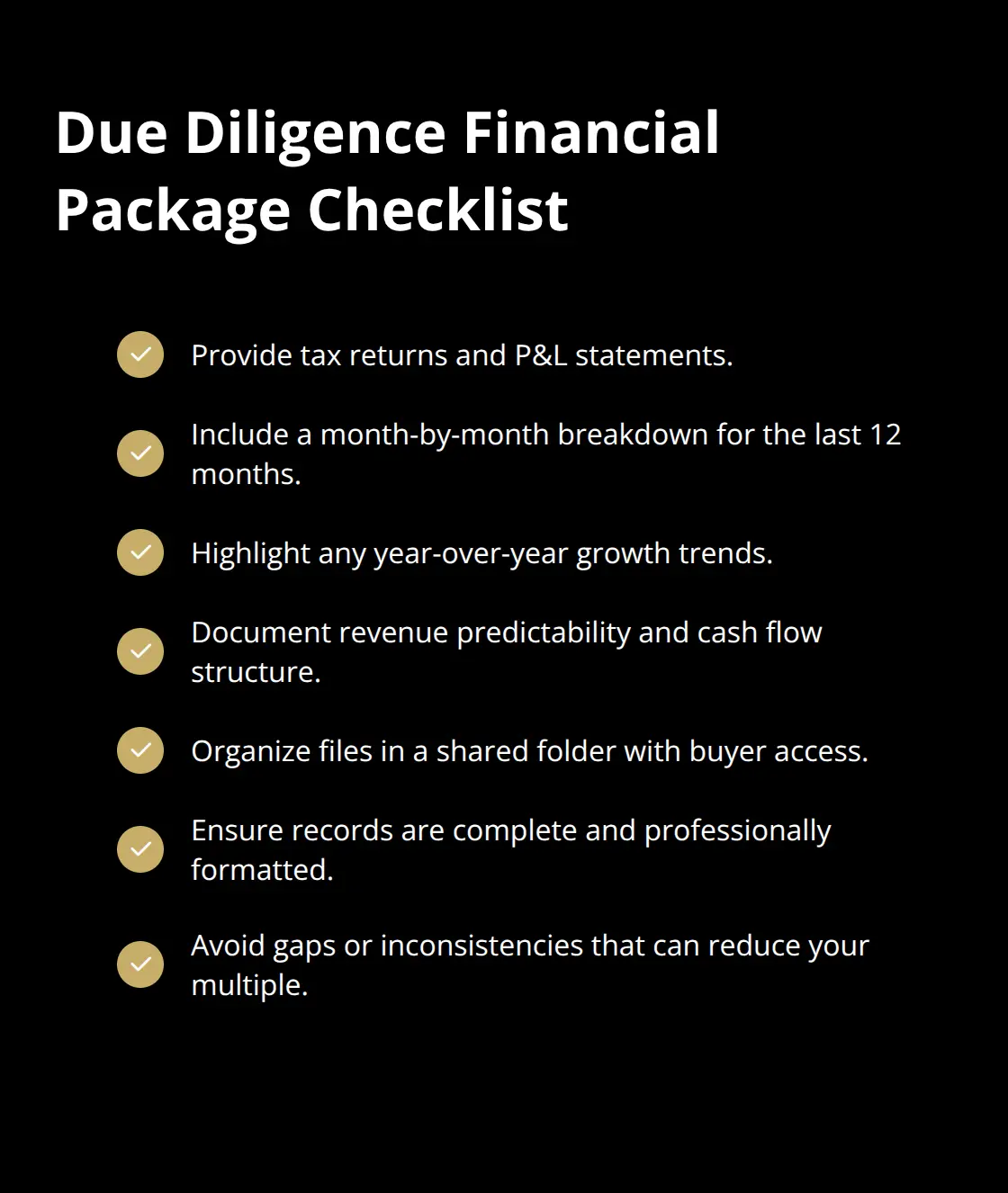
Key factors that impact your business valuation include revenue predictability and strong cash flow structures. Keep all documentation in a shared folder that buyers can access during due diligence-organized, professional, and complete. Disorganized or missing records immediately signal to buyers that your business isn’t as systematic as you claim, which tanks your multiple faster than any single factor.
Final Thoughts
Selling a home-based business sale requires preparation, but the payoff justifies the effort. The strategies outlined here-documenting your systems, quantifying your customer relationships, and presenting your financials clearly-directly impact how much a buyer will pay. Owners who invest time in these areas consistently achieve higher multiples and faster sales.
Calculate your actual SDE by adding back owner expenses that won’t continue after the sale. Document your three strongest assets: your customer list with retention data, your operational workflows, and your financial records for the past three years. Audit your digital presence and ensure your website and social media reflect the professional operation you’re selling, not a side project.
The ideal buyer for a home-based operation seeks to acquire a turnkey system rather than build from scratch, or an entrepreneur looking to add your revenue stream to an existing operation. Platforms like Unbroker offer transparent, low-cost alternatives that connect you with qualified buyers while keeping more money in your pocket. Your documented systems, financial clarity, and customer relationships are what actually sell the business, regardless of which channel you use.