Determining the value of your small business is a critical step for growth, investment, or sale. At Unbroker, we understand the complexities involved in small business valuation and its importance for informed decision-making.
This guide will walk you through the key methods, factors, and steps to accurately assess your company’s worth. Whether you’re a seasoned entrepreneur or a first-time business owner, mastering these valuation techniques will give you a competitive edge in the market.
How Small Business Valuation Methods Work
Small business valuation requires a tailored approach. Let’s explore the most common methods and their real-world applications.
The Asset-Based Approach: Tangible Value
This method focuses on the tangible assets of your business. It’s straightforward but often underestimates a company’s true value. Asset-Based Approach also includes intangible asset valuation, which is crucial for measuring business value in M&A and financial reporting.
The Market Approach: Comparative Analysis
This method compares your business to similar ones that have recently sold. It’s akin to comparing houses in a neighborhood. The Market Approach estimates the value of a business, asset, or security by comparing it to recent sales of similar assets. However, finding truly comparable businesses can prove challenging, especially in niche markets.
The Income Approach: Future Earnings Potential
The income approach considers your business’s ability to generate future profits. It’s particularly useful for service-based businesses. A consulting firm with steady clients and $200,000 annual profit might be valued at 2-3 times this amount, considering its growth potential and market stability.
The Discounted Cash Flow Method: Time Value of Money
This sophisticated approach calculates the present value of expected future cash flows. The Discounted Cash Flow method uses a projected discount rate to calculate the present value of expected future cash flows. If the DCF is higher than the current cost of the investment, it may represent a good opportunity.
Choosing the Right Method
Each method has its strengths and weaknesses. A combination of these approaches often yields the fairest valuation. The key is to select the method that best reflects your business’s unique characteristics and market position.
Valuation blends art and science. While these methods provide a framework, factors like industry trends, economic conditions, and your business’s unique selling propositions all play vital roles in determining its true worth.
As we move forward, we’ll examine the key factors that significantly impact small business valuation, providing you with a more comprehensive understanding of this complex process.
What Drives Small Business Value?
Financial Performance: The Bottom Line
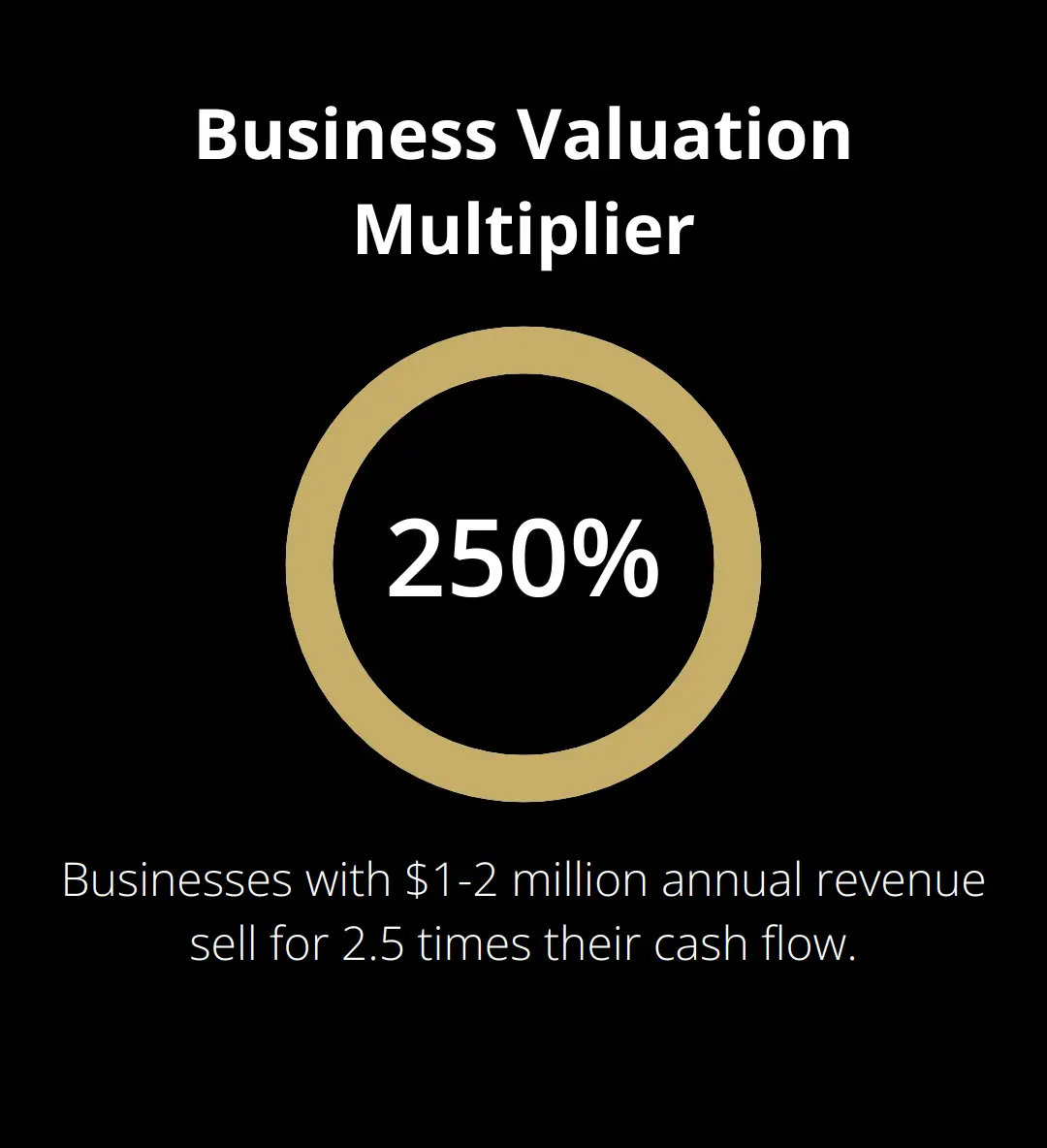
Financial performance forms the foundation of business valuation. Investors seek a history of profitability and growth. A 2024 BizBuySell study revealed businesses with annual revenues between $1 million and $2 million sold for an average of 2.5 times their cash flow. This multiplier increases for businesses that show consistent year-over-year growth.
To increase your valuation:
- Keep detailed financial records
- Show consistent revenue growth
- Demonstrate strong profit margins
- Create a clear strategy for future financial projections
Market Position: Standing Out from the Crowd
Your business’s market position significantly affects its value. A company with a unique product or service in a growing market will command a higher valuation than one in a saturated or declining industry.
For example, tech startups in emerging fields (like artificial intelligence or renewable energy) often see valuations 10-15 times their annual revenue, according to recent PitchBook data. In contrast, traditional retail businesses might only see multiples of 0.3 to 0.5 times annual revenue.
To improve your market position:
- Identify and capitalize on your unique selling propositions
- Stay ahead of industry trends
- Invest in innovation and R&D
- Build strong barriers to entry for competitors
Intangible Assets: The Hidden Value
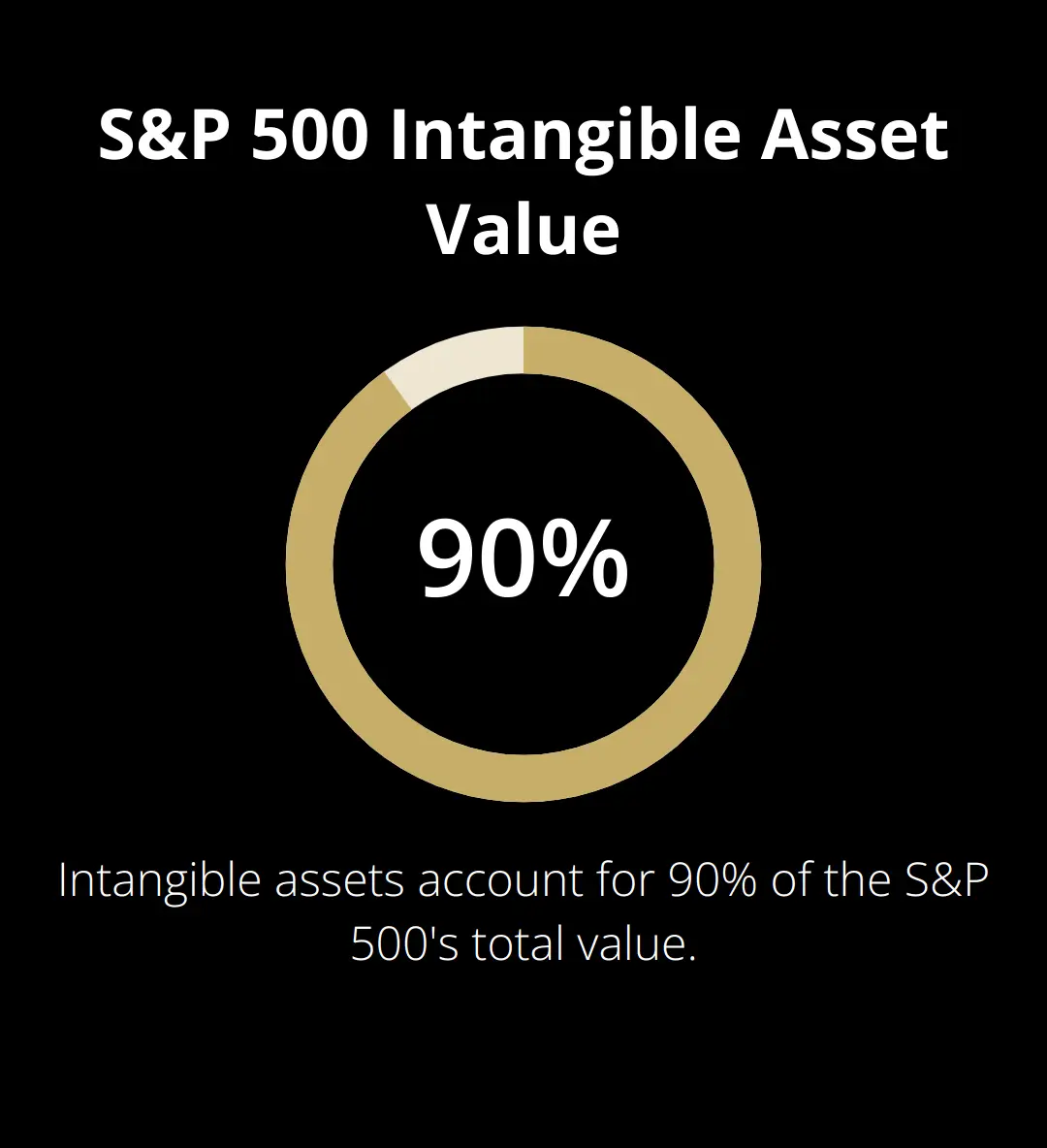
The power of intangible assets should not be underestimated. These can include patents, trademarks, copyrights, and even your company’s reputation. An Ocean Tomo study found that intangible assets account for 90% of the S&P 500’s total value.
While valuing intangibles presents challenges, they often provide a competitive edge that translates into higher valuations. For instance, a software company with proprietary algorithms might see a valuation boost of 20-30% compared to similar companies without such intellectual property.
To leverage your intangible assets:
- Protect your intellectual property through patents and trademarks
- Invest in building a strong brand reputation
- Develop and document proprietary processes or technologies
- Cultivate a positive company culture
Customer Base and Relationships
A strong, loyal customer base adds significant value to your business. Repeat customers, long-term contracts, and high customer satisfaction rates all contribute to a higher valuation. According to Harvard Business Review, increasing customer retention rates by 5% increases profits by 25% to 95%.
To enhance your customer relationships:
- Implement customer loyalty programs
- Provide exceptional customer service
- Regularly gather and act on customer feedback
- Develop strategies for customer acquisition and retention
Management Team and Employees
The strength of your management team and workforce plays a vital role in business valuation. Investors value companies with experienced leadership and skilled employees. A study by Deloitte found that companies with strong leadership are 2.3 times more likely to outperform their peers financially.
To bolster your team’s value:
- Invest in employee training and development
- Create clear succession plans for key positions
- Foster a culture of innovation and continuous improvement
- Implement employee retention strategies
These factors intertwine to create a comprehensive picture of your business’s value. As we move to the next section, we’ll guide you through the practical steps of determining your small business’s worth, empowering you to make informed decisions about your company’s future.
How to Value Your Small Business
Gather Your Financial Documents
Start your valuation process with a thorough collection of financial records. Financial records and market conditions significantly impact your business’s value. Collect at least three years of tax returns, profit and loss statements, and balance sheets. Include your cash flow statements, which provide essential insights into your business’s financial health.
Pro tip: Use accounting software (such as QuickBooks or Xero) to maintain organized financials. These tools generate valuation-ready reports at the click of a button.
Analyze Your Market Position
Understand your place in the market. Research industry reports, study your competitors, and identify your unique selling propositions. The IBISWorld database offers excellent industry-specific data and trends.
For e-commerce businesses, focus on metrics like average order value, customer acquisition cost, and lifetime value. Compare these to industry benchmarks. Outperforming industry averages can significantly boost your valuation.
Calculate Adjusted Net Profit
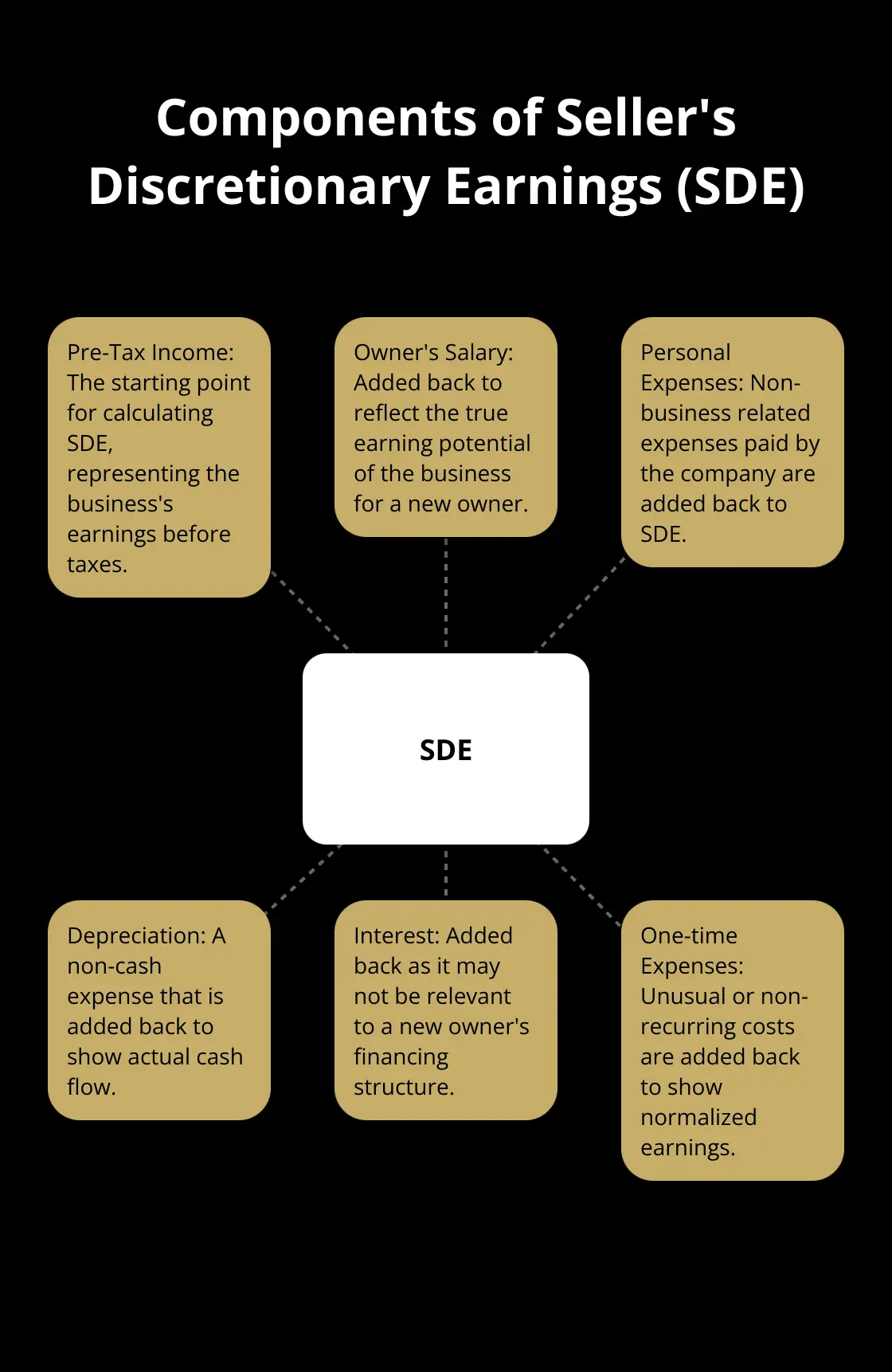
Your adjusted net profit (often called Seller’s Discretionary Earnings or SDE) plays a key role in small business valuation. Start with your pre-tax income, then add back owner’s salary, personal expenses, and one-time costs.
Use this formula:Pre-Tax Income + Owner’s Salary + Personal Expenses + Depreciation + Interest + One-time Expenses = SDE
Select the Right Valuation Method
Different businesses require different valuation methods. Asset-heavy businesses (like manufacturing companies) might benefit from the asset-based approach. Service-based businesses often suit the income approach better.
A combination of methods often provides a more comprehensive valuation. This multi-faceted approach offers a range of values, giving you a more realistic picture of your business’s worth.
Consider Professional Valuation Services
While DIY valuation is possible, professional services offer valuable insights. They bring industry expertise and objectivity to the process. Using a CVA can provide confidence in the valuation of your business, whether you’re planning to sell, seeking financing, or making strategic decisions.
For professional services, look for certified valuation analysts. These experts navigate complex valuation scenarios and provide detailed reports that stand up to scrutiny from potential buyers or investors.
Regular valuations help you track progress and make informed decisions about your company’s future. Follow these steps to maximize your company’s worth and make strategic decisions for its future.
Final Thoughts
Small business valuation empowers owners to make informed decisions, attract investors, and negotiate fair deals. The process requires a blend of objective analysis and industry insight, often benefiting from a combination of valuation methods. Owners should organize financial documents, analyze market position, and calculate adjusted net profit to start the valuation process.
Professional help can provide valuable expertise for complex valuations. Regular assessments guide strategic decisions and track business growth over time. Small business valuation serves as a roadmap for a company’s future, equipping entrepreneurs to navigate challenges and seize opportunities.
We at Unbroker offer transparent, cost-effective solutions for business sales. Our platform streamlines the selling process, providing access to a wide network of potential buyers without high brokerage fees. Small business valuation sets the foundation for your next big move, whether you plan for growth, seek investment, or prepare for a sale.