Selling your business is one of the biggest financial decisions you’ll make. Most owners wait until they’re ready to list before thinking about preparation-and that’s a mistake that costs them money and time.
We at Unbroker know that pre-sale exit planning done right can add hundreds of thousands to your final sale price. The groundwork you lay now determines how attractive your business looks to buyers and how quickly you close the deal.
Get Your Financial House in Order Before Buyers Look
Your financial statements are the first thing serious buyers examine, and they shape every decision that follows. Most owners underestimate how much sloppy bookkeeping costs them. The most common red flag buyers encounter is commingled personal and business expenses, which immediately creates doubt about the accuracy of your numbers and can reduce your sale price by 10-20 percent or more.
Separate personal from business finances
Before you list, separate personal from business finances by removing owner draws, family member salaries who don’t contribute to the business, club memberships, home office costs, and travel that has no business purpose. Once cleaned up, your true profitability emerges, and buyers can see what they’re actually purchasing.
Switch to accrual accounting if you’re still using cash accounting. Buyers expect this standard, and it gives a clearer picture of revenue and obligations.
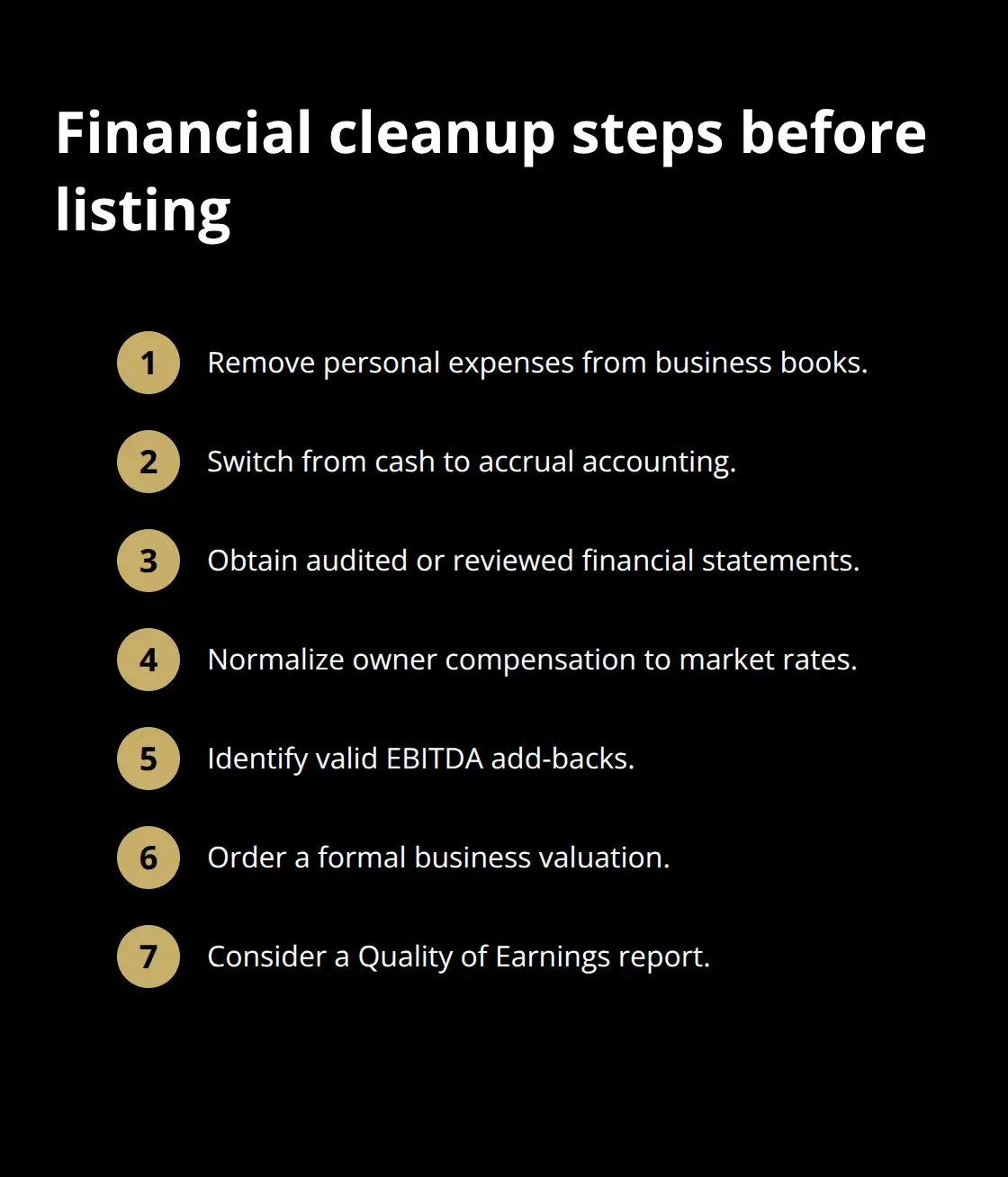
Audited financial statements carry significant weight because they provide third-party verification that reduces buyer skepticism. If an audit isn’t feasible, at least have reviewed statements prepared by a CPA.
Normalize your compensation and identify add-backs
Owner compensation often distorts how profitable a business actually appears. If you pay yourself $200,000 annually but the market rate for your role is $120,000, buyers will adjust downward when evaluating earnings. Normalize your compensation to what a replacement would cost so buyers can estimate true ongoing profitability.
Then identify EBITDA add-backs, which are one-time or non-recurring expenses that shouldn’t factor into ongoing earnings. A concrete example shows the math: if you add back $50,000 in one-time professional fees for the sale itself, and buyers value your business at a 5x EBITDA multiple, that adjustment alone increases your sale price by $250,000. Other common add-backs include excess owner salary, family member payroll, and personal expenses run through the company.
Strengthen your financial credibility
Quality of Earnings reports compile a single document that presents the accuracy, quality, and sustainability of a company’s earnings. These reports persuade institutional and private equity buyers who rely heavily on this analysis. Get a formal business valuation done before listing. This identifies what your company is actually worth and helps guide which exit path makes sense for your goals.
Buyers will conduct their own valuation, but knowing your baseline prevents surprises and positions you to negotiate confidently when offers arrive. Clean financials also accelerate due diligence and reduce the likelihood of post-closing disputes. With your numbers in order, you’re ready to examine the operational systems that buyers evaluate alongside your financial performance.
How to Organize Your Operations for a Successful Sale
Buyers don’t just evaluate your financial statements-they examine how smoothly your business actually runs. A company with clean books but chaotic operations will face skepticism and lower valuations. Operational readiness means documenting the systems, processes, and legal structure that keep your business functioning.
Review Critical Agreements and Change-of-Control Provisions
Start with your legal documents and contracts. You need to review all critical agreements to identify change-of-control provisions that could block a sale or require buyer approval. Bank loan covenants frequently contain clauses that trigger when ownership transfers, so contact your lender now to understand what happens at closing. Shareholder agreements, vendor contracts, and customer agreements should all be reviewed for similar restrictions.
Organize these documents in a centralized location-digital format works best-so you can provide them quickly during due diligence without scrambling. This preparation prevents surprises that could derail negotiations or reduce your sale price.
Document Key Processes and Protect Intellectual Property
Most owners operate intuitively without written procedures, which means the business depends heavily on their personal knowledge. You need to create standard operating procedures for your core business functions: sales, customer service, fulfillment, and financial management. These don’t need to be elaborate-one to two pages per process is sufficient. Include decision-making frameworks, approval authorities, and escalation paths. This documentation proves to buyers that your business can function without you, which directly impacts valuation.
Intellectual property protection matters more than most owners realize. If you’ve developed proprietary software, processes, or methods, you should document them and consider filing for trademark or patent protection if you haven’t already. Buyers conduct IP due diligence to confirm ownership and assess litigation risk. A business with unprotected intellectual property faces valuation discounts because buyers worry about legal exposure or inability to defend competitive advantages.
Eliminate Operational Inefficiencies Before Listing
You should streamline your operations before listing by identifying and eliminating inefficiencies. Buyers evaluate operational metrics closely-customer acquisition cost, retention rates, inventory turnover, and production quality all influence valuation multiples. If your operation carries excess inventory, idle capacity, or quality issues, fix these now rather than hoping buyers overlook them.
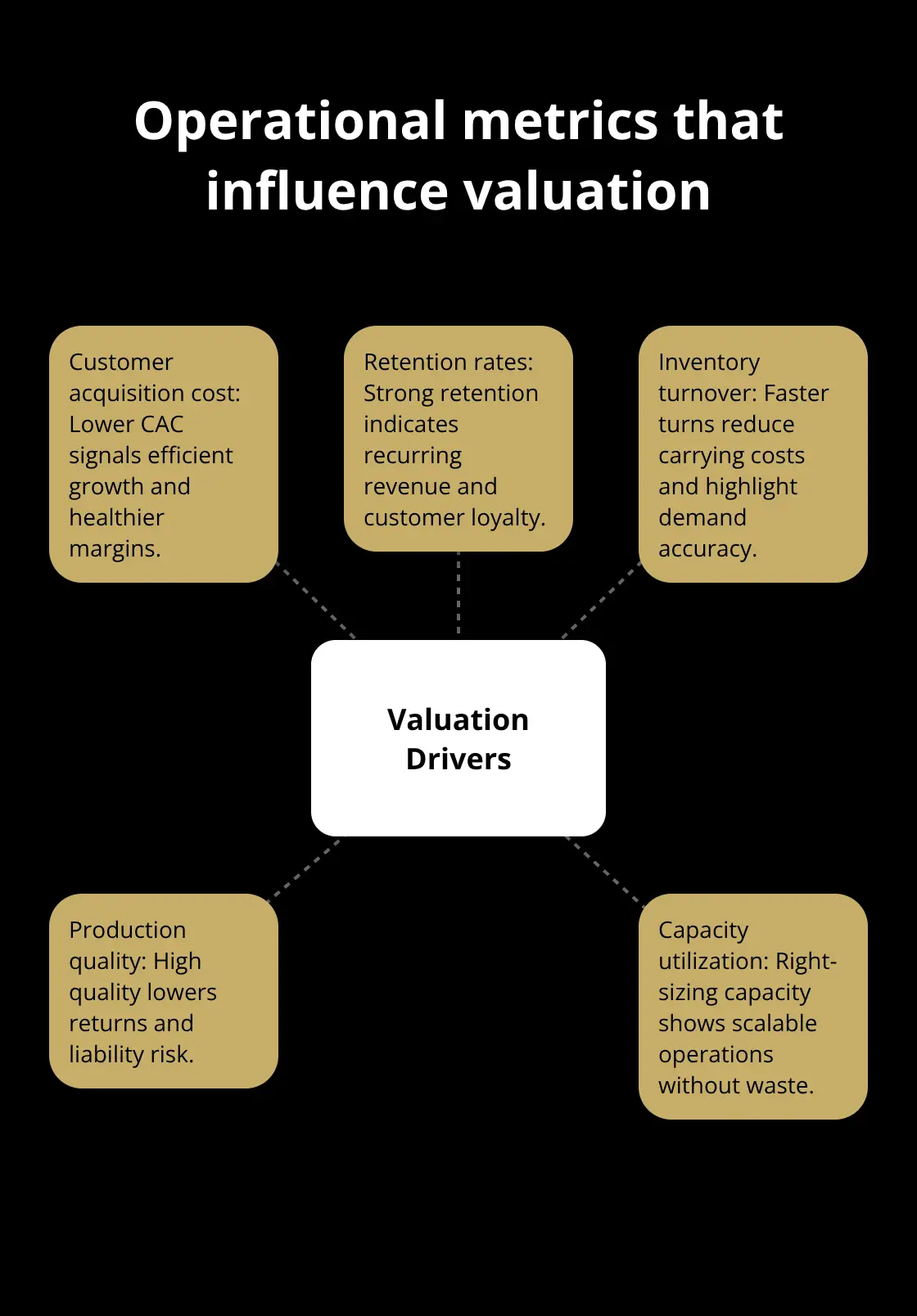
Excess inventory ties up cash and suggests either poor demand forecasting or weak sales execution, both red flags. Idle capacity signals the business isn’t scaling efficiently. Quality problems create liability and customer relationship risks. These operational weaknesses typically result in valuation discounts.
Build and Document a Strong Management Team
You need to build a strong management team and document their roles and compensation. Buyers worry about key person risk-whether the business survives if a critical employee leaves. Identify your top three to five employees and ensure their compensation aligns with market rates and their contributions. If key people are underpaid relative to their responsibilities, bring them to market rate before the sale. This prevents them from leaving when uncertainty hits during the sales process.
Create an organizational chart showing reporting relationships and responsibilities. This clarity reassures buyers that your business has professional management systems, not just owner-driven operations. A well-organized business with documented processes, clean legal agreements, and a capable management team sells faster and commands higher valuations than one where everything exists in the owner’s head. With your operations in order, you’re ready to focus on how you present your business to potential buyers and the marketing strategies that attract the right offers.
How to Present Your Business to the Right Buyers
You’ve cleaned your financials and strengthened your operations. Now you need to present your business in a way that attracts serious, qualified buyers and protects your confidentiality. Most owners treat the sales process like a real estate listing, posting basic information and hoping someone responds. That approach leaves money on the table. Your business profile needs to tell a specific story about why a buyer should care, backed by concrete numbers that demonstrate value and growth potential.
Lead with Your Strongest Financial Metrics
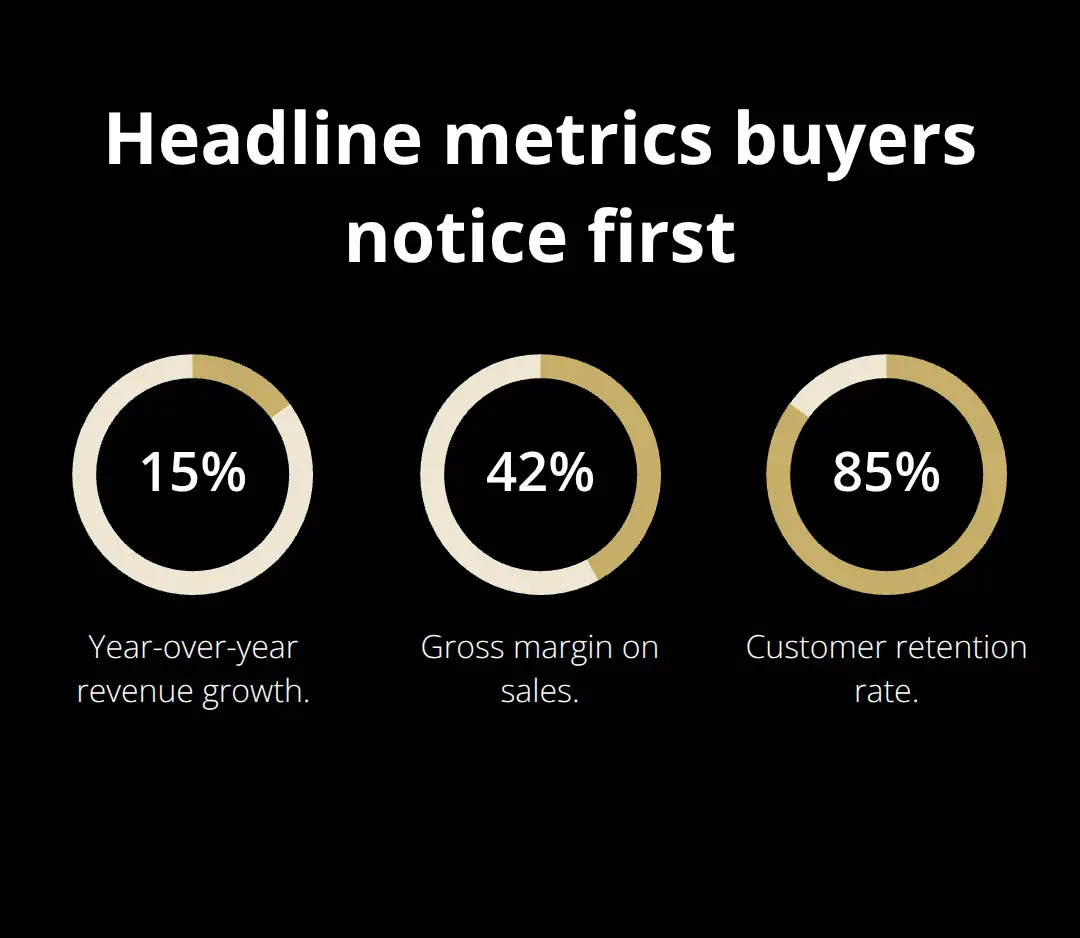
Open your business summary with revenue, EBITDA, growth rate, and customer retention numbers rather than company history or mission statements. A buyer scanning dozens of business profiles will skip generic descriptions and stop on specific performance data. If your revenue grew 15 percent year-over-year, state that immediately. If your gross margin is 42 percent, lead with it. If customer retention runs 85 percent, that’s a headline fact because it signals recurring revenue and business stability.
Follow these metrics with a brief explanation of what your business does, your market position, and why customers choose you over competitors. Buyers want to understand your competitive advantage quickly, not read paragraphs about your company’s journey. Include your customer concentration to be transparent about risk. If your top three customers represent 40 percent of revenue, disclose that upfront rather than letting buyers discover it during due diligence and lose confidence. Transparency builds trust and prevents deal-killing surprises later.
List your key employees by title and years with the company, emphasizing continuity and expertise. Detail your major customer types and industries served to help buyers assess market diversification. Include your facility details, equipment condition, and any recent capital investments. Buyers want to know what they’re inheriting operationally.
Target Qualified Buyers Through Strategic Marketing
Marketing your business to qualified buyers requires moving beyond generic online listings. Targeted approaches matter because the average business for sale receives inquiries from 30 to 50 potential buyers, but most lack serious capital or genuine interest. Your marketing should use multiple channels to reach institutional buyers, private equity firms, and strategic acquirers.
Create a professional data room that centralizes all documents buyers request during due diligence: audited financials, tax returns, customer contracts, employee agreements, intellectual property documentation, and equipment lists. Organize it logically so buyers navigate without confusion. Digital data rooms let you track which documents buyers access and how long they spend reviewing specific sections, giving you insight into their level of serious interest.
Never post your business on public marketplaces without professional guidance because it creates negotiating disadvantages and attracts unqualified prospects. Control the narrative by managing what information gets shared and when.
Protect Confidentiality and Screen Prospects Carefully
Confidentiality matters enormously during the sales process because employees, customers, and suppliers will hear rumors and panic if they learn the business is for sale before you’re ready to manage that transition. Require confidentiality agreements before sharing sensitive financial information with any prospective buyer. This legally binds them to keep your sale confidential and gives you recourse if they breach the agreement.
Screen buyers carefully before granting access to detailed financial information. Ask about their acquisition experience, capital availability, and timeline. A buyer with vague answers or a flexible timeline often lacks serious intent. Qualified buyers come prepared with specific questions about your industry, customer relationships, and operational challenges. They’ve done homework and can articulate why your business fits their acquisition strategy. Those conversations indicate genuine interest worth pursuing.
Build Credibility and Frame Growth Opportunity
Build credibility with prospects by responding promptly to inquiries and providing information in a professional format. Slow responses or disorganized documentation create doubt about your professionalism and business quality. If a buyer feels friction in the sales process, they’ll assume friction exists throughout your operations. Speed and organization signal that your business is well-managed and worth their time.
Frame your business narrative around growth opportunity rather than just current performance. Show buyers where revenue can expand, what operational efficiencies are available, and how your market is evolving. Institutional buyers specifically look for margin expansion potential and revenue synergies they can capture post-acquisition. A business with $2 million in EBITDA but clear pathways to $3 million attracts more interest than one with flat growth, even if current performance is identical.
Final Thoughts
Pre-sale exit planning determines your sale price and closing speed far more than most owners realize. Owners who skip these preparation steps typically leave 10 to 20 percent on the table-hundreds of thousands of dollars in lost proceeds. Clean financials with documented add-backs can increase your valuation by $250,000 or more on a modest EBITDA multiple, while organized operations eliminate buyer skepticism about key person risk and a professional business profile attracts qualified buyers instead of tire-kickers.
Starting your pre-sale exit planning early gives you flexibility to fix problems without pressure. If you discover a change-of-control clause in a critical contract, you have time to negotiate modifications rather than scrambling weeks before listing. If your management team needs strengthening or your financials need cleaning, you can address these issues methodically instead of rushing through a messy process.
Assess where your business stands right now and identify which preparation areas need the most attention. We at Unbroker help business owners navigate this process with transparent guidance and modern tools that eliminate unnecessary complexity, and our platform provides the resources you need to prepare confidently and connect with serious buyers without excessive fees.