Real estate transactions move at a crawl. Document delays, coordination chaos, and payment bottlenecks add weeks to closings that should take days.
We at Unbroker built an efficient transaction platform to fix this. Automated workflows, real-time tracking, and integrated communication cut friction at every stage. The result: faster closings and happier clients.
What Makes a Transaction Platform Actually Work
Documents, Visibility, and Communication Form the Foundation
An efficient transaction platform rests on three pillars: how fast documents move, whether everyone knows what’s happening, and how seamlessly people can talk to each other. A residential closing involves 180+ pages of documents, coordination among 10+ parties, and dozens of deadlines, according to the National Association of Realtors.
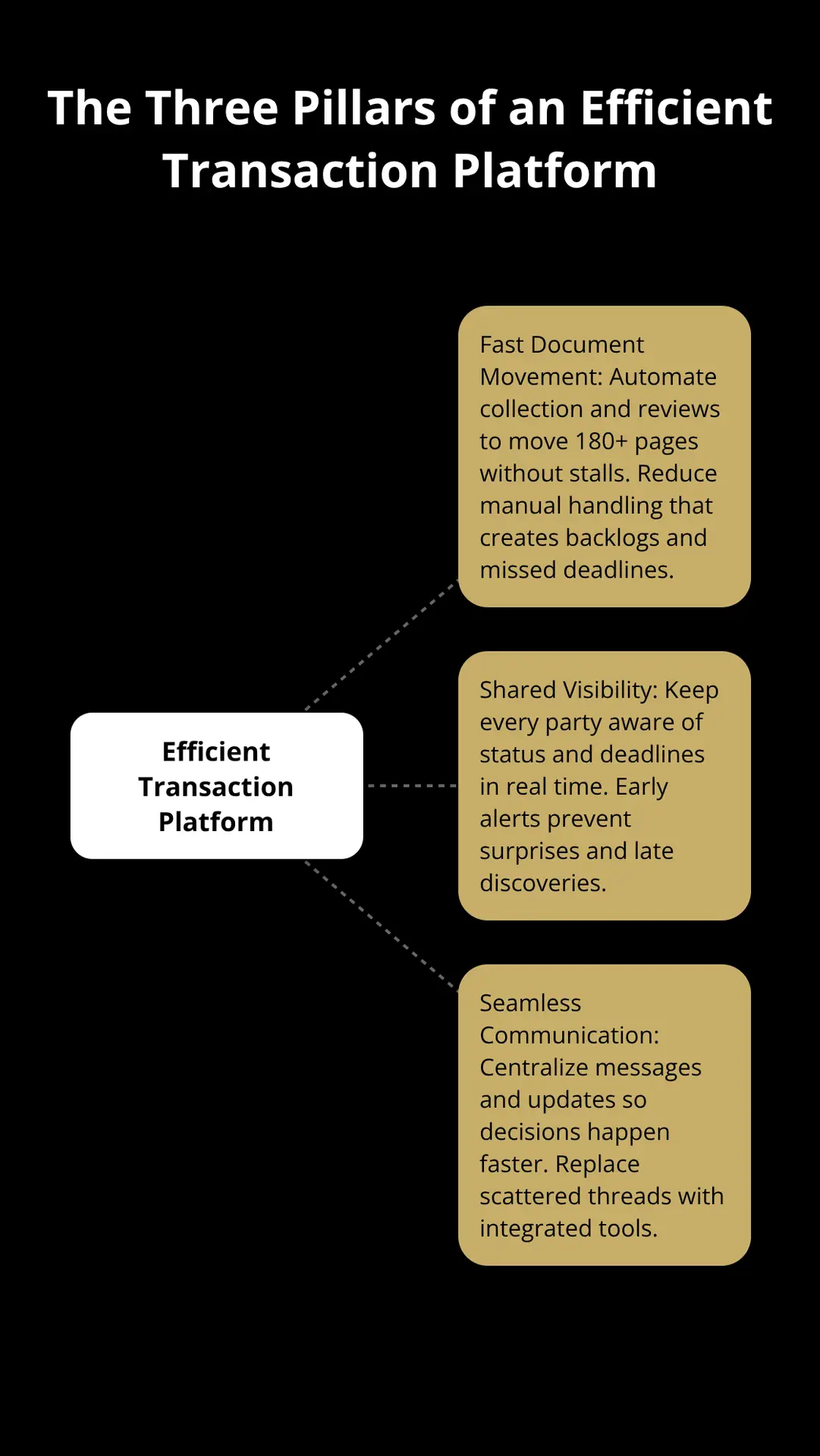
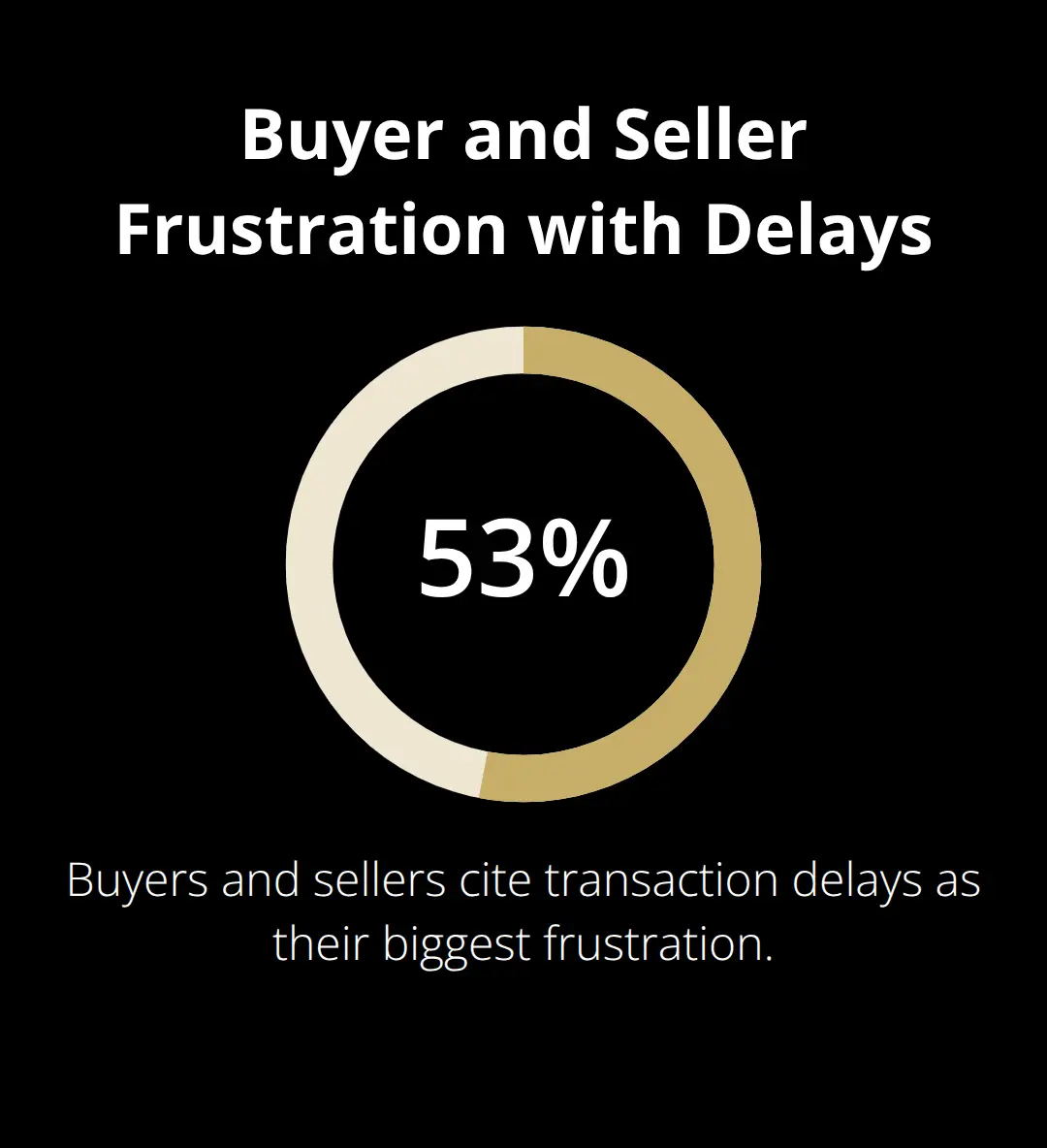
Without automation and visibility, you manage chaos with spreadsheets and email threads. The National Association of Realtors found that 53% of buyers and sellers say transaction delays are their biggest frustration-the market is ready for better solutions.
E-Signatures Remove Legal and Practical Barriers
E-signatures and the ESIGN Act give electronic signatures the same legal weight as ink signatures, so you move past wet-ink bottlenecks entirely. SMS-based e-signatures accelerate this further by letting signers complete documents via text, dramatically shortening turnaround times compared to traditional email workflows. This shift from paper to digital eliminates weeks of back-and-forth.
One Platform Replaces Scattered Tools
Consolidate document management, e-signatures, and compliance tracking into one back-office platform to eliminate friction from handoffs between tools. When you integrate these capabilities with payment processing integration with accounting software like QuickBooks, you stop re-entering data and start automating commissions, payouts, and reconciliation. Real-time visibility into transaction status becomes non-negotiable. A solid closing checklist tracks every document, task, and deadline automatically, so nothing slips through the cracks.
Spot Bottlenecks Before They Derail Closings
This visibility lets you spot bottlenecks before closings slip: if documents stall at review, you catch it immediately instead of discovering delays days later. Integrated communication tools keep all parties-agents, lenders, title companies, notaries-on the same page without scattered Slack channels or email chains. When communication, document workflows, and payment processing operate on a single platform, you compress weeks of coordination into days.
Payment Processing Completes the Picture
High-volume transaction processing demands scalable architecture, operational efficiency, and seamless integration with existing business tools. Faster settlements directly improve working capital and enable more efficient capital deployment. Robust KYC and AML compliance are non-negotiable for secure, mission-critical transaction services.
The real test of any platform comes when you try to move a deal from contract to close. That’s where bottlenecks reveal themselves-and where the right infrastructure makes all the difference.
How to Stop Wasting Time on Data Entry During Closings
The Hidden Cost of Manual Data Re-Entry
Manual data re-entry across multiple systems burns money fast. You enter buyer information into the title system, then again into the lender portal, then again into your accounting software. Each re-entry introduces errors that stall closings and create compliance headaches. A platform that pulls data once and distributes it across all systems cuts this waste immediately.
Templates That Update Themselves Across Your Operation
Standardized workflows with preloaded templates for common stages-listing agreements, contracts, disclosures-eliminate the need to rebuild documents from scratch on every deal. When templates update automatically across your entire operation, you stop managing outdated versions scattered across email and shared drives. This single change removes hours of administrative friction per closing.
Automatic Signature Assignment Replaces Manual Audits
The real efficiency gain happens when document collection feeds directly into verification. As each signer returns a completed page, the platform flags missing signatures and assigns them to the correct party automatically. This removes the manual audit step where someone manually checks pages against a checklist. Automatic signature assignment and verification streamlines this process, and lenders prioritize process improvement as their top priority according to Fannie Mae’s Q2 2025 Mortgage Lender Sentiment Survey, which directly impacts closing speed.
Centralized Documentation Stops the Version Hunt
When you centralize financial and legal documentation in one system, you stop hunting across five different folders for the latest version of the purchase agreement or the title commitment. Real-time visibility into transaction status means you spot stalled documents before delays cascade: if a disclosure hasn’t been signed after two days, the system alerts the responsible party immediately instead of you discovering the miss a week later when the closing date is suddenly at risk.
Integration Transforms Storage Into an Engine
Integration with accounting software for commission calculations automates fund transfers, eliminating the reconciliation nightmare that typically happens post-close. High-volume transaction processing requires seamless integration with existing business tools (accounting systems, document repositories, payment processors), and that integration is what transforms a platform from a storage container into an engine that actually moves deals forward. When these systems talk to each other without manual handoffs, you compress weeks of coordination into days-and that speed advantage compounds across every deal your team closes.
Where Real Closings Stall
Document Delays Expose Blind Spots
Document delays expose blind spots in closing timelines more than any other factor. In practice, this means tracking down a missing disclosure signature on day 18 of a 21-day close, then scrambling to get it signed before the lender’s deadline passes. The problem isn’t that documents take time to collect-it’s that most teams have no visibility into what’s missing until it’s too late. A platform that flags unsigned pages within hours instead of days changes everything. When a buyer hasn’t signed the title commitment after 48 hours, the system alerts the responsible party immediately. That speed advantage compounds: catch delays early and you prevent the cascade where one missing signature pushes the entire close back a week.
Fragmented Communication Creates Information Silos
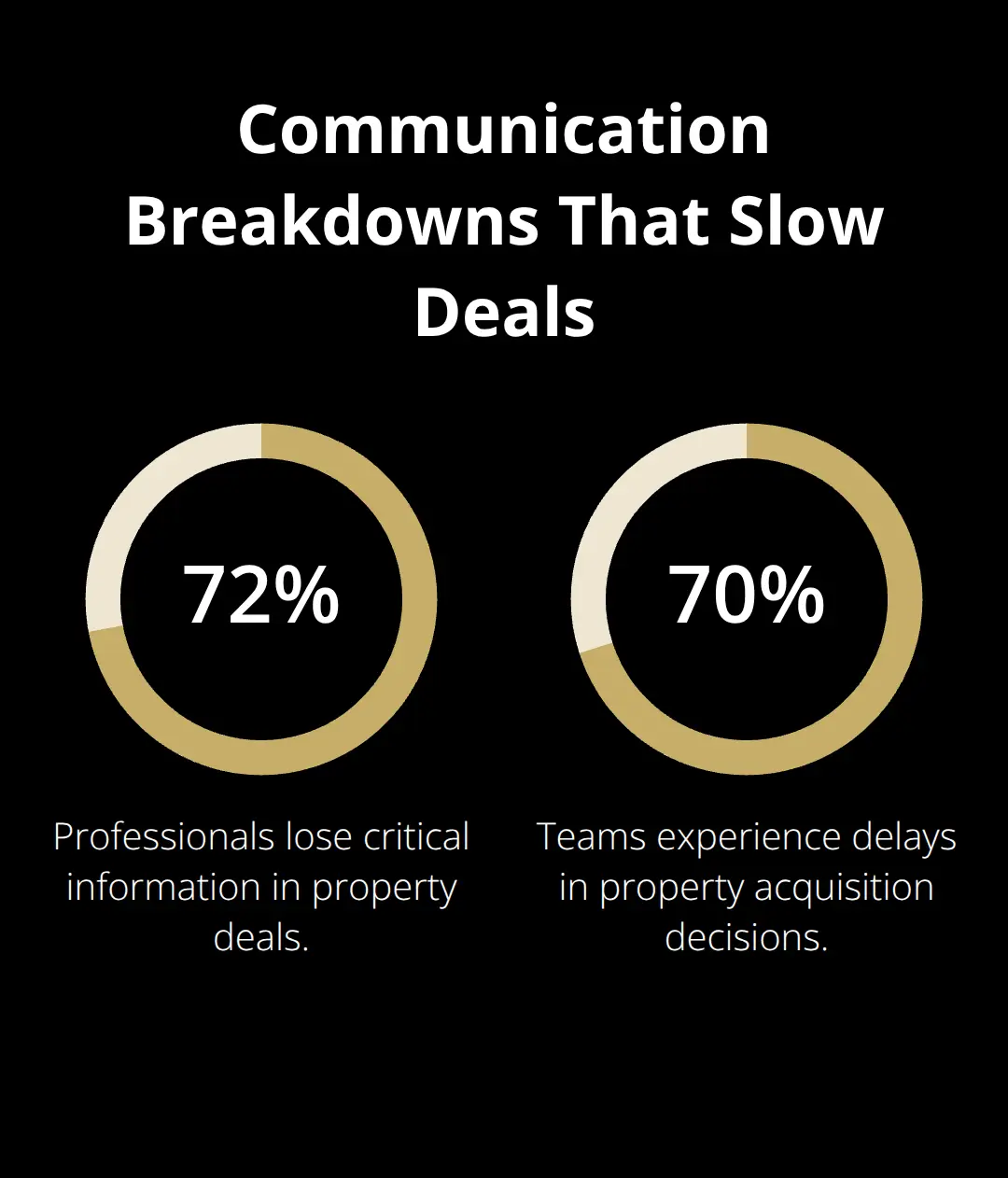
Fragmented communication creates blind spots between agents, lenders, title companies, and notaries, with 72% losing critical information relating to property deals and 70% experiencing delays in property acquisition decisions. Communication tools embedded in your transaction platform keep everyone in one place, eliminating the search through five different Slack channels to find who said what and when.
Real-time notifications mean the moment a document arrives, every stakeholder who needs to act sees it immediately. Process improvement sits at the top of lender priorities, and that translates directly to faster closings for teams that eliminate communication friction.
Payment Processing Bottlenecks Disrupt Cash Flow
Payment processing introduces its own bottleneck. SWIFT transfers take 3–5 business days and remain unpredictable, which disrupts cash flow and damages supplier relationships when closing funds don’t arrive on schedule. Hidden costs in international payments often exceed the visible transfer fee due to exchange-rate margins and intermediary charges. A transparent payment platform shows the mid-market exchange rate upfront and charges a single clear fee, not hidden markups buried in the fine print. Automation matters here too: commission calculations, fund transfers, and reconciliation happen without manual intervention, which compresses post-close administrative work from days into hours. Batch processing lets you pay up to 1,000 invoices in one click, and API integrations support invoice-triggered payments with real-time status updates. The result is faster fund distribution to agents and vendors, which improves working capital and accelerates the next deal cycle.
Integration Unifies Scattered Systems
Teams that consolidate document workflows, communication, and payment processing on a single integrated platform stop managing five separate systems and start moving deals forward at scale. When these systems talk to each other without manual handoffs, you compress weeks of coordination into days-and that speed advantage compounds across every deal your team closes.
Final Thoughts
Faster closings mean happier clients and stronger business outcomes. The 53% of buyers and sellers frustrated by transaction delays represent real market demand for speed and reliability. An efficient transaction platform delivers this by automating what slows you down-standardized workflows prevent manual re-entry errors, real-time visibility catches problems before they cascade, and integrated communication keeps all parties aligned without scattered email chains.
The teams winning in real estate today aren’t managing transactions faster through effort alone. They use platforms that handle coordination, compliance, and cash flow automatically, which frees your team to focus on client relationships instead of administrative chaos. Transparent payment processing removes hidden costs and accelerates fund distribution, so you compress weeks of coordination into days.
We at Unbroker built a modern platform for business sales that eliminates high brokerage fees and hidden costs. Start by auditing your current process to identify where deals stall most often-that’s where an efficient transaction platform delivers the biggest return.