Selling a business fast requires more than hope-it demands strategy. The right pricing, targeted marketing, and professional guidance separate quick sales from listings that languish on the market.
At Unbroker, we’ve seen firsthand that most business owners leave money on the table or waste months in the selling process because they skip the fundamentals. This guide walks you through the exact steps to move your sale forward while keeping it confidential.
What Your Business Is Actually Worth
Pricing mistakes kill fast sales. Set your price too high and buyers vanish; set it too low and you leave six figures on the table. Most business owners either guess based on revenue multiples they heard casually or pull numbers from outdated online calculators. Neither approach works. A professional valuation anchors your price in reality and gives buyers confidence that you’re serious.
Hire a certified appraiser who knows your industry
A generalist won’t cut it. You need a certified business appraiser who understands your sector’s specific dynamics. They analyze your financials across three years, stress-test your cash flow, and account for customer concentration risk. This investment costs between $2,000 and $5,000 but pays for itself by preventing lowball offers.
The appraiser will also recast your earnings to show buyers what the business actually generates after removing owner-specific expenses (your inflated salary, one-time costs, or personal perks). This recast number matters more than raw profit because it shows the true earning potential under new ownership.
Research actual closing prices, not asking prices
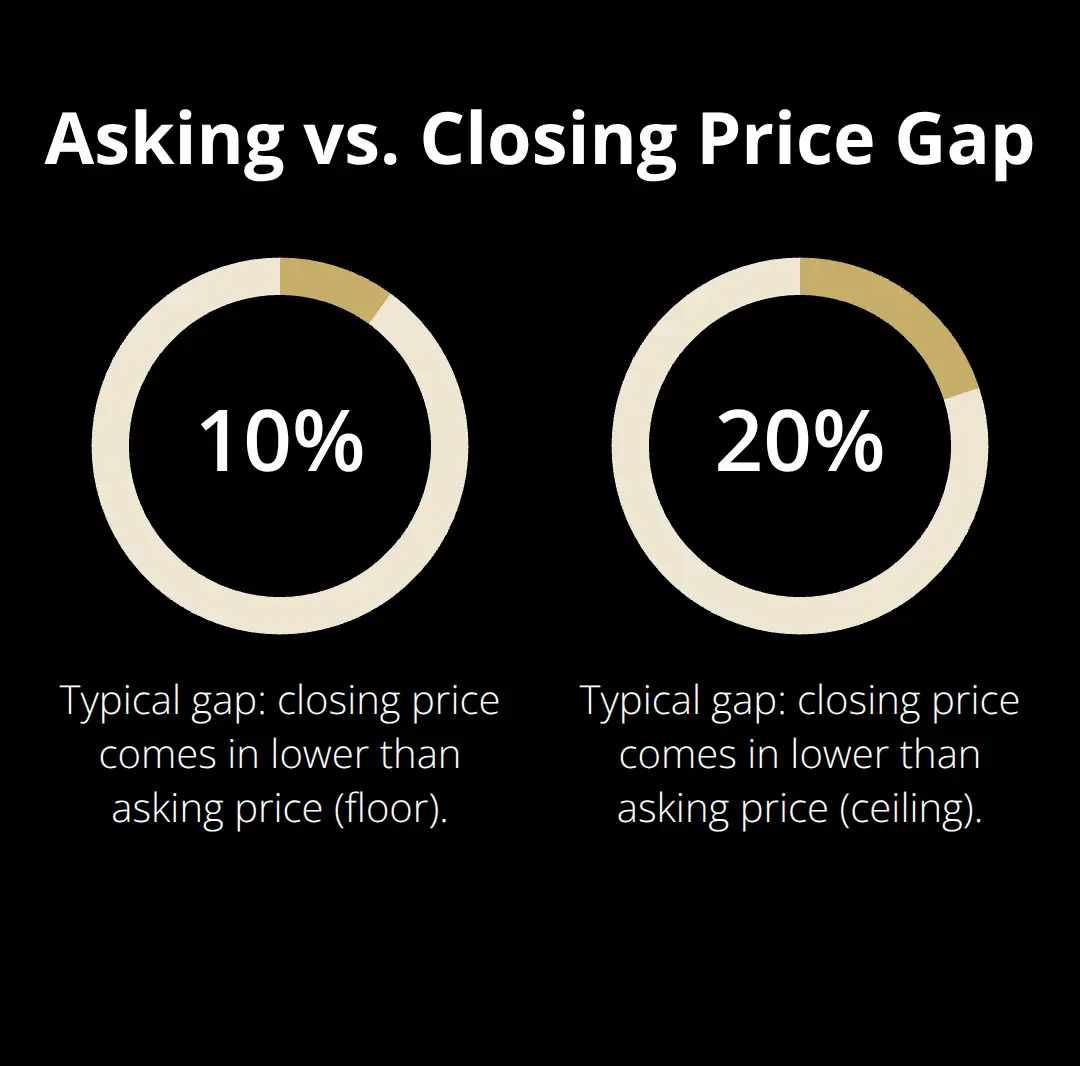
Asking prices and closing prices live in different universes. Actual closing prices typically run 10 to 20 percent lower than what sellers initially list. Industry databases track completed transactions by category and region.
If you sold a SaaS company, check what similar revenue-stage companies with comparable churn rates and customer acquisition costs closed for in the past 12 months. A manufacturing business should compare against similar-sized operations with comparable equipment, customer base, and geographic footprint.
Talk to business brokers who specialize in your sector. They have access to confidential transaction data and can tell you whether market conditions favor sellers or buyers right now.
Understand current market conditions
Current buyer demand matters enormously. Higher interest rates can pressure valuations and profits, which often means lower multiples. If your business depends on contract renewals or customer relationships, buyers will pay less if you can’t guarantee that those relationships transfer smoothly.
Transparency about market realities prevents painful surprises during negotiations. Once you understand what your business is worth in today’s market, you can position it effectively to attract serious buyers who will move fast.
Finding Buyers Who Will Actually Close
Identify your ideal buyer profile first
The difference between a slow sale and a fast one often comes down to reaching the right buyers first. Most business owners make the mistake of listing their business on general marketplaces like BizBuySell and hoping qualified buyers find them. That approach wastes time and money. Instead, you need to identify who your ideal buyer is, then actively place your business in front of them through channels where they actually look.
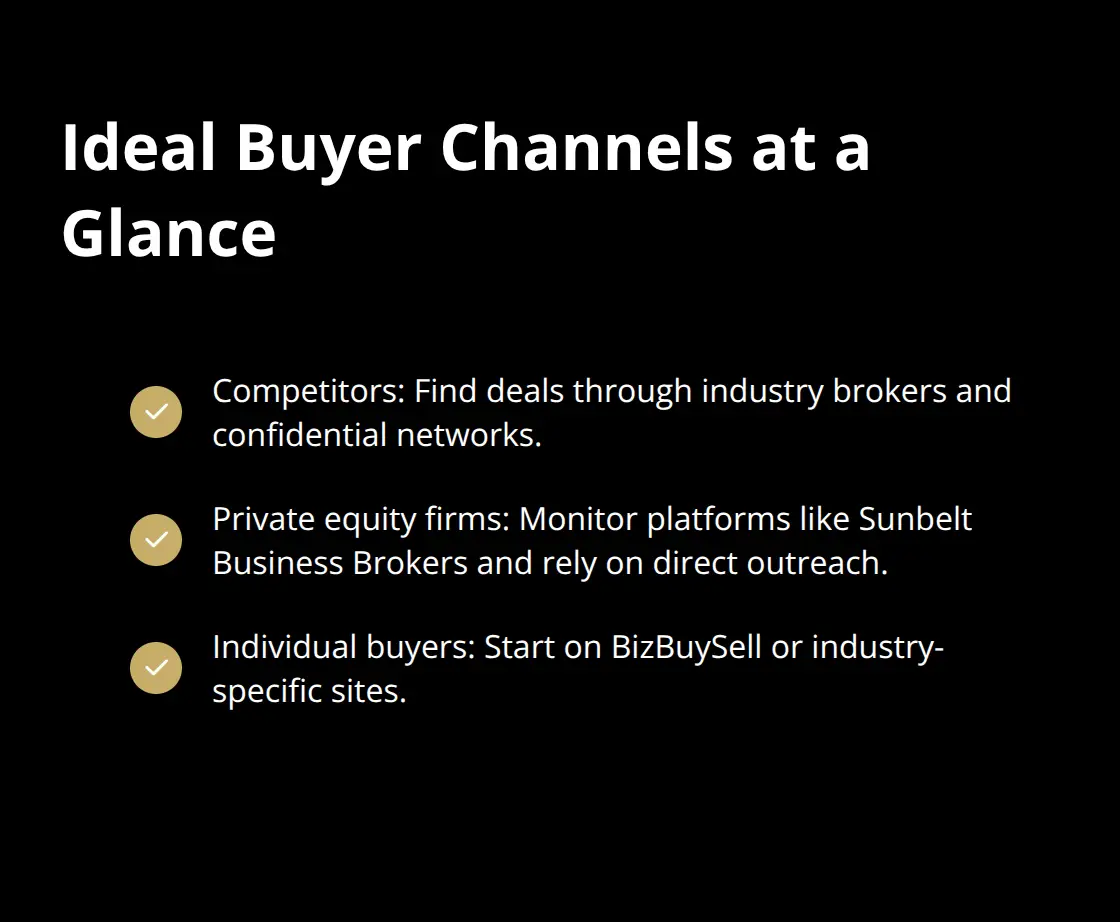
Define your ideal buyer profile: Is it a competitor looking to consolidate market share? A private equity firm hunting for add-on acquisitions? An individual entrepreneur seeking an established revenue stream? Each profile shops in different places. Competitors often find deals through industry brokers and confidential networks, while PE firms monitor platforms like Sunbelt Business Brokers and rely on direct outreach from advisors. Individual buyers typically start on BizBuySell or industry-specific sites.
Once you know who you’re targeting, you can place your business where they’ll see it and control the narrative around what makes your operation valuable.
Place your business on the right channels
Strategic placement across multiple channels works better than casting a wide net everywhere. A SaaS company might showcase its product roadmap and customer testimonials on a dedicated landing page; a manufacturing business might emphasize its equipment, supply chain relationships, and order pipeline. Digital platforms like LinkedIn, industry forums, and specialized marketplaces let you highlight your strengths directly to the right audience.
Talk to business brokers who specialize in your sector. They have access to confidential transaction data and know exactly where serious buyers in your industry look for opportunities. This targeted approach attracts qualified inquiries much faster than passive listings.
Emphasize what makes your business defensible
Your unique value proposition matters more than your revenue number. Buyers care about what makes your business defensible and scalable under new ownership. If you’ve built a customer base with long-term contracts and high retention rates, that’s your story-not just total revenue. If you’ve systematized your operations so the business doesn’t depend on you personally, that’s a major selling point.
Document your customer acquisition cost, lifetime value, churn rate, and any proprietary processes or technology that competitors can’t easily replicate. These metrics demonstrate efficiency and growth viability to serious buyers. Businesses with clear, documented value propositions attract serious inquiries faster.
Control information disclosure with NDAs
The goal is to make your business unmissable to the right buyer while maintaining strict confidentiality around sensitive details. Customer lists and financial specifics stay protected until a prospect signs a non-disclosure agreement. A confidentiality agreement keeps your business’s sensitive information private and prevents competitors from using disclosed data if the deal falls through (a real risk, since competitors are often among the most interested prospective buyers).
Include a no-poach provision in your NDA to prevent the buyer from hiring your top employees before the deal closes. This protects your team and ensures continuity during the sale process. Once you’ve attracted serious, qualified buyers through targeted channels and protected your information with proper agreements, you’re ready to move into active negotiations-where speed and flexibility determine whether you close fast or watch the deal stall.
Moving Fast Through Negotiations Without Leaving Value Behind
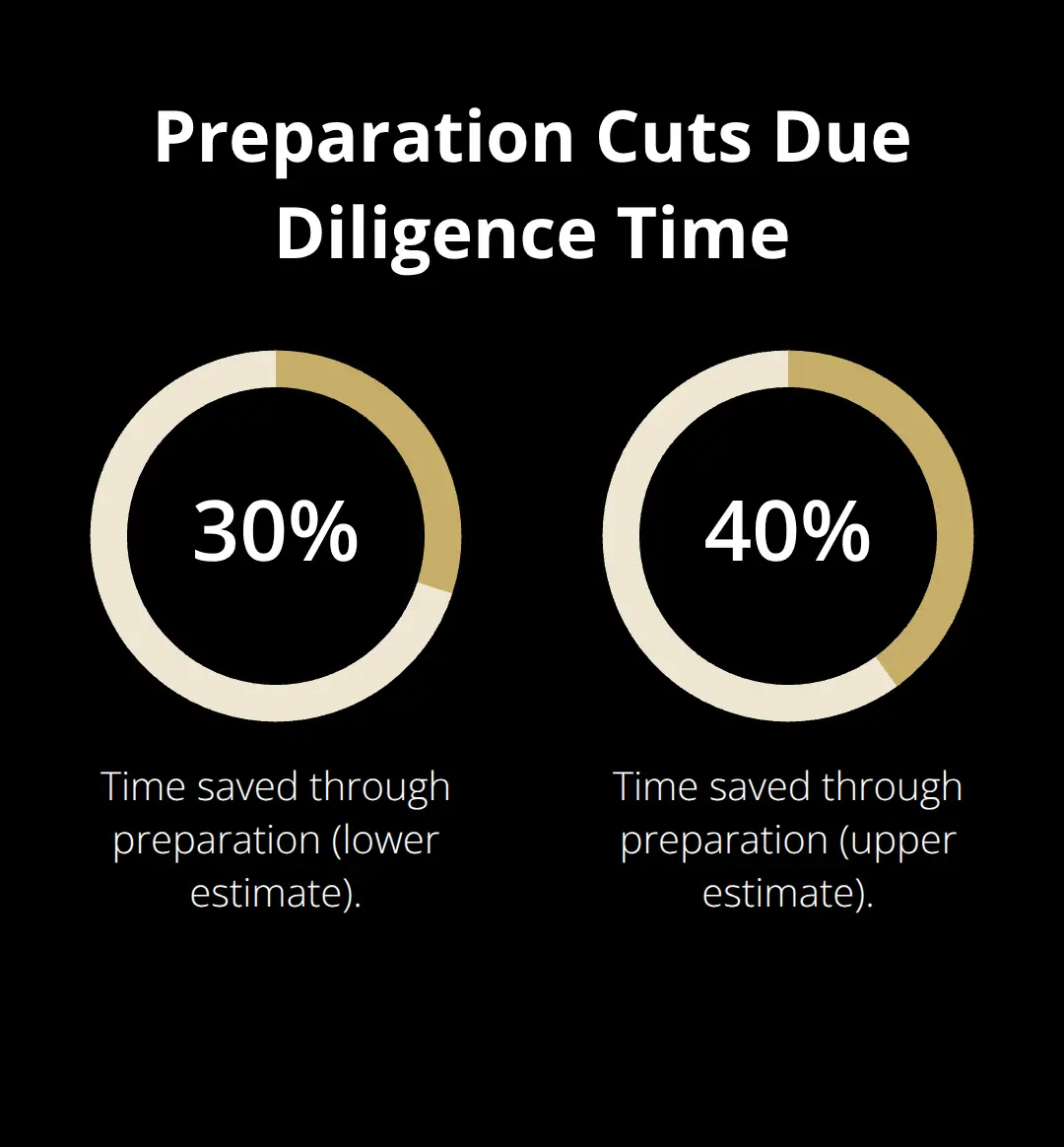
The documentation phase separates sellers who close in weeks from those stuck in months of back-and-forth. Start assembling your materials months before you actively market the business, not after a buyer appears. Gather three years of audited financial statements (income statement, balance sheet, cash flow), federal and state tax returns, and a current interim P&L. Compile a complete asset inventory including equipment valuations, lease agreements, loan documents, patents, licenses, and all active customer and supplier contracts. Create a secure digital data room organized by category so buyers can access everything without slowing down due diligence. A disorganized seller signals operational chaos to buyers, which tanks valuations and kills momentum. Your data room should also include department workflows, an up-to-date organizational chart, key personnel agreements, and onboarding documentation that demonstrates your business runs without depending entirely on you. Include customer acquisition costs, retention rates, churn metrics, and other KPIs that show efficiency and growth viability. This preparation typically cuts due diligence timelines by 30 to 40 percent because buyers spend less time requesting missing documents and more time making decisions.
Flexibility on payment structure beats price cuts
Flexibility on price and structure accelerates closing, but most sellers misunderstand where to give ground. Never discount your asking price simply because a buyer requests it early in negotiations. Instead, stay firm on valuation while offering flexibility on payment structure and timing. A buyer who cannot pay your asking price upfront might close faster if you offer seller financing for 20 to 30 percent of the purchase price, spreading payments over two to three years. This broadens your buyer pool because it helps financed deals receive bank approval when the buyer lacks sufficient capital. You can also accelerate closing by offering a shorter post-sale transition period (30 days instead of 90) if the buyer commits to maintaining key customer relationships and employee contracts. The goal is moving the sale forward while protecting the value you have built. Work with a CPA to understand the tax implications of different deal structures before negotiations start, since some payment arrangements trigger higher tax liability than others. A letter of intent that outlines key terms-purchase price, payment method, transition timeline, and major representations-maintains momentum without fully locking in every detail before due diligence completes.
Professional advisors eliminate wasted time
Selling a business without an attorney, CPA, and deal coach is like navigating without a map. An attorney screens buyers early with signed NDAs and proof of funds, eliminating unqualified prospects before they waste your time. A CPA structures the deal for tax efficiency and confirms the buyer can actually finance what they propose. A deal coach manages the pace and interpersonal friction that derails most sales-they read signals, push negotiations forward when they stall, and prevent emotional decisions that kill deals. This advisory team costs between $10,000 and $25,000 depending on deal complexity, but they typically recover that cost by negotiating better terms and preventing the deal collapse that costs months and thousands in lost revenue. Expect the sales timeline to run six to twelve months from valuation to closing, with larger or more complex transactions taking longer. The fastest closings happen when advisors maintain transparent, ongoing communication among seller, buyer, and all parties involved. They coordinate all document exchanges through the data room, manage due diligence timelines with clear deliverables, and handle the legal screening that protects you from competitors who pose as serious buyers to extract free operational intelligence.
Screening buyers protects your confidentiality
Competitors are often among the most interested prospective buyers, which means you must screen early and aggressively. Require every prospect to sign a confidentiality agreement before you share sensitive information like customer lists, financial specifics, or operational details. A confidentiality agreement keeps your business’s sensitive information private and prevents competitors from using disclosed data if the deal falls through. Include a no-poach provision in your NDA to prevent the buyer from hiring your top employees before the deal closes. This protects your team and ensures continuity during the sale process. Your attorney should handle all screening to verify legitimacy and confirm proof of funds before you move forward with serious discussions. Without proper screening, valuable information may be misused by competitors if the deal does not close, which can damage your competitive position and employee morale.
Final Thoughts
Selling a business fast requires three core elements: accurate pricing, targeted buyer outreach, and professional execution. A certified appraiser grounds your price in reality, research into actual closing prices prevents you from leaving money on the table, and understanding current market conditions keeps you competitive. Reaching the right buyers through industry-specific channels and brokers beats casting a wide net on generic marketplaces, while screening prospects with NDAs and proof of funds eliminates time-wasters and competitors fishing for intelligence.
Preparation cuts months from your timeline. Assemble your documentation months before you market the business, organize your data room by category, and prepare your financial statements, tax returns, and asset inventory in advance. This approach cuts due diligence timelines by 30 to 40 percent because buyers spend less time requesting missing documents and more time making decisions. Stay flexible on payment structure while holding firm on valuation, and work with an attorney, CPA, and deal coach to prevent the emotional decisions that derail sales.
We at Unbroker built our platform to remove friction from the sale process and help you sell a business fast without traditional brokerage markups. Our Full Service Business Sale handles the heavy lifting for a simple 6% success fee, paid only when your business sells. Explore Unbroker to discover how a modern platform can help you close your sale with transparency, no hidden fees, and a satisfaction guarantee.