Selling your business without a broker is possible, but it requires strategy and preparation. At Unbroker, we’ve seen business owners successfully navigate DIY sales by understanding the fundamentals.
This guide walks you through the essential steps: organizing your finances, marketing effectively, and handling the legal side. You’ll learn practical tactics to reach buyers and negotiate confidently on your own terms.
Getting Your Business Ready to Sell
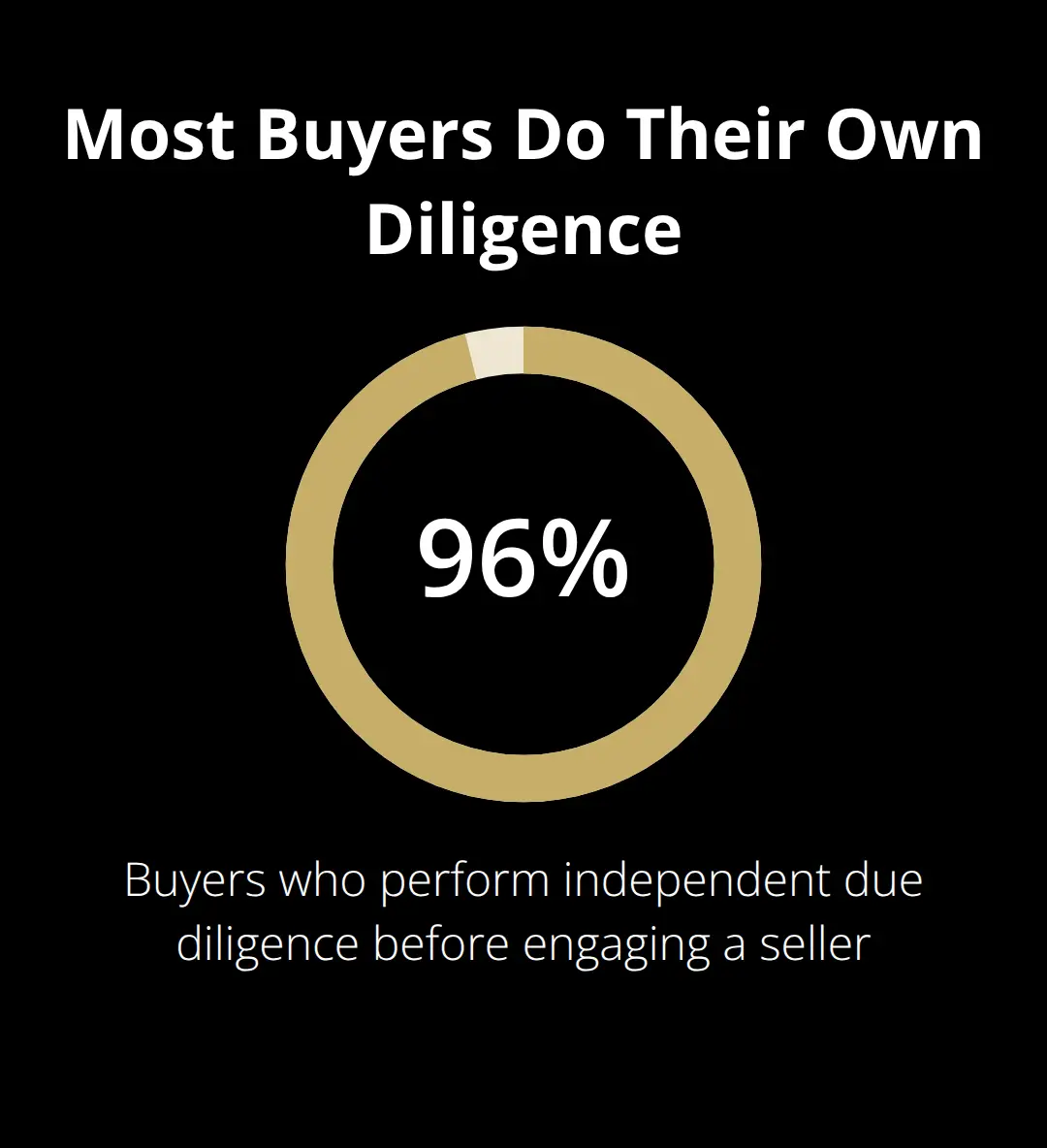
The difference between a fast sale and a stalled one often comes down to preparation. Buyers won’t move forward without solid financials, and according to Sunbelt Atlanta, about 96% of buyers conduct their own due diligence before engaging with a seller. You need to have your documentation organized before you even start marketing.
Gather three to five years of clean financial statements plus a current interim profit and loss statement and balance sheet. These documents form the foundation of buyer confidence. Beyond the numbers, create a complete inventory of your assets, leases, loans, patents, licenses, and key contracts. This sounds tedious, but it directly speeds up due diligence and prevents deal delays. Many DIY sellers underestimate how much time buyers spend verifying information, so having everything organized in a digital data room from day one saves weeks of back-and-forth emails. The data room should include your financial records, contracts, compliance documents, and operational procedures.
What Valuation Actually Means
Don’t fall into the trap of valuing your business based on gross revenue alone. Revenue is just the top line; what matters is cash flow and profit. A business generating $2 million in revenue but $150,000 in profit tells a completely different story than one with $500,000 in profit from the same revenue. You should get a professional valuation done, even if you’re selling yourself. The cost typically ranges from $2,000 to $5,000, but it gives you a defensible asking price backed by industry standards. Professional valuators use methods like the earnings multiple approach for valuation, asset-based valuation, and comparable sales analysis. Knowing which method applies to your business prevents you from pricing too low or so high that buyers walk away immediately.
Who Actually Wants to Buy Your Business
You should define your ideal buyer profile before you start marketing. Are you looking for a competitor who wants to expand? A financial investor seeking passive income? A first-time entrepreneur entering your industry? Each type has different priorities and brings different resources. Competitors often move fast because they understand your market immediately, but they may also push harder on price. Financial investors want proof of consistent, predictable cash flow and sustainable operations. First-time buyers need extensive hand-holding but might pay a premium for your operational knowledge. Understanding who you’re selling to shapes everything: your asking price, the information you emphasize, and how you position the business.
Demonstrate Operational Excellence
You should demonstrate operational excellence to attract serious buyers. Document your standard operating procedures, prepare an updated organizational chart, and make client and supplier contracts easily accessible. Buyers want to see that the business runs without depending entirely on you. This operational clarity directly influences how quickly a buyer moves from interest to offer. When you show that systems and processes exist independent of your personal involvement, you eliminate a major risk factor in their decision-making. The next step involves marketing your business effectively to reach qualified buyers who match your ideal profile.
How to Market and Sell Your Business Without a Broker
Craft a Compelling Business Summary
Your business summary is the first impression buyers receive, and it determines whether they request more information or move on. The summary should be a one-page document that covers what your business does, its revenue and profit figures, why it’s profitable, and what makes it different from competitors. Avoid vague language like successful or growing; instead, state concrete numbers.
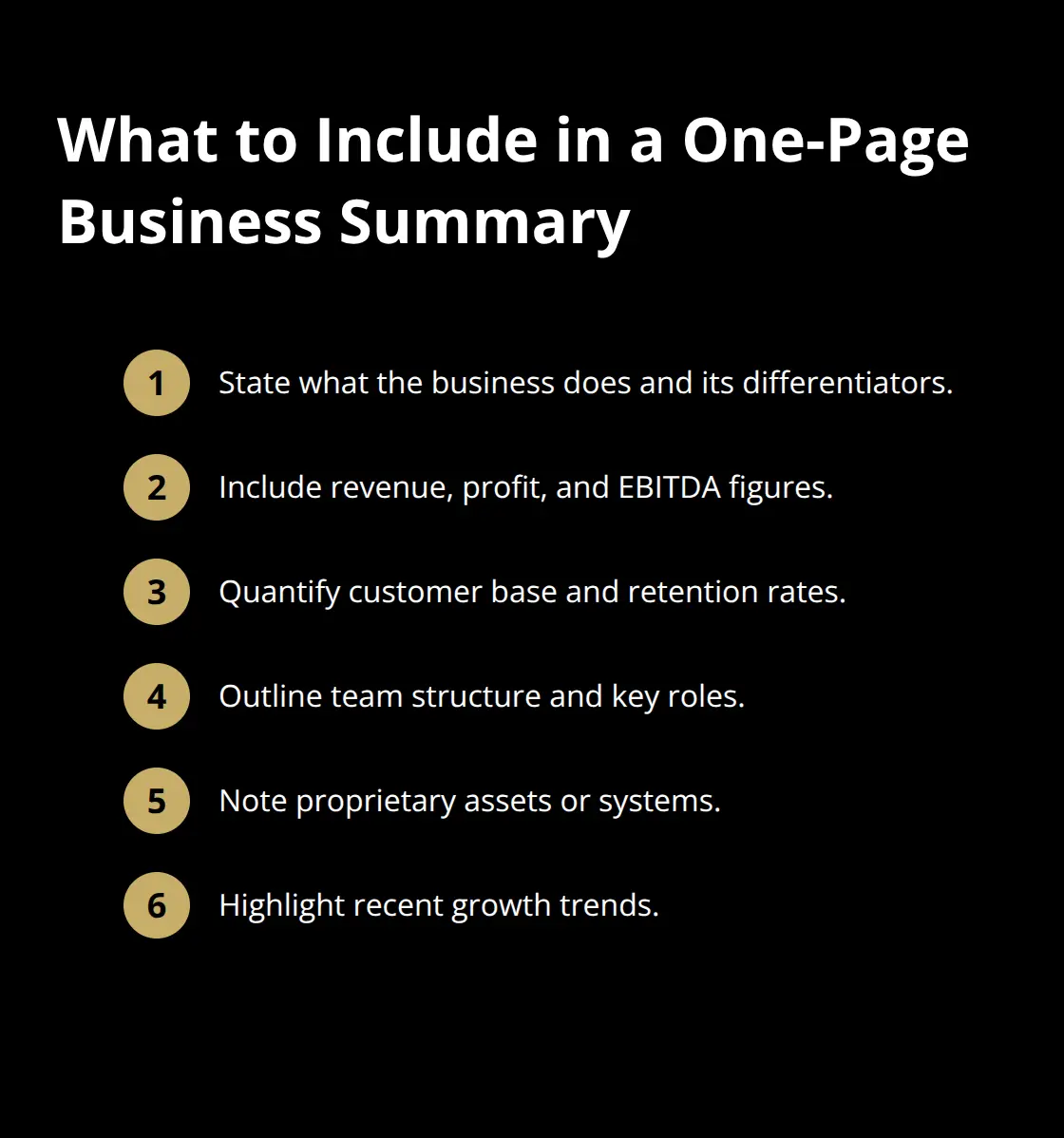
For example, state that the business generated $1.2 million in revenue with $280,000 in EBITDA last year, not that it’s a profitable enterprise. Include information about your customer base (how many clients, what industries, retention rates), your team structure, and any assets like intellectual property or proprietary systems. A strong summary also mentions growth trends, such as year-over-year revenue increases or new market expansion. This document becomes the foundation for all your marketing materials, so invest time in refining it before you launch.
Reach Buyers Through Multiple Channels
Marketing a DIY sale requires you to reach buyers through multiple channels simultaneously. BizBuySell and WebsiteClosers are the primary platforms where business buyers actively search, so list your business on both sites with your polished summary and financial highlights. However, don’t rely solely on these marketplaces; qualified buyers also come from LinkedIn, industry-specific forums, and direct outreach to competitors or adjacent business owners who might acquire you. Create a simple one-page PDF summary you can email to interested parties, and set up a secure landing page where prospects can request access to your financial data room. Screen every inquiry with a non-disclosure agreement before sharing sensitive information; this protects your competitive position if negotiations fall through. Expect multiple conversations simultaneously, and maintain momentum by responding to inquiries within 24 hours.
Move Quickly With a Letter of Intent
When a serious buyer emerges, move quickly to a letter of intent that outlines the preliminary commitment and chief terms between you and the buyer. This document signals alignment without locking you into final terms before due diligence completes. A letter of intent typically includes the proposed purchase price, whether payment occurs at closing or over time, which assets or shares transfer, and the expected timeline to close. The letter remains non-binding in most cases, which protects both parties during the information-gathering phase.
Negotiate From a Position of Strength
Negotiating without professional help means you must understand your walk-away price before talks begin and stick to it. Know your minimum acceptable offer, your ideal price, and what trade-offs matter most (cash at closing versus seller financing, for instance). During negotiations, listen more than you speak; buyers often reveal their constraints and concerns if given space. Don’t make early concessions hoping to build goodwill; instead, maintain competitive tension by engaging multiple qualified buyers simultaneously. If a buyer requests seller financing, vet them thoroughly with proof of funds and credit checks, and implement a clear repayment structure with personal guarantees. Many DIY sellers underestimate how much leverage they lose by showing desperation or accepting the first offer that arrives.
Prepare for the Legal Phase Ahead
Once you’ve negotiated terms and both parties agree on the basics, the process shifts from sales to legal documentation. The contracts you prepare and the disclosures you make during this phase directly impact your liability after the sale closes, so understanding what comes next protects your interests and accelerates the closing timeline.
Legal and Financial Decisions That Actually Matter
The moment you move from negotiation to closing, tax and legal decisions become irreversible. You cannot undo a poorly structured deal after the papers are signed, so getting this right from the start prevents costly mistakes later. The first major decision is whether to structure the sale as an asset sale versus stock sale tax implications, and this choice directly impacts your tax bill. In an asset sale, you transfer specific assets and certain liabilities to the buyer, which typically results in higher taxes for you because the seller undergoes a “double tax” where the corporation pays a capital gains tax at the entity level. A stock sale transfers ownership of the company itself, which often produces better tax outcomes for the seller but shifts more risk to the buyer since they inherit all liabilities.
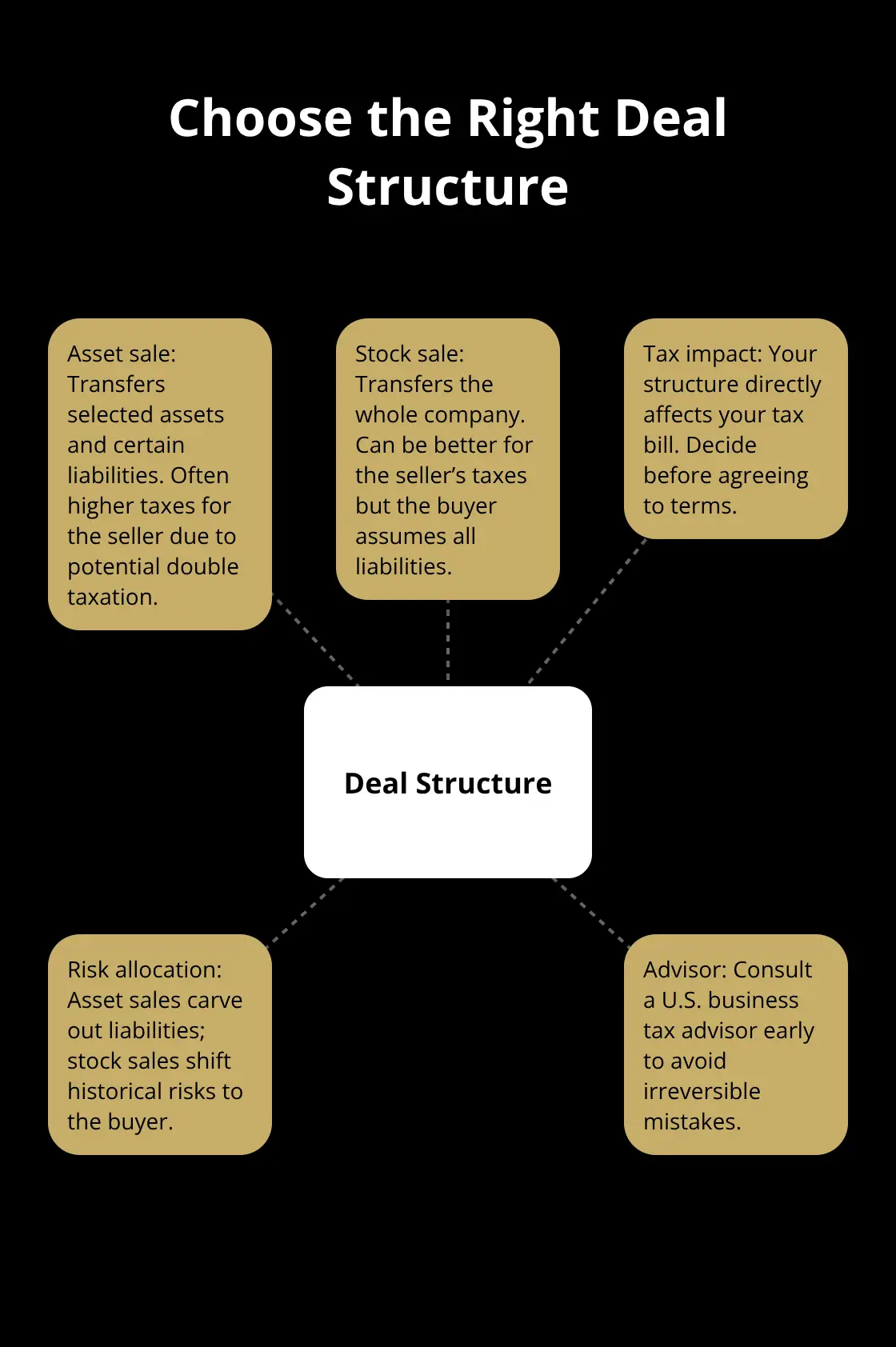
Consulting a business tax advisor before you agree to terms is not optional.
Seller Financing Expands Your Buyer Pool
Consider whether you want to finance part of the sale yourself. Seller financing expands your buyer pool because it lowers the amount of capital a buyer needs upfront, but it also means you become a lender and carry the risk of non-payment. If you go this route, require proof of funds before negotiations begin, implement a seller financing structure and risk management plan with a clear repayment schedule, personal guarantees, and a properly structured note, and work with a business lawyer to ensure all terms are documented.
Purchase Agreements Protect Your Interests
The legal documents you prepare during closing protect your interests and define what the buyer actually receives. At minimum, you need a purchase agreement that specifies whether it’s an asset purchase agreement or stock purchase agreement, a confidentiality agreement to prevent the buyer from sharing your sensitive information if the deal falls through, and disclosure schedules that list all contracts, pending litigation, debt, and employee agreements. Accurate disclosure schedules matter tremendously because they limit your liability after closing; if you disclose a problem upfront, the buyer cannot claim fraud later if that problem materializes.
Transparency Builds Credibility With Buyers
Many DIY sellers try to hide weaknesses, which backfires when due diligence uncovers them and tanks the deal or forces a price cut. Instead, be transparent about what you know and pair your disclosures with your strongest operational and financial assets to retain credibility. If you plan to stay involved post-sale, an employment or transition agreement defines your role, compensation, and timeline so both parties understand expectations. Corporate governance documents should be organized and current because buyers want proof that your business is legally compliant and properly authorized to complete the transaction.
Confidentiality Requires Discipline and Clear Agreements
Protecting confidentiality throughout the process requires discipline and clear agreements. Screen every buyer with a signed non-disclosure agreements for business transactions before sharing financials or client lists, and maintain a limited circle of people within your organization who know the sale is happening. If word leaks that you are selling, employees start updating resumes, customers question continuity, and suppliers may demand cash on delivery instead of terms, all of which damage deal value. Use a secure data room rather than emailing sensitive documents, and never share information with buyers who haven’t signed an NDA.
Final Thoughts
Selling your business without a broker demands preparation, strategy, and discipline across three core areas: financial clarity, operational documentation, and transparent buyer communication. You must organize your financials, obtain a professional valuation, and market across multiple platforms like BizBuySell and WebsiteClosers while protecting confidentiality through NDAs. When offers arrive, move quickly with a letter of intent and negotiate from strength by engaging multiple qualified buyers at once.
The legal and tax decisions you make during closing cannot be reversed, so professional guidance on asset versus stock sale structures and seller financing arrangements protects your interests permanently. Transparency about your business’s strengths and weaknesses builds credibility far better than hiding problems that due diligence will uncover anyway. Accurate disclosure schedules and proper corporate governance documents shield you from liability after the sale closes.
You don’t need to handle every aspect alone when you DIY sell a business. Many sellers benefit from expert support on specific challenges like legal document preparation, negotiation strategy, or marketing reach, and Unbroker offers transparent, low-cost options designed for business owners who want control over their sale. Whether you manage everything yourself or bring in support for particular tasks, the fundamentals stay the same: prepare thoroughly, market strategically, and protect yourself legally throughout the process.