Business buyers don’t waste time on vanity metrics. They focus on specific financial and operational data that reveals a company’s true value and growth potential.
At Unbroker, we see this pattern repeatedly during acquisition processes. The right business metrics can make or break a deal, while weak KPIs often send buyers running before negotiations even begin.
Which Financial Metrics Matter Most to Buyers
Revenue Growth Patterns Drive Valuations
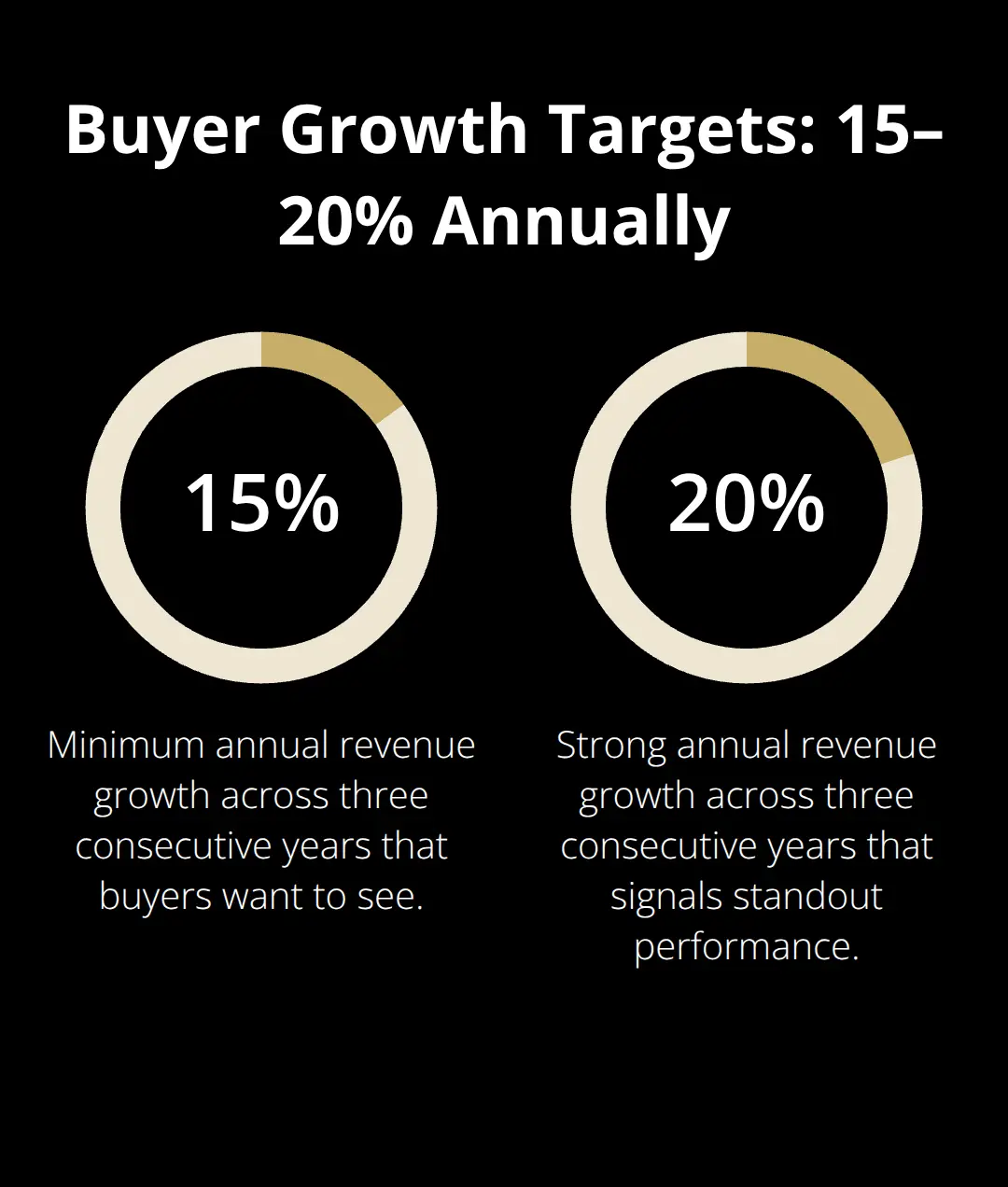
Revenue growth patterns tell the real story buyers want to hear. Smart acquirers look for companies that show 15-20% annual revenue growth over three consecutive years, not just one lucky quarter. Multiples can be a useful tool for valuation, but in some situations, they can wind up missing or even distorting the real picture. Buyers also examine monthly revenue trends, particularly in service businesses where predictable income streams reduce investment risk. Companies with seasonal revenue fluctuations need to demonstrate strong cash management and clear strategies for income stabilization throughout the year.
Cash Flow Trumps Paper Profits
Cash flow matters more than reported profits because it shows real money creation capacity. Buyers typically want to see cash flow margins above 15% and positive free cash flow for at least two years. EBITDA multiples depend on the size of the subject company, its profitability, its growth prospects, and the industry in which it works. Companies that require heavy reinvestment to maintain growth face lower valuations than those that create cash without constant capital injections. Strong cash flow also indicates pricing power and customer loyalty (two factors that directly impact post-acquisition performance).
Asset Efficiency Reveals Management Quality
Return on assets and inventory turnover rates expose how well management uses company resources. Buyers favor businesses that achieve strong market position through efficient operations. Asset utilization metrics like revenue per employee help buyers assess scalability potential and identify redundancies. Companies with high asset turnover ratios typically receive higher acquisition multiples because they demonstrate operational excellence and growth capacity without proportional resource increases.
These financial fundamentals form the foundation of buyer interest, but operational metrics provide the complete picture that determines final purchase decisions.
What Operational Metrics Actually Influence Buyers
Customer Economics Drive Valuation Decisions
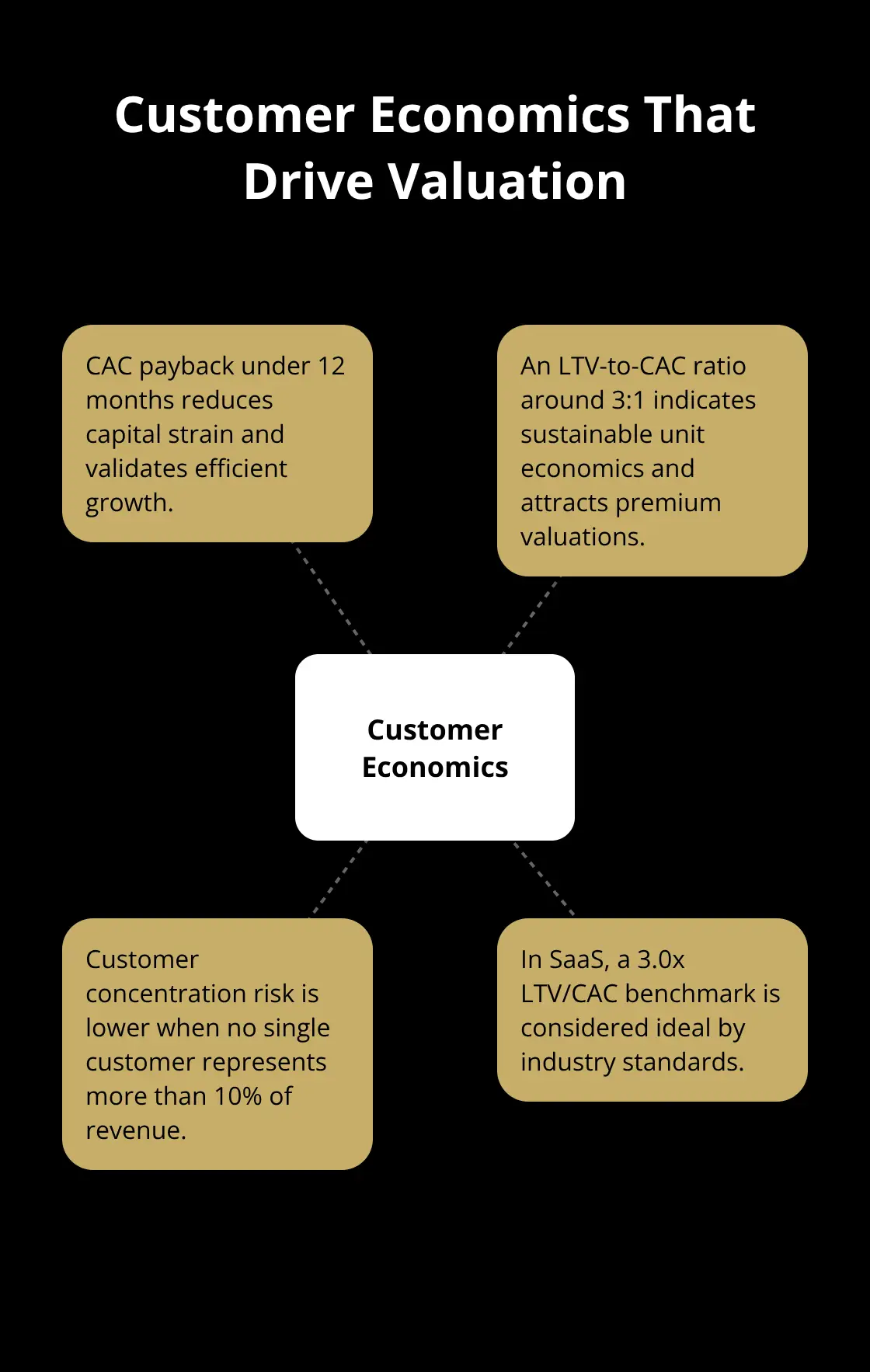
Buyers examine customer acquisition cost and lifetime value ratios with intense scrutiny because these numbers reveal business sustainability. Companies with CAC payback periods under 12 months and LTV-to-CAC ratios around 3:1 attract premium valuations. The standard benchmark for the ideal LTV/CAC ratio is around 3.0x in the SaaS industry.
Buyers also analyze customer concentration risk and prefer businesses where no single customer represents more than 10% of total revenue. This diversification protects against sudden revenue drops and demonstrates market appeal across multiple segments.
Market Position Determines Strategic Value
Market position data tells buyers whether they acquire a leader or a follower. Companies that hold market share in their primary segment command higher multiples than fragmented market players. Market share denotes the size of a company in relation to its market and its competitors by comparing the company’s sales to total industry sales.
Buyers evaluate competitive advantages through pricing power metrics and customer retention rates. Companies that raise prices without losing customers demonstrate strong market positioning (a factor that directly impacts business valuation).
Scalability Metrics Separate Winners From Losers
Revenue per employee is an important benchmarking metric used by businesses to evaluate employee productivity. Technology companies that demonstrate strong revenue per employee metrics show scalability potential, while service businesses typically have different benchmarks.
Gross margin expansion over time signals pricing power and operational improvement. Buyers favor companies that maintain gross margins above 60% in software or 25% in manufacturing. Process automation levels directly impact scalability assessments, with companies that automate routine tasks receiving higher valuations.
Inventory turnover rates above industry averages indicate efficient operations and reduced working capital requirements. These operational strengths become even more important when buyers spot potential red flags in other areas of the business.
Red Flag KPIs That Deter Potential Buyers
Customer Retention Failures Signal Business Problems
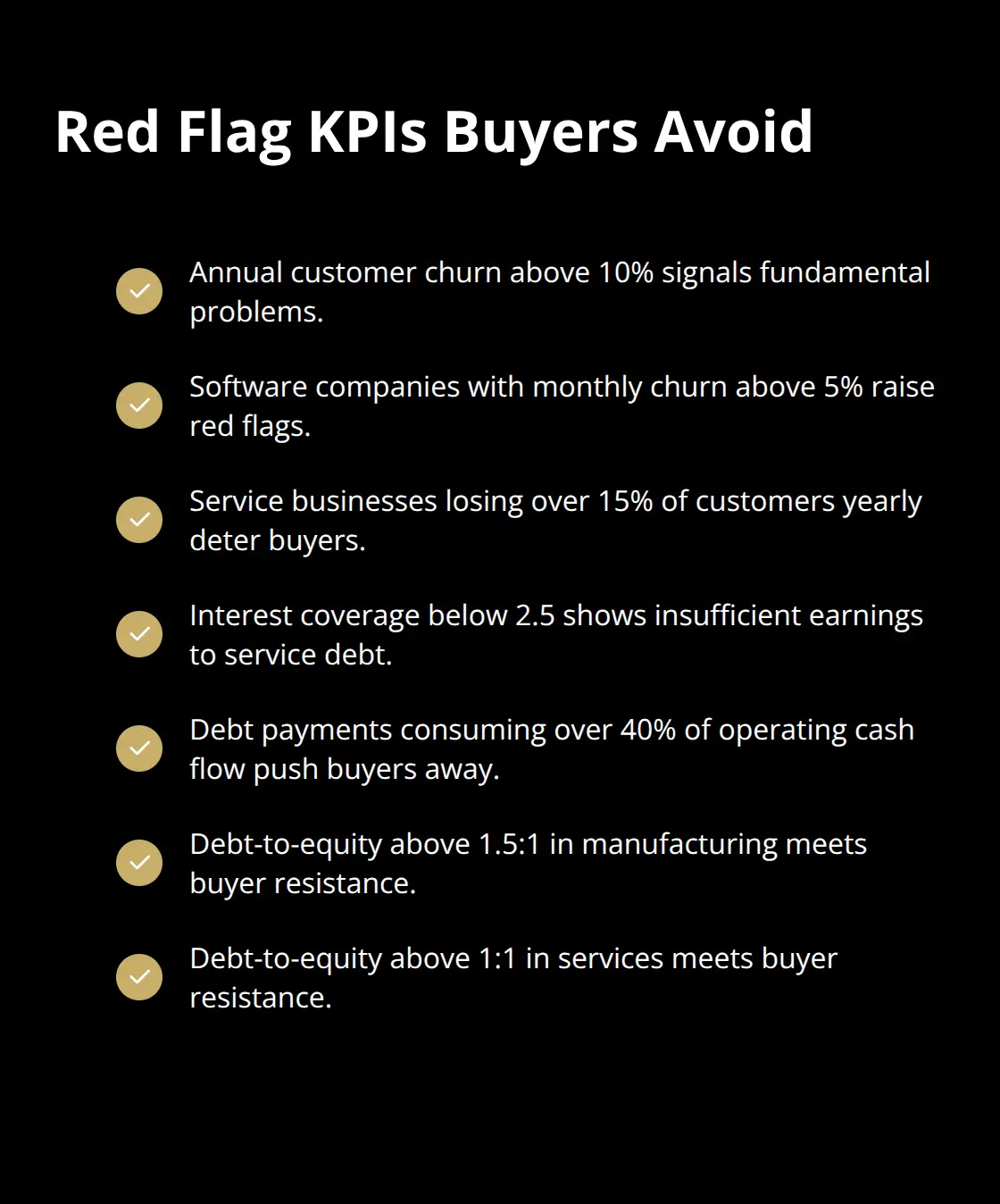
Customer churn rates above 10% annually signal fundamental business problems that buyers avoid at all costs. Companies lose customers faster than industry benchmarks and face immediate valuation drops because buyer confidence disappears when retention metrics show weakness. Software companies with monthly churn rates that exceed 5% or service businesses that lose more than 15% of customers yearly create red flags that experienced buyers recognize instantly.
The math becomes simple: businesses that cannot retain customers struggle to maintain revenue growth and require constant expensive customer acquisition to survive. Buyers also examine customer concentration carefully because companies that depend on a few major clients face catastrophic risk if those relationships end.
Excessive Debt Levels Eliminate Most Buyers
Debt-to-equity ratios help businesses determine how much debt and equity finance operations, and excessive leverage limits operational flexibility while increasing bankruptcy risk. Manufacturing companies with ratios that exceed 1.5:1 and service businesses above 1:1 face serious buyer resistance during due diligence.
Companies with high debt-to-equity ratios face significantly higher default rates than those with lower ratios. Interest coverage ratios below 2.5 compound the problem and show insufficient earnings to service existing debt obligations. Buyers walk away when they see debt payments consume more than 40% of operating cash flow because post-acquisition improvements become nearly impossible under such financial constraints.
Poor Financial Documentation Destroys Trust
Inconsistent financial reporting practices destroy buyer trust and often terminate negotiations before serious discussions begin. Companies that change accounting methods frequently, show unexplained revenue fluctuations, or maintain incomplete records face immediate buyer skepticism.
Occupational fraud affects businesses globally based on real cases from 138 countries and territories, with poor financial controls creating significant vulnerabilities. Missing documentation for major transactions, inconsistent inventory records, or gaps in customer contracts signal operational problems that buyers refuse to inherit. Clean financial records with consistent reporting standards become non-negotiable requirements that determine whether buyers proceed with serious due diligence or abandon potential acquisitions entirely.
Final Thoughts
Business metrics determine whether buyers engage seriously or walk away from potential acquisitions. Revenue growth patterns above 15% annually, cash flow margins that exceed 15%, and customer retention rates above 90% create the foundation for successful sales. Buyers prioritize companies with LTV-to-CAC ratios around 3:1 and debt-to-equity ratios below industry benchmarks.
Present your business metrics through clean financial documentation with consistent reporting standards. Organize data chronologically to show trends rather than isolated snapshots. Address weak areas proactively by improving customer retention strategies, reducing debt levels, and implementing stronger financial controls before you enter the market.
Companies that demonstrate operational excellence through efficient asset utilization and scalable business models command premium valuations (particularly those with predictable cash generation capacity). We at Unbroker help business owners navigate the complexities of presenting their companies effectively to qualified buyers. Our transparent platform eliminates traditional brokerage fees while providing comprehensive support throughout the entire sales process.