Business owners selling their companies often wonder if broker networks actually deliver better buyers than going solo. The promise sounds appealing: access to thousands of pre-screened investors and industry connections.
We at Unbroker see sellers wrestling with this decision daily. The reality behind these networks tells a different story than the marketing materials suggest.
What Actually Happens Inside Broker Networks
Broker networks operate through three interconnected systems that determine their effectiveness. Most networks maintain access to shared platforms where brokers post available businesses, creating databases that span multiple markets. The International Business Brokers Association maintains the largest collection of small to medium size businesses with over 37,000 transactions, but the mechanics behind these databases reveal significant limitations.
Database Access Creates Geographic Overlap
Networks like BizBuySell and BusinessBroker.net aggregate listings from hundreds of brokers, but this creates substantial duplication rather than unique opportunities. A manufacturing business in Ohio might appear on six different platforms through various network members, each claiming exclusive access. The screening process varies dramatically between brokers within the same network.
Some brokers conduct thorough financial verification and require three years of tax returns plus bank statements. Others accept basic qualification letters. This inconsistency means that pre-qualified buyers in one market may not meet standards in another, despite network-wide marketing claims.
Referral Systems Generate Mixed Results
Referral arrangements between brokers across markets operate on commission-sharing agreements (typically splitting the standard 10% fee). However, cross-referral success rates remain challenging compared to direct broker relationships.
The referral broker often lacks deep knowledge about the specific business or local market conditions. This creates communication gaps that extend sale timelines by an average of 45 days according to Transworld Business Advisors research. Multiple handoffs between brokers also dilute accountability and responsiveness to both sellers and buyers.
Quality Control Varies Across Network Members
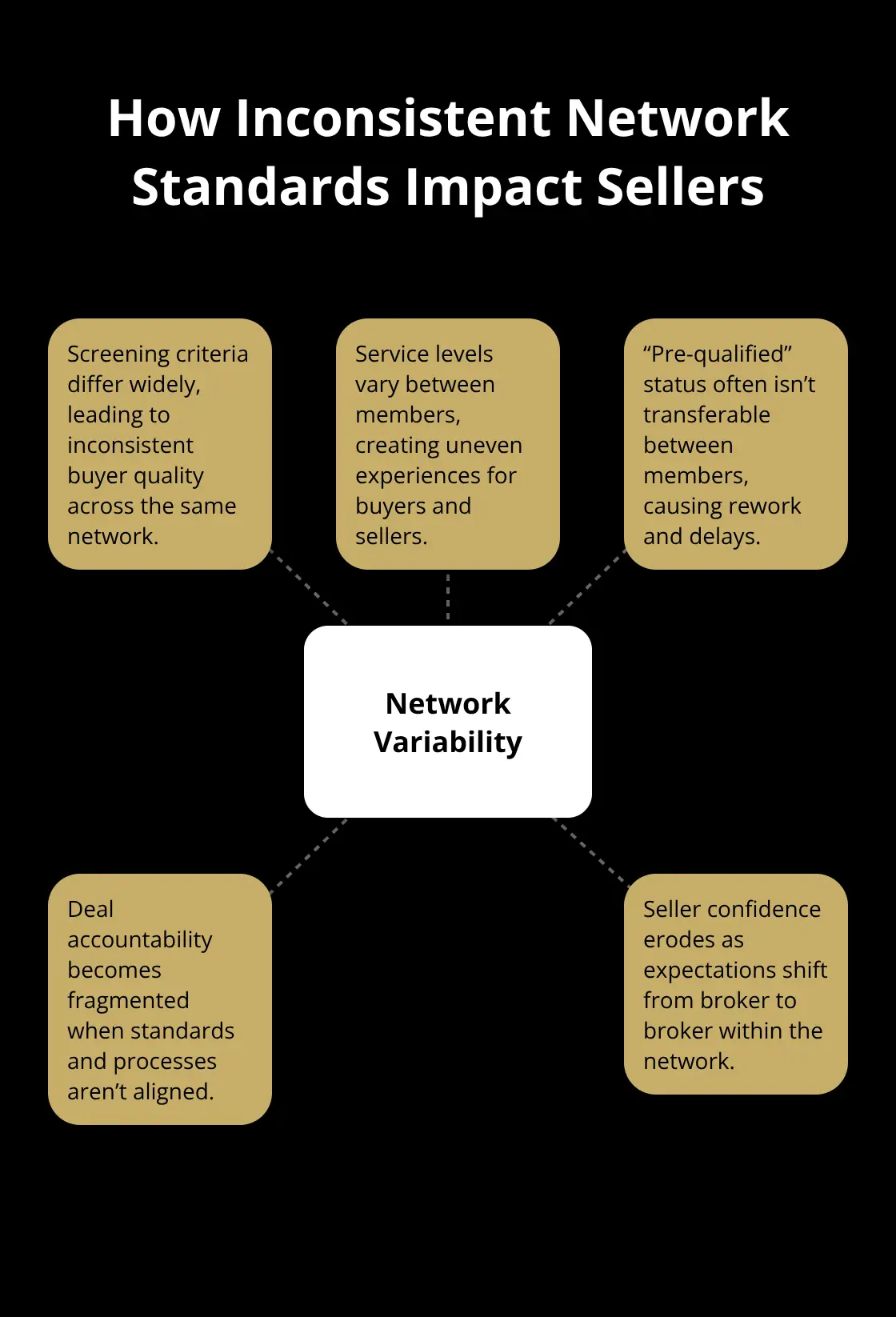
Network membership requirements differ significantly between organizations. Some networks accept any licensed broker who pays membership fees, while others maintain stricter standards for experience and transaction volume. This variation directly impacts buyer quality and transaction success rates within the same network.
The screening processes that networks advertise often apply only to lead brokers, not to the entire network membership. When buyers move between network members, they may encounter completely different qualification standards and service levels.
These operational realities raise important questions about whether the promised network advantages translate into better outcomes for sellers, particularly when compared to more targeted approaches.
Quality vs Quantity in Buyer Networks
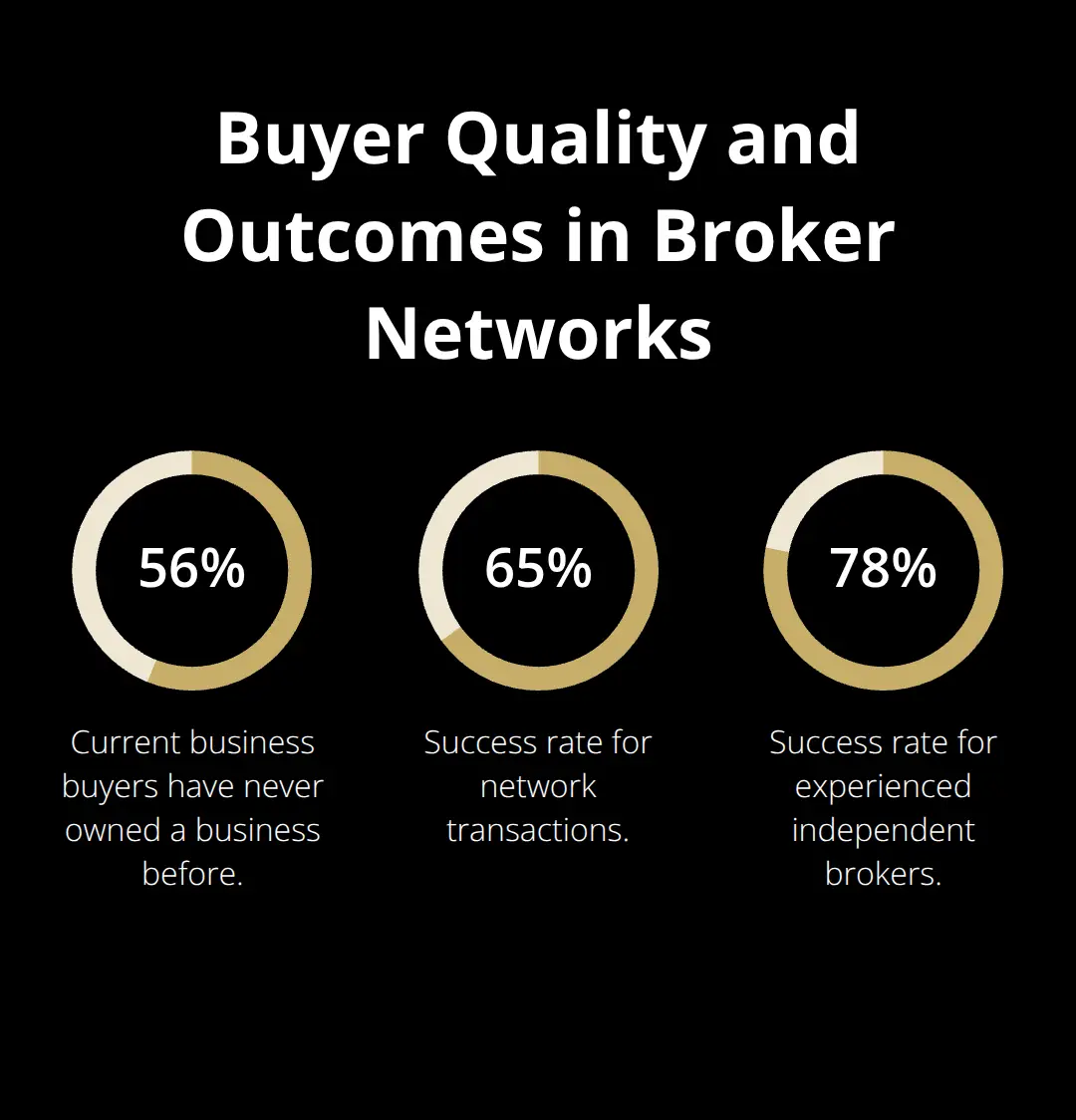
The pre-qualification promise from broker networks sounds compelling, but the execution tells a different story. Recent data shows that over 56% of current business buyers have never owned a business before, highlighting qualification challenges despite screening processes. The problem lies in inconsistent qualification standards across network members and the reality that financial capability changes rapidly in small business transactions.
Network Size Creates More Problems Than Solutions
National networks like IBBA generate higher inquiry volumes but lower conversion rates compared to regional approaches. Regional brokers with local connections consistently outperform national networks in matching serious buyers with appropriate businesses. The geographic spread dilutes focus and creates communication delays that extend negotiations.
Industry Connections Matter More Than Network Breadth
Business brokers focus on companies valued at less than $2.0 million, often finding the ultimate buyer near the company’s location according to industry analysis. A manufacturing broker with 200 qualified industrial buyers will outperform a network with 10,000 mixed prospects. Industry-specific connections understand business operations, financing requirements, and market conditions that general networks cannot match.
Qualification Standards Vary Dramatically
Network members apply different screening criteria, which creates inconsistent buyer quality across the same platform. Some brokers require three years of tax returns and verified bank statements, while others accept basic qualification letters. This variation means pre-qualified status in one market may not translate to serious buyer capability in another region.
The expertise gap becomes apparent during due diligence when specialized buyers ask informed questions while network referrals often lack industry knowledge. These complications create additional delays that ultimately waste more time than broad network access saves, raising important questions about the true cost of network participation versus targeted marketing approaches. When collecting buyer data, focusing on quality over quantity yields more valuable results than casting the widest possible net.
What Do Broker Networks Really Cost
Broker networks impose substantial financial burdens that sellers rarely calculate upfront. Commission structures for network transactions typically range from 10% to 15% of the sale price, with additional fees for platform access and marketing services. Network brokers charge higher commissions compared to independent brokers, which creates a significant cost difference on business sales. These commissions split between referring brokers and closing brokers, but the seller pays the full amount regardless of which broker actually closes the deal.
Platform Fees Add Hidden Costs
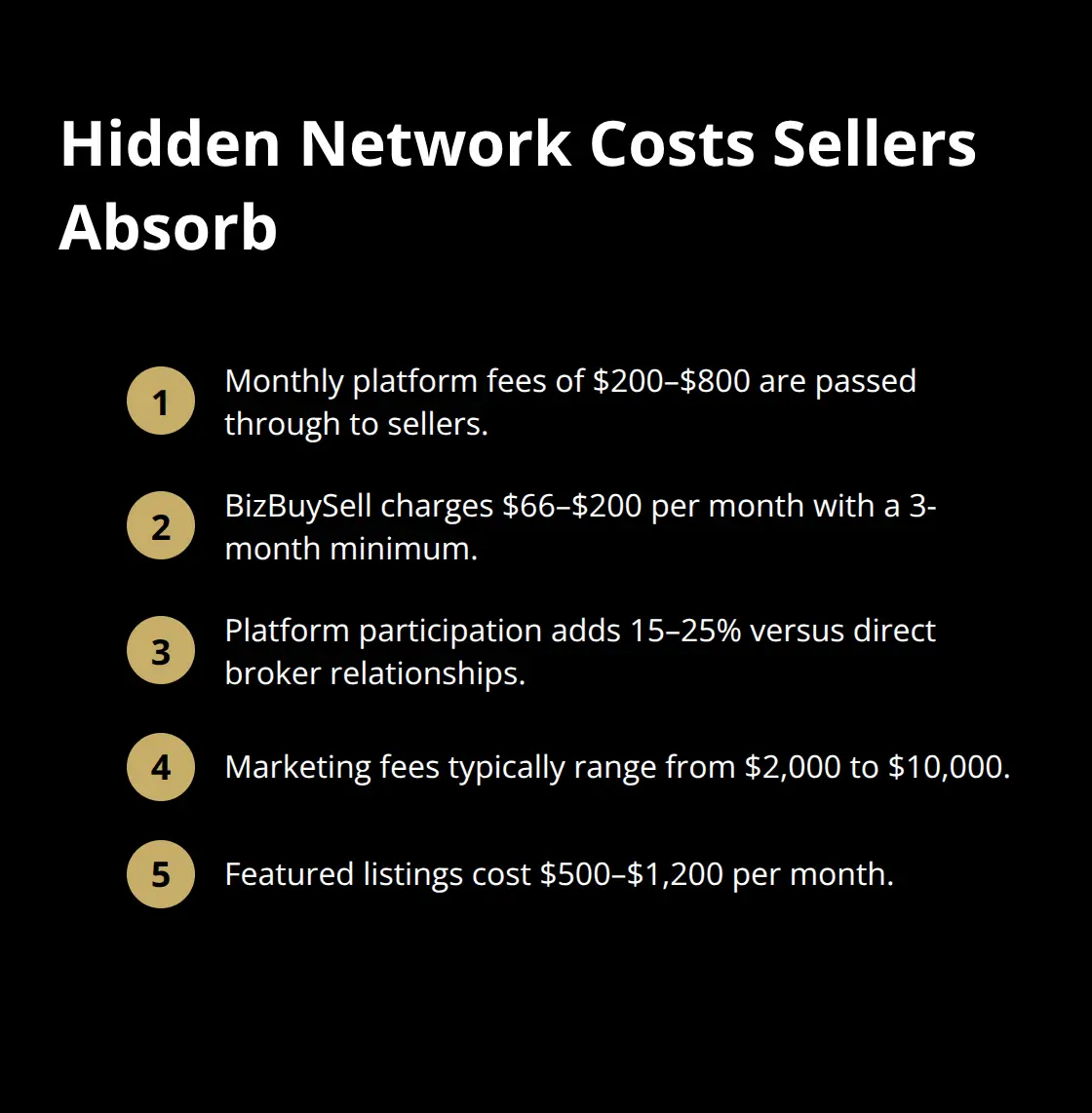
Network membership requires brokers to pay monthly platform fees that range from $200 to $800, costs that get passed directly to sellers through higher service charges. BizBuySell charges brokers between $66–$200 per month depending on the listing tier, with a minimum 3-month commitment. These platform costs increase the total expense of network participation by 15-25% compared to direct broker relationships. Marketing fees range from $2,000 to $10,000, with featured listings that require $500-1,200 monthly payments that many sellers discover only after they sign agreements.
Time Investment Shows Poor Returns
Network transactions take an average of 8-12 months to close compared to 6-8 months for direct broker sales according to Transworld Business Advisors data. The referral process between network members creates delays during buyer qualification and due diligence phases. Multiple broker handoffs extend communication chains and slow decision-making, particularly when buyers need quick responses during competitive bidding situations.
Success Rates Favor Independent Brokers
Success rates for network transactions hover around 65% compared to 78% for experienced independent brokers with established buyer relationships. The additional time investment rarely justifies the promised network advantages, especially when sellers factor in the opportunity cost of extended marketing periods and delayed closing proceeds. Modern platforms like Unbroker offer transparent fees (often under $5,000 total) that eliminate high brokerage fees while maintaining access to qualified buyers through AI-driven processes.
Final Thoughts
Broker networks deliver meaningful value only for businesses that exceed $5 million in value or operate in highly specialized industries that require niche expertise. Manufacturing companies with unique equipment or technology businesses that need industry-specific buyers benefit from network connections that independent brokers cannot match. Most small businesses under $2 million face poor returns from network participation due to higher costs and extended timelines.
The financial analysis strongly favors selective approaches over broad broker networks participation. Network fees, extended commission structures, and platform costs typically add $15,000-25,000 to transaction expenses compared to direct broker relationships. These additional costs rarely generate proportional increases in sale prices or buyer quality for typical small business transactions.
Modern platforms like Unbroker demonstrate how technology eliminates traditional network advantages while reducing costs significantly. AI-driven buyer matching, transparent pricing, and direct seller control create better outcomes than network referral systems. The data shows that targeted marketing to qualified buyers produces faster sales and higher net proceeds than wide network approaches that generate more inquiries but fewer serious offers.