Business owners often struggle with complex financial calculations when determining their company’s worth. Traditional valuation methods require extensive accounting knowledge that most entrepreneurs simply don’t have.
We at Unbroker understand this challenge. Modern valuation software has changed the game by making professional-grade business assessments accessible to non-financial experts through intuitive interfaces and automated calculations.
Key Features to Look for in Business Valuation Software
User-Friendly Interface Determines Success
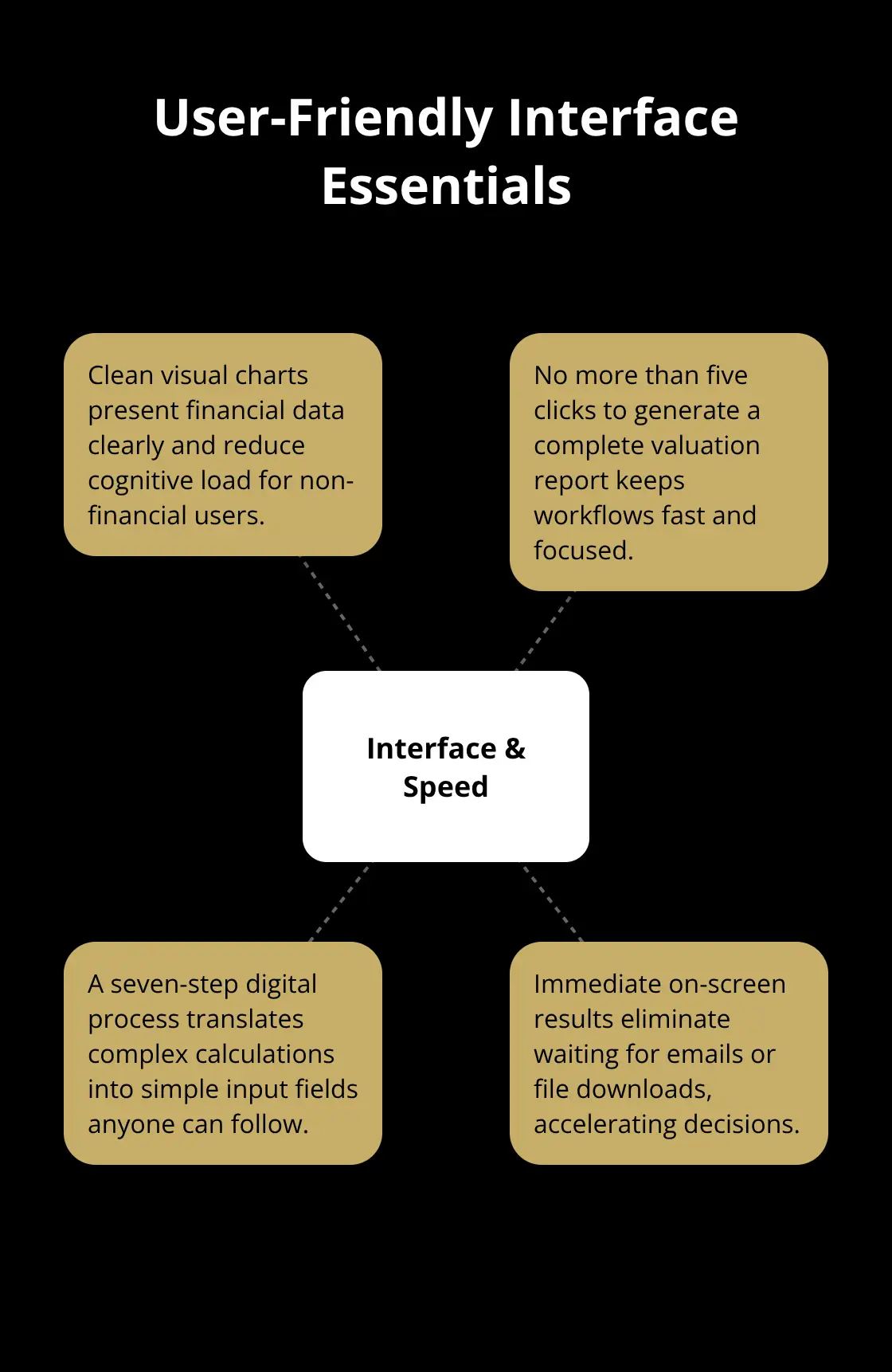
The interface determines your valuation experience from start to finish. Software with cluttered dashboards and confusing navigation frustrates users within minutes. Look for platforms that present financial data through clean visual charts and require no more than five clicks to generate a complete valuation report. BizEquity demonstrates this approach with their seven-step digital process that transforms complex calculations into simple input fields. The best tools display results immediately on your screen rather than force you to wait for email delivery or file downloads.
Multiple Calculation Methods Reduce Risk
Single-method valuations create dangerous blind spots in your assessment. Professional-grade software must include asset-based, market-based, and income-based approaches simultaneously. This combination protects you from market fluctuations that could skew one methodology while others remain stable. ValuAdder provides multiple valuation methods within one platform, which allows you to cross-reference results and identify the most accurate range for your business. Software that limits you to earnings multiples alone produces unreliable results, especially for asset-heavy companies or businesses in volatile industries.
Automated Report Generation Saves Time
Generic reports waste your time and confuse stakeholders who need specific information. Quality software generates customized documents that match your audience (whether you present to potential buyers, investors, or legal advisors). The platform should automatically populate your company data into professional templates and allow you to modify sections without starting from scratch. This feature eliminates the $8,000 cost and 4-6 week timeline of traditional valuation services while it maintains professional presentation standards that serious buyers expect.
Data Integration Streamlines Workflow
Manual data entry creates errors and consumes valuable time. Advanced valuation software connects directly with your accounting systems (QuickBooks, Xero, or similar platforms) to pull financial information automatically. This integration reduces input mistakes that could affect your final valuation by thousands of dollars. The software should also update market data in real-time to reflect current industry conditions and comparable company performance.
These features form the foundation of effective valuation software, but when choosing business valuation programs, consider factors like database size and integration capabilities. The market offers numerous options with different strengths and specializations.
Top Business Valuation Software Options for 2025
BizEquity Dominates Quick Market Valuations
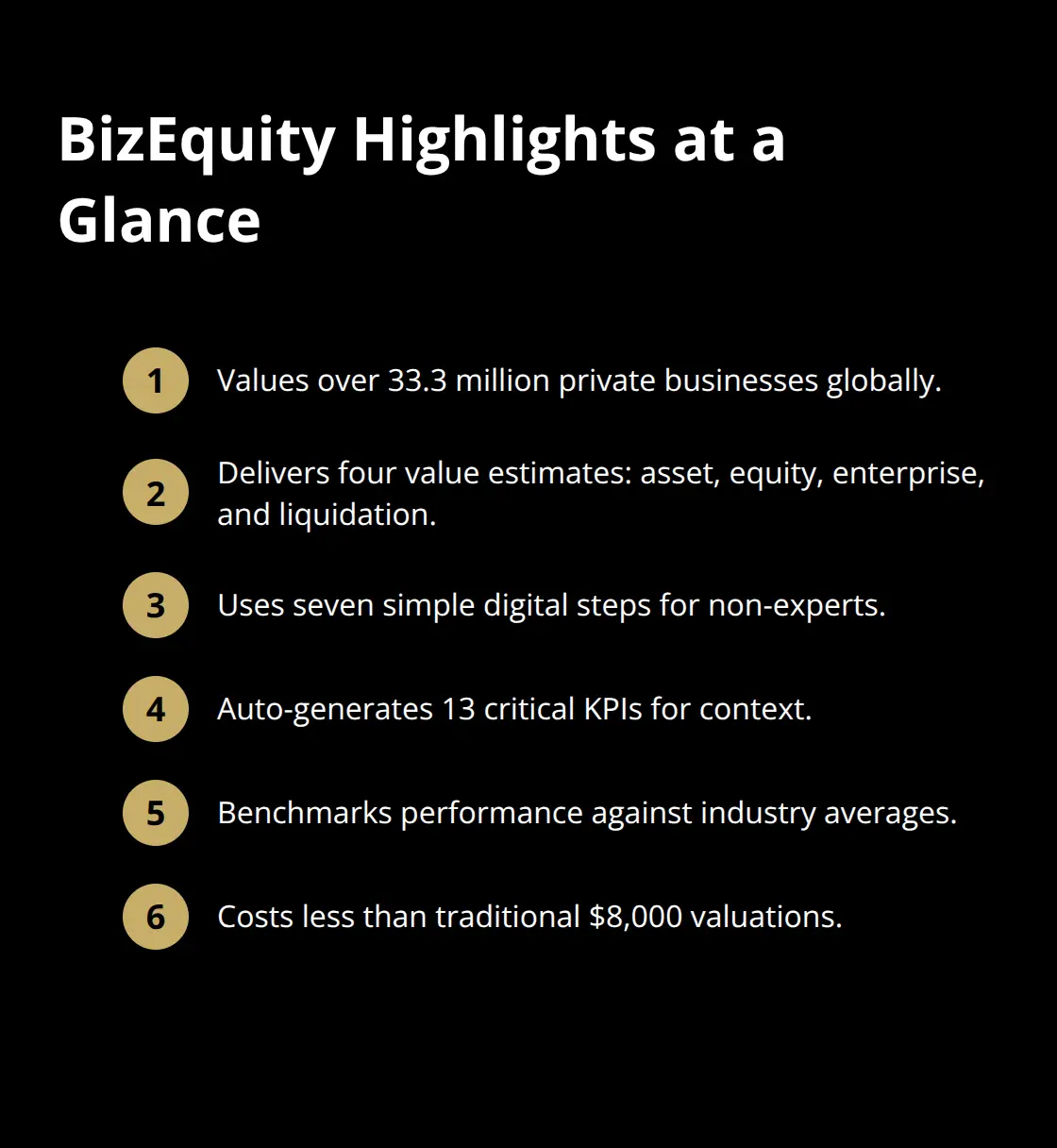
BizEquity leads the market for non-financial users who need quick, reliable valuations without complexity. Their patented system has valued over 33.3 million private businesses globally, which demonstrates proven accuracy at scale. The platform delivers four essential value estimates (asset, equity, enterprise, and liquidation values) through seven simple digital steps that require no financial expertise.
BizEquity generates 13 critical KPIs automatically and benchmarks your performance against industry averages. This gives you immediate context for your results without manual calculations. The software costs significantly less than traditional $8,000 valuations while it delivers professional-grade accuracy that satisfies lenders and potential buyers.
ValuAdder Provides Comprehensive Analysis Tools
ValuAdder targets users who need comprehensive analysis with multiple valuation methods in one platform. The software includes various valuation approaches, from discounted cash flow to asset-based methods. This protects you from single-method blind spots that could cost thousands in negotiations.
ValuAdder runs locally on your computer rather than cloud-based systems. This approach gives you complete data control and faster processing speeds. The software handles complex calculations while it maintains user-friendly interfaces that non-financial experts can navigate effectively.
Business Valuation Resources Serves Specialized Needs
Business Valuation Resources offers specialized online calculators for specific industries and situations. Their tools focus on particular valuation challenges like ESOP transactions or family limited partnerships. This makes them ideal for niche requirements that general platforms cannot address effectively.
The platform provides industry-specific templates and methodologies that account for unique business structures. Users access targeted solutions rather than generic approaches that may miss important sector-specific factors.
Each software option addresses different user needs and business complexities. Your choice depends on factors like budget constraints, technical requirements, and the level of detail you need for your specific situation. Consider exploring top exit planning tools if you’re planning a future business sale.
How to Choose the Right Valuation Software for Your Needs
Your business type determines which software features matter most for accurate valuations. Manufacturing companies need asset-heavy calculation methods while service businesses require income-based approaches. SaaS companies benefit from specialized recurring revenue models that traditional software cannot handle properly. Restaurant owners need inventory tracking capabilities that retail-focused platforms lack. BizEquity works well for standard businesses but struggles with complex ownership structures. ValuAdder handles multiple entity types effectively but requires more technical knowledge than most entrepreneurs possess.
Match Software Capabilities to Industry Standards
Technology companies need software that values intellectual property and growth potential accurately. Real estate businesses require platforms with property-specific valuation methods and market comparables. Professional services firms need tools that account for client relationships and contracts properly. Healthcare practices require specialized methodologies that consider regulatory requirements and patient base stability. Generic software produces unreliable results for specialized industries because standard multiples do not reflect sector-specific risks and opportunities. Industry-specific features and data can significantly improve the accuracy of your valuations.
Budget Beyond Initial Software Costs
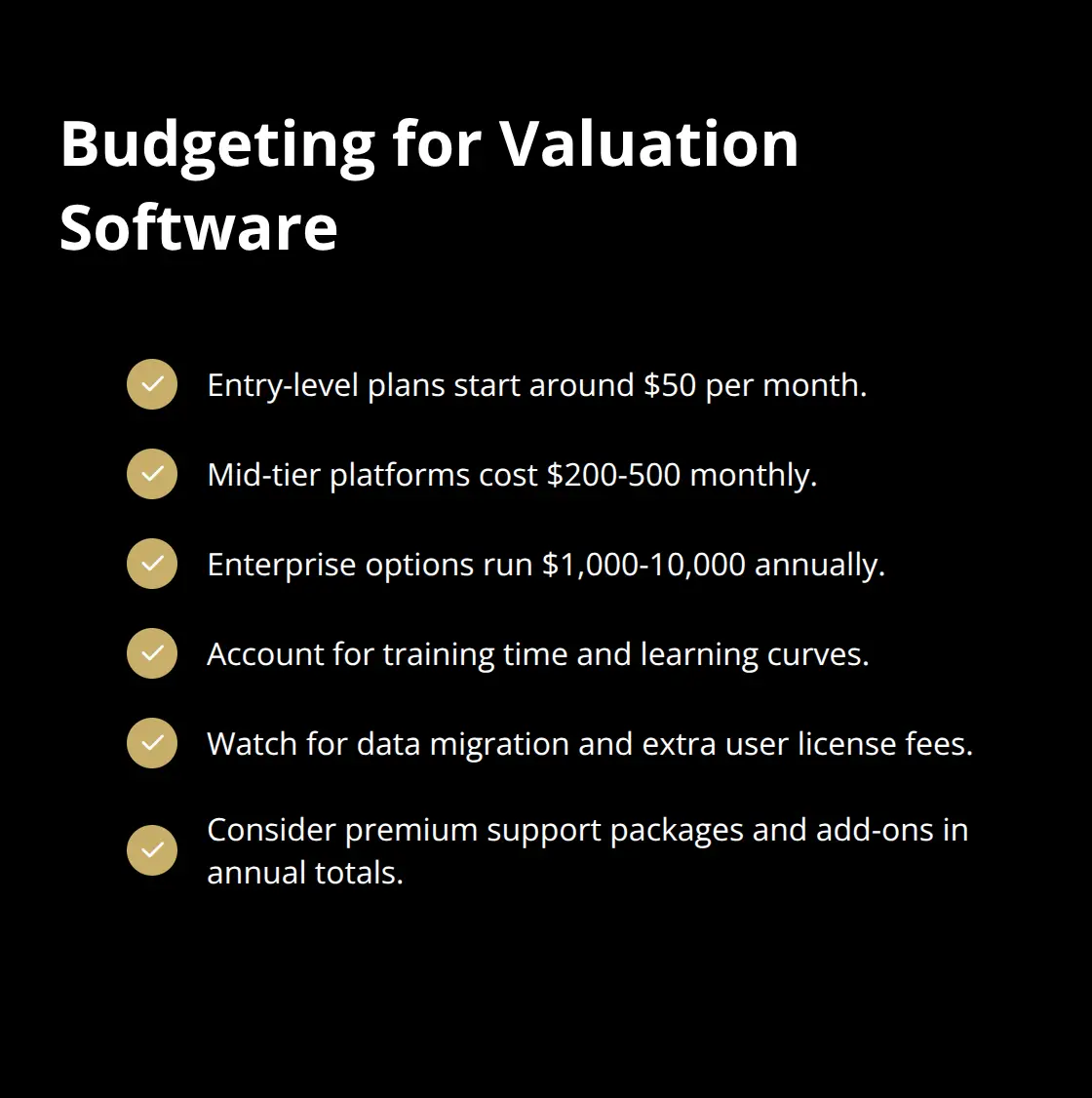
Entry-level software starts around $50 monthly but limits you to basic calculations and generic reports. Mid-tier platforms cost $200-500 monthly and provide multiple valuation methods with customization options. Enterprise solutions range from $1,000-10,000 annually but offer advanced analytics and integration capabilities. Factor in training time costs because complex software requires significant learning before productive use. Hidden costs include data migration fees, additional user licenses, and premium support packages that basic plans exclude.
Calculate total annual expenses (software subscriptions, training investments, and potential consultant fees for complex situations).
Support Quality Determines Success Speed
Live chat support resolves technical issues within hours while email-only support creates multi-day delays. Phone support costs more but provides immediate problem-solving for urgent valuations. Video tutorials work better than written manuals for visual learners who navigate complex features. Some platforms offer dedicated account managers for enterprise clients while others provide community forums only. Test support responsiveness during trial periods because poor assistance wastes weeks when deadlines approach. Training resources should include industry-specific examples rather than generic scenarios that do not match your business model.
Evaluate Integration and Scalability Needs
Your accounting system compatibility affects daily workflow efficiency. QuickBooks users need software that connects seamlessly with their existing financial data. Xero integration prevents manual data entry errors that could affect valuations by thousands of dollars. Cloud-based solutions provide mobile access for remote work while desktop software offers faster processing speeds. Consider future growth plans because basic software may not handle increased complexity as your business expands. Enterprise features (multi-user access and advanced reporting) become necessary as teams grow beyond single-person operations. Creating an exit strategy that aligns with your goals helps determine which software features support your long-term plans.
Final Thoughts
BizEquity stands out as the top choice for non-financial users who need quick, reliable valuations without complexity. Their seven-step process and 33.3 million business database provide proven accuracy at affordable rates. ValuAdder works better for users who want comprehensive analysis tools and accept steeper learning curves, while Business Valuation Resources serves specialized industry needs that general platforms cannot address.
Small businesses benefit most from BizEquity’s simplicity and speed. Medium-sized companies should consider ValuAdder for detailed analysis capabilities. Large enterprises need custom solutions with advanced integration features that match their complex requirements.
Start with your primary use case: quick market estimates, detailed financial analysis, or specialized industry requirements. Download free trials to test interfaces before you commit to annual subscriptions (most valuation software providers offer 14-day trials that let you evaluate features with your actual business data). We at Unbroker help business owners sell their companies through our platform that connects sellers with qualified buyers.