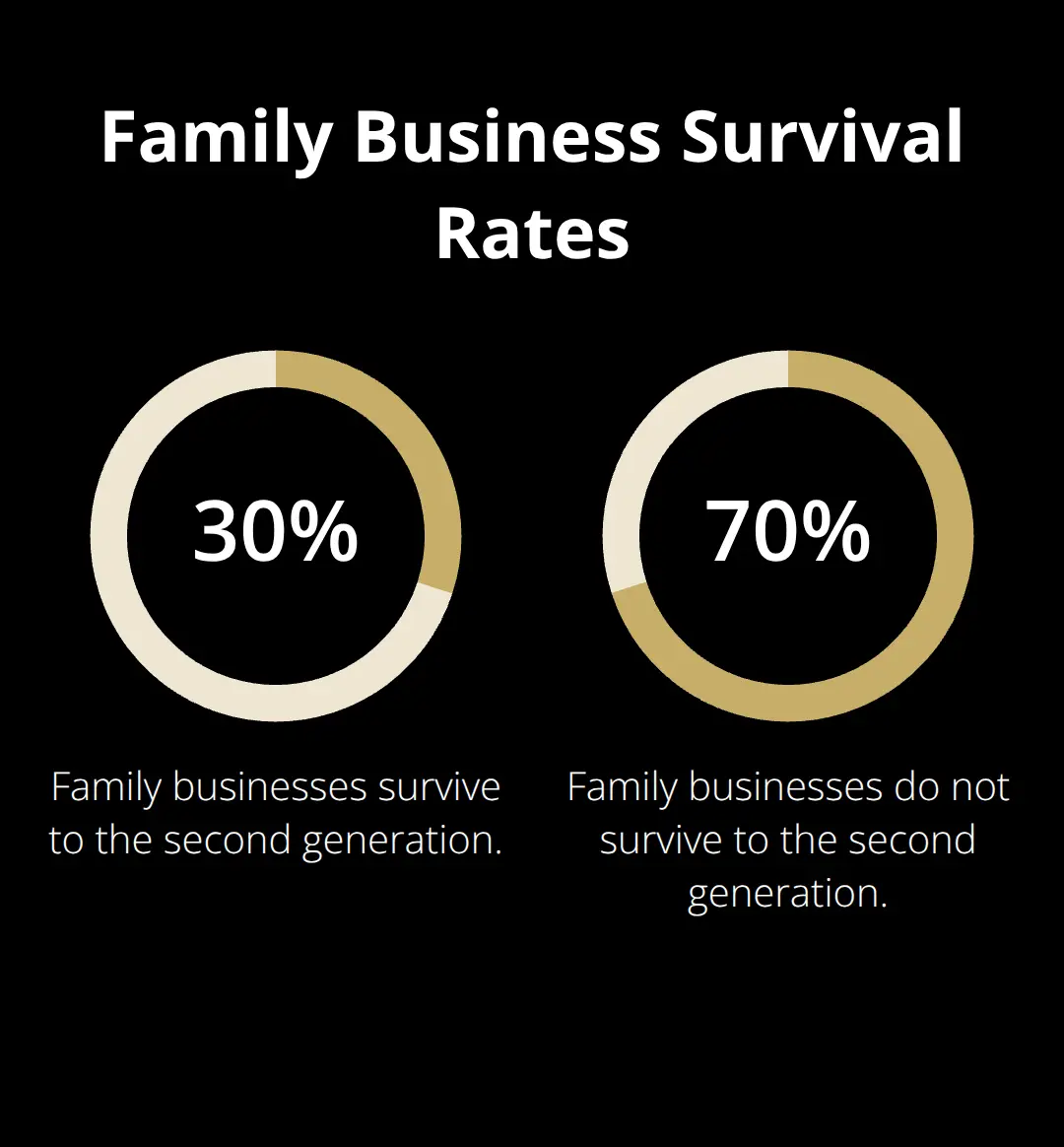
Family businesses drive 70% of global GDP, yet only 30% survive to the second generation. The statistics get worse with each passing generation.
Succession planning represents the difference between a thriving multi-generational enterprise and a business that dies with its founder. We at Unbroker see this challenge daily when working with family-owned companies.
The good news? With proper planning, your family business can beat these odds and build a lasting legacy.
What Makes Family Business Succession Planning So Complex
Family business succession planning extends far beyond will preparation or automatic selection of the oldest child as CEO. This process requires systematic transfer of leadership, ownership, and operational control while family relationships and business value remain intact. PwC’s 2023 Family Business Survey shows that only 34% of family businesses have robust, documented succession plans, which creates massive vulnerabilities when leadership transitions become necessary.
The Emotional Barriers That Destroy Business Value
Family business succession differs fundamentally from corporate transitions because emotions merge with business decisions. Parents find it difficult to release control of their life’s work, while children face pressure to continue legacies they may not desire. The Exit Planning Institute discovered that 70% of businesses fail to find buyers or successful succession plans after market listing, often because owners delayed addressing these emotional barriers too long. Sibling rivalries, conflicting company visions, and fairness concerns among family members add complexity layers that business logic alone cannot resolve.
The Statistics Behind Succession Failures
Numbers reveal harsh succession realities. Cornell University research shows that about 40% of businesses turn into second-generation businesses, while approximately 13% are passed down successfully to a third generation. These failures result from predictable problems: insufficient leadership development, poor communication, tax planning errors, and role confusion among family members. BizBuySell data indicates the median sale price for closed businesses hit $315,000 in 2022, yet most family businesses never reach the market because succession planning started too late or never began.
Why Traditional Approaches Fall Short
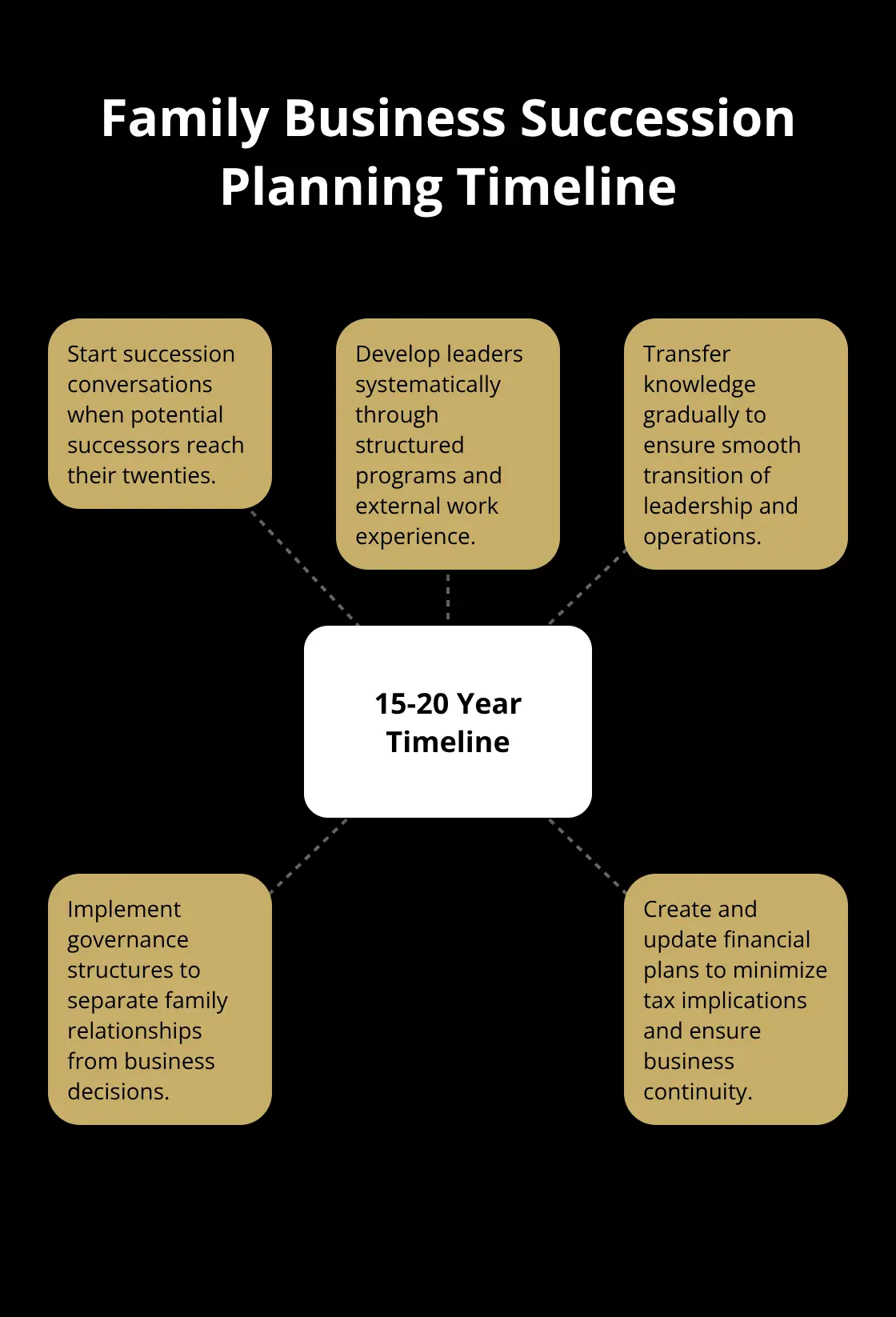
Most family business owners treat succession as a single event rather than a multi-year process. This approach ignores the reality that successful transitions require 15-20 years of preparation (according to family business research). Owners often assume their children want the business, fail to develop leadership skills in potential successors, and postpone difficult conversations about ownership transfer. The result? When succession becomes urgent due to health issues or retirement needs, families scramble to create plans that should have developed over decades.
These challenges explain why effective succession planning requires a completely different approach than most families expect.
Key Components of a Successful Succession Plan
Successful succession plans require three non-negotiable components that most family businesses execute poorly. You must identify and develop future leaders years before they need control. This means you create structured leadership development programs rather than hope your children will figure things out. Send potential successors to work outside the family business for 3-5 years minimum. This external experience builds confidence, eliminates nepotism accusations, and brings fresh perspectives back to your company. When they return, assign specific measurable responsibilities with clear performance metrics rather than vague mentorship arrangements.
Leadership Development That Actually Works
External work experience transforms potential successors from entitled heirs into capable leaders. Companies like Mars and Samsung require family members to work elsewhere for minimum periods before they can join the family business. This approach forces successors to prove themselves in neutral environments where their last name carries no weight. They return with industry knowledge, professional networks, and confidence that internal-only development cannot provide. Create formal mentorship programs with trusted non-family employees rather than direct parent-child relationships (which often create bias and conflict).
Governance Structures That Prevent Family Wars
Clear governance structures separate family relationships from business decisions, which prevents the emotional conflicts that destroy family business transitions. Establish a family council that meets quarterly to discuss business strategy, ownership policies, and succession timelines. Create written employment policies that apply equally to family and non-family employees, including performance standards, compensation structures, and termination procedures. Document who makes what decisions and when. Family members should not receive automatic voting rights or management positions without proven qualifications. This approach eliminates role confusion that creates resentment among employees and family members.
Financial Planning That Minimizes Tax Disasters
Financial plans represent the most technical succession aspect but cause the most expensive failures when handled poorly. Estate taxes can consume 40% of your business value without proper planning.

Start with professional business valuations updated every three years to understand your company’s worth and tax implications. Consider annual business share gifts to children using the $17,000 annual exclusion limit, which transfers ownership gradually while minimizing gift taxes. Establish buy-sell agreements that define share values and purchase terms if family members want to exit the business. These agreements prevent disputes and provide liquidity for departing family members without forcing business sales.
The foundation elements above create the framework, but execution requires specific steps that transform plans into reality.
How Do You Execute Your Succession Plan Step by Step
Succession plan execution begins with immediate action, not when retirement approaches. Start succession conversations when potential successors reach their twenties. This timeline provides 15-20 years to develop leaders and transfer knowledge systematically. Schedule quarterly family meetings with structured agendas that address business performance, leadership development progress, and ownership transition timelines.
Document every decision and create written policies for family employment, compensation, and performance evaluation. Research shows that businesses with documented succession plans have better survival rates during generational transitions compared to those that rely on informal arrangements.
Assess Every Candidate Without Family Bias
Evaluate all potential successors with identical criteria regardless of family relationships. Create competency assessments that measure leadership skills, industry knowledge, financial acumen, and cultural fit with company values. Require all candidates to complete external work experience for minimum 5 years before you consider them for leadership roles.
Interview current employees about each candidate’s performance and leadership potential through anonymous feedback systems. Consider non-family candidates when family members lack necessary qualifications or interest. Employee ownership transitions often show strong performance outcomes, with employee-owned businesses demonstrating lower turnover rates and sustained profitability.
Create Legal Framework That Prevents Future Conflicts
Document all succession decisions through comprehensive legal structures that eliminate ambiguity during transitions. Establish buy-sell agreements that define share valuations, purchase terms, and trigger events for ownership changes. Create employment agreements for family members that specify roles, responsibilities, compensation, and termination conditions identical to non-family employees.
Draft shareholder agreements that govern voting rights, dividend policies, and decision-making authority. Update estate planning documents annually to reflect current business valuations and family circumstances. These legal protections become essential when family dynamics change through divorce, death, or disagreements about business direction.
Prepare for Unexpected Leadership Disruptions
Plan for unforeseen circumstances that could force immediate leadership changes. Create emergency succession protocols that activate when owners face sudden illness, death, or incapacity. Designate interim leaders and decision-makers who can maintain operations during crisis periods (typically trusted non-family executives or board members).
Maintain updated life insurance policies that provide liquidity for estate taxes and family buyouts. Document all critical business relationships, vendor contracts, and operational procedures so successors can access essential information immediately. Test your emergency plans annually through scenario exercises with key stakeholders.
Remember that exit planning should begin five years before your target date, focusing the first two years on operational improvements. Never ignore family expectations or skip the business preparation phase when creating an exit strategy that aligns with your personal goals.
Final Thoughts
Family business succession planning demands systematic execution across leadership development, governance structures, and financial frameworks. Only 30% of family businesses survive to the second generation, but proper planning dramatically improves these odds. Professional guidance becomes essential when you navigate complex tax implications, legal documentation, and family dynamics (attorneys, accountants, and succession specialists provide objective perspectives that family members cannot maintain during emotional transitions).
You must start your succession planning immediately, regardless of your current age or retirement timeline. Begin leadership development programs for potential successors, establish clear governance policies, and document all operational procedures. Create emergency protocols for unexpected leadership disruptions and update legal frameworks annually.
When succession planning leads to business sale considerations, Unbroker offers transparent, low-cost alternatives to traditional brokers. Their Full Service Business Sale option provides hands-off support, while the Assisted Business Sale gives DIY sellers expert guidance at affordable monthly rates. Your family business legacy depends on decisions you make today, as the 15-20 year succession timeline means delays become exponentially more expensive and risky.