Selling a vending machine route with partial ownership can be a complex process. At Unbroker, we often see silent partnerships in the vending industry, which add unique challenges to the sale.
This guide will walk you through the key aspects of selling a vending route when a silent partner is involved, from understanding the partnership structure to navigating legal considerations and ensuring a smooth transition for all parties.
What Is a Silent Partner in a Vending Route?
Definition and Role
A silent partner, also known as a limited partner, invests capital in a vending route business without participating in daily operations. This investor typically provides funds for machine purchases or location acquisitions but doesn’t handle restocking, maintenance, or customer relations.
Responsibilities and Involvement
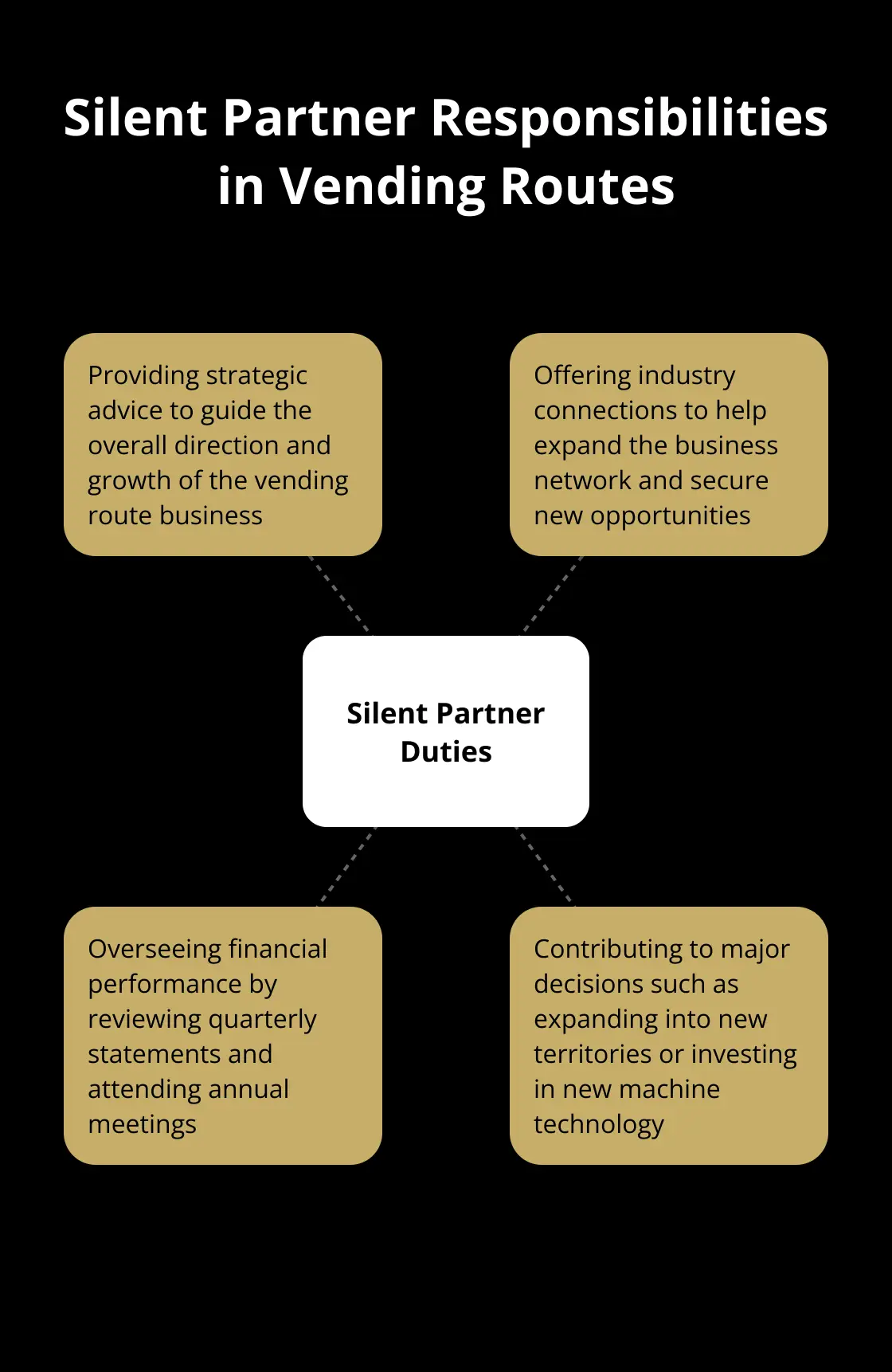
While silent partners don’t manage day-to-day tasks, they play specific roles within the business structure. Their primary duties include:
- Providing strategic advice
- Offering industry connections
- Overseeing financial performance
Silent partners often review quarterly financial statements, attend annual meetings, and contribute to major decisions (such as expanding into new territories or investing in new machine technology). However, they won’t drive around to restock machines or negotiate with location owners.
Legal Aspects of Silent Partnerships
The legal considerations of a silent partnership in a vending route are significant. The partnership agreement should clearly outline:
- Terms of the silent partner’s involvement
- Profit-sharing arrangements
- Decision-making processes for selling the business
Silent partners typically have limited liability, which means they’re only responsible for debts up to their investment amount. This limited liability can appeal to potential buyers, as it reduces the risk they assume. However, a lawyer should review the partnership agreement to ensure all parties understand their rights and obligations during a sale.
Right of First Refusal
An often overlooked aspect is the right of first refusal. Most decently written operating agreements usually have a “right of first refusal” to the company provision. This clause can significantly impact the sale process and should be addressed early on.
Exit Strategy Importance
A clear exit strategy should be in place from the beginning of any partnership. Knowing when and how to exit an investment is crucial. This could be after reaching a certain profit margin, during a buyout, or at another predetermined point.
Understanding these key aspects of silent partnerships in vending routes will prepare you for the complexities of selling your business. The next section will discuss how to prepare for selling a vending route with a silent partner, including valuation methods and necessary documentation.
How to Prepare Your Vending Route for Sale
Accurate Business Valuation
Determining the true value of your vending route is essential for a successful sale. To obtain an accurate valuation:
- Calculate your annual revenue and profit for the past 3 years.
- Create a comprehensive list of all assets (machines, vehicles, inventory).
- Document any exclusive contracts or prime locations.
- Consider professional appraisal services familiar with vending businesses.
Your silent partner’s stake must factor into the valuation. Their investment and any agreed-upon profit-sharing arrangements will impact the final sale price.
Essential Documentation Compilation
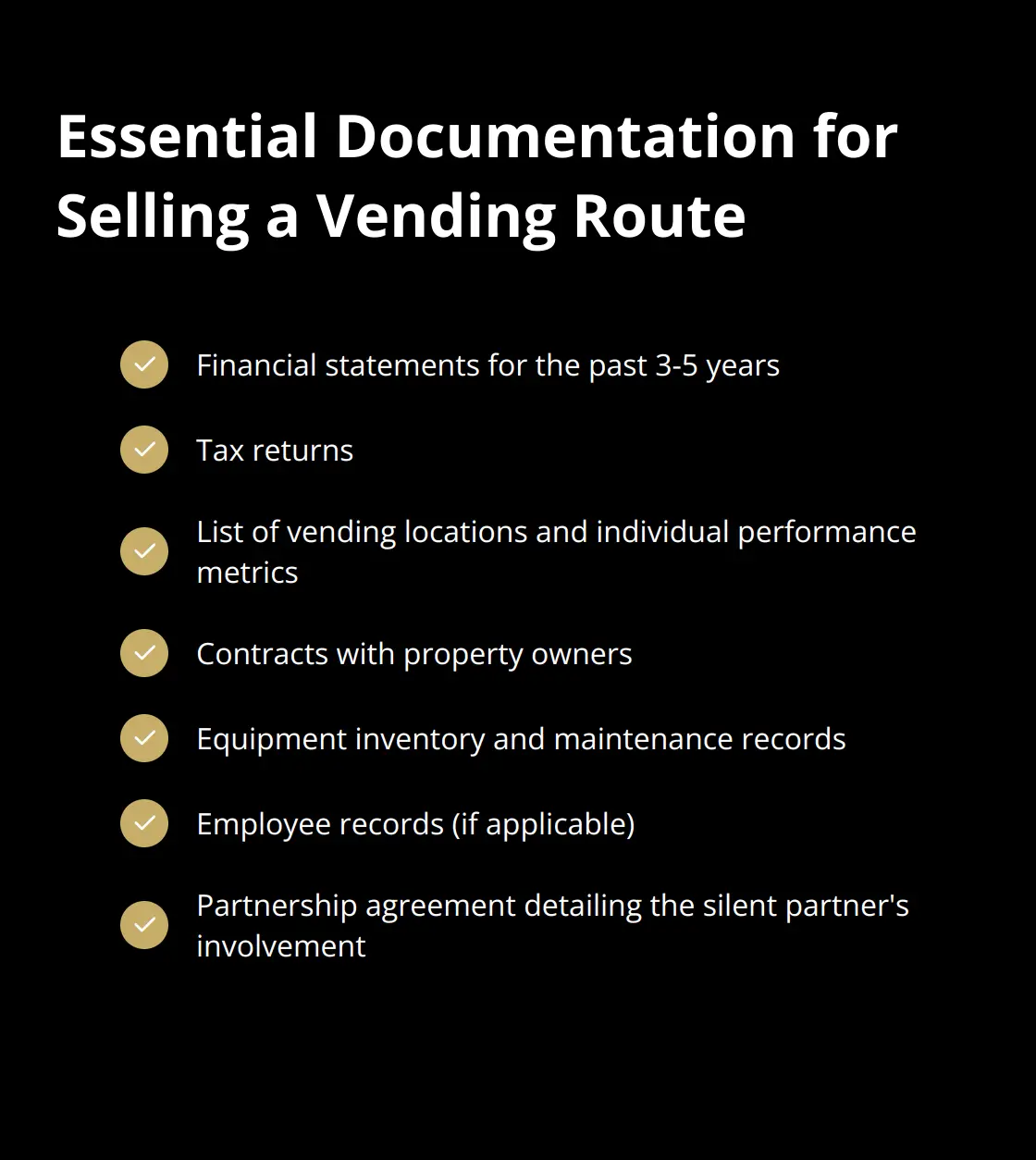
Potential buyers want a clear picture of your vending route’s performance and potential. Assemble these critical documents:
- Financial statements (past 3-5 years)
- Tax returns
- List of vending locations and individual performance metrics
- Contracts with property owners
- Equipment inventory and maintenance records
- Employee records (if applicable)
- Partnership agreement detailing the silent partner’s involvement
Organize these documents in a secure, digital format. This approach streamlines the due diligence process and demonstrates professionalism to potential buyers.
Addressing Partnership Dynamics
The involvement of a silent partner adds complexity to the sale. To prevent conflicts:
- Review your partnership agreement for clauses related to business sale or dissolution.
- Discuss your intention to sell with your silent partner early in the process.
- Agree on the division of sale proceeds.
- Determine if the silent partner wishes to retain any stake post-sale.
If disagreements arise, try mediation or seek legal counsel to resolve issues before approaching buyers. Maintain transparency with potential buyers about the partnership structure to build trust throughout the sale process.
Preparing for Buyer Questions
Anticipate and prepare for common buyer inquiries:
- Why are you selling the business?
- What growth opportunities exist?
- How stable are your current locations?
- What’s the average lifespan of your vending machines?
Prepare concise, honest answers to these questions. Your readiness will instill confidence in potential buyers and smooth the negotiation process.
The next step in selling your vending route involves navigating the complexities of the sale process itself, including how to handle profit sharing agreements and legal considerations unique to silent partnerships.
How to Navigate the Sale Process
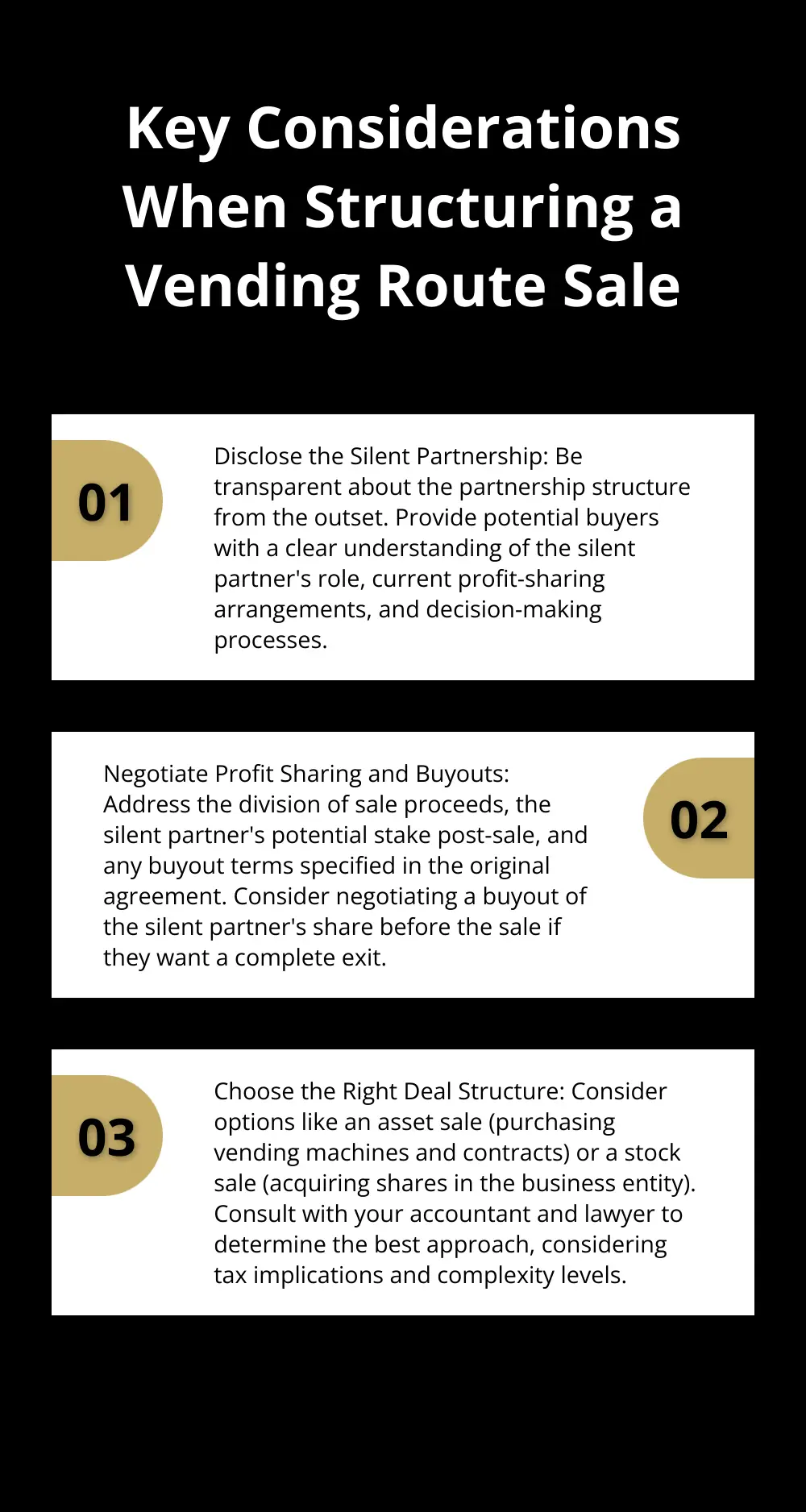
Disclose the Silent Partnership
Transparency forms the foundation of a successful sale. Inform potential buyers about your silent partner from the outset. This approach builds trust and prevents complications during negotiations.
When you reveal the partnership:
- Describe the silent partner’s role
- Explain the current profit-sharing arrangement
- Detail any decision-making processes that include the silent partner
Provide serious buyers with a redacted version of your partnership agreement. This action gives them a clear picture of the business structure without exposing sensitive details.
Negotiate Profit Sharing and Buyouts
The sale of a vending route with a silent partner often involves intricate financial arrangements. Address these key points:
- Division of sale proceeds
- The silent partner’s potential stake post-sale
- Buyout terms specified in your original agreement
If your silent partner wants a complete exit, you might need to negotiate a buyout of their share before the sale. This step can simplify the process for the new buyer.
For silent partners who wish to stay involved, structure the deal to accommodate this preference. This might require the creation of a new partnership agreement between the buyer and your existing silent partner.
Consider Legal Aspects
The legal facets of selling a vending route with a silent partner can prove complex. Work with a lawyer experienced in business sales and partnership law. They can assist you with:
- Review (and potential modification) of your existing partnership agreement
- Drafting of the sales agreement to reflect the complex ownership structure
- Protection of all parties’ interests in the sale
Your lawyer should also examine any non-compete clauses or other restrictions that might affect the sale or your future business activities.
Structure the Deal
The deal structure can significantly impact both you and your silent partner. Consider these options:
- Asset sale: The buyer purchases the vending machines and contracts, but not the business entity
- Stock sale: The buyer acquires shares in your business entity
Each structure carries different tax implications and levels of complexity. Discuss these options with your accountant and lawyer to determine the best approach for your situation.
Utilize Professional Support
Professional support can prove invaluable during this complex process. Platforms like Unbroker offer tools and expertise to streamline the sale, even with the added complexity of a silent partner. Their services (which include legal document templates and negotiation assistance) can help you navigate the intricacies of selling a vending route with shared ownership.
Final Thoughts
Selling a vending machine route with partial ownership presents unique challenges. Clear communication between all parties-the active owner, silent partner, and potential buyers-prevents misunderstandings and fosters trust. This transparency proves essential when disclosing partnership structures, negotiating profit-sharing arrangements, and addressing concerns during the sale.
Legal guidance plays a vital role in navigating the complexities of partnership agreements and ensuring compliance with relevant regulations. A lawyer experienced in business sales and partnership law can protect the interests of all parties involved. Their expertise particularly helps when structuring deals and drafting sales agreements that reflect unique ownership dynamics.
We at Unbroker offer a modern platform designed to simplify the process of selling vending businesses with shared ownership. Our transparent pricing, vast buyer network, and tools (including legal document templates) can help streamline your sale. For expert support in selling your vending route, visit our website to learn more about our services.