Selling your business quietly is a strategic move, not a sign of weakness. A confidential listing process protects what you’ve built while still attracting serious buyers who can close the deal.
At Unbroker, we’ve seen firsthand how the right approach to confidentiality can mean the difference between a smooth transaction and one derailed by leaked information. The challenge isn’t keeping secrets-it’s keeping the right secrets from the right people.
Why Confidentiality Protects Your Business Value
When you announce a business sale publicly, you hand your competitors a roadmap to your vulnerabilities. A leaked sale signals weakness to the market, and buyers interpret that as leverage to negotiate harder. FE International found that public listings attract mostly tire-kickers and competitors fishing for information rather than serious buyers with capital ready to close. Your actual competitive advantages-proprietary systems, client relationships, pricing strategies-become exposed the moment word spreads. Confidentiality isn’t about hiding; it’s about controlling who knows what and when they know it. The businesses that sell for the highest multiples maintain operational normalcy throughout the process.
How Confidentiality preserves revenue and valuation
When your team doesn’t know about a potential sale, they perform at full capacity. When your clients don’t hear rumors, they continue renewing contracts without hesitation. Revenue stays stable, and that stability directly impacts your valuation. Buyers see a functioning operation, not a sinking ship. This operational continuity translates into higher multiples because purchasers perceive lower execution risk. A confidential process removes the market signals that trigger defensive behavior from employees, customers, and suppliers.
Employee Retention and Productivity
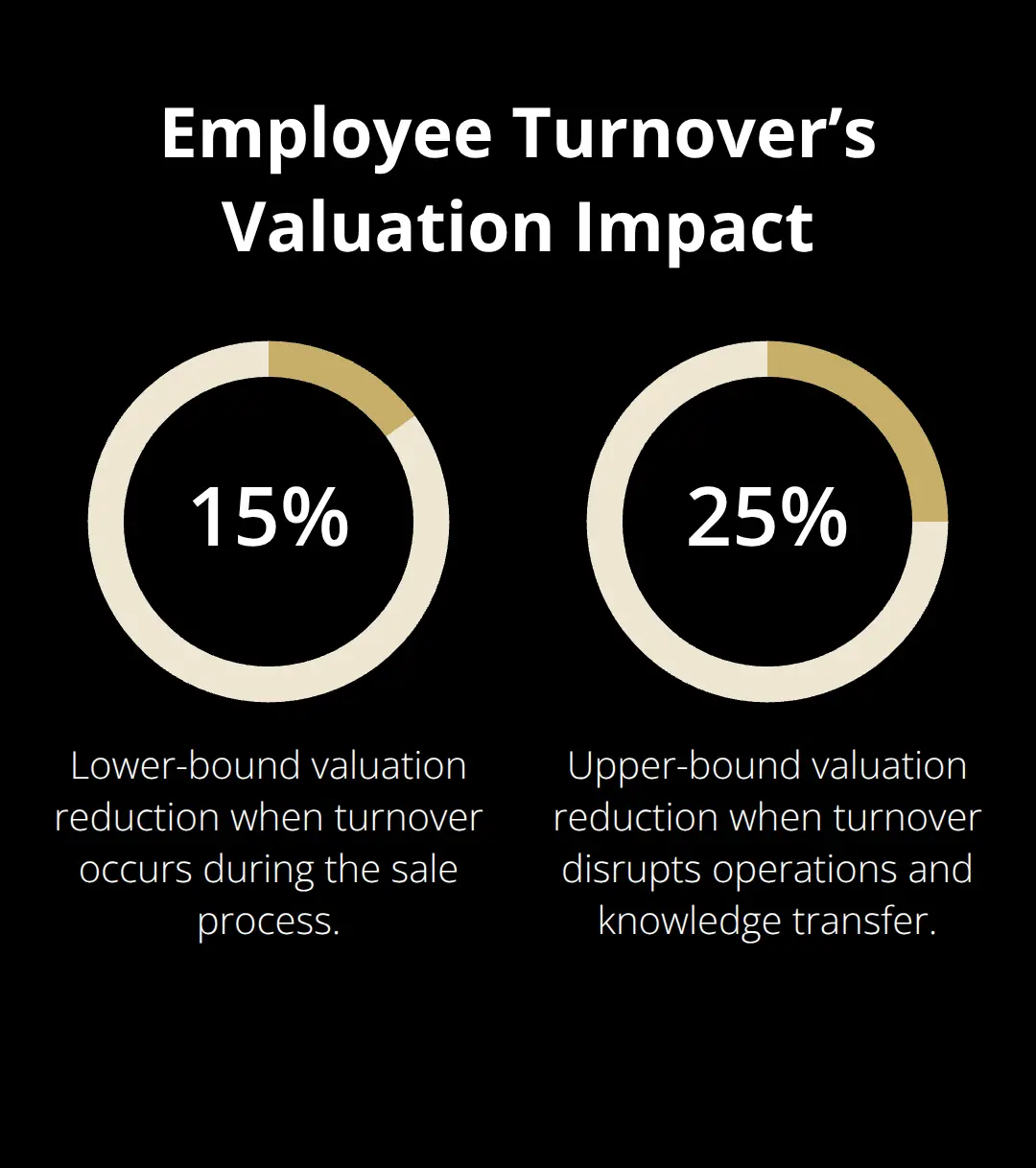
Employee turnover during a sale can cut 15-25% off your final valuation because buyers inherit operational risk and institutional knowledge gaps. High performers leave first, sensing instability or fearing their role won’t survive the transition. A confidential process keeps your team focused on their work instead of updating LinkedIn profiles. You don’t need to tell everyone about a potential sale; you need to tell no one until absolutely necessary.
When the time comes to inform key management, frame it as a positive opportunity rather than a threat. Businesses that maintain productivity throughout a sale close faster and command higher prices.
Protecting Customer Confidence and Contracts
Customer attrition during a visible sale is real and quantifiable. Clients hesitate on renewals when they perceive instability. Long-term contracts get renegotiated downward. Suppliers tighten payment terms. A confidential process prevents these cascading problems. Your customers should never feel uncertain about continuity until the deal is done and you’re ready to introduce them to the new owner. That’s when you control the narrative and frame the transition as beneficial to them, not disruptive.
The mechanics of running a confidential sale require more than good intentions. You need structured processes, legal protections, and strategic buyer screening to attract qualified purchasers while keeping your identity and sensitive information secure.
How to Secure a Confidential Sale Process
Build Legal Protection with Strategic NDAs
Non-disclosure agreements form the legal backbone of any confidential sale, but most business owners treat them as checkbox items rather than strategic tools. An effective NDA defines exactly what constitutes confidential information, specifies the receiving party’s obligations, and sets a defined duration for the confidentiality period. Wisconsin Statute 452.133(1)(d) imposes a duty to preserve confidential information even after closing, so terms, concessions, and related data must remain confidential unless authorized. The agreement should also cover non-solicitation of employees and customers to prevent poaching during the sale process. Draft and sign an NDA with a lawyer before sharing financial statements, customer lists, or operational details. This creates legal recourse if confidential information leaks to competitors or the market. The NDA itself signals to buyers that you take confidentiality seriously, which attracts serious acquirers rather than information-gathering competitors.
Filter Buyers Through Phased Information Release
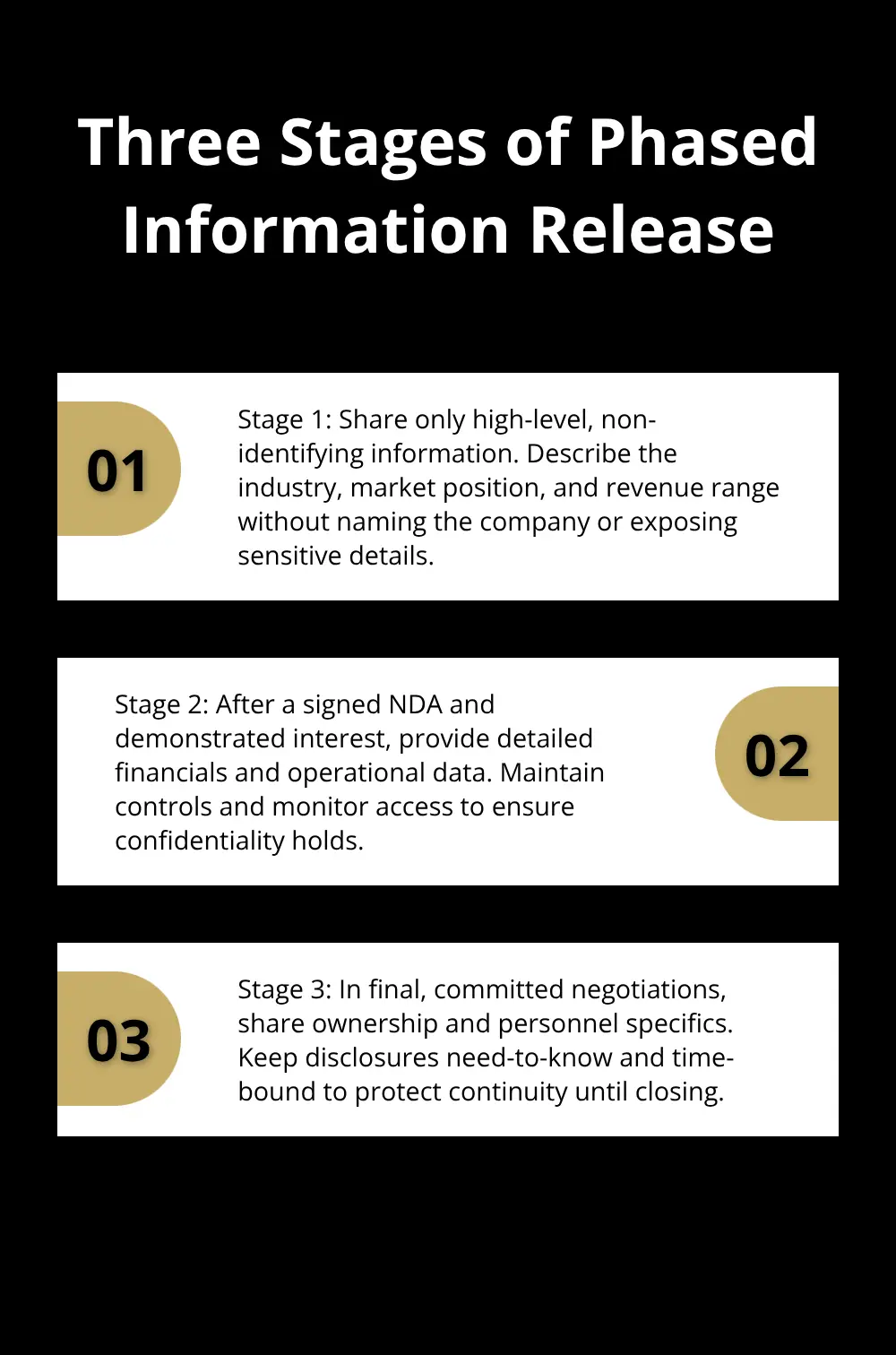
Limiting buyer access requires a phased disclosure approach that filters out unqualified prospects early. Stage one shares high-level information about the business without naming the company or revealing sensitive details. Only after a prospect signs an NDA and demonstrates genuine interest do you move to stage two, which includes detailed financials and operational data. Stage three grants full ownership and personnel information only in final, committed negotiations. Platforms verify buyers with proof of funds, employment history checks, and background screening to weed out shell companies and tire-kickers. Demand that buyers demonstrate liquidity within 48 hours to access the data room, ensuring readiness to close. A virtual data room provides encrypted access logs, audit trails, and document watermarks to deter unauthorized sharing. Watermarked documents and trackable PDFs discourage forwarding sensitive files to competitors or non-authorized recipients.
Leverage Professional Networks for Targeted Outreach
Professional business brokers manage screening and information flow, controlling which prospects receive what data and when. Marketing your business confidentially means using coded listings that do not reveal the company identity, relying instead on industry-specific networks and broker relationships to reach qualified buyers. You attract serious purchasers through targeted outreach rather than public job boards or business listing sites. This controlled approach ensures that only vetted, financially capable buyers learn about your opportunity. The combination of legal protections, staged disclosure, and professional intermediaries creates a fortress around your sensitive information while still connecting you with the right purchasers. With these structural safeguards in place, you can now focus on the next critical phase: how to balance the need for confidentiality with the reality that serious buyers require trust and transparency to move forward.
Attracting Serious Buyers Without Exposing Your Business
The Teaser Document: Your Strategic First Impression
The teaser document makes your first impression, and you must make it count without revealing anything that matters. A teaser shares enough intrigue to spark genuine interest from qualified buyers while protecting your operational details, customer names, and financial specifics. The document describes your industry, market position, revenue range (not exact figures), and growth trajectory without naming your company or listing clients. Think of it as a movie trailer, not the full script. Serious buyers understand this format and expect it; tire-kickers and competitors often move on immediately because the teaser provides insufficient intelligence for their purposes.
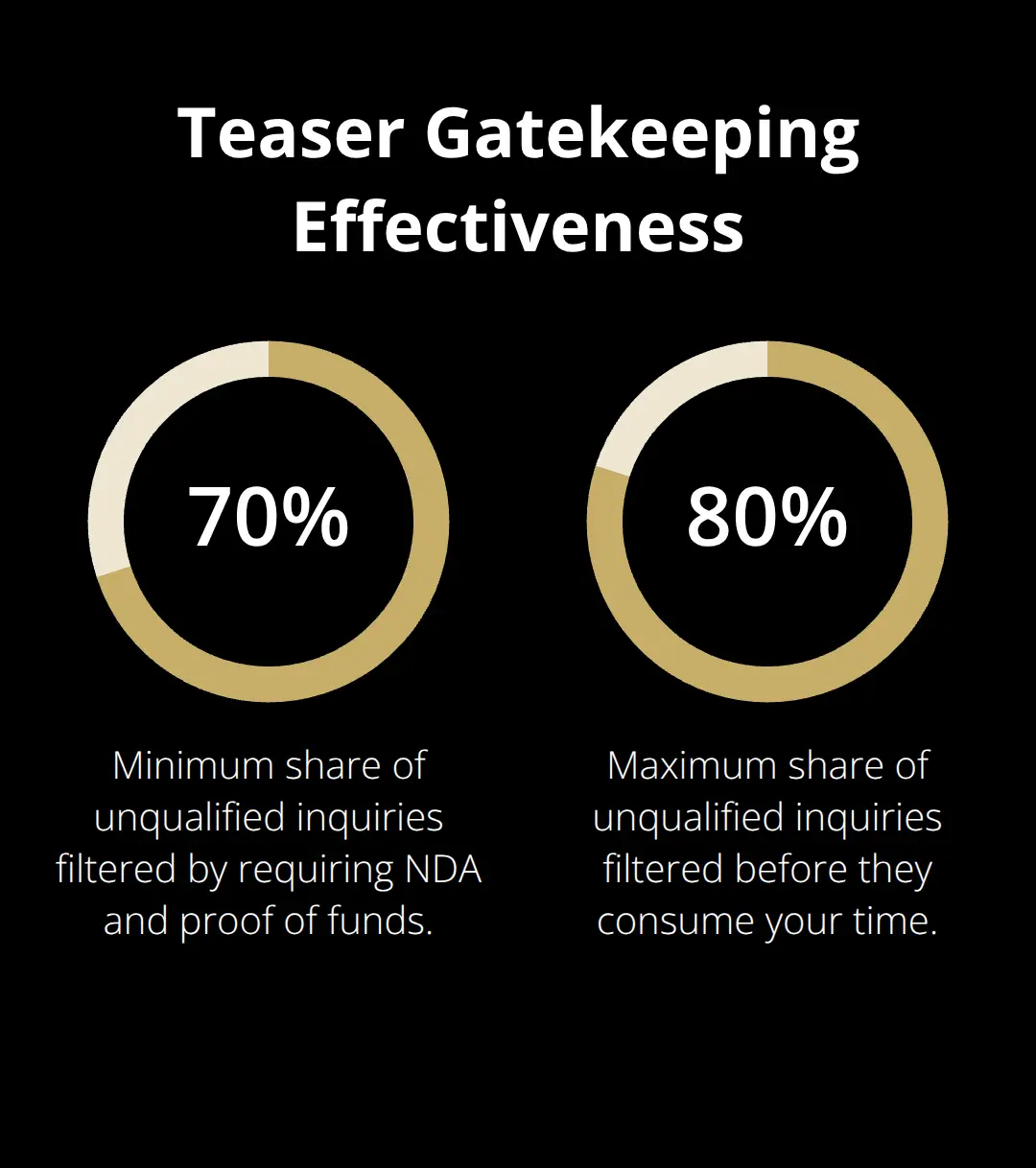
Include a clear statement that full information arrives only after signing an NDA and demonstrating proof of funds. This single requirement filters out 70-80% of unqualified inquiries before they consume your time. Professional brokers know exactly how detailed to make teasers for specific industries.
In healthcare, a teaser might highlight patient volume and service lines without naming facilities. In manufacturing, it emphasizes production capacity and equipment without disclosing proprietary processes.
The teaser also establishes your credibility and professionalism, signaling to serious acquirers that you run a tight ship and take the sale process seriously. This positioning attracts buyers who view the transaction as legitimate and well-managed rather than desperate or rushed.
Controlled Access Through Virtual Data Rooms
Trust accelerates during the due diligence phase, but only if you manage information strategically. After a buyer signs the NDA and proves liquidity, you grant access to your virtual data rooms where they review financial statements, customer contracts, and operational metrics on a secure, tracked platform. The watermarking and access logs reassure you that sensitive documents stay shielded from malicious activity and accidental exposures.
Respond promptly to buyer questions during this phase; delays signal weakness or disorganization. Schedule regular check-ins with serious prospects to address concerns and maintain momentum. These conversations build confidence that the business operates smoothly and that you represent a reliable partner in the transaction. Buyers move faster when they receive consistent communication and transparent data.
Building Confidence Through Personal Connections
Introduce your management team selectively to top candidates, allowing them to validate your operational claims and ask detailed questions about day-to-day execution. This personal connection often tips the scale when multiple buyers compete for your business. Connect serious prospects with your professional advisors-accountants, legal counsel, and industry consultants-who answer technical questions and reinforce the business’s legitimacy (this ecosystem approach signals professionalism and stability to potential purchasers).
Buyers gain confidence when they interact with a professional network, not just you alone. This layered approach to trust-building transforms confidentiality from an obstacle into a competitive advantage, making your sale feel exclusive and carefully managed rather than desperate or exposed.
Final Thoughts
A confidential listing process protects what matters most: your revenue, your team, and your reputation. The businesses that sell for the highest multiples control the narrative, vet their buyers carefully, and maintain operational stability from day one until closing. Employees stay focused, customers keep renewing, and suppliers maintain normal terms when you run your business at full capacity.
Start with a solid NDA that legally binds buyers to confidentiality, then use phased disclosure to filter out tire-kickers and competitors before they waste your time. Leverage professional networks and brokers who understand how to reach qualified purchasers without broadcasting your sale, and build trust through controlled access to your data and consistent communication with serious prospects. This approach maximizes what you’ve built by controlling who learns about your sale and when.
We at Unbroker built our platform around this principle-handling the confidentiality infrastructure so you can focus on running your business. Our AI-driven buyer matching connects you with serious purchasers while our secure data room keeps your sensitive information protected, and Unbroker provides the tools and network you need without the inflated fees traditional brokers charge.