Exiting a vertical SaaS company is a complex process that requires careful planning and execution. At Unbroker, we’ve seen many founders struggle with this crucial step in their entrepreneurial journey.
This guide will walk you through the key steps of preparing your niche software company for exit, choosing the right exit strategy, and executing the process effectively. We’ll share practical tips and insights to help you navigate this challenging but potentially rewarding phase of your business.
How to Prepare Your Vertical SaaS Company for Exit
Preparing your vertical SaaS company for exit requires meticulous planning and execution. Companies that invest time in thorough preparation often achieve better outcomes during the exit process.
Assess Your Company’s Value and Market Position
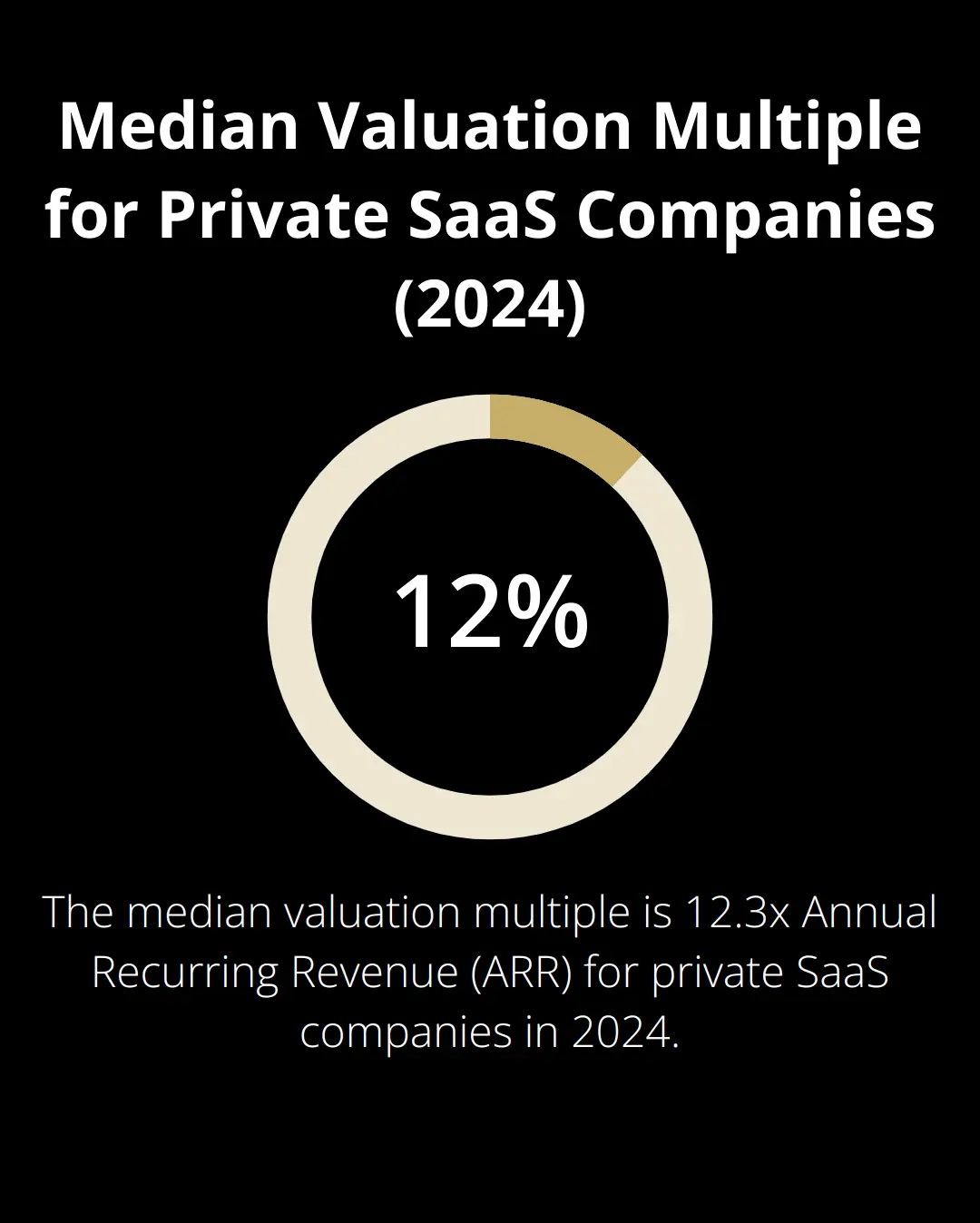
Start with a comprehensive valuation of your company. This involves more than number crunching; you need to understand your market position and how potential buyers perceive your value. A recent report by SaaS Capital shows that the median valuation multiple for private SaaS companies was 12.3x Annual Recurring Revenue (ARR) in 2024. Vertical SaaS companies often command higher multiples due to their specialized nature and strong product-market fit.
To assess your market position, analyze your competitive landscape. Identify your direct competitors and potential acquirers. Examine recent M&A activity in your vertical. This information will help you understand how your company compares and who might want to acquire you.
Optimize Financial Performance and Growth Metrics
Focus on key metrics that buyers care about. The Rule of 40 indicates the balance between growth and profitability and helps assess the attractiveness of a SaaS business. For vertical SaaS, try to achieve a higher combined score of 50 or more.
Pay close attention to your Customer Acquisition Cost (CAC) and Customer Lifetime Value (CLV). A study by ProfitWell found that SaaS companies with a CLV to CAC ratio of 3:1 or higher attract more buyers. Improve this ratio by reducing your CAC and increasing your CLV through upsells and cross-sells.
Strengthen Your Customer Base and Retention Rates
In vertical SaaS, strong customer relationships can make or break a deal. Depending on your target customer segment and Customer Acquisition Cost (CAC), the Net Revenue Retention (NRR) rate could be below 60% (for SMB) or below 70% (for Enterprise), according to Gainsight.
Diversify your customer base to reduce risk. While vertical SaaS companies often have a few large clients, ensure that no single customer accounts for more than 10-15% of your revenue. This diversification increases your attractiveness to potential buyers.
Streamline Operations and Documentation
Efficient operations serve as a key selling point. Document all your processes, from customer onboarding to feature development. Create a comprehensive operations manual that a potential buyer could use to run your business without you.
Invest in automation where possible. A report by Deloitte shows that companies implementing automation in their operations see a 15-20% increase in efficiency on average. This not only makes your company more profitable but also more scalable (highly attractive to potential buyers).
Ensure all your legal and financial documentation is in order, including contracts, intellectual property rights, and financial statements. A clean house will speed up the due diligence process and instill confidence in potential buyers.
The preparation for exit should start at least 12-18 months before you plan to exit. This timeline allows you to implement changes and show consistent results, making your company a more attractive acquisition target. As you complete these preparatory steps, you’ll need to consider which exit strategy aligns best with your goals and market conditions.
Choosing the Right Exit Strategy for Your Vertical SaaS Company
Selecting an appropriate exit strategy for your vertical SaaS company is a pivotal decision that can significantly impact your financial outcome and the future of your business. Let’s explore the most common exit options and how to align them with your goals.
Acquisition: The Preferred Path
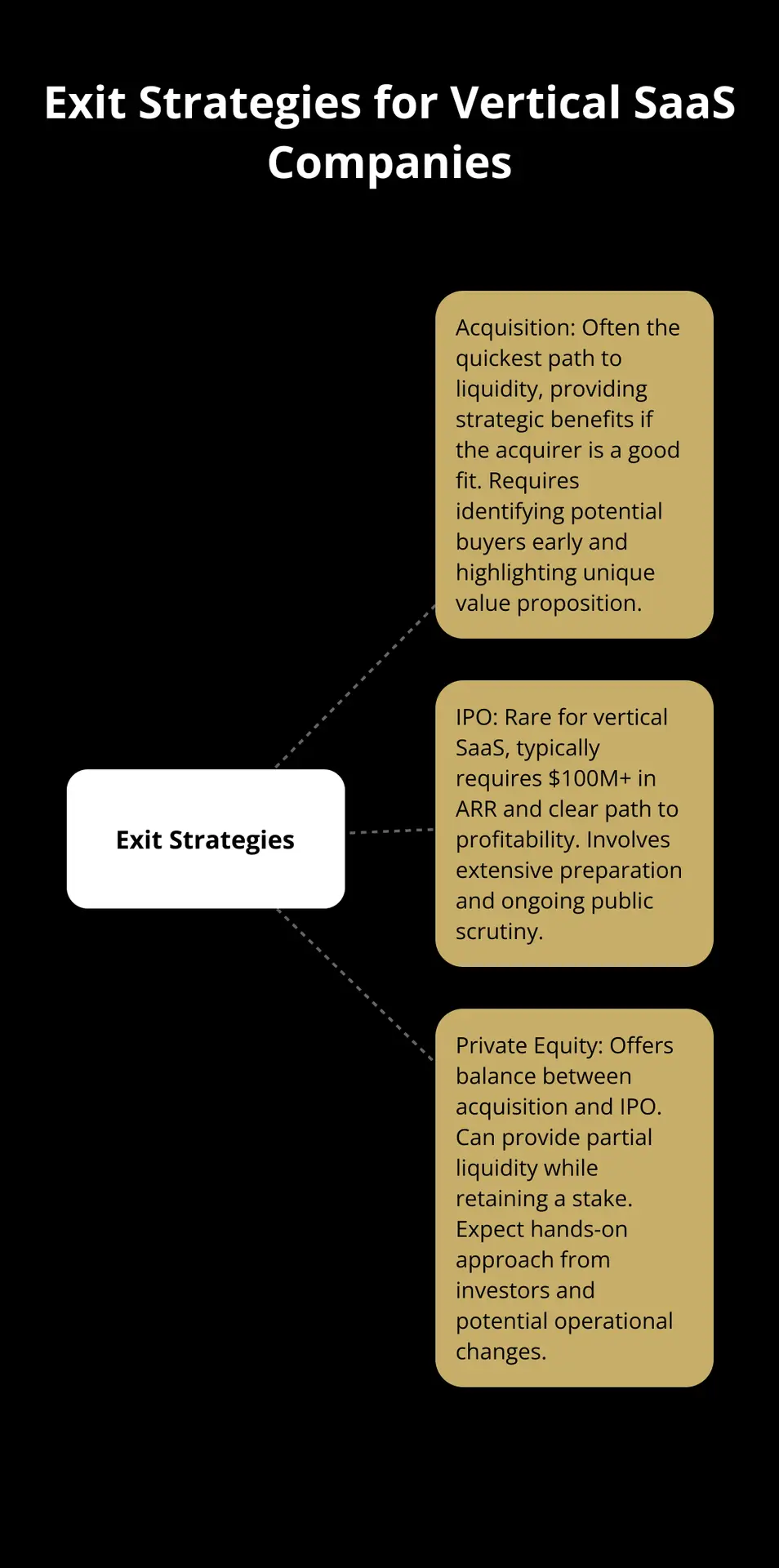
Acquisitions dominate the exit landscape for vertical SaaS companies. This option often provides the quickest path to liquidity and can offer strategic benefits if the acquirer is a good fit.
To prepare for an acquisition:
- Identify potential buyers early (larger companies in your vertical, horizontal SaaS providers looking to expand, or specialized private equity firms).
- Build relationships with these potential buyers well before you’re ready to sell.
- Highlight your unique value proposition within your niche market.
IPO: The Unicorn Route
Initial Public Offerings (IPOs) are rare for vertical SaaS companies. This path typically requires significant scale – usually $100 million+ in annual recurring revenue (ARR) and a clear path to profitability.
If you’re considering an IPO:
- Start preparations early (at least 18-24 months in advance).
- Implement robust financial systems and controls.
- Assemble a strong board of directors.
- Develop a compelling growth story for investors.
Keep in mind that going public means ongoing scrutiny and quarterly reporting requirements. Weigh these factors against the potential for a higher valuation and increased liquidity for shareholders.
Private Equity: The Middle Ground
Private equity (PE) offers a balance between acquisition and IPO. According to Bain & Company, fundraising across private asset classes fell for a third year in a row in 2024, tumbling 24% year-on-year and down 40% from the all-time peak. This option can provide partial liquidity while allowing you to retain a stake and potentially benefit from a second exit later.
When exploring PE options:
- Look for firms with experience in your vertical.
- Prepare for a hands-on approach from investors.
- Expect potential significant changes to your operations.
Aligning Strategy with Goals
Your exit strategy should align with your personal and business objectives. Ask yourself:
- Do you want a quick exit or are you willing to stay on for several years post-sale?
- Is maximizing short-term value your priority, or are you more concerned with the long-term success of your product and team?
Try using a decision matrix to evaluate your options. Score each exit strategy against criteria like potential financial return, timeline to exit, impact on employees, and alignment with your personal goals. This structured approach can help clarify your thinking and lead to a more informed decision.
The best exit strategy isn’t always the one with the highest dollar value. Factor in the impact on your team, customers, and the future of your product. A lower offer from a strategic buyer who shares your vision might be more valuable than a higher offer that could lead to your product being shelved.
As you weigh these options, it’s essential to start planning the execution of your chosen exit strategy. The next section will guide you through the steps to successfully navigate the exit process, from assembling your advisory team to closing the deal.
How to Execute Your Vertical SaaS Exit
Build Your Exit Dream Team
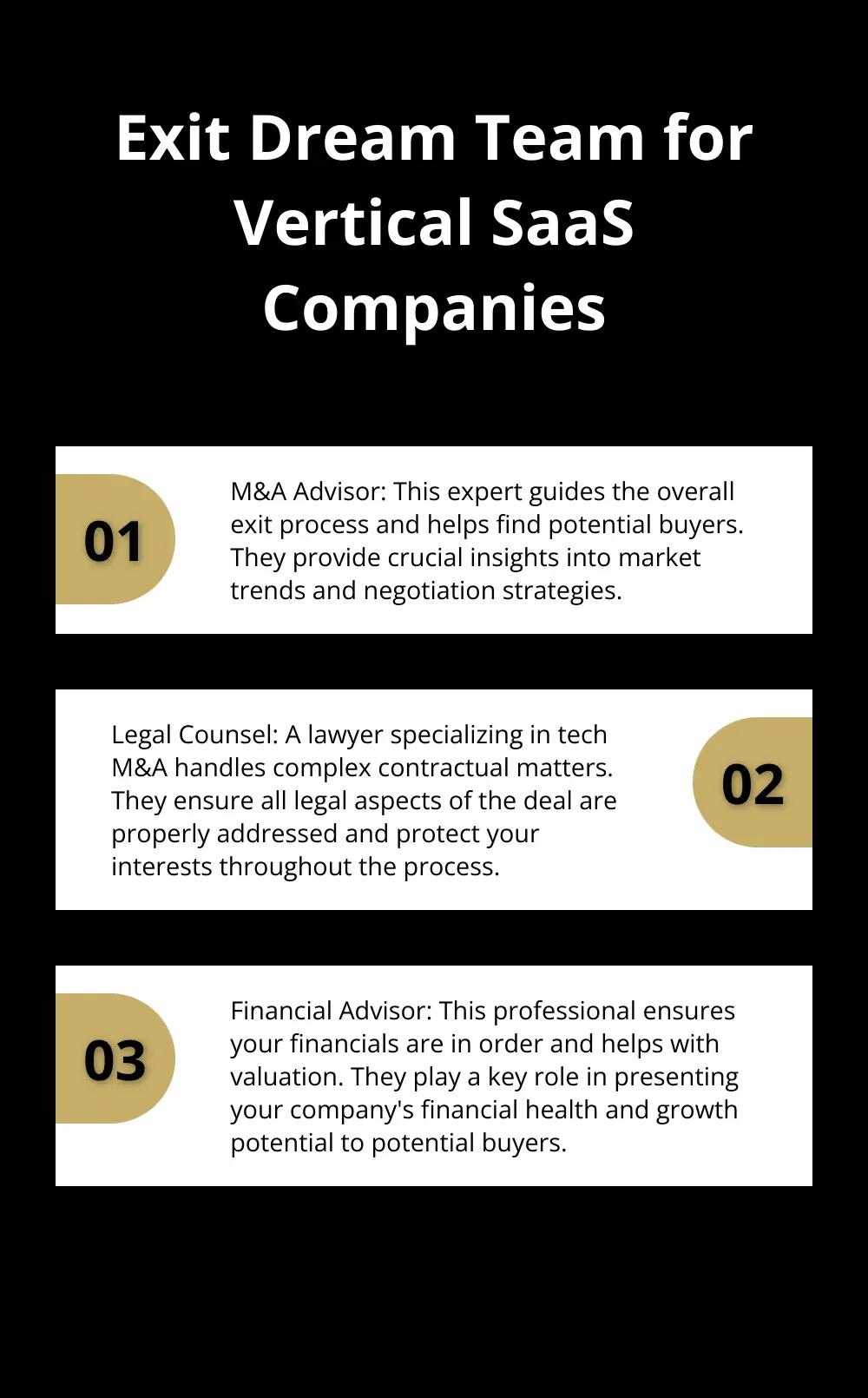
The first step in executing your exit is to assemble a team of seasoned advisors. This team typically includes:
- M&A Advisor: This expert will guide the overall process and help you find potential buyers.
- Legal Counsel: A lawyer specializing in tech M&A will handle complex contractual matters.
- Financial Advisor: This professional will ensure your financials are in order and help with valuation.
- Tax Specialist: An expert will optimize the tax implications of the sale.
When you select advisors, prioritize those with experience in vertical SaaS exits.
Prepare for Due Diligence
Due diligence often becomes the most time-consuming part of the exit process. Start your preparations early by organizing:
- Financial statements (3-5 years)
- Customer contracts and metrics (churn, LTV, CAC)
- Intellectual property documentation
- Employee contracts and org charts
- Product roadmap and technical documentation
Create a secure virtual data room to store and share these documents. Tools like Dropbox or Google Drive work for smaller deals, but for larger exits, consider specialized platforms (such as Intralinks or Datasite).
Approach Potential Buyers
Identifying and approaching potential buyers requires a delicate touch. Start by creating a list of strategic buyers in your vertical and adjacent markets. Don’t overlook private equity firms that specialize in vertical SaaS.
When you approach buyers, use a teaser document that highlights your company’s unique value proposition without revealing sensitive information. In 2024, SaaS M&A saw a strong rebound, increasing more than 41% compared to 2023.
Master Negotiations
Negotiations can make or break your exit. Key points to focus on include:
- Valuation: Be prepared to justify your asking price with solid metrics.
- Deal structure: Understand the implications of cash vs. stock, earnouts, and escrows.
- Representations and warranties: These can significantly impact your post-sale liability.
The highest offer isn’t always the best. Consider factors like cultural fit, product continuity, and employee retention.
Manage the Transition
Once you’ve signed the deal, the real work begins. Create a detailed transition plan that covers:
- Customer communication strategy
- Employee retention and integration plans
- Product roadmap alignment
- Data migration and system integration
Set clear milestones and KPIs for the transition period.
If your exit doesn’t go as planned, don’t despair. There are strategies to sell a software consultancy even after a failed exit or merger.
Final Thoughts
Exiting a vertical SaaS company requires careful planning and strategic decision-making. The exit strategy for niche software companies should start 12-18 months in advance to implement changes and show consistent results. This foresight allows you to build relationships with potential buyers and align your exit strategy with personal and business goals.
A well-executed exit strategy yields numerous benefits for niche software companies. It can maximize financial return, ensure product continuity, and provide security for employees. It also opens doors to new opportunities and growth, whether you stay involved with the company or pursue new ventures.
We at Unbroker understand the intricacies of selling vertical SaaS businesses. Our platform offers transparent, low-cost options for business owners looking to exit without high brokerage fees. We provide the tools, expertise, and support to help you achieve a successful exit (whether you prefer a hands-off approach or want to be more involved in the sale process).