Small businesses often struggle with managing human resources effectively. Outsourcing HR functions can be a game-changer, allowing companies to focus on core operations while ensuring compliance and employee satisfaction.
At Unbroker, we’ve seen firsthand how outsourcing human resources for small businesses can lead to significant cost savings and improved efficiency. This guide will walk you through the process of HR outsourcing, helping you make informed decisions for your company’s future.
What Is HR Outsourcing for Small Businesses?
Definition and Core Concept
HR outsourcing for small businesses involves the delegation of human resources tasks to external experts. This approach allows companies to focus on their core business while letting experts manage matters such as recruitment, benefits, and other HR-related tasks.
Cost-Effective HR Management
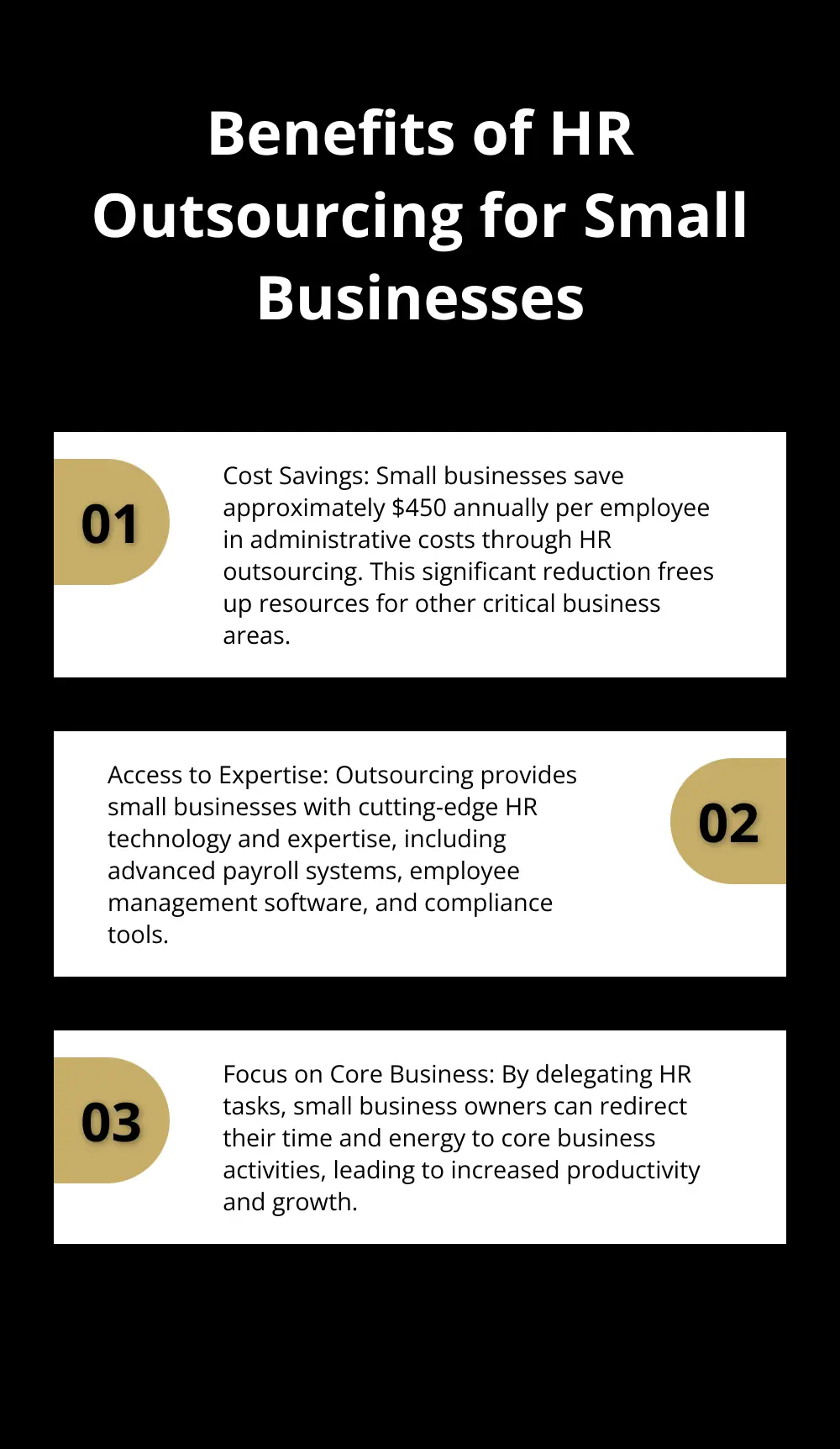
One of the primary advantages of HR outsourcing is cost savings. Small businesses can reduce expenses associated with hiring and training in-house HR staff. A study reveals that businesses that outsource HR functions save approximately $450 annually per employee in administrative costs. This significant reduction in costs can free up resources for other critical business areas.
Access to Expertise and Technology
Outsourcing HR provides small businesses with access to cutting-edge HR technology and expertise. This includes advanced payroll systems, employee management software, and compliance tools. This technological edge can help small businesses compete more effectively with larger organizations.
Focus on Core Business Activities
Small business owners can redirect their time and energy to core business activities when they outsource HR tasks. This shift in focus often leads to increased productivity and growth. Companies outsourcing HR functions can spend less time on administrative tasks, allowing business owners to concentrate on strategic initiatives and revenue-generating activities.
Common HR Tasks to Outsource
Payroll Processing
Payroll processing is one of the most frequently outsourced HR functions. It requires constant attention to changing tax laws and can be time-consuming for small business owners. Outsourcing this task ensures accuracy and compliance with regulations.
Benefits Administration
Benefits administration is another area where outsourcing can be beneficial. HR outsourcing providers often have access to better and more cost-effective benefit plans (due to their larger client base). This can help small businesses offer competitive benefits packages to attract and retain top talent.
Recruitment and Onboarding
Many small businesses choose to outsource recruitment and onboarding processes. These providers have extensive networks and sophisticated screening processes that can help find top talent more efficiently.
Employee Training and Development
Outsourcing employee training and development can be advantageous for small businesses. External providers often have a wide range of training programs and resources that small businesses might not be able to develop in-house. This can lead to a more skilled and engaged workforce.
The decision to outsource HR functions should not be taken lightly. Small businesses must carefully evaluate potential HR outsourcing partners to ensure they align with business goals and culture. The next section will explore how to choose the right HR outsourcing solution for your small business.
How to Select the Best HR Outsourcing Partner
Assessing Your HR Needs
Small businesses must evaluate their current HR challenges before selecting an outsourcing partner. Common pain points include payroll accuracy, compliance issues, and talent acquisition. Identifying these specific needs will help narrow down the required services.
Types of HR Outsourcing Services
HR outsourcing offers various service models:
- Professional Employer Organizations (PEOs): These provide comprehensive HR solutions and become co-employers, sharing certain employer responsibilities.
- Administrative Services Organizations (ASOs): Similar to PEOs but without the co-employment relationship, ASOs handle administrative tasks while businesses retain full workforce control.
- Human Resource Outsourcing (HRO): This model allows outsourcing of specific HR functions while keeping others in-house.
- Managed Service Providers (MSPs): These specialize in managing contingent workforces, particularly useful for businesses with many temporary or contract workers.
Key Factors in Provider Selection
When evaluating potential HR outsourcing partners, consider these critical factors:
- Expertise and Experience: Seek providers with a proven track record in your industry. Request case studies or references from similar-sized businesses.
- Technology Infrastructure: Ensure the provider offers user-friendly platforms for both employers and employees.
- Compliance Management: Your partner should have a strong compliance team. Ask about their process for staying updated on regulations.
- Scalability: Confirm that the provider’s services can scale with your business growth.
- Cultural Fit: The provider’s values should align with your company culture (as they will interact with your employees).
Cost Considerations and ROI
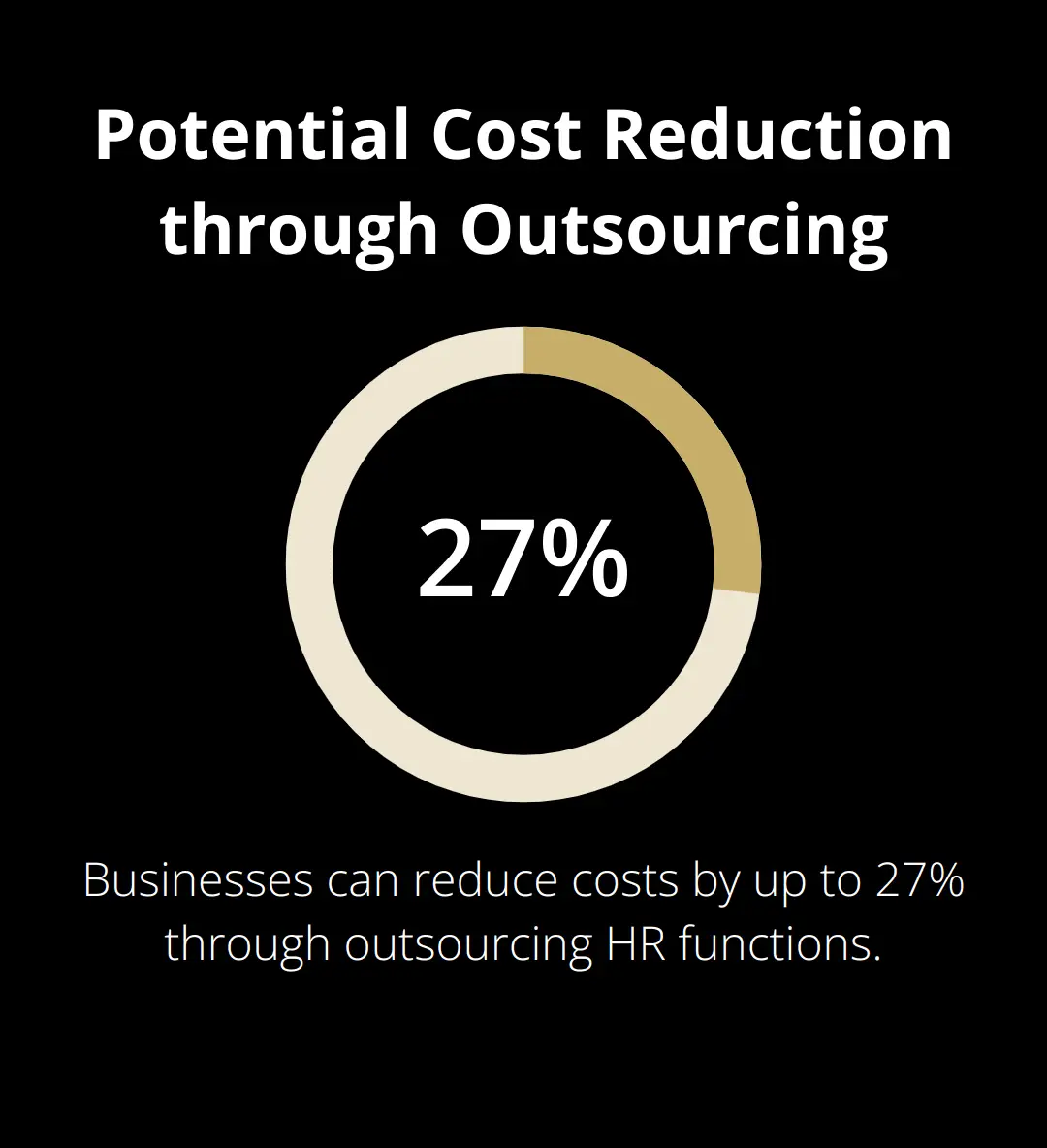
While cost matters, it shouldn’t be the sole factor. According to a report by PwC, businesses can reduce costs by up to 27% through outsourcing.
Consider the total value proposition:
- Direct Cost Savings: Compare outsourcing costs against maintaining an in-house HR team.
- Time Savings: Calculate the hours saved on HR tasks and how to reinvest that time in core business activities.
- Risk Mitigation: Factor in the potential costs of compliance violations that professional HR management can help avoid.
- Employee Satisfaction: Better HR services often lead to higher employee satisfaction and retention, reducing turnover costs.
- Access to Better Benefits: Many providers offer access to improved benefits packages, which can serve as a powerful recruitment tool.
The selection of an HR outsourcing partner requires careful consideration of various factors. The next chapter will explore how to implement HR outsourcing in your small business effectively, ensuring a smooth transition and maintaining your company culture.
How to Implement HR Outsourcing
Prepare Your Team
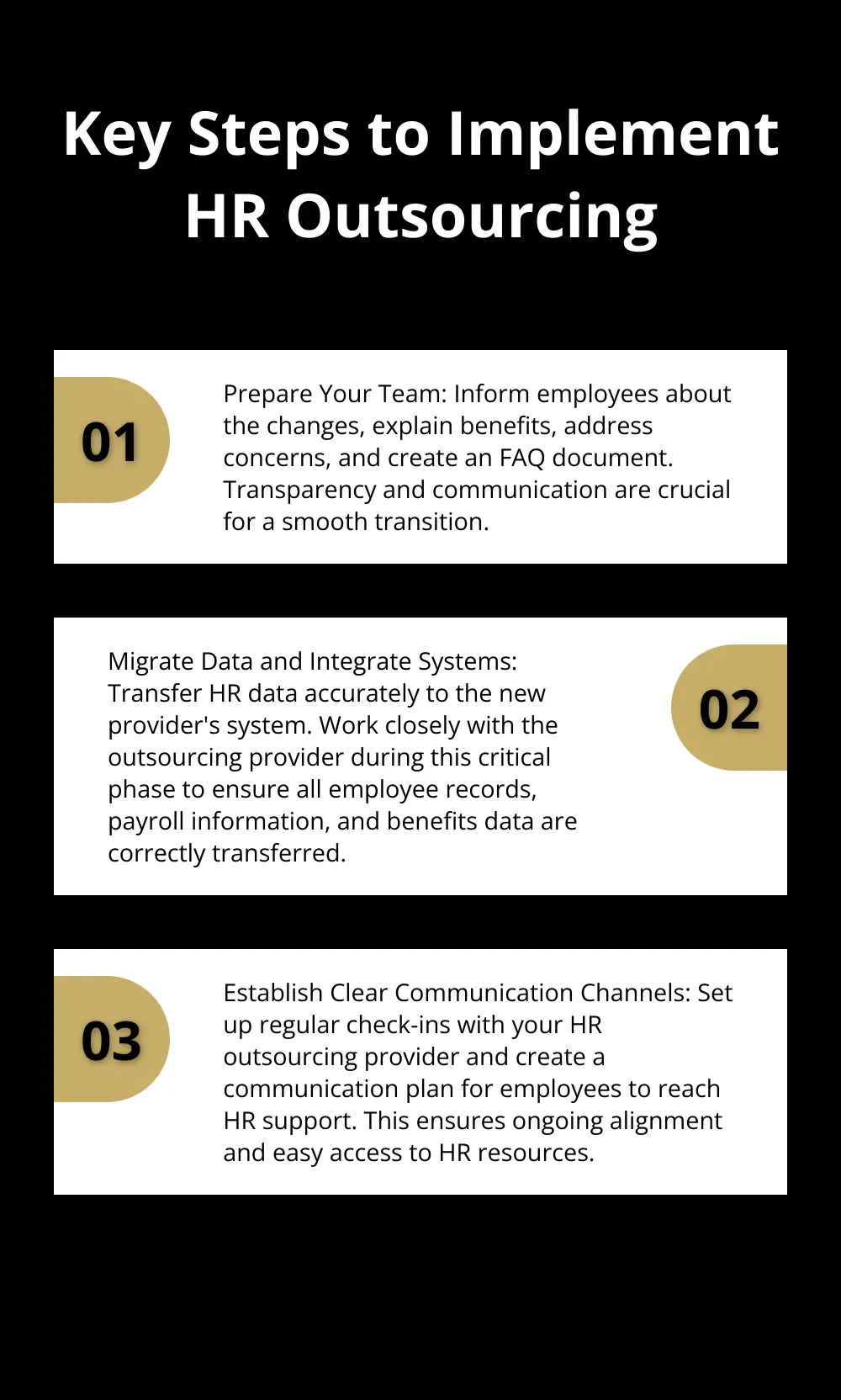
Inform your employees about the upcoming changes. Transparency is important. Explain the benefits of HR outsourcing, such as improved benefits packages and more efficient HR processes. Address any concerns they might have about job security or changes in company culture. Research shows that most large change management efforts fail. Why? Something’s been left out of the equation: the human element.
Schedule team meetings and one-on-ones to discuss the transition. Create an FAQ document addressing common questions and concerns. This proactive approach can significantly reduce resistance and anxiety among your staff.
Migrate Data and Integrate Systems
Focus on transferring your HR data to the new provider’s system. This step is critical and often time-consuming. Ensure all employee records, payroll information, and benefits data transfer accurately.
Work closely with your chosen HR outsourcing provider during this phase. They should offer guidance and support throughout the data migration process. Double-check all transferred data for accuracy to avoid future complications.
Establish Clear Communication Channels
Set up regular check-ins with your HR outsourcing provider. These meetings will help you stay informed about HR activities and allow you to provide input on important decisions.
Create a communication plan that outlines how employees can reach HR support. This might include a dedicated email address, phone number, or online portal. Ensure all employees know how to access these resources.
Preserve Your Company Culture
While outsourcing HR functions, it’s important to preserve your unique company culture. Your HR outsourcing provider should act as an extension of your team (not a separate entity). Brief them thoroughly on your company values, mission, and culture.
Involve your outsourced HR team in company events and initiatives when possible. This integration helps maintain a cohesive company culture and ensures the outsourced team understands your organization’s ethos.
Monitor and Adjust
Regularly review and adjust your approach based on feedback from employees and performance metrics from your HR provider. Try to identify areas for improvement and work with your provider to optimize processes. This ongoing evaluation (and adjustment) will help ensure that your HR outsourcing solution continues to meet your business needs as they evolve.
Final Thoughts
Outsourcing human resources for small businesses revolutionizes operations, allowing owners to focus on core activities. Companies can access advanced HR technology, offer competitive benefits, and save costs through expert management. Careful planning and clear communication ensure a smooth transition to outsourced HR services.
We expect AI and machine learning to play larger roles in HR functions like recruitment and performance management. These advancements will make HR outsourcing even more attractive for small businesses aiming to stay competitive. The evolving technological landscape promises enhanced efficiency and effectiveness in HR management.
At Unbroker, we recognize the importance of streamlined operations for business success. While we specialize in transparent, low-cost business sales, we understand that effective HR management adds value to any company. HR outsourcing remains a powerful tool for small businesses to level the playing field and thrive in today’s dynamic business environment.