Business owners face a complex landscape when choosing between traditional brokers and modern sale platforms. The average business sale takes 6-10 months through conventional channels, while digital platforms promise faster results.
We at Unbroker see sellers struggling with high commission fees that can reach 10-15% of their sale price. The right platform choice directly impacts both timeline and final proceeds from your business exit.
Traditional Business Brokers vs Modern Sale Platforms
Commission Structures Create Massive Cost Differences
Traditional business brokers charge commission rates between 8-12% of your sale price, while modern platforms operate on transparent fee structures that save sellers thousands. A $500,000 business sale through a traditional broker costs $40,000-60,000 in commissions alone. Unbroker charges a 6% success fee, paid only when the business sells, which comes to $30,000 on that same transaction—savings of $10,000-30,000 compared to a traditional broker.
Digital Marketing Expands Buyer Reach Dramatically
Traditional brokers rely on personal networks and industry contacts, which limits exposure to potential buyers. Modern platforms leverage digital marketing across multiple channels and reach qualified buyers through AI-driven matching systems. This expanded reach reduces average sale times. Digital platforms also provide 24/7 listing visibility, while broker networks operate during business hours only.
Automated Systems Accelerate Transaction Speed
Traditional sales involve manual document preparation, phone-based communication, and in-person meetings that extend timelines. Modern platforms automate legal document generation, provide secure digital data rooms, and facilitate virtual negotiations. These streamlined processes eliminate delays common in traditional sales. Buyers can access information instantly, schedule virtual tours, and submit offers through integrated platforms (accelerating decision-making from weeks to days).
Technology Integration Transforms Due Diligence
Modern platforms digitize the entire due diligence process through secure data rooms and automated document sharing. Traditional brokers still rely on physical document exchanges and manual verification processes that create bottlenecks. Digital platforms allow multiple buyers to review materials simultaneously, while traditional methods force sequential reviews that extend timelines unnecessarily.
The cost and efficiency advantages of modern platforms become even more apparent when examining the specific features that drive successful business sales.
Key Features That Drive Successful Business Sales
Successful business sales depend on three non-negotiable elements that modern platforms execute far better than traditional methods. The most effective platforms combine qualified buyer networks that exceed 50,000 active prospects, professional marketing materials that convert inquiries into offers, and automated legal documentation that reduces transaction times from months to weeks.
Qualified Buyer Networks Generate Real Offers
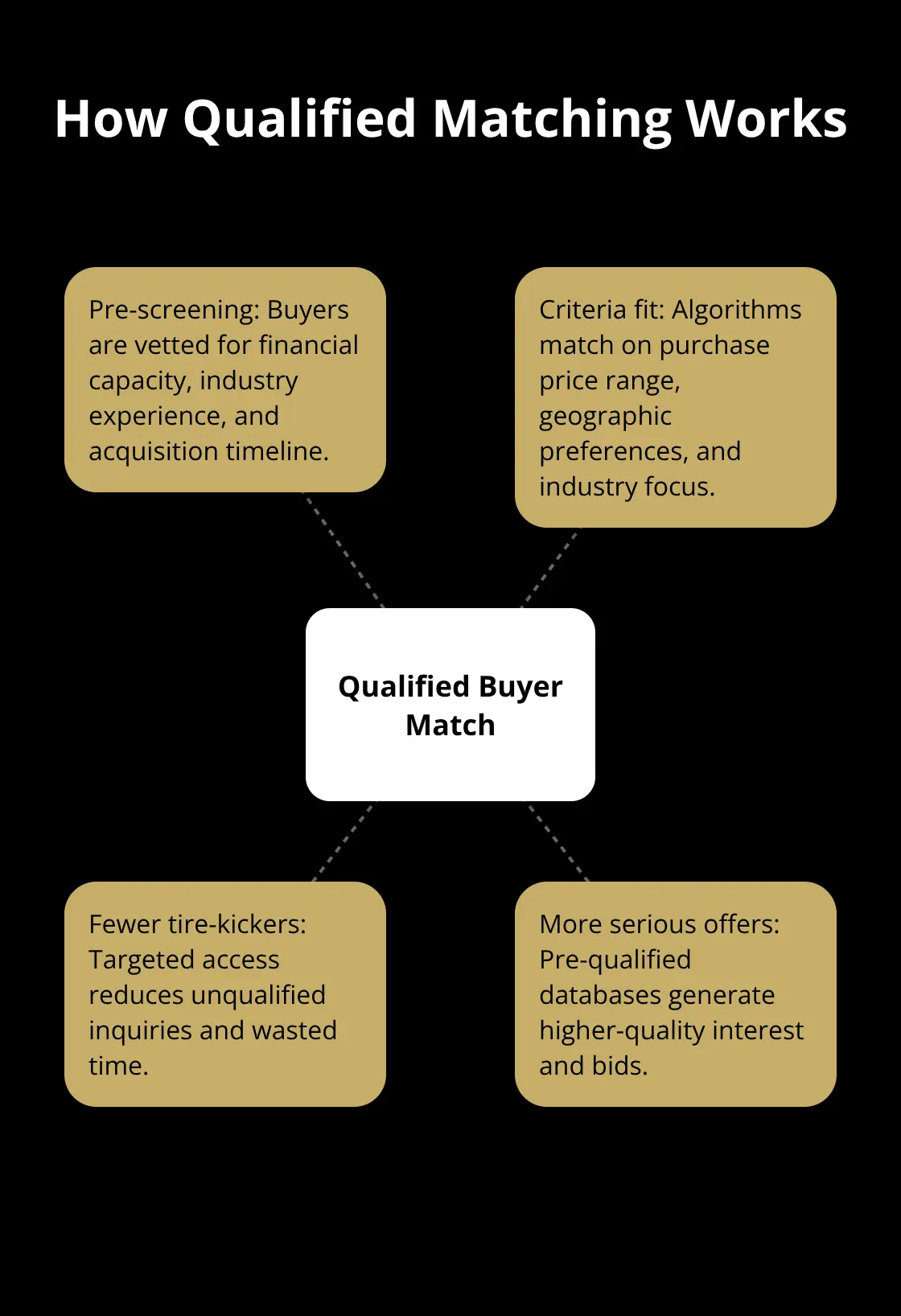
Platforms with pre-qualified buyer databases generate more serious offers than general marketing approaches. The best systems screen buyers for financial capacity, industry experience, and acquisition timeline before they grant access to listings. AI-driven algorithms connect sellers with buyers who meet specific criteria like purchase price range, geographic preferences, and industry focus. This targeted approach eliminates tire-kickers and reduces wasted time on unqualified prospects.
Modern platforms maintain buyer databases of 30,000-100,000 active prospects, while traditional brokers typically work with 200-500 contacts in their personal networks. The difference in reach translates directly to more competitive offers and faster sales.
Professional Marketing Materials Drive Higher Valuations
High-quality marketing packages with professional photography, detailed financial summaries, and industry-specific presentations are essential for maximizing business value. Effective platforms provide templated marketing materials that highlight key value drivers, growth opportunities, and competitive advantages.
These materials must include normalized financial statements, market analysis, and operational documentation that sophisticated buyers expect. Listings with comprehensive marketing packages receive more inquiries and close faster than basic advertisements. The presentation quality directly correlates with perceived business value and attracts premium buyers who pay top dollar.
Automated Transaction Management Eliminates Delays
Digital transaction management systems streamline the closing process through automated workflows and document preparation. The most effective platforms generate purchase agreements, confidentiality agreements, and due diligence checklists instantly based on deal parameters.
Secure data rooms allow multiple buyers to review documents simultaneously rather than sequential access that creates bottlenecks. Automated reminders and milestone tracking keep all parties accountable to deadlines. These systems eliminate the manual coordination that causes deals to fall through due to missed deadlines or communication failures.
The financial impact of these features becomes clear when you examine the actual costs associated with different platform types and their pricing models.
What Do Business Sale Platforms Really Cost?
The price difference between traditional brokers and modern platforms can be significant depending on deal size. Traditional brokers charge between 8% to 12% in fees, costing sellers tens or hundreds of thousands of dollars, while platforms like Unbroker charge a 6% success fee, paid only when the business sells. On a $500,000 sale, that’s a difference of $10,000-30,000 staying in the seller’s pocket compared to a traditional broker.
Hidden Fees Multiply Total Platform Costs
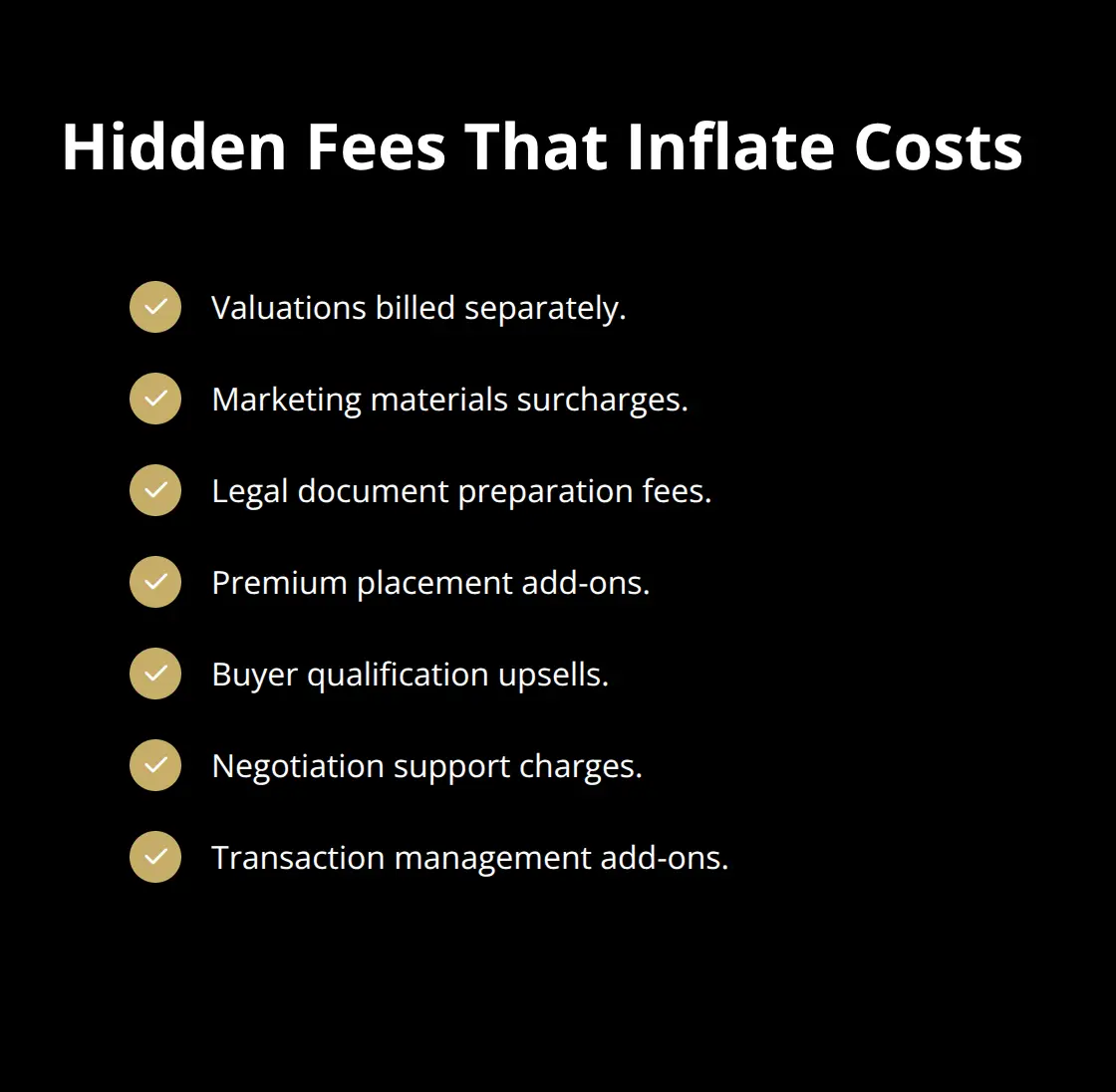
Marketing upgrades, premium placements, and document preparation services add substantial costs beyond advertised rates. Traditional brokers frequently charge separate fees for business valuations, marketing materials, and legal document preparation that total $5,000-15,000 before any sale occurs. Many platforms advertise low monthly fees but require expensive add-ons for essential services like buyer qualification, negotiation support, and transaction management which inflate final costs significantly. The most transparent platforms include all necessary services in their base rates without surprise charges or mandatory upgrades.
Commission Structures Scale Unfavorably for Sellers
Percentage-based commissions create exponential cost increases as business values rise. A $300,000 business sale through traditional channels costs substantial commissions, while larger sales cost between 8% to 12% for businesses under $1 million. Unbroker’s 6% success fee stays well below those traditional rates, which benefits sellers dramatically on higher-value transactions.
ROI Analysis Reveals Clear Winners
Smart sellers calculate break-even points before selecting platforms to maximize net proceeds from their business exit. The cost difference represents significant percentages of sale proceeds that sellers retain when they avoid traditional commission structures money that stays in their pocket rather than going to intermediaries.
Final Thoughts
Smart business sellers prioritize sale platforms that combine transparent fees with proven results. The data shows Unbroker’s 6% success fee can save sellers tens of thousands of dollars compared to traditional commission structures—for example, $10,000-30,000 on a $500,000 sale. Modern sale platforms deliver faster closings through AI-driven buyer matching and automated documentation systems that eliminate manual bottlenecks.
The business sale landscape in 2025 favors digital-first approaches that provide 24/7 visibility and instant buyer access to due diligence materials. Sellers who choose platforms with pre-qualified buyer networks of 50,000+ prospects generate more competitive offers than those who rely on limited broker contacts. These expanded networks create competitive bidding situations that drive higher final sale prices.
We at Unbroker recommend that you evaluate platforms based on total transaction costs, buyer network size, and technology integration rather than marketing promises. The most successful sellers select platforms that offer transparent pricing without hidden fees or mandatory upgrades (which can double your total costs). Start by calculating your potential savings on commission fees, then verify the platform’s buyer qualification process and transaction management capabilities.