Selling a business without professional help often looks straightforward until you hit the first major obstacle. Most owners underestimate how quickly sale complexity spirals when they try to handle negotiations, valuations, and legal requirements alone.
At Unbroker, we’ve seen countless deals stall or fall apart because sellers lacked the right expertise. The difference between a successful sale and a costly mistake often comes down to having someone in your corner who knows what they’re doing.
Why DIY Business Sales Stumble
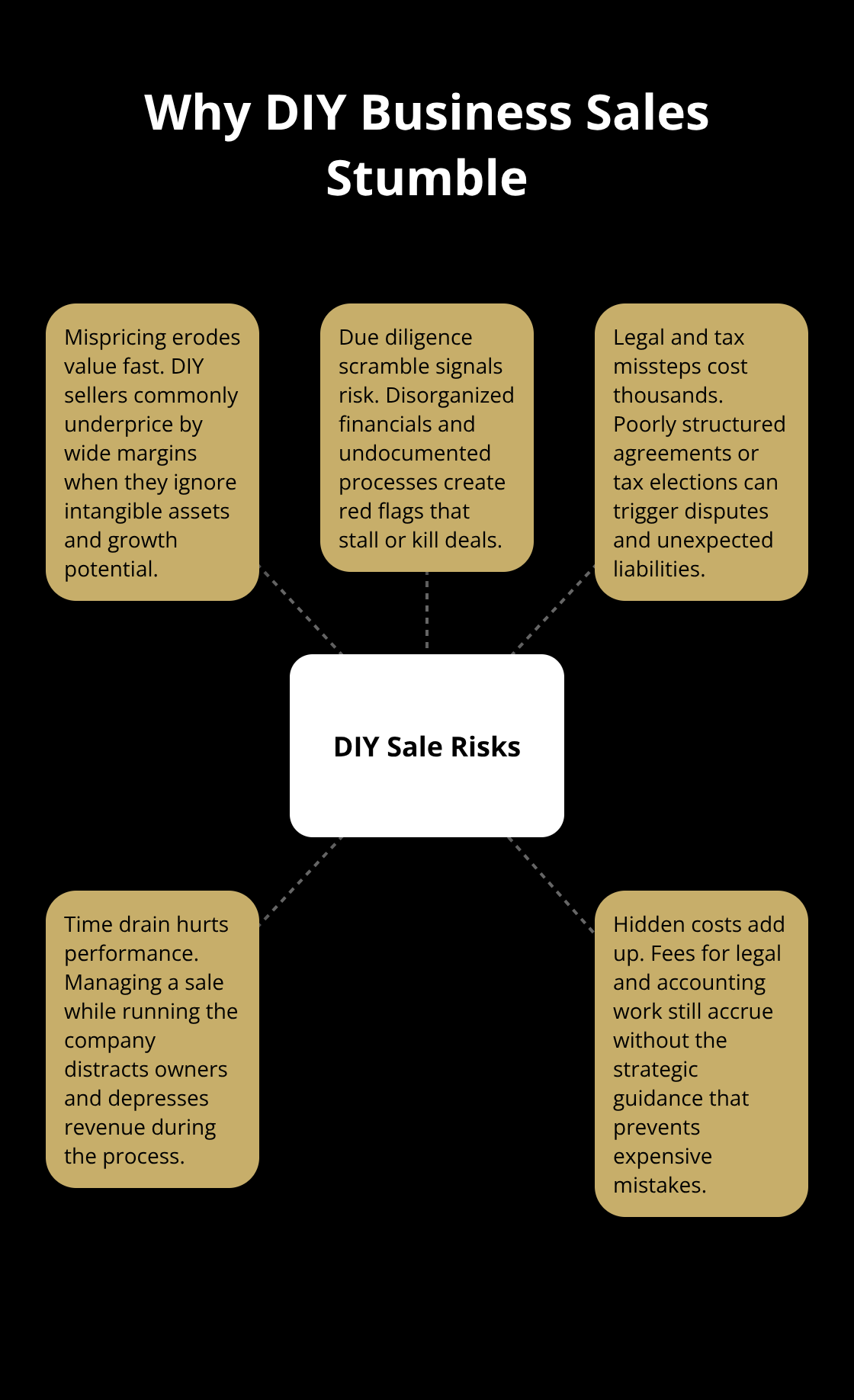
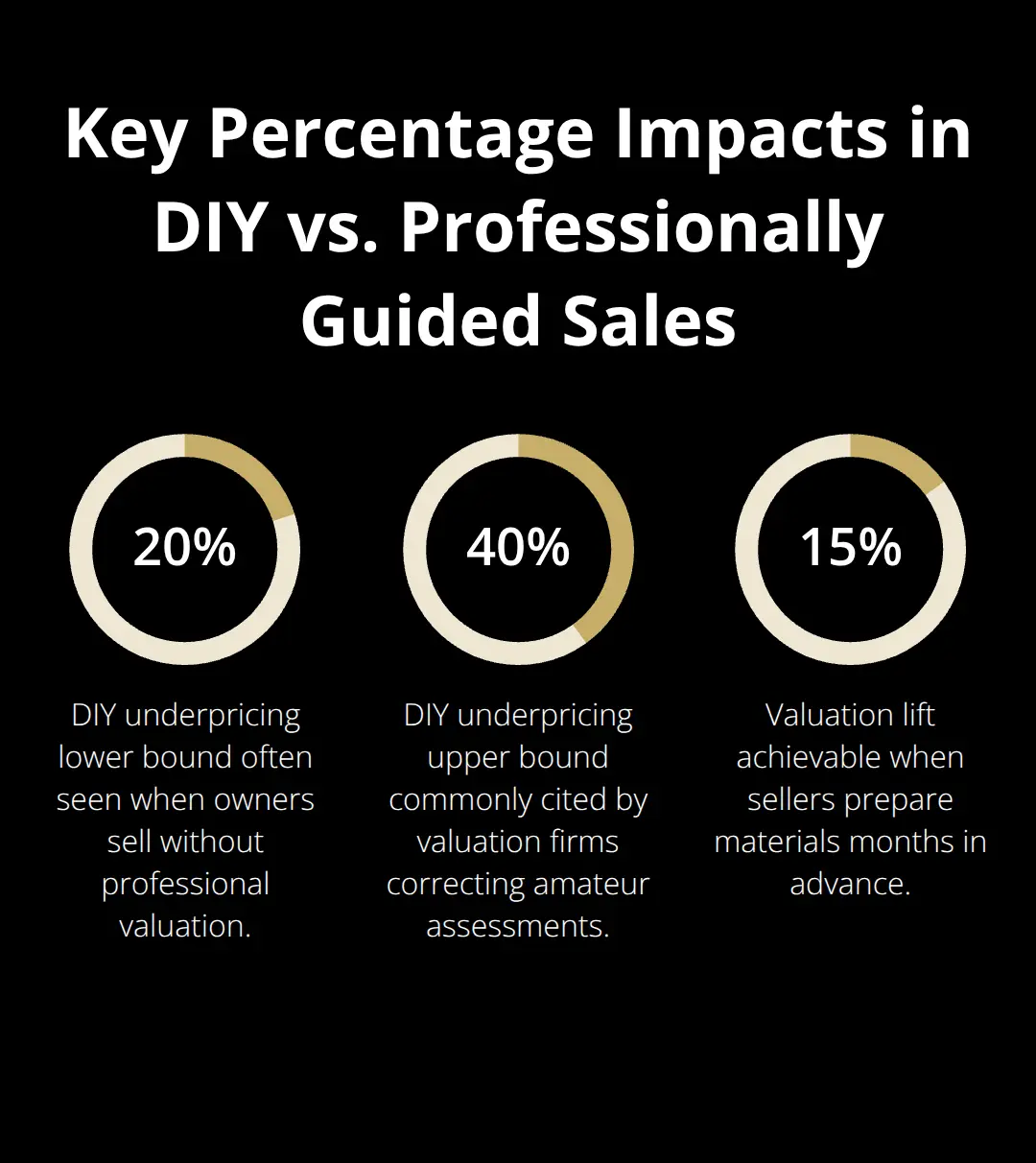
Selling without professional guidance introduces mistakes that compound quickly. Owners frequently misprice their businesses, often by 20-40% below market value, according to data from business valuation firms who regularly correct amateur assessments. This happens because self-directed sellers rely on outdated comparables, ignore intangible assets like customer relationships or brand reputation, and fail to account for growth potential.
Another critical error involves inadequate due diligence preparation. Buyers expect organized financial records, clean cap tables, and documented processes-yet many owners scramble to assemble these materials only after a buyer emerges, creating red flags that tank valuations or kill deals entirely.
Legal and Tax Missteps That Cost Thousands
Legal mistakes prove equally damaging. Non-compete agreements, liability transfers, and tax structure decisions require expertise most business owners lack. A seller might structure a transaction in a way that triggers unexpected tax consequences worth tens of thousands of dollars, or fail to properly transfer intellectual property rights, leaving themselves exposed to future disputes.
Negotiation without experience also costs money. Professional brokers and advisors understand market dynamics, buyer psychology, and deal structures that protect seller interests. DIY sellers often accept the first reasonable offer rather than recognizing they have leverage, or they make emotional decisions that undermine their position.
The Time Drain That Kills Business Value
The time commitment alone makes DIY selling impractical for most business owners. Managing buyer communications, coordinating inspections, preparing financial documentation, and handling contract revisions typically consumes significant effort over several months. That’s substantial hours diverted from running the business, which directly impacts revenue and profitability during the sale window. Many owners report their businesses decline in value during a DIY sale simply because they’re distracted.
Hidden Costs That Add Up Fast
Hidden costs accumulate beyond the obvious ones. Legal reviews, accountant time for preparing tax documents, and corrections to financial statements add up to $5,000-$15,000 in professional fees anyway-yet DIY sellers still lack the strategic guidance that prevents costly mistakes. When deals fall apart or require renegotiation, those sunk costs vanish with zero return.
Buyer verification presents another invisible expense. Without proper screening, sellers waste time with unqualified buyers, tire-kickers, or those unable to secure financing. This extends the sale timeline and often forces price reductions to close with whoever remains interested. A structured buyer network connects sellers with genuinely qualified purchasers, eliminating this waste and accelerating the path to a successful transaction.
Why Complexity Spirals During Business Transactions
Valuation Errors Compound Quickly
Valuation mistakes happen faster than most sellers realize. When you price your business without professional methodology, you work from incomplete information. You might compare your revenue to a competitor’s without adjusting for differences in customer retention, profit margins, or growth trajectory. A business generating $1 million in annual revenue with 90% customer retention and recurring contracts differs fundamentally from one with 60% retention and transactional sales, yet DIY sellers frequently treat them as equivalent.
The result: you underprice by significant margins or set expectations so high that qualified buyers walk away.
Professional valuation uses standardized approaches like the income approach, which projects future cash flows and discounts them to present value, or the market approach, which analyzes actual comparable sales adjusted for relevant differences. Without this rigor, you essentially guess at your business’s worth.
Tax Structure Decisions Create Hidden Liabilities
Tax structure choices during a sale create hidden liabilities that surface months or years later. If you structure the transaction as a stock sales versus asset sales decision, you may trigger double taxation that costs tens of thousands. Alternatively, failing to allocate purchase price across different asset categories properly can create disputes with the IRS later.
These decisions require expertise most business owners lack. A single structural choice can shift tens of thousands in tax consequences, yet many sellers make these decisions without professional guidance.
Due Diligence Preparation Determines Deal Success
Buyers conduct financial audits, customer interviews, and operational reviews to validate your claims about revenue, growth, and sustainability. If your records are incomplete, your processes undocumented, or your customer concentration too high, these red flags either kill the deal or justify steep discounts.
Many DIY sellers discover during this phase that they lack organized due diligence preparation materials, forcing them to reconstruct years of financial records under time pressure. This scrambling signals weakness to buyers and erodes your negotiating leverage. Sellers who prepare materials months before marketing their business typically close at valuations 15–25% higher than those who assemble materials reactively.
Legal Paperwork Requires Precision
The legal documents themselves-non-compete agreements, intellectual property transfers, liability assignments, and earn-out provisions-require precision. A single misworded clause shifts risk entirely to you or creates unenforceable terms that leave you exposed to future claims.
These three dimensions interact in ways that compound problems. Valuation mistakes lead to buyer skepticism, weak due diligence preparation extends timelines and invites aggressive renegotiation, and legal oversights create post-closing disputes that drain your time and resources long after the sale closes. Understanding where professional guidance prevents these cascading failures becomes essential as you move toward structuring your actual sale.
Who Actually Negotiates Your Business Sale
Understanding Your Negotiating Position
When you negotiate alone, you operate without leverage because you don’t understand what you have. Professional advisors recognize that a business generating $500,000 in revenue with three enterprise clients and a two-year average customer lifespan sits in a fundamentally different negotiating position than one with identical revenue spread across 200 small customers with monthly churn. Yet most DIY sellers present both scenarios identically and accept whatever offer arrives first. Experienced negotiators structure deals to protect seller interests through earnout provisions, seller financing terms, and non-compete language that keeps you whole if the buyer fails to retain customers post-closing.
They also understand buyer psychology well enough to recognize when a buyer tests your resolve versus makes a genuine final offer. Research from the Program on Negotiation shows that professional representation delivers measurable advantages in deal outcomes, primarily because advisors separate emotion from strategy and identify creative deal structures that satisfy both sides. Most DIY sellers accept first offers that fall 15–25% below what the market would support simply because they lack confidence in their valuation or don’t know how to negotiate your business sale professionally.
Structuring Deals for Your Specific Situation
Professional structuring matters tactically because each deal format carries different implications for you. A buyer might propose an all-cash offer at a lower price or a higher price with 30% paid over three years. Each structure carries different tax implications, risk profiles, and cash flow timing. An advisor evaluates these trade-offs based on your specific situation, not generic advice, and helps you understand which option actually serves your interests best.
Accessing Qualified Buyers
Access to qualified buyers changes everything about sale speed and final price. DIY sellers typically market through their personal network, local business brokers with limited reach, or generic online marketplaces where tire-kickers outnumber serious buyers. This forces you to spend months filtering unqualified prospects, responding to lowball offers, and managing buyers who lack financing. Meanwhile, your business sits exposed to competitors and employees who sense uncertainty.
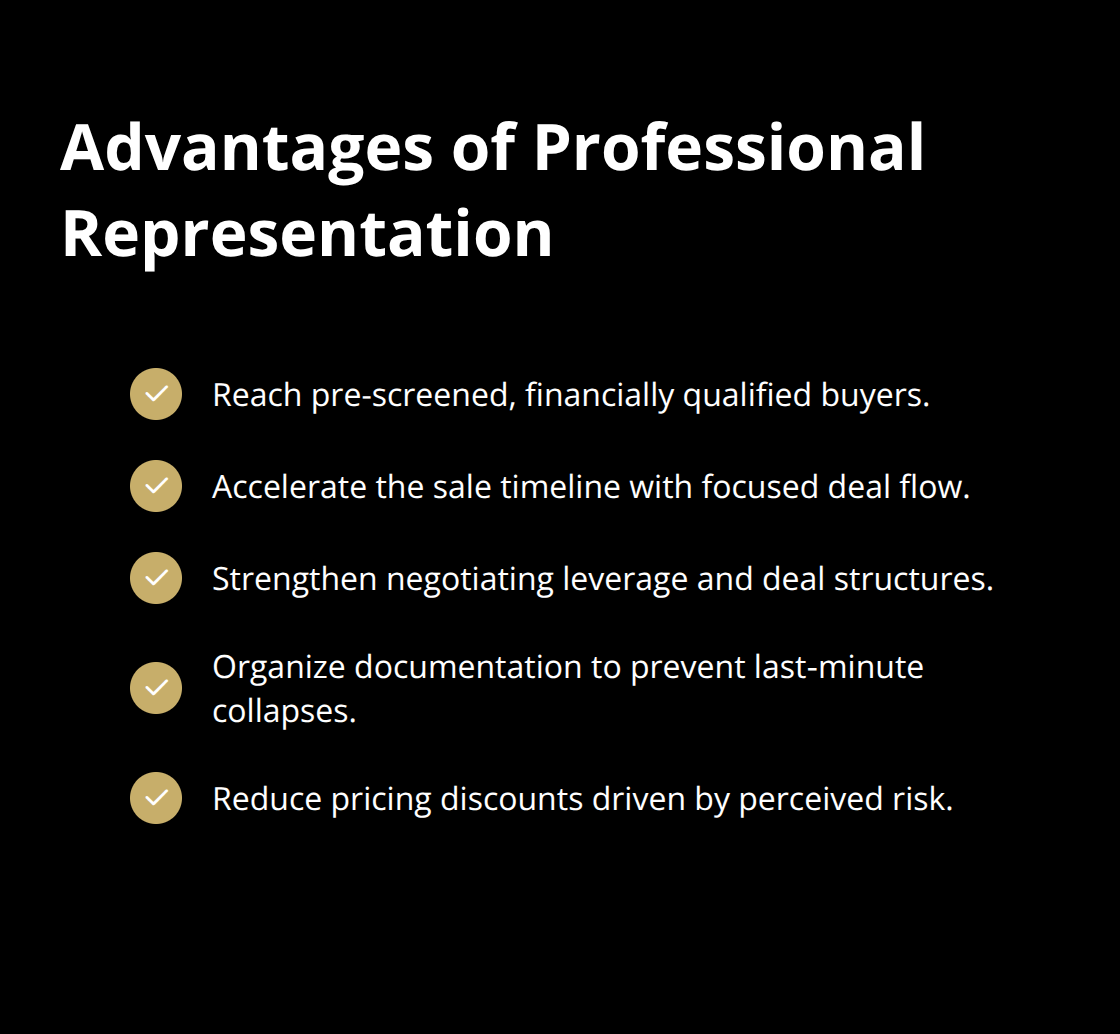
Professional buyer networks operate differently. They pre-screen for financial capacity, industry knowledge, and genuine acquisition intent before connecting buyers to sellers. This means your sale reaches people who can actually close, understand your business model, and have capital ready. The speed advantage alone compounds into real financial benefit because your business stops losing value the moment sale activity becomes visible internally.
Organizing Documentation and Compliance
Documentation and compliance determine whether a deal closes or collapses in final stages. Deals fall apart at 90% completion when a seller fails to properly document customer contracts, can’t produce clean financial statements, or neglects to address intellectual property ownership questions. Buyers’ legal teams then demand price reductions to compensate for perceived risk.
Professional preparation prevents this outcome (typically costing $3,000–$8,000 in professional time) by organizing materials months before marketing, addressing red flags proactively, and creating a due diligence package that builds buyer confidence rather than triggers skepticism. This preparation prevents discounts that run 10–20% of total sale value, making the return on investment obvious.
Final Thoughts
The reality is straightforward: when sale complexity reaches a certain point, DIY approaches stop working. You recognize this moment when buyer communications consume more time than running your business, when you can’t value your company accurately, or when legal questions arise that you can’t answer confidently. These aren’t signs of failure-they’re signals that professional guidance will protect your interests and accelerate your path to closing.
Expert assistance saves money in ways that aren’t immediately obvious. A valuation error of 20% on a $2 million business costs you $400,000, and tax structure mistakes trigger unexpected liabilities worth tens of thousands. Weak due diligence preparation justifies buyer discounts of 15–25%, so professional guidance typically pays for itself many times over while also compressing your sale timeline by months. Your business maintains its value during the sale process rather than declining because you’re distracted, and that operational stability translates directly into higher final valuations and smoother closings.
At Unbroker, we’ve built a platform specifically designed to make professional support accessible without the traditional brokerage fees that eat into your proceeds. You gain access to qualified buyer networks, legal document templates, negotiation assistance, and the confidence that comes from knowing someone experienced has your back. Your business deserves a sale process that reflects its actual value and protects your interests from start to finish.