Selling your business is one of the biggest financial decisions you’ll make. Most sellers never ask the right questions during a broker interview, which costs them thousands in unnecessary fees and missed opportunities.
At Unbroker, we’ve seen too many business owners sign agreements without understanding what they’re actually paying for or what value they’re getting. The difference between a broker who’s transparent about costs and one who hides them can mean tens of thousands of dollars in your pocket.
What Brokers Actually Charge You
Most business brokers operate on a commission model that takes a percentage of your sale price. Business broker commission percentages can vary widely based on factors like business size, complexity of the transaction, and industry norms. On a $1 million sale, you pay $80,000 to $120,000 in fees alone. What makes this worse is that brokers rarely break down what you actually receive for that money. You pay the same percentage whether your broker works hard on your sale or lets it sit for months. We’ve reviewed hundreds of broker agreements, and sellers consistently tell us they had no idea what services that percentage covered until after they signed.
The hidden costs nobody mentions
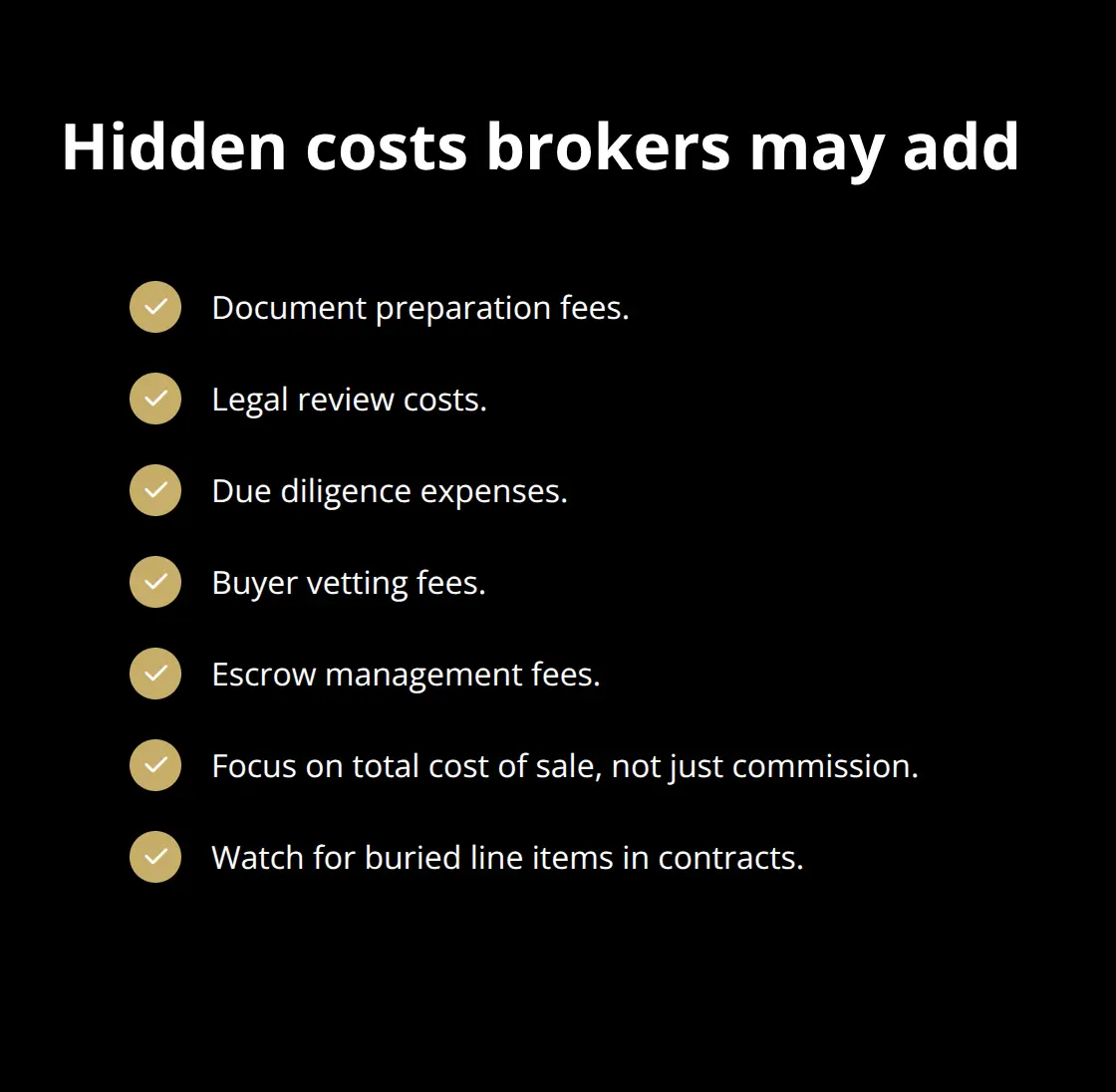
Beyond the headline commission, brokers layer on additional expenses that don’t appear in initial conversations. Hidden costs in business broker agreements frequently include document preparation fees of $500–1,500, legal review costs of $1,000–3,000, and due diligence expenses. Some brokers charge separate fees for buyer vetting or escrow management. When you ask about pricing, brokers focus on the commission percentage while they bury these line items in dense contract language. A seller who pays a 10 percent commission plus $10,000 in hidden costs on a $500,000 sale nets $40,000 less than they expected. The real comparison isn’t just the commission rate but the total cost of sale, which includes every fee from initial listing through closing.
Why alternative pricing protects your wallet
A growing number of options now use success-fee pricing that ties the provider’s payment directly to a successful sale. This aligns incentives well: the provider only gets paid when your business actually sells, so they’re motivated to get you the best outcome rather than collecting fees regardless of results. Commission structures for business brokers vary widely, but a straightforward success-fee model — such as Unbroker’s 6% fee, paid only when the business sells — offers a structure designed to align incentives with yours, compared to traditional brokers charging 8–12% commissions. The math favors transparent, success-based pricing that rewards a strong sale price rather than burying costs in hidden fees.
Unbroker’s Full Service Business Sale charges a 6% success fee, paid only when your business sells, a fraction of traditional broker commissions. There’s no upfront cost to get started, and you get access to a vast buyer network, premium marketing tools, legal document templates, and negotiation assistance-all built around a fee you only pay on success.
Now that you understand what you’ll actually pay, the next critical question is whether your broker has the track record to justify any fee at all.
Does Your Broker Actually Have Relevant Experience
A broker’s track record matters far more than their sales pitch. The critical mistake sellers make is accepting vague claims about experience without asking for concrete evidence. When a broker tells you they’ve sold hundreds of businesses, that statement means nothing if those sales occurred in different industries, different price ranges, or years ago. We at Unbroker have reviewed countless broker agreements, and sellers consistently report that their broker had minimal experience with their specific business type. A broker experienced in selling software companies may struggle with a manufacturing operation or service business. Ask for the exact number of sales they’ve completed in your industry over the past two years, not lifetime totals. Request a list of the three most recent comparable sales they’ve handled, including sale price, time on market, and whether the sale closed at, above, or below asking price. If they hesitate or provide only vague answers, that’s a red flag. A broker worth hiring will have this data readily available and will share it without defensive language.
Your buyer network determines your buyer pool
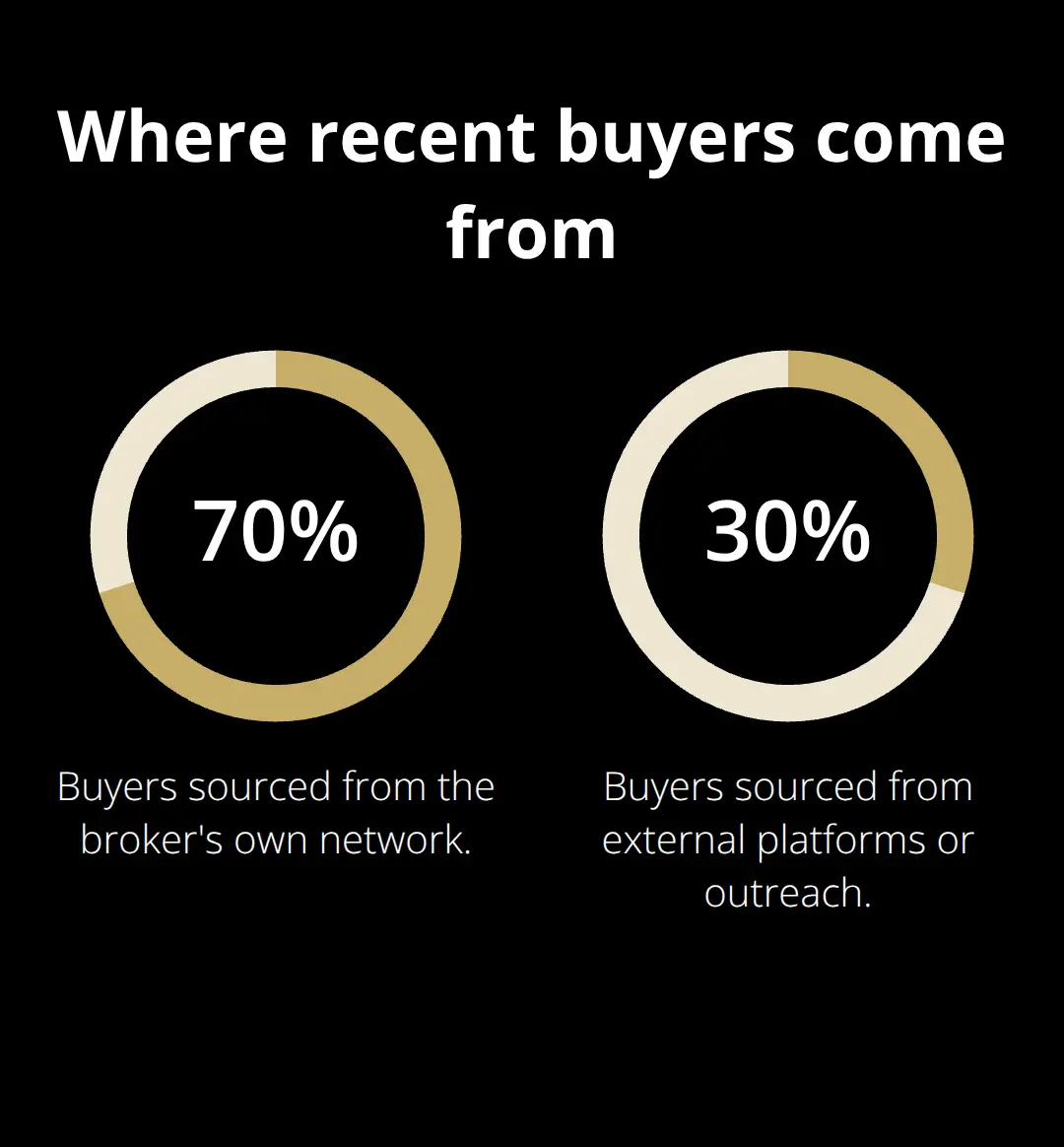
The size of a broker’s buyer network means nothing without knowing its composition and activity level. Ask specifically how many active, qualified buyers they have in your industry and price range right now, not how many are on their general platform. Request the percentage of their recent sales that came from their own buyer network versus external sources. A broker who sources 70 percent of buyers internally has built genuine relationships and deal flow; one who sources 30 percent is essentially listing your business and hoping someone finds it. Inquire about their buyer vetting process and how they pre-qualify prospects before showing your business. This protects your confidentiality and prevents wasting time with unqualified leads.
Ask how they maintain buyer relationships between deals and what communication cadence they use. A broker with consistent buyer touchpoints will move your business faster than one who only contacts prospects when they have something to sell.
Marketing tools reveal how seriously they’ll promote your sale
Ask to see the exact marketing plan they’ll execute for your business before you sign anything. A real plan includes professional photography or video, detailed business descriptions optimized for search, syndication across multiple platforms, and a timeline for each activity. Generic responses like “we’ll list it on our website and major portals” should concern you. Inquire whether they use AI-driven tools to match your business with qualified buyers or whether they rely on passive browsing. Ask how they handle confidentiality while marketing broadly enough to reach serious prospects. Weak marketing plans typically involve a basic listing with minimal business context, no video, and passive distribution. Strong plans include targeted outreach to previous buyers in your industry, direct email campaigns to qualified prospects, and multi-channel promotion. Request specific metrics they track: how many qualified leads they generate per week, average time from listing to first offer, and how they adjust strategy if initial response is weak.
The strength of their recent activity in your sector
The strength of their buyer network directly correlates to their actual recent activity in your sector. A broker who sold five manufacturing businesses last year has a fundamentally different network than one who claims manufacturing experience but hasn’t closed a deal in that space in three years. Request documentation of where their recent buyers came from and how long the average buyer stayed engaged before making an offer. A broker who can’t articulate their marketing approach in concrete terms hasn’t thought it through carefully enough to handle your sale effectively. This is where the conversation shifts from what they claim to what they can actually prove. The next step is understanding what support they’ll provide when negotiations begin and how they’ll protect your interests throughout the process.
What Really Protects You When Your Broker Represents Your Interests
Confidentiality protocols separate serious brokers from careless ones
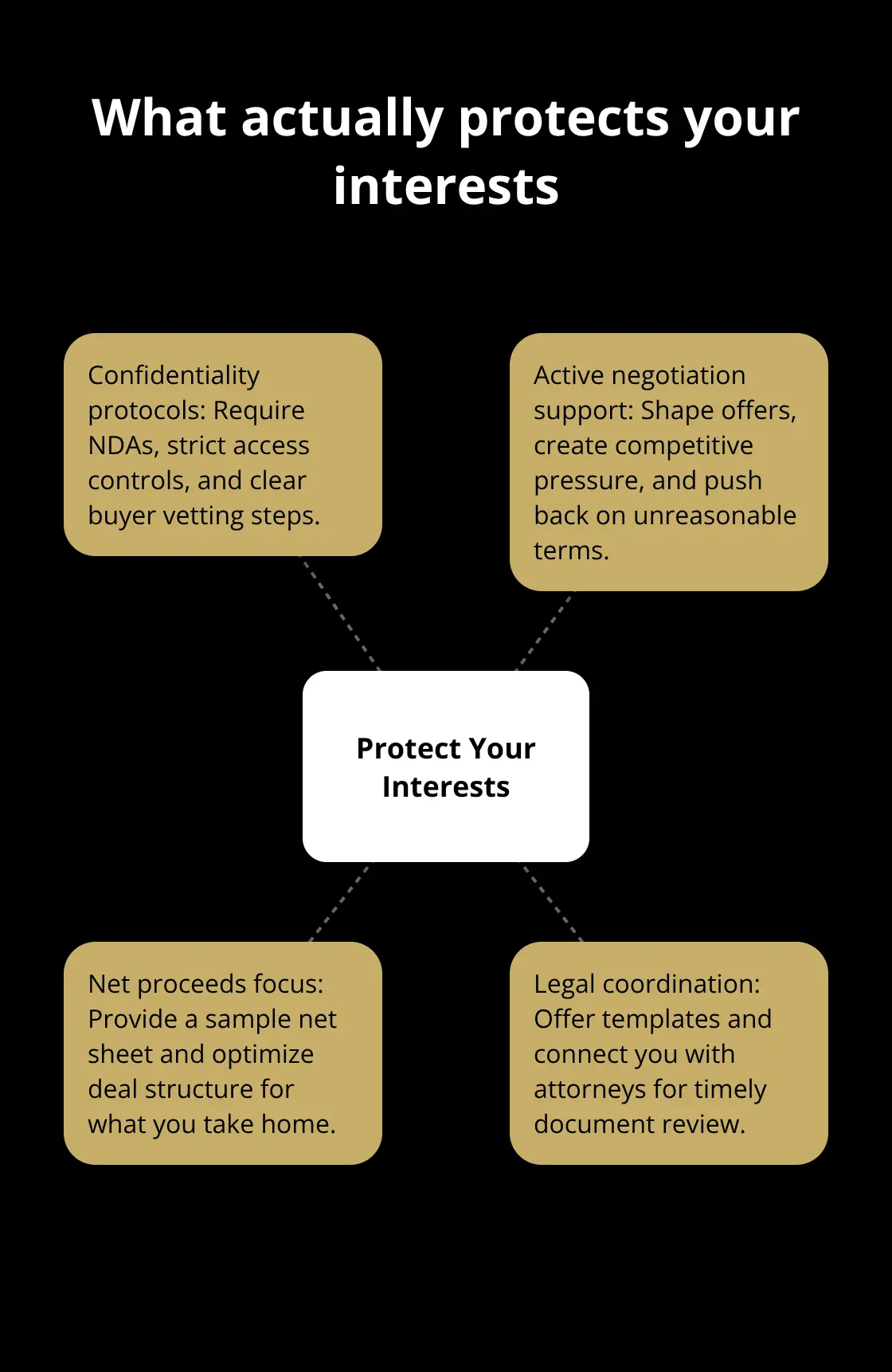
The moment your business hits the market, confidentiality becomes your biggest concern. A broker who mishandles information can crater your deal before serious buyers even see it. Ask your broker exactly how they prevent your business details from leaking to competitors, employees, or the public. Request their confidentiality protocols in writing: Do they require NDAs before sharing financials? How do they vet buyers before initial conversations? What systems do they use to track who has access to sensitive information?
A broker who fumbles these details will show it immediately-vague answers like “we handle it carefully” should trigger immediate skepticism. Your broker should have this same level of rigor built into their process, not as an afterthought. If they cannot articulate their confidentiality framework in specific terms during your interview, they will not protect your information during the sale.
Active negotiation support determines your actual proceeds
Negotiation support separates brokers who actually earn their fees from those who simply list and wait. During the critical negotiation phase, your broker should actively shape offers in your favor, not passively relay messages between parties. Ask how they handled multiple offers in the past-did they create competitive pressure that drove price up, or did they accept the first reasonable bid?
Request specific examples of how they negotiated better terms for sellers: earnout structures, contingency reductions, or closing timeline adjustments that protected your interests. Ask whether they provide legal document templates or connect you with attorneys to review agreements. Many brokers claim to handle negotiations but actually hand everything to a lawyer while they disappear. The best brokers actively participate in back-and-forth discussions, understand deal structure beyond just price, and push back when buyer terms are unreasonable.
Net proceeds matter far more than headline sale price
Your broker should explain how they calculate your actual net proceeds after all costs, not just focus on the headline sale price. Request a sample net sheet showing commissions, closing costs, and taxes so you understand the real financial outcome before you commit. This calculation reveals whether your broker prioritizes your bottom line or simply chases the highest sale price (which may not benefit you after fees).
A broker worth hiring will walk through this math with you upfront and adjust their strategy to maximize what you actually take home. They should also discuss how different deal structures-cash versus earnout, quick close versus extended timeline-affect your net proceeds differently. This conversation separates brokers who think strategically about your outcome from those who treat every sale the same way.
Final Thoughts
You now have the framework to conduct a broker interview that protects your interests. The three categories of questions we’ve covered-fees, experience, and support-separate brokers who deserve your business from those who don’t. Most sellers skip this work because they assume all brokers operate similarly, but they don’t. A broker charging 10 percent with hidden fees will cost you substantially more than one charging 5 percent transparently, and a broker with zero recent experience in your industry will waste months of your time.
The pattern across all these questions is simple: transparency and low fees align your broker’s incentives with yours. When a broker makes money only if you get a good outcome, they work harder on your sale. When they hide costs in contract language, they signal that they don’t respect your intelligence. When they can’t articulate their experience or marketing plan in concrete terms, they haven’t earned your trust.
Taking control of your business sale means refusing vague answers during your broker interview and comparing candidates side by side on fees, experience, and negotiation track record. We at Unbroker built our platform because we saw how broken the traditional broker model had become-you shouldn’t have to choose between paying massive commissions or handling the entire sale yourself. Your business deserves a sale process designed around your interests, not your broker’s commission.