Selling a private business is one of the biggest financial decisions you’ll make. Most sellers leave money on the table because they don’t understand what buyers actually want or how to negotiate effectively.
We at Unbroker have seen firsthand how private business sale tips can transform outcomes. This guide shows you exactly how to strengthen your position, avoid costly mistakes, and close a better deal.
What Buyers Actually Look For
Buyers of private businesses fall into three distinct categories, and each has different priorities that shape how they’ll negotiate. Strategic buyers want synergies-they’re looking to acquire your customer base, eliminate a competitor, or gain market share. Financial buyers focus on cash flow and return on investment, typically targeting businesses with predictable, recurring revenue. Owner-operators search for lifestyle businesses or turnaround opportunities where they can apply their expertise. Understanding which type you’re dealing with changes everything about how you position your business and what terms matter most. A strategic buyer might accept lower profitability if your customers are high-value; a financial buyer will scrutinize your margins obsessively. Research whether your potential buyer has made similar acquisitions, what they paid, and what they kept or changed post-acquisition before you even mention a price. This intel shapes your entire negotiation strategy.
Getting Your Valuation Right From the Start
Most sellers either overprice based on emotion or underprice from uncertainty. The market doesn’t care about your effort or what you think your business is worth-it cares about what similar businesses actually sold for. Pull comparable sales data for businesses in your industry and region. If you operate a SaaS company, multiples typically range from 3x to 5x revenue depending on growth rate and customer retention. Service businesses usually sell for 1.5x to 3x revenue. E-commerce and product businesses often trade around 2x to 4x EBITDA. These aren’t arbitrary-they reflect what buyers have actually paid.
Professional Valuation Prevents Mispricing
Get a professional business valuation done by someone who specializes in your industry; this can cost anywhere from $6,000 to more than $20,000 but prevents catastrophic mispricing. Document your business’s financial metrics meticulously: customer acquisition cost, lifetime value, churn rate, gross margin, and growth trajectory over the past three to five years. Buyers will request this data anyway, so having it organized and verified saves time and builds credibility.
Clean Financials Signal Strength
If your financials are messy, clean them up before showing them to anyone-inconsistent records signal risk and give buyers leverage to negotiate lower. Organized financial statements demonstrate that you’ve run a professional operation, which increases buyer confidence and supports your valuation. This preparation positions you to move forward with serious negotiations from a position of strength.
How to Negotiate Without Leaving Money on the Table
Anchor Your Position With Data, Not Emotion
The moment a buyer makes their first offer, the negotiation takes shape. Initial offers act as anchors, pulling all subsequent discussions toward that number. If you receive an offer below your target, resist the urge to counter immediately. Instead, pause and ask clarifying questions about how they arrived at that figure. This forces them to justify their position and often reveals whether they’re testing your resolve or genuinely constrained by their budget.
When you counter, frame it with a specific rationale tied to your financials or market data, not emotion. A constraint-based explanation-your revenue multiple or customer acquisition costs-proves more persuasive than attacking their offer. Avoid overjustifying though; if your valuation rests on solid comps and your numbers are clean, a well-anchored price with minimal explanation often outperforms excessive justification.
Know Your Walk-Away Number Before Talks Begin
The key is establishing your walk-away price before negotiations start and sticking to it. Define this number with your team beforehand, document it, and refuse to negotiate below it unless your best alternative to negotiated agreement-your BATNA in negotiation terms-forces you to. Most sellers never establish this boundary, which means they’ll accept whatever feels slightly better than nothing. This single decision separates sellers who capture full value from those who leave money on the table.
Silence and Patience Win Negotiations
Silence remains one of your strongest negotiation tools, yet most sellers underuse it. After you present terms or counter an offer, stop talking. Let the buyer sit with your proposal. Silence creates discomfort that often prompts them to improve their offer or reveal their actual constraints. This works because most people feel compelled to fill quiet space, and buyers are no exception.
Patience wins deals in ways that aggression never will. If a buyer senses urgency from you, they’ll delay and extract concessions. Conversely, if you appear willing to walk away, they’ll move faster. Structure your timeline to show you have other options in play; mention casually that you’re speaking with multiple buyers without being aggressive about it.
Bundle Concessions to Signal Your Limits
When concessions become necessary, bundle them strategically rather than giving them away piecemeal. If you must drop price by $50,000, offer it as one adjustment tied to a specific condition-perhaps a faster closing timeline or assumption of certain liabilities-rather than five separate $10,000 reductions. This signals that you’re nearing your limit and discourages further asks.
Lead With Value, Not Price
Throughout negotiations, ground every discussion in value. Don’t lead with price; lead with what makes your business worth buying. If you operate a SaaS platform with 85% gross margins, a 12-month customer retention rate above 95%, and recurring revenue, those metrics matter far more than your asking price. Strategic buyers especially will pay premiums for strong unit economics, and financial buyers will model your cash flows against your multiple. Present your value drivers explicitly and let the numbers do the talking.
The strength of your negotiating position depends entirely on how well you’ve prepared beforehand. Buyers test sellers who appear unprepared, but they respect those who know their numbers cold. This preparation becomes your foundation as you move into the final stages of closing the deal and addressing the common pitfalls that derail many sales.
Common Mistakes Sellers Make
Overpricing Without Market Data
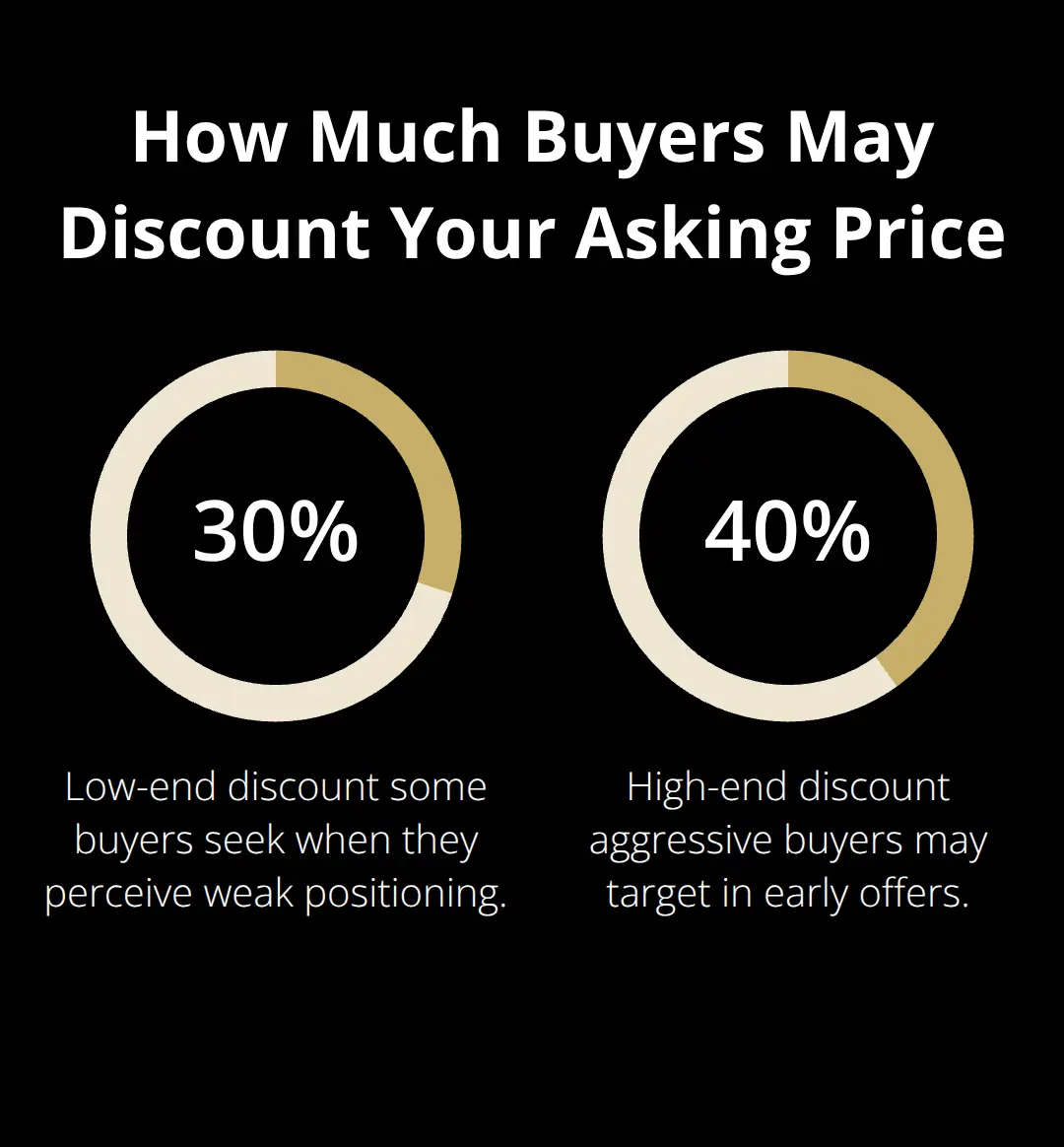
The biggest mistake sellers make happens before negotiations even start: they price based on what they think their business is worth rather than what the market will actually pay. Buyers offer 30 to 40 percent below asking prices because they’ve researched comparable sales and spotted weak positioning.
If your asking price sits at 5x EBITDA while similar businesses in your sector sold for 3x to 15x depending on industry and growth, you’ve already handed them negotiating power.
The solution is ruthless market discipline. Pull actual transaction data from your industry and check what peers sold for in the past 12 months. Anchor your price to that reality, not your aspirations. Overpricing doesn’t create leverage; it signals you don’t understand your market and gives buyers justification to lowball you from day one.
Sharing Information Too Early Kills Your Position
Too many sellers hand over detailed financial records, customer lists, and operational playbooks to any buyer who expresses interest. This creates two serious problems: unvetted competitors gain intelligence about your business, and serious buyers feel you’re desperate because you expose vulnerabilities too quickly.
Before you share anything beyond basic revenue figures and industry category, qualify the buyer. Ask about their acquisition history, their timeline, their capital availability, and their strategic fit with your business. Request proof of funds if they claim to be cash buyers. A legitimate buyer will provide this without hesitation; a tire-kicker will disappear. Only after you’ve confirmed they’re credible and serious should you open your financial records. This staged disclosure protects your leverage and prevents information leakage to competitors.
Failing to Vet Buyer Credibility
Many sellers fail to confirm whether a potential buyer actually has the cash to close. Thorough pre-negotiation preparation strengthens confidence and increases the likelihood of successful outcomes. Vetting involves checking their track record of completed acquisitions, speaking with their previous sellers if possible, and having your legal advisor review any non-disclosure agreements before you sign them.
A buyer who hesitates to provide basic credibility markers (proof of funds, acquisition history, references) signals they’re not serious. Walk away and focus your energy on qualified prospects who can actually move the deal to completion. This discipline prevents wasted time and protects you from information theft by competitors masquerading as buyers.
Final Thoughts
Selling your private business successfully hinges on three fundamentals: understanding what buyers actually want, negotiating from a position of strength, and avoiding the mistakes that cost sellers hundreds of thousands of dollars. Your preparation determines your outcome-a professional valuation, clean financials, and clear knowledge of your walk-away price give you confidence that translates directly into better terms. When you anchor your position with data instead of emotion, bundle concessions strategically, and use silence to your advantage, buyers recognize they’re dealing with a prepared seller who understands their market value.
The mistakes sellers make are preventable. Overpricing without market justification, sharing sensitive information too early, and failing to vet buyer credibility waste months and leave money on the table. Each of these errors stems from rushing the process or skipping the preparation work that separates successful sales from mediocre ones. Document your financials, research comparable sales in your industry, and establish your non-negotiable terms before any buyer conversation starts.
Whether you work with a broker, hire a consultant, or manage the process independently, the principles remain the same: prepare thoroughly, negotiate strategically, and protect your leverage until the deal closes. If you’re handling the sale yourself, Unbroker offers Full Service support with a 6% success fee, paid only when your business sells, giving you access to negotiation assistance, legal templates, and a network of qualified buyers without the high brokerage fees traditional brokers charge. These private business sale tips work because they’re grounded in how real negotiations actually happen, not theoretical best practices.