When you sell a business, hidden fees and broker markups can quietly eat into your profits. Traditional brokers rarely show you the full picture of what they’re charging or how they’re marketing your company.
At Unbroker, we built our platform with complete transparency. You’ll see every cost, every offer, and every step of the process in real time-no surprises at closing.
What You’re Really Paying in Hidden Costs
Traditional brokers typically charge between 8% and 12% of your sale price, but that’s rarely the full story. Many brokers add listing fees, marketing charges, due diligence coordination costs, and escrow fees that aren’t mentioned upfront. A $2 million business sale at 10% costs you $200,000 in broker commission alone.
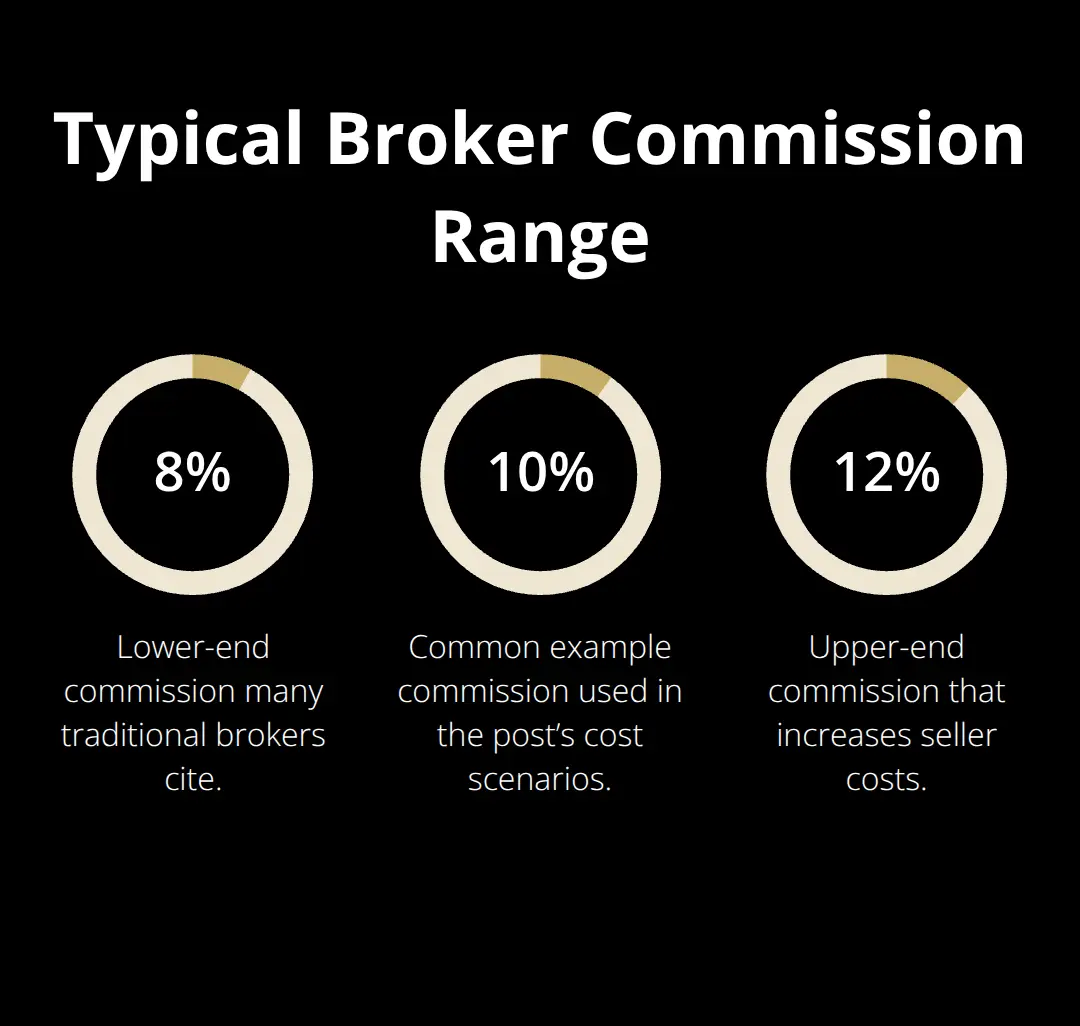
Add another $15,000 to $30,000 in hidden fees, and you’ve lost $215,000 to $230,000 before taxes. Most brokers won’t break down where that money goes or how they spend it on your behalf. They control the buyer list, the marketing strategy, and the negotiation process, leaving you with minimal visibility into whether they actually work hard for your sale or simply collect a check.
The Real Impact on Your Bottom Line
A 10% commission on a $5 million sale costs you $500,000. That’s $500,000 that could stay in your pocket or fund your next venture. The difference between a 10% traditional broker and a modern platform charging a 6% success fee becomes massive at higher sale prices. A $10 million sale with a 10% broker fee costs you $1 million, compared to $600,000 at a 6% success fee-keeping an extra $400,000 in your pocket. Many sellers don’t realize this until after they’ve already signed an exclusive agreement with no way out. Brokers also control the timeline, which extends the sale process and costs you in carrying costs, management distraction, and opportunity loss. A faster, more transparent sale process directly protects your final payout.
Why Lack of Transparency Creates Dead Zones in Your Deal
You don’t see which marketing channels your broker uses or whether they actually promote your business effectively. You don’t know if serious buyers face filtering before they reach you. You can’t access offer details without calling your broker, which means delays and miscommunication. This information gap gives brokers complete control and removes your ability to make informed decisions about your own sale. Some brokers intentionally slow deals to negotiate higher commissions or push you toward buyers who benefit the broker’s portfolio rather than maximize your sale price. Without real-time visibility into buyer interest, offers, and marketing performance, you operate blind while paying a massive premium for that blindness.
What Transparent Pricing Actually Looks Like
Transparent platforms show you exactly what you pay and when you pay it. No surprise fees appear at closing. No hidden markups inflate the final bill. You see the commission structure upfront (whether flat fee, percentage, or hybrid model), and you understand what services that covers. You also know what additional costs might apply-legal review, document preparation, buyer verification-before you commit. This clarity lets you compare options fairly and make decisions based on actual numbers, not broker promises. When a platform separates its costs from buyer acquisition costs and marketing expenses, you can evaluate whether the investment matches the results you receive.
How Information Control Shifts Power in the Sale
Brokers who withhold information maintain leverage over you throughout the process. They decide which offers you see, which buyers get priority, and how long negotiations take. You can’t challenge their decisions because you lack the data to do so. Transparent platforms flip this dynamic by giving you access to buyer interest, offer details, and marketing metrics in real time. You see how many qualified buyers viewed your listing, which marketing channels drove traffic, and what feedback you received. This information (combined with expert guidance when you need it) lets you make strategic decisions instead of trusting a broker’s word. The shift from information scarcity to information access fundamentally changes who controls your sale.
What Transparent Platforms Actually Demand of Themselves
Pricing That Leaves No Room for Surprises
When you demand transparency from a platform, you’re asking for specifics, not promises. A transparent platform shows you the exact pricing structure before you sign anything. Flat fees, percentage-based commissions, or hybrid models must all be spelled out with zero ambiguity. If a platform charges a 6% success fee due only when your business sells, that’s transparent. If it charges a percentage, you need to know the exact percentage and at what point it gets deducted. Hidden tiers, conditional fees, or charges that appear only after you’ve invested time in the process are red flags. Request a written breakdown of every cost: legal document preparation, buyer verification, marketing spend, negotiation support, escrow fees, and anything else. Ask specifically what happens if the sale falls through or takes longer than expected. Most brokers won’t answer these questions clearly because they profit from the confusion. A platform serious about transparency will provide a cost comparison tool, showing you exactly what you’d pay versus a traditional broker at your expected sale price. For a $3 million business sale, a 6% success fee versus a 10% traditional broker fee could save you $120,000.
Direct Access to Buyer Data and Offers
Real-time access to buyer information and offers separates transparent platforms from traditional brokers who control the flow of data. A sales dashboard centralizes, standardizes, and visually represents all your sales data in an easily accessible platform. Offers arrive directly to you without filtering or delay, complete with buyer details and terms. You track where your listing appears, which advertising channels perform best, and how long each stage of the process takes. When a buyer makes an offer, you access the full proposal immediately rather than waiting for your broker to call. This removes the middleman’s ability to suppress competing offers or slow negotiations to extract better terms.
What Questions Reveal a Platform’s True Commitment
Ask any platform whether you can export your buyer data and review communication history, and access performance reports whenever you need them. If they hesitate or mention restrictions, that’s a sign they’re protecting their information advantage, not yours. Request a sample dashboard so you can see exactly what information you’ll access during your sale. Ask whether the platform stores your data securely and complies with privacy standards.
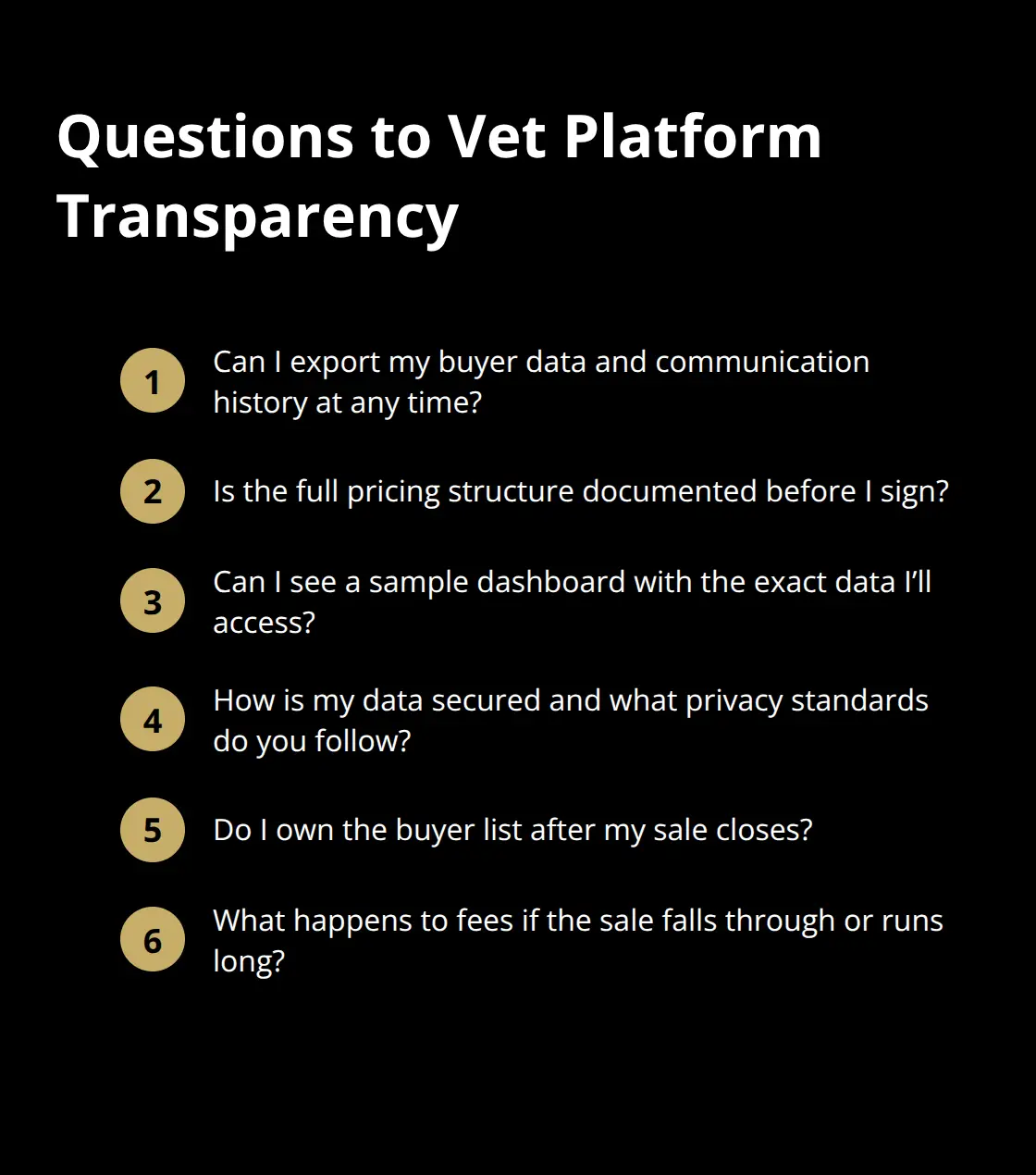
Find out if you own your buyer list or if the platform retains it after your sale closes. These questions separate platforms that genuinely prioritize your control from those that simply claim to. A platform that answers every question directly and provides written documentation of its policies demonstrates the transparency it promises.
The next step involves understanding how these transparent features actually work in practice-and what happens when you need expert guidance alongside complete visibility.
What You Actually See When You Sell Through a Transparent Platform
Real-Time Dashboards That Show Everything
A transparent platform provides a real-time dashboard that tracks every interaction with your business listing. You see exactly how many qualified buyers viewed your company, which marketing channels drove that traffic, and what questions buyers asked about your operations. This isn’t theoretical reporting-it’s concrete data that updates throughout the day. When a buyer submits an offer, it lands in your inbox immediately with full terms visible, rather than waiting for a broker to summarize it over the phone. You access buyer profiles, their financing capacity, their timeline, and their specific interest in your industry. This direct access eliminates the information bottleneck that traditional brokers maintain.
Direct Communication That Removes the Middleman
Direct communication with potential buyers eliminates the middleman’s ability to slow negotiations or suppress competing offers. When multiple buyers express interest, you see all of them simultaneously and understand their relative positions without a broker filtering the information. If a buyer asks about cash flow or growth projections, you see that question in real time and respond directly, avoiding miscommunication or delays. You control the narrative around your business instead of relying on a broker’s filtered version. This transparency transforms a traditionally opaque process into one where you make informed decisions based on actual data rather than broker assurances.
Performance Metrics That Prove Marketing ROI
Detailed reporting on marketing performance shows you exactly what’s working-whether it’s LinkedIn advertising, industry publication placements, or targeted outreach to strategic buyers in your sector. You know which marketing investments generated serious inquiries versus mere curiosity. This data lets you adjust your strategy mid-sale if certain channels underperform, rather than committing blindly to a broker’s predetermined marketing plan. A seller at a $5 million valuation can see whether the platform spent marketing dollars effectively or wasted them on low-quality leads. You measure marketing ROI directly against your actual buyer inquiries and offers received.
Timeline Visibility That Identifies Bottlenecks
The dashboard shows you exactly when each stage of the process occurs-from initial listing to offer negotiation to due diligence. You track how long your sale takes compared to industry benchmarks and identify bottlenecks immediately. This visibility prevents delays that traditional brokers sometimes introduce to extract better terms or extend their engagement. When you understand which channels convert browsers into serious buyers, you can negotiate more effectively with future platforms and hold them accountable for performance. A $5 million sale that takes six months instead of three months costs you in carrying costs, management distraction, and opportunity loss-costs that transparency helps you avoid.
Information Access That Shifts Control to You
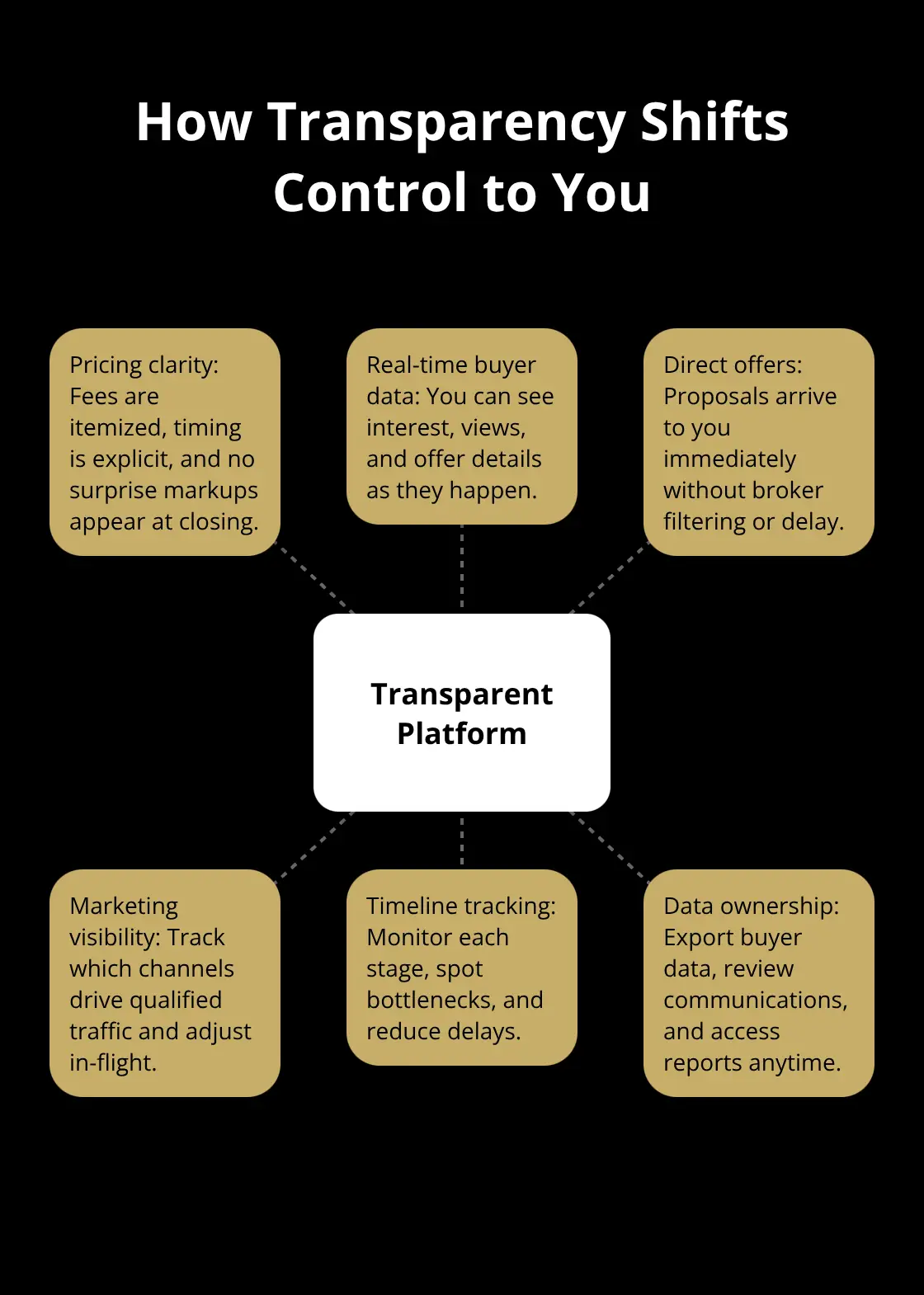
You access buyer data, communication history, and performance reports whenever you need them. This ownership of information fundamentally changes who controls your sale. Traditional brokers maintain leverage by controlling what information you see and when you see it. Transparent platforms flip this dynamic by giving you complete visibility into buyer interest, offer details, and marketing metrics in real time. You can challenge decisions because you have the data to support your position. This shift from information scarcity to information access means you make strategic decisions instead of trusting a broker’s word about what’s happening behind the scenes.
Final Thoughts
Transparency directly impacts your bottom line in ways that become impossible to ignore once you see the numbers. A $5 million business sale with a traditional broker costs you $500,000 in commission alone, plus another $15,000 to $30,000 in hidden fees. That same sale through a platform with transparent pricing, charging a 6% success fee due only at closing, would cost you $300,000-a difference that lets you keep hundreds of thousands more of your proceeds.
Before you commit to any platform, ask three critical questions about pricing structure, data ownership, and cost breakdowns. Platforms that hesitate or provide vague answers protect their information advantage, not yours. We at Unbroker built our platform specifically to eliminate the hidden fees and information gaps that traditional brokers rely on, offering full-service selling for a single 6% success fee, paid only when your business sells.
Platform transparency features separate platforms that genuinely prioritize your control from those that simply claim to. You access our buyer network, premium marketing tools, legal templates, and negotiation support without surprise fees or hidden markups. Start your transparent sale with Unbroker and keep the money that should stay in your pocket.