Selling a business comes with real costs, and understanding them upfront matters. An upfront platform fee is one of the first expenses you’ll encounter, yet many sellers don’t know what they’re actually paying for.
At Unbroker, we believe transparency about pricing helps you make better decisions. This guide breaks down what these fees cover, how they compare to traditional broker commissions, and whether they’re worth your investment.
What Platform Fees Actually Cost You
Understanding Your Upfront Investment
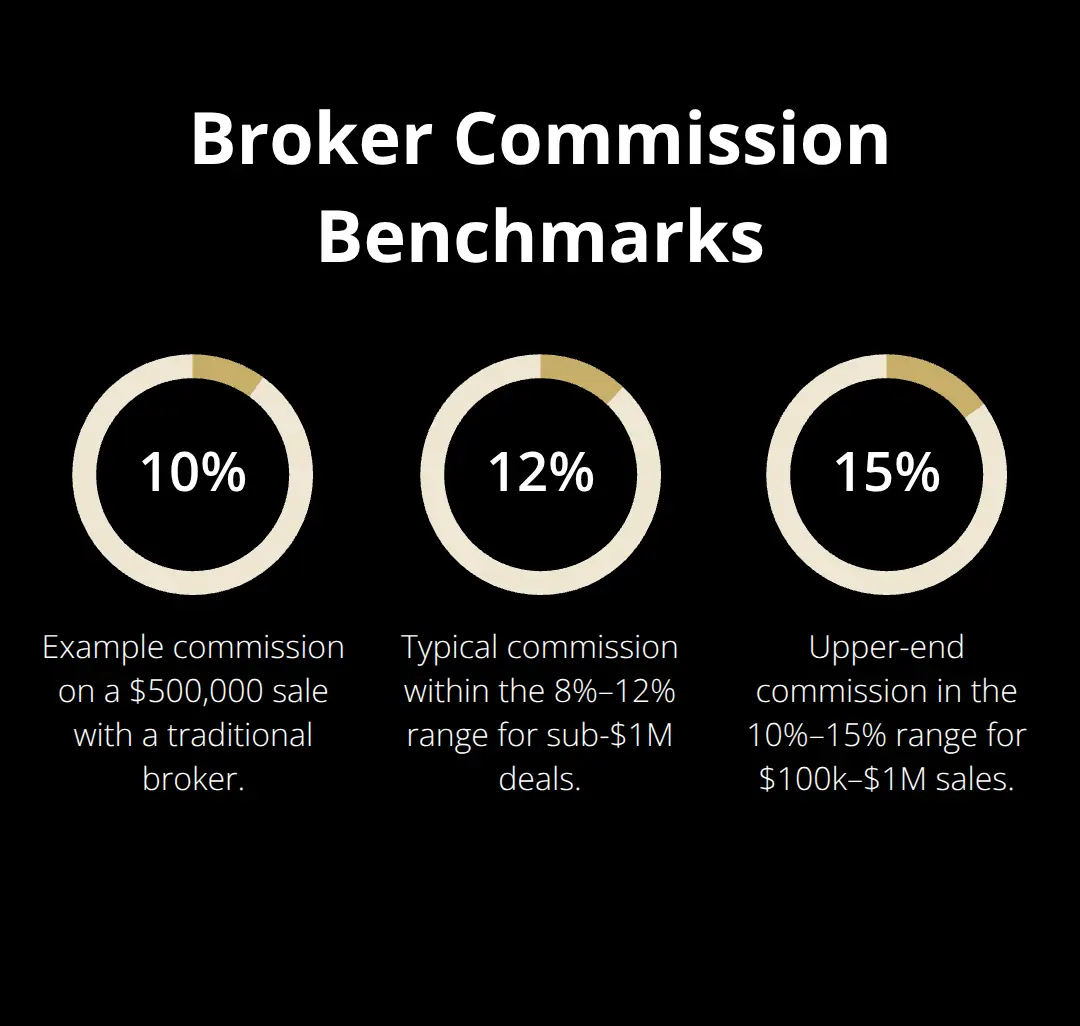
A success-fee model is a pricing structure where you pay a percentage of the final sale price only when your business actually sells. This structure gives you access to marketing tools, buyer networks, and support services needed to sell your business, without requiring any upfront payment. The key difference between a success-fee model and traditional broker commissions is how the two are structured: many traditional brokers charge 10–15% of the final sale price for businesses sold between $100,000 to $1,000,000, while a modern success-fee model-such as a 6% fee-means you pay nothing if your business doesn’t sell.
Traditional brokers in the business sale space often charge commissions on top of their initial fees, making their total cost structure significantly higher than transparent platform pricing. If you sell a business for $500,000 through a traditional broker charging 10%, you’d pay $50,000 in commissions alone. With a transparent platform charging a 6% success fee, you’d pay $30,000-a total savings of $20,000. This pricing transparency matters because it lets you calculate your exact costs before committing, rather than discovering hidden fees buried in broker agreements.
Hidden Costs in Traditional Broker Models
Many sellers overlook that traditional brokers charge for additional services beyond their base commission: legal document preparation, valuation reports, buyer vetting, and negotiation support. These add-ons can cost thousands more. Platform fees, by contrast, typically bundle these services into one transparent price, eliminating surprise charges later in the process.
What Your Platform Fee Actually Covers
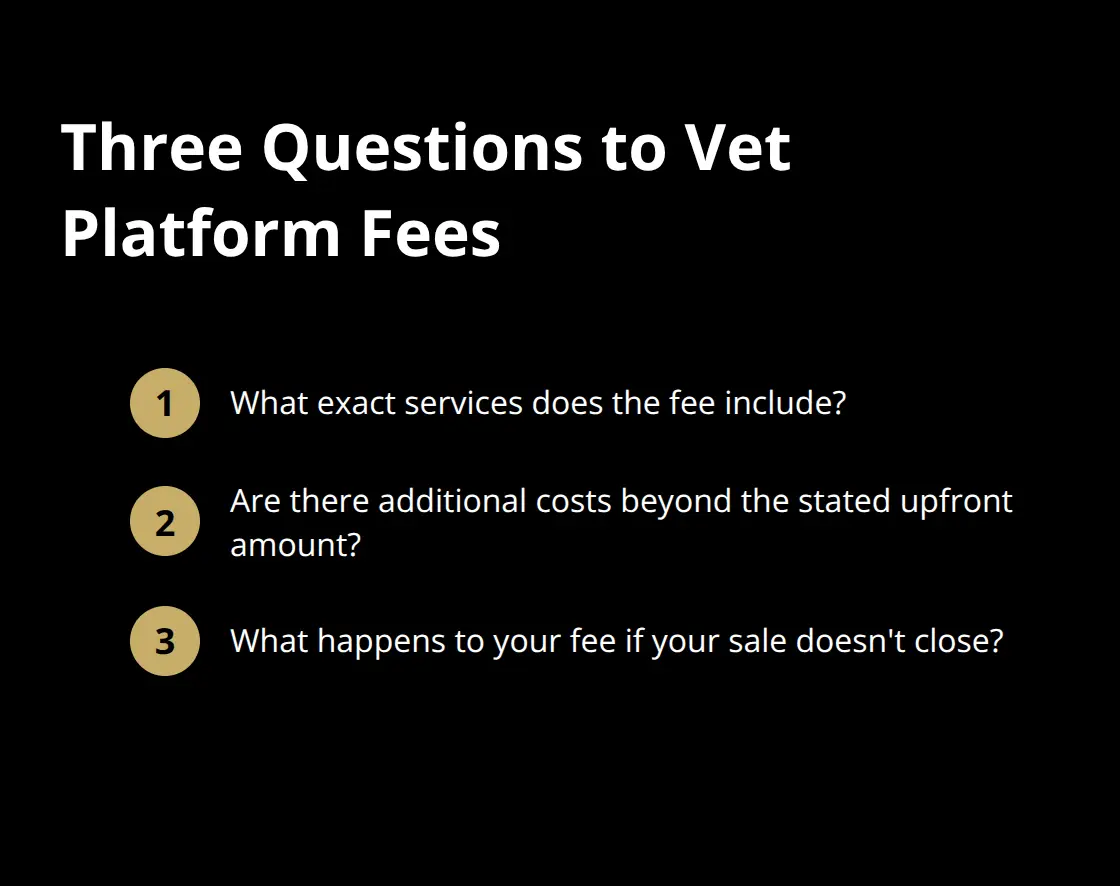
A success-fee service should include access to a buyer network, marketing materials for your listing, document templates, and direct support during the sales process. Some services charge extra for premium placement or enhanced visibility, but transparent providers disclose these optional costs upfront. When comparing options, ask three specific questions: What exact services does the fee include? Are there additional costs beyond the stated success fee percentage? Do you owe anything if your business doesn’t sell?
Sellers often assume a platform fee is wasted money if they don’t sell, but many platforms either refund the fee or credit it toward future use. The real cost of not using a platform is opportunity cost-traditional brokers take 10–15% of your sale price, which on a $1 million business sale equals $100,000–$150,000. Even if a platform charges $5,000 upfront and another $5,000 post-sale, you’re saving significantly compared to traditional commission structures.
The Real Math Behind Your Decision
This calculation shifts the conversation from whether you can afford the platform fee to whether you can afford not to use one. The difference between transparent platform pricing and traditional broker commissions often exceeds $40,000 on mid-market business sales. Understanding this gap helps you evaluate whether a platform’s upfront cost represents genuine value or an unnecessary expense.
Now that you know what platform fees cover and how they compare to traditional models, the next step is identifying which additional costs you’ll encounter beyond the initial upfront payment.
What You’ll Actually Pay Beyond the Upfront Fee
Most sellers stop their cost analysis at the upfront platform fee, but that’s where real financial planning should start. Beyond your initial payment, several cost categories directly impact your net proceeds from the sale. Understanding these expenses before listing prevents surprises during the sales process and helps you calculate your true cost of selling.
Platform Add-Ons and Optional Services
Some platforms bundle additional services into their upfront fee, while others charge separately for premium features like enhanced buyer matching, priority support, or legal document customization. You need to ask your platform provider to itemize exactly what’s included versus what costs extra. Professional business valuation reports, for example, cost $500–$1,500 on some platforms, while others offer this free as part of their core service. The difference between platforms often comes down to what they’ve already factored into their upfront cost structure versus what they reserve as add-on charges.
Professional Services You Can’t Skip
Beyond platform-specific costs, you’ll need to budget for professional services that fall outside any platform’s scope. Legal review of purchase agreements typically costs $150 to $400 per hour, or $500 to $3,000+ as a flat fee depending on your business complexity. These aren’t optional expenses-serious buyers expect them, and skipping them signals inexperience. Additionally, if your business requires industry-specific certifications or compliance documentation, you’ll spend additional time and resources in preparation.
The Hidden Cost of Your Time
If you’re using an assisted platform versus a full-service broker, you’re trading money for your own labor. Research suggests DIY sellers spend considerable hours on listing preparation, buyer communication, and document management. At $50–$150 per hour (your opportunity cost), that’s a meaningful investment in hidden time costs that most sellers never calculate into their decision.
Your Total Investment Picture
When you total the platform fee, professional services, compliance preparation, and your time investment, your all-in cost typically ranges from $7,000–$15,000 for mid-market business sales. Compare this to traditional broker commissions of 8% to 12% for businesses under $1 million, and the value becomes clear. This cost breakdown reveals why understanding what you’ll actually pay matters far more than fixating on the upfront fee alone.
Now that you know what costs to expect, the next step is evaluating whether a specific platform’s fee structure aligns with your selling timeline and business complexity.
Getting Real Value From Your Platform Fee
Match Your Fee Structure to Your Selling Situation
The platform fee you pay should translate directly into faster sales and better buyer matches, not just platform access. Start by defining what success looks like for your specific sale before selecting a platform. If you’re selling a $250,000 service business and need to close within six months, a self-directed platform lets you control timing and exit if progress stalls. If you’re selling a $2 million business with complex operations, a full-service option charging a 6% success fee-paid only when your business sells-becomes more attractive because AI-driven buyer matching and professional negotiation assistance reduce your timeline and hidden costs. Your fee structure should match your selling complexity and time constraints.
Evaluate Your Access to Qualified Buyers
A platform’s buyer network size matters far more than its upfront cost. Platforms with 50,000+ active buyers in your industry segment generate more qualified inquiries than networks with 5,000 buyers, even if they charge slightly more. Ask your platform provider for specific buyer count data in your business category and request examples of comparable sales they’ve facilitated. This data reveals whether you’re paying for genuine market access or inflated positioning claims. AI-driven processes mean your listing reaches buyers most likely to purchase, reducing unqualified inquiries and accelerating serious negotiations.
Calculate the True Value of Included Services
The tools bundled into your platform fee directly impact your out-of-pocket professional services costs. Legal document templates worth $500–$1,500 if purchased separately should be included in your upfront fee, not sold as add-ons. Negotiation support and buyer vetting services that would cost $2,000–$5,000 with a traditional broker should also be bundled in. Calculate the replacement cost of each included service by researching standalone pricing for legal templates, valuation reports, and negotiation coaching, then compare that total to the platform’s fee. If a platform charges $5,000 upfront but includes $8,000 in professional services normally purchased separately, your actual net cost is negative-the platform pays for itself before your sale closes.
Understand Your Risk Protection
Platforms offering satisfaction guarantees or fee credits toward future use shift your risk profile. If a platform refunds your fee if your sale doesn’t close within a defined timeframe, your actual cost is limited to your time investment, not the platform fee itself. This protection matters because business sales frequently extend beyond initial timelines due to buyer financing, due diligence, or market conditions beyond your control.
Decide on Premium Placement Strategically
Premium placement and enhanced visibility features are optional add-ons that only make sense if your business falls into a competitive category where buyer attention is scarce. A highly specialized manufacturing business might justify $500–$1,000 in premium placement because few buyers search for that category. A generic service business competing with hundreds of similar listings doesn’t benefit proportionally from paid visibility, so skipping premium placement saves money without sacrificing qualified buyers.
Final Thoughts
Selling your business involves real financial decisions, and understanding your upfront platform fee is the first step toward protecting your net proceeds. The cost of selling through a transparent platform typically ranges from $7,000 to $15,000 when you factor in all expenses, compared to traditional broker commissions that consume 8% to 12% of your sale price. On a $500,000 business sale, that difference amounts to $30,000 or more in your pocket instead of a broker’s.
The platforms worth your investment are those that bundle professional services into their fee structure rather than nickel-and-diming you with add-ons. Legal document templates, buyer vetting, negotiation support, and access to qualified buyers should all be included in what you pay upfront. When you calculate the replacement cost of these services purchased separately, many transparent platforms actually pay for themselves before your sale closes.
Transparency in pricing matters because it lets you make informed decisions without discovering hidden costs mid-transaction. You know exactly what you’re paying, what services you’re receiving, and what your true cost of selling actually is. Explore your options at Unbroker to see how transparent pricing can work for your business sale.