Selling your business shouldn’t mean handing over 10% or more of your proceeds to a broker. Traditional commission structures are outdated, and at Unbroker, we believe cost-conscious sellers deserve better options.
Low cost brokerage options now exist that strip away unnecessary overhead while keeping professional support in place. You can sell smarter, keep more money, and still reach qualified buyers.
What You Really Pay With Traditional Brokers
Traditional business brokers operate on a commission model that typically extracts between 8% and 10% of your sale price. Selling a $1 million business costs you $80,000 to $100,000 in fees alone. That money doesn’t go toward marketing or buyer outreach-it vanishes the moment you sign the contract.

The commission structure creates misaligned incentives. Brokers profit whether they work hard or coast, and they pocket the same percentage regardless of how quickly they find a buyer or how much they negotiate on your behalf. Global demand for low-cost alternatives has grown significantly, with the online discount brokerage segment projected to reach $30.7 billion by 2030. This explosive growth reflects a fundamental shift: sellers reject losing massive portions of their proceeds to outdated fee structures.
Hidden Costs Hide the True Price
Traditional brokers conceal secondary costs within their agreements-escrow fees, document preparation charges, marketing expenses that get tacked onto your final bill, and retainer costs that mount over months. A seller often discovers these hidden fees only after signing, making the true cost far higher than the advertised commission percentage. The opacity of traditional brokerage pricing means you have minimal control over how your money gets spent and no guarantee that higher fees result in better outcomes.
The Real Impact on Your Bottom Line
When you sell for $500,000 through a traditional broker charging 10%, you lose $50,000 immediately. That’s not a marketing investment-that’s money that could have stayed in your pocket or funded your next venture. Low-cost platforms eliminate the commission trap by charging a small, transparent success fee instead of taking a double-digit percentage cut. This structure removes the conflict of interest inherent in traditional brokerage.
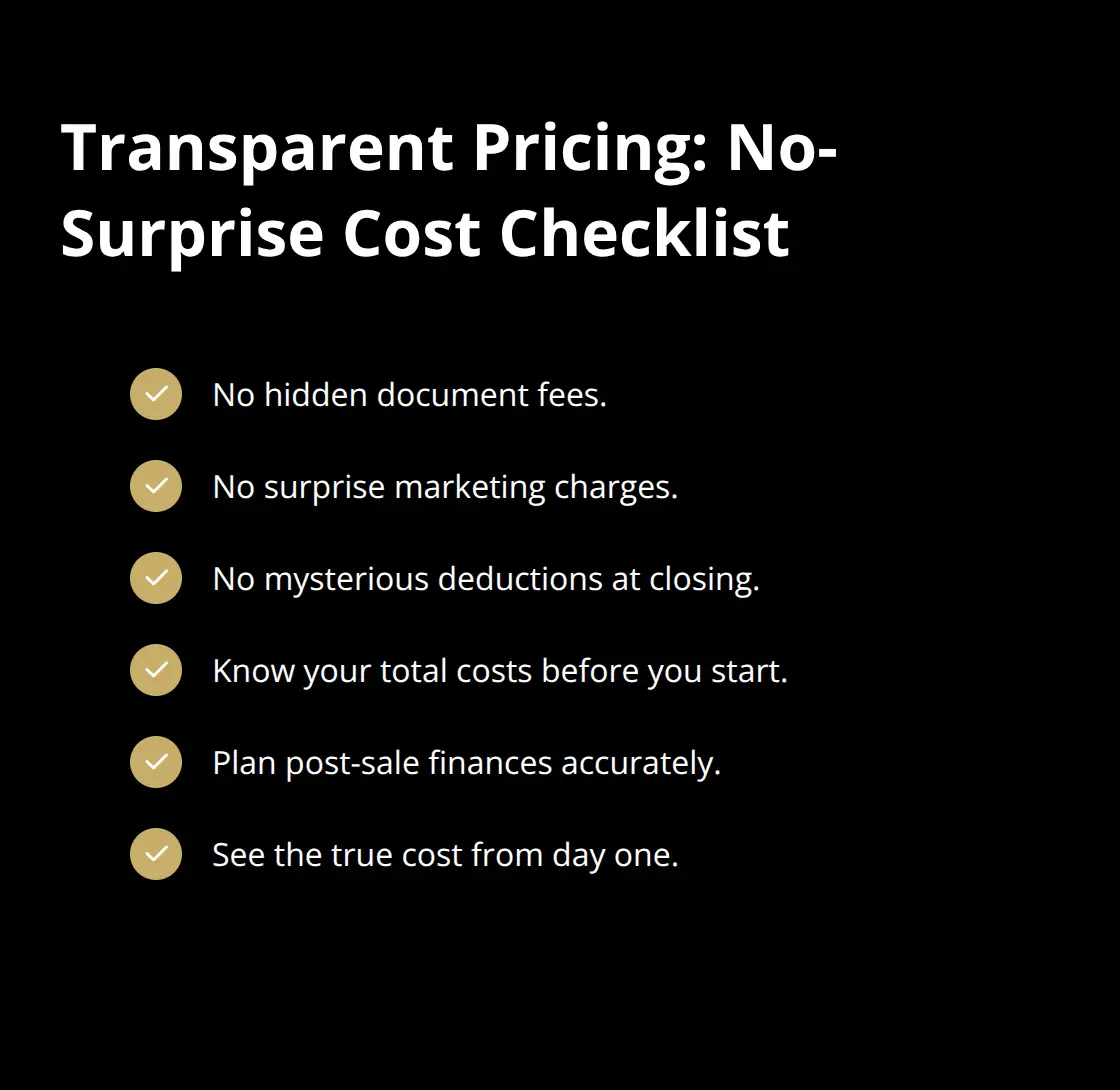
Transparent pricing also means no surprises. With Unbroker, you know exactly what you’ll pay-a 6% success fee due only when your business sells-with no hidden document fees, no surprise marketing charges, and no mysterious deductions at closing. This predictability lets you plan your post-sale finances accurately and makes the true cost of selling visible from day one.
Why Buyers and Sellers Both Benefit
Traditional brokers take their cut from the sale price, which indirectly pressures sellers to inflate asking prices to compensate for the fee they’ll lose. This inflates the entire market and makes it harder for serious buyers to find fairly priced opportunities. Low-cost platforms remove this pressure, allowing sellers to price competitively and buyers to find genuine value.
When fees don’t consume 10% of the transaction, both sides can negotiate more honestly. A seller using a low success-fee model can afford to price realistically because they’re not hemorrhaging money to broker commissions. A buyer benefits from fairer pricing and a more straightforward negotiation process. Technology handles the heavy lifting of buyer identification and initial screening, replacing the old model where brokers controlled access to their networks. Professional support remains available when you need it (for legal questions, contract review, or negotiation guidance), but you only pay a modest success fee when your business sells, not a double-digit commission that eats into your life’s work.
Understanding what traditional brokers cost sets the stage for exploring how low-cost platforms operate differently-and why their transparent models work better for sellers who want to keep more of what they’ve earned.
How Low-Cost Platforms Replace Expensive Broker Commissions
A Success Fee Model Eliminates Misaligned Incentives
Low-cost platforms operate on a fundamentally different model than traditional brokers. Instead of taking 8-10% of your sale price, platforms like Unbroker charge a single 6% success fee, paid only when your business sells, that aligns with your interests rather than against them. A $1 million business sale costs $80,000 to $100,000 in traditional broker commissions, compared to $60,000 at a 6% success fee-a difference of $20,000 to $40,000 that stays in your pocket. This structure removes the perverse incentive where brokers profit equally whether they work hard or do minimal outreach. The online discount brokerage segment continues expanding because sellers recognize that a lower, aligned success fee delivers better outcomes than commissions that reward speed over quality.
Technology Handles the Heavy Work
Low-cost platforms tap vast databases enhanced by algorithmic matching that identifies genuinely qualified purchasers faster than traditional methods. AI-driven buyer matching and automated marketing replace reliance on a broker’s personal network and subjective screening. Marketing tools built into the platform let you control your listing presentation without paying extra for each marketing touchpoint. Legal document templates and negotiation assistance reduce the need for separate attorney fees on routine matters, though you retain the option to bring in specialized counsel for complex issues. Confidentiality protections remain standard-your business details stay secure while buyers sign NDAs before viewing sensitive information.
Transparency Eliminates Surprise Charges
Cost-conscious sellers who used traditional brokers often report discovering unexpected charges weeks after signing. Low-cost platforms eliminate this entirely by publishing all fees upfront and maintaining transparent communication throughout the sale process. You know exactly what you’ll pay before you start, with no hidden document fees, no surprise marketing charges, and no mysterious deductions at closing. This predictability lets you plan your post-sale finances accurately and makes the true cost of selling visible from day one. A satisfaction guarantee means if you’re not happy with the process or results, you have recourse rather than being locked into a contract where the broker controls everything.
How Pricing Structures Protect Your Proceeds
Traditional brokers take their cut from the sale price, which indirectly pressures sellers to inflate asking prices to compensate for the fee they’ll lose. Low-cost platforms remove this pressure, allowing sellers to price competitively and buyers to find genuine value. When fees don’t consume 10% of the transaction, both sides can negotiate more honestly. A seller using a low success-fee model can afford to price realistically because they’re not hemorrhaging money to broker commissions. A buyer benefits from fairer pricing and a more straightforward negotiation process. Technology handles the heavy lifting of buyer identification and initial screening, replacing the old model where brokers controlled access to their networks.
Professional support remains available when you need it (for legal questions, contract review, or negotiation guidance), but you only pay for the platform and support structure, not a percentage of your life’s work. This shift toward transparent, technology-enabled selling creates space for a new question: how do you actually market your business effectively and negotiate terms when you’re not relying on a traditional broker’s network?
How to Market and Negotiate Without Overpaying
When you stop paying a traditional broker 8-10% of your sale price, you gain control over how that money gets deployed. Sellers redirect those savings into targeted marketing and strategic negotiation tactics that move deals forward. The difference is stark: instead of hoping your broker’s network includes the right buyer, you can invest in visibility across multiple channels and use AI-driven buyer networks to surface genuinely qualified purchasers.
Control Your Marketing Message
Professional platforms now offer built-in marketing tools that let you craft compelling business descriptions, upload financial documents securely, and control exactly what information reaches potential buyers at each stage. This transparency works both ways-serious buyers see unfiltered information rather than a broker’s spin, which builds trust faster and leads to better-quality offers. Cost-conscious sellers who use low-cost platforms typically invest their savings into professional photography, detailed financial documentation, and targeted outreach to specific buyer categories rather than broad-based broker marketing. This focused approach generates higher-quality inquiries and stronger opening offers because serious buyers self-select when they see detailed, honest information about your business.
Negotiate Directly With Qualified Buyers
Negotiating directly with qualified buyers removes the middleman who historically controlled all communication and extracted their percentage regardless of outcome. You can now engage directly with qualified buyers through structured processes that protect confidentiality while enabling honest conversation about price, terms, and deal structure. When you’re not fighting to cover broker commissions, you have genuine flexibility to negotiate earnout structures, seller financing, or phased transitions that create win-win outcomes neither side would accept under traditional brokerage pressure.
Accelerate Your Timeline With AI-Driven Matching
The shift toward AI-driven buyer networks has fundamentally changed how quickly the right purchaser finds your listing. Algorithmic matching identifies prospects based on industry, geographic focus, acquisition history, and financial capacity-eliminating the old gatekeeping where brokers decided which buyers got access to which deals. This acceleration cuts time-to-sale significantly, which directly protects your bottom line since carrying costs, management time, and opportunity costs all decline when deals close faster.

Reduce Legal Costs With Templates and Support
Legal document templates included on transparent platforms reduce the need for expensive attorney involvement on routine matters, though you retain the option to bring in specialized counsel for complex deal structures or contingencies (such as earnouts or contingent payments). This approach lets you allocate your savings strategically rather than paying flat legal fees regardless of complexity. Negotiation assistance built into the platform helps you structure offers and counteroffers without hiring outside advisors for every conversation, further protecting your proceeds from unnecessary expenses.
Final Thoughts
Selling your business ranks among the most significant financial decisions you’ll make, and the difference between keeping 90% of your proceeds and losing 10% to traditional broker commissions compounds dramatically at scale. A $2 million sale costs you $160,000 to $200,000 with a conventional broker-money that could fund your next venture, secure your retirement, or reward years of hard work. Low cost brokerage options now exist that strip away these unnecessary commissions and let you retain what you’ve earned.
The shift toward transparent pricing and technology-driven processes reflects a simple truth: sellers no longer accept outdated fee structures that prioritize broker profits over your outcomes. A lower, transparent success fee, AI-driven buyer networks, and professional support structures have made it possible to sell without hemorrhaging money to inflated commissions. You gain control over marketing, negotiate directly with qualified buyers, and access networks that surface genuine purchasers faster than traditional methods ever could.
We at Unbroker built our platform around this principle-transparent pricing eliminates surprises, our AI-driven buyer network accelerates your timeline, and our legal templates reduce costs that traditional brokers hide in fine print. Explore how Unbroker can help you sell with confidence and savings and discover what keeping more of your proceeds actually means for your future.