Most business sellers assume they need to pay premium broker fees to get real results. That’s simply not true.
At Unbroker, we’ve seen countless business sales succeed through low cost broker platforms that deliver the same quality outcomes as traditional brokers charging three times as much. The difference comes down to efficiency, not corners cut.
What You Actually Pay vs. What Traditional Brokers Charge
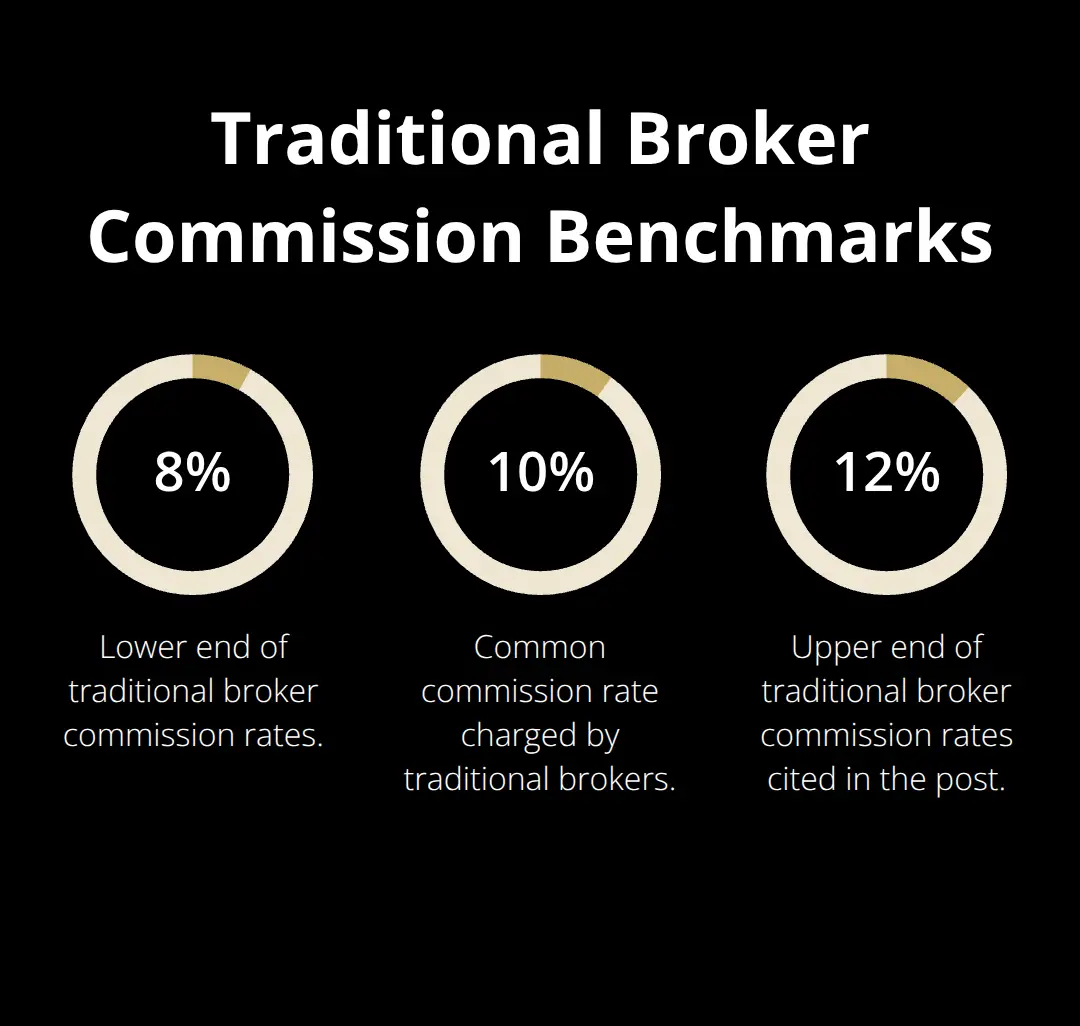
Traditional business brokers typically charge 10% of the sale price, with commission rates between 8% and 10% of the sales price. On a $1 million business sale, that’s $80,000 to $100,000 in fees before you see a penny. These brokers justify high fees with claims of expertise and buyer networks, but the math doesn’t support the premium. Sellers achieve identical or better outcomes while paying a fraction of that cost.
The difference isn’t quality-it’s how brokers structure their operations. Traditional firms carry bloated overhead: large office networks, multiple layers of staff, and expensive marketing budgets that get passed directly to you. They also build in commission-based incentives that sometimes misalign with your interests. A broker earning 10% has motivation to push any deal across the finish line, not necessarily the best deal for you.
Transparent Pricing Eliminates Overhead
Low-cost platforms eliminate unnecessary overhead entirely. They charge a low, transparent success fee rather than the high percentage-based commissions traditional brokers charge. You know exactly what you’ll pay-a straightforward percentage of the final sale price-with no surprises when papers are signed. This structure removes the conflict of interest that plagues traditional brokers. A lower success-fee model aligns the broker’s incentive with yours: close the right deal, not just any deal. You’re not subsidizing unnecessary layers or paying for services you don’t need.
Hidden Costs That Traditional Brokers Bury
Beyond the headline commission, traditional brokers often tack on additional charges that accumulate silently. Some charge for due diligence packages, buyer qualification, or “marketing coordination.” Others bundle in costs for legal document preparation or escrow services that should be standard. A seller might think they’re paying 10% only to discover another 2% to 3% in hidden fees when papers are signed. These surprise charges erode the value of the broker’s services and create friction at the worst possible moment. Low-cost platforms succeed because they eliminate this nickel-and-diming approach. Everything is disclosed upfront. No surprise fees for document templates, no hidden charges for buyer access, no unexpected costs for negotiation support.
The Real Numbers Behind Your Savings
Consider a $500,000 business sale. A traditional broker at 10% costs $50,000. A low-cost platform charges a fraction of that amount. That difference goes directly into your pocket. On a $2 million sale where a traditional broker might charge $200,000, low-cost options remain fixed and affordable. The savings scale dramatically with deal size, which is exactly backward from how most seller expenses should work. Smaller business sales shouldn’t face higher percentage fees simply because the absolute dollar amount is lower. Real sellers report that these savings translate into tangible outcomes: faster reinvestment in new ventures, stronger cash positions after acquisitions, or simply keeping more of what they built. The outcome isn’t theoretical-it’s money that stays with you instead of flowing to unnecessary broker overhead. These savings create real financial advantages that compound over time, especially when you reinvest them into your next opportunity.
What Results Actually Look Like on a Budget Platform
Qualified Buyers Without Premium Price Tags
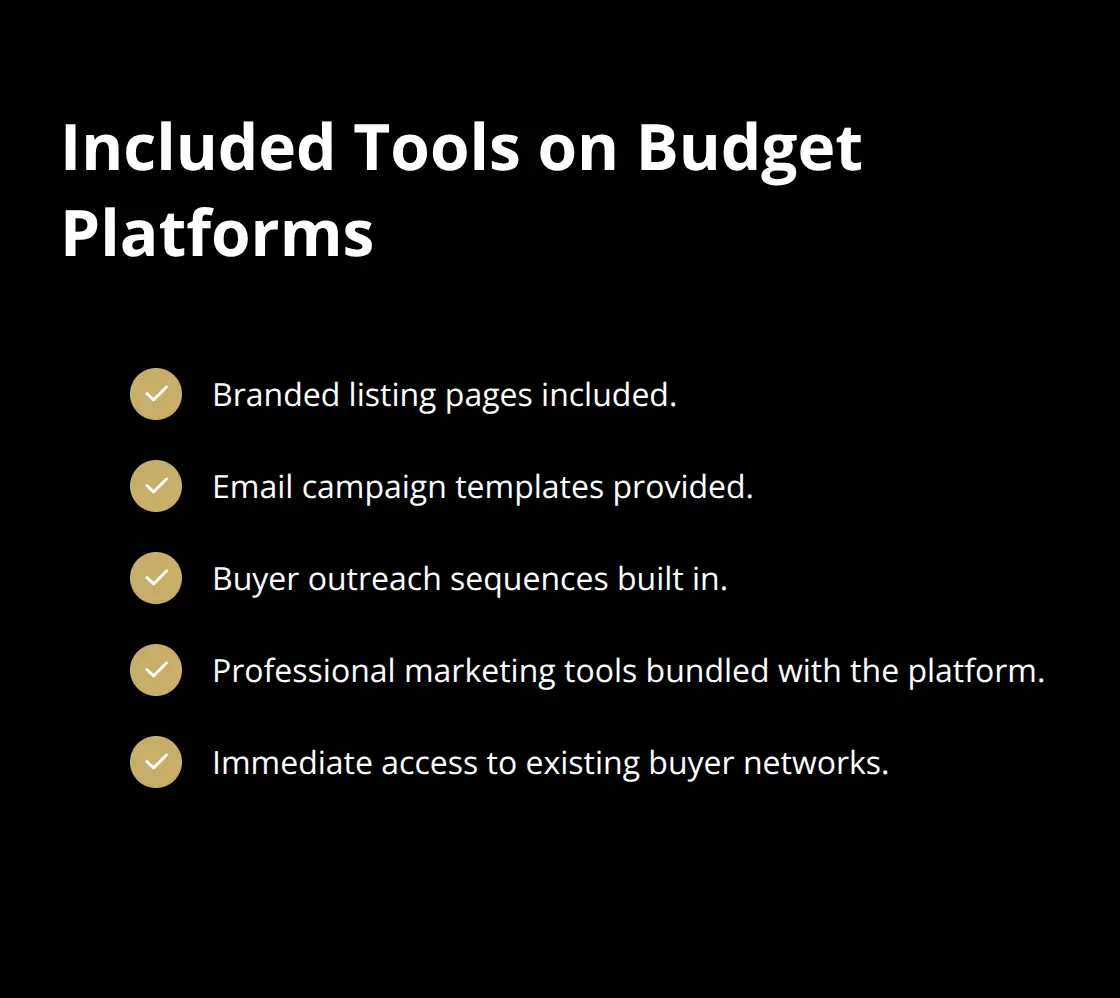
Low-cost platforms connect sellers with qualified buyers through the same networks that expensive brokers access, then apply AI-driven matching to filter prospects more efficiently. You receive branded listing pages, email campaign templates, and buyer outreach sequences as part of the base service rather than as premium add-ons that inflate costs. Professional marketing tools that traditionally cost thousands in separate vendor fees now ship with the platform itself. This operational structure means you access buyer networks immediately without waiting for a broker to manually cultivate relationships on your behalf.
Speed and Quality Replace Commission Pressure
When a platform removes commission-based incentives, the entire sales process shifts from speed-focused to quality-focused. Sellers using budget-friendly services close deals at comparable speeds to those paying traditional broker premiums, often with better final terms because the fee structure doesn’t reward rushing deals across the finish line. Traditional business brokers charge commission rates between 8-12% of your sale price, compared to Unbroker’s 6% success fee, paid only when the business sells. Faster closure means less uncertainty, lower carrying costs, and quicker access to proceeds for reinvestment.
Expert Support Without Hourly Billing
Legal document templates save weeks of back-and-forth with outside counsel, and negotiation guidance keeps conversations moving without the overhead of hourly legal bills. Budget platforms offer structured guidance on valuation positioning, buyer qualification, and deal structure through a success-fee model that doesn’t penalize sellers for asking questions or requesting revisions. This accessibility removes friction from the sales process and prevents small clarifications from becoming expensive consulting sessions.
Accountability Built Into Modern Platforms
Satisfaction guarantees and refund policies force platforms to deliver actual outcomes rather than rely on reputation alone. This accountability structure protects your investment and ensures that support teams prioritize results over collecting fees upfront and disappearing. The risk shifts entirely to the platform, which means your interests and theirs finally align.
The financial advantage of low-cost platforms becomes even more apparent when you examine what happens after the sale closes. Reinvestment opportunities, tax planning, and strategic positioning for your next venture all depend on how much capital you retain from the transaction itself.
Why Budget Platforms Deliver Enterprise-Quality Results
Technology Replaces Expensive Overhead
Low-cost platforms strip away the operational bloat that traditional brokers use to justify premium fees, then reinvest efficiency gains directly into seller outcomes. Modern platforms use automation and data-driven processes to accomplish what once required large teams and expensive overhead. Document automation, buyer matching algorithms, and communication workflows handle tasks that traditionally demanded manual broker intervention at every stage. The result is faster deal progression without sacrificing accuracy or attention to detail. Technology handles repetitive work, freeing resources to focus on the parts that actually influence deal quality and final price.
This operational model means sellers receive professional-grade support without subsidizing unnecessary layers of staff or inflated marketing budgets.
AI-Driven Matching Connects You With Real Buyers
AI-driven buyer matching filters prospects more accurately than manual outreach, connecting sellers with genuinely qualified buyers rather than generating lists of long-shot prospects that waste weeks of negotiation time. The algorithm identifies prospects with actual interest and financial capacity, eliminating the noise that plagues traditional broker outreach. Sellers spend their time on serious conversations instead of chasing leads that go nowhere. This precision reduces uncertainty and accelerates the path to closing.
Legal Templates Eliminate Months of Back-and-Forth
Legal document templates and negotiation frameworks eliminate the back-and-forth that typically adds months to sales timelines and inflates legal costs through hourly billing. A seller using template-based agreements moves from initial offer to closing documents in days rather than weeks. This speed reduces uncertainty and carrying costs in the process. Negotiation guidance keeps conversations moving without the overhead of hourly legal bills or weeks of waiting for attorney revisions.
Success Fees Align Incentives With Your Success
Lower success-fee structures reduce the perverse incentive that makes some traditional brokers push deals across the finish line regardless of final terms. When a broker earns 10% commission, the gap between a rushed deal at $900,000 and a properly structured deal at $1 million matters less to them than it should. Low-cost platforms with transparent, success-based pricing-like Unbroker’s 6% fee, paid only when the business sells-keep broker incentives closely aligned with seller interests. The financial outcome for sellers is measurable: comparable or faster closures with better final terms, because the fee structure rewards quality over speed.
Final Thoughts
The evidence proves that low-cost broker platforms deliver competitive results without premium price tags. On a $1 million business sale, you keep $80,000 to $100,000 that traditional brokers would claim through commissions. That money stays in your pocket and funds your next opportunity, faster reinvestment, or stronger cash reserves after the transaction closes.
Traditional brokers justify their 8-12% commissions by claiming exclusive networks and specialized expertise, but modern platforms access identical buyer networks and apply AI-driven matching to filter qualified prospects more accurately. Legal templates and negotiation support replace expensive outside counsel, and transparent fee structures eliminate the misaligned incentives that push rushed deals instead of quality outcomes. The operational difference isn’t quality-it’s efficiency that flows directly to your financial advantage.
Start your business sale with Unbroker and experience how transparent pricing, AI-enhanced buyer matching, and expert support work together without traditional broker markups. You choose between full-service selling or assisted support, both eliminating hidden fees and delivering access to qualified buyers. Your business deserves a sale process that prioritizes your financial outcome over broker commissions.