Selling a business is one of the biggest financial decisions you’ll make. Licensed business brokers bring regulatory oversight, qualified buyer networks, and protection against fraud-things unlicensed operators simply can’t offer.
At Unbroker, we’ve seen too many business owners lose money or face legal trouble by working with the wrong broker. The difference between a licensed professional and an unlicensed operator can cost you hundreds of thousands of dollars.
Why Licensed Brokers Protect Your Money
Regulatory oversight functions as your financial shield, not bureaucratic paperwork. Only 17 states require business broker licensing while 33 states have zero oversight. Licensed brokers operate under state supervision, follow strict compliance rules, maintain escrow accounts for earnest money, and face real consequences for misconduct. When a broker holds a real estate license or securities registration, they must disclose conflicts of interest, handle client funds properly, and follow specific negotiation protocols.
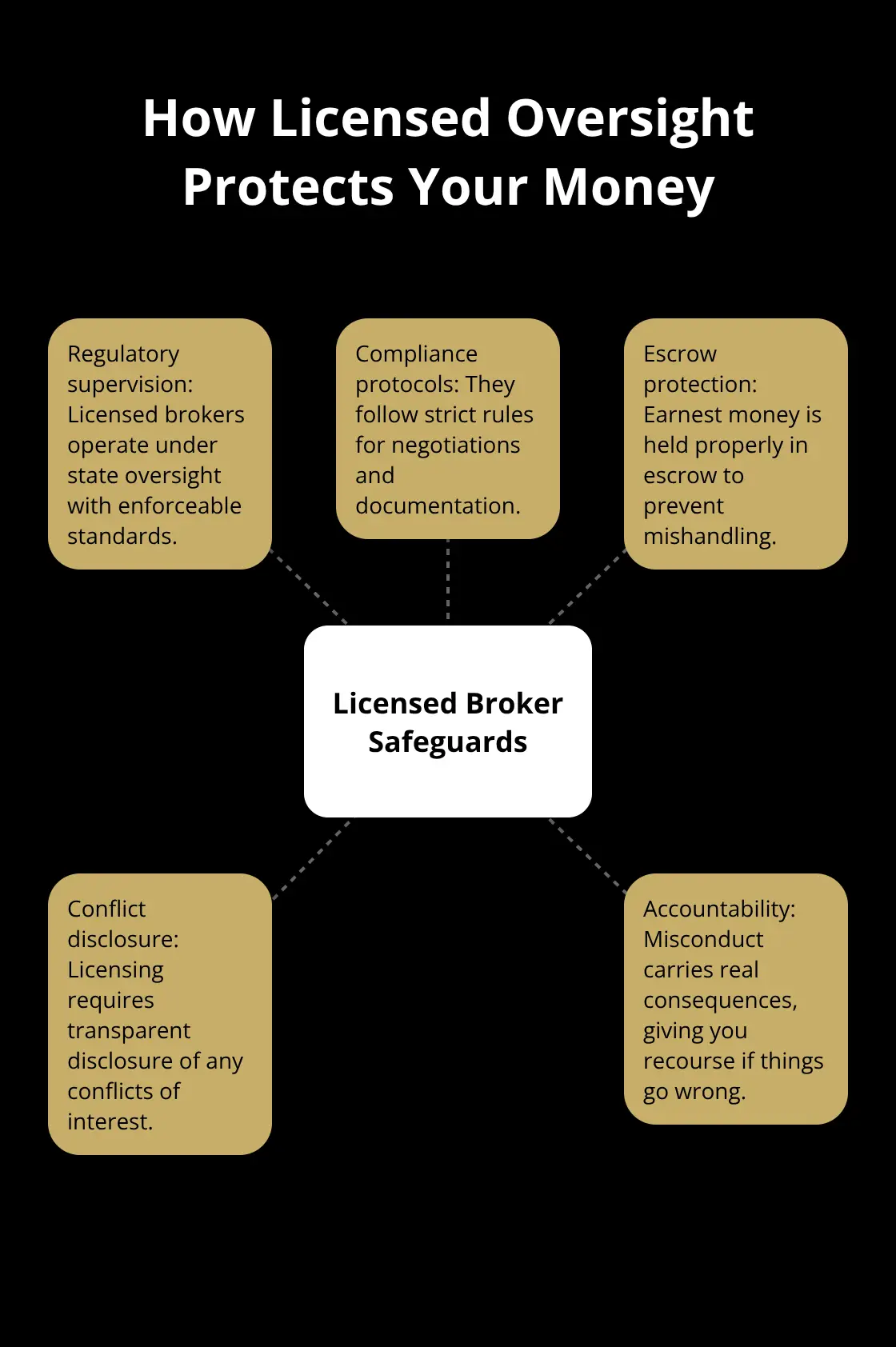
Unlicensed operators have zero accountability. If they mishandle your deposit, disappear mid-deal, or pressure you into unfavorable terms, you have almost no recourse.
The SEC and state regulators actively pursue unlicensed intermediaries who collect success fees. In real-world cases, buyers challenged paying fees to unregistered brokers, triggering legal disputes that derailed otherwise solid deals. Licensed brokers maintain errors and omissions insurance, protecting you if something goes wrong. When you work with a credentialed professional, you gain access to a regulated system designed to keep your money safe.
Qualified Buyer Networks Attract Serious Capital
Licensed brokers with established networks access serious buyers-private equity groups, family offices, strategic acquirers, and high-net-worth investors who have already been vetted. This distinction matters enormously.
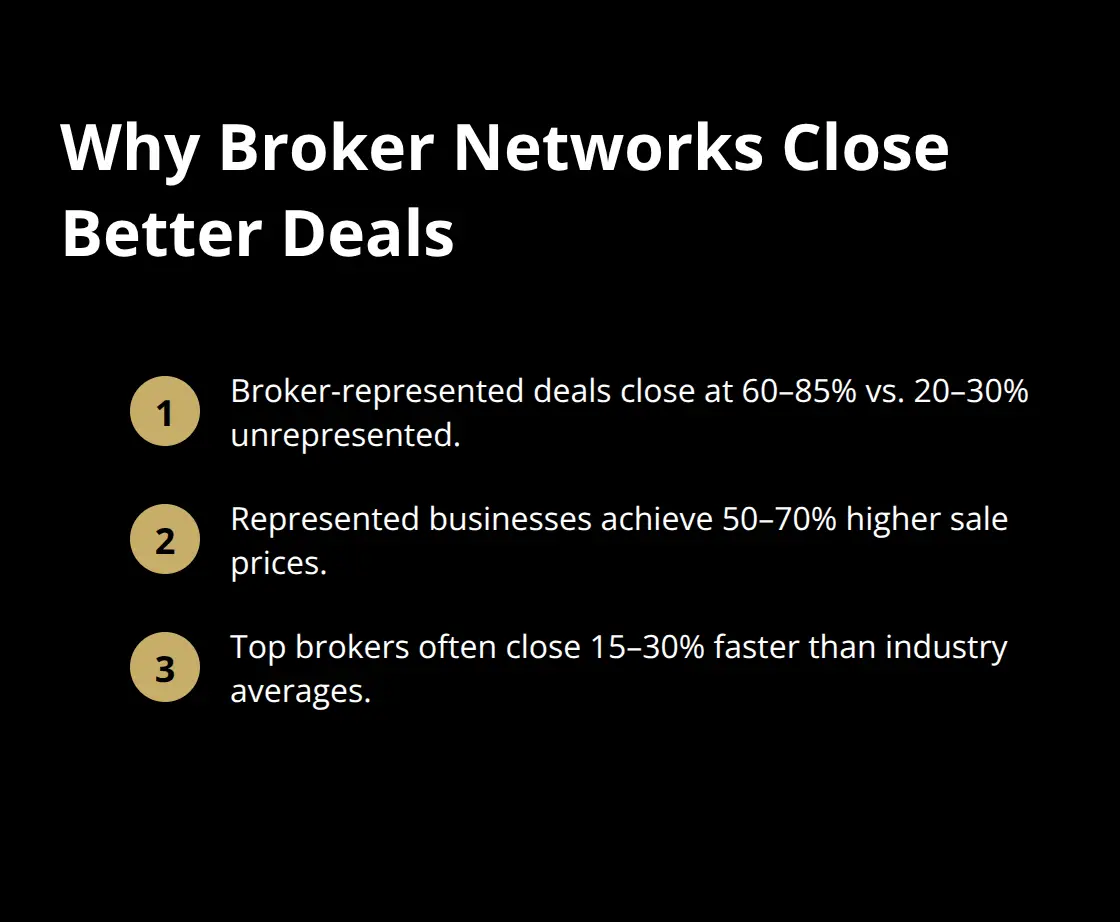
Studies show broker-represented sales close at 60–85%, while unrepresented sales close at just 20–30%. The difference stems from access to pre-qualified buyers who have capital ready and understand business acquisitions.
Unlicensed operators typically lack these networks, forcing them to rely on online listings or cold outreach, which attracts curious browsers rather than committed purchasers. Represented businesses also achieve 50–70% higher sale prices than unrepresented sales, largely because licensed brokers position your company effectively and identify buyers willing to pay premium valuations. Top brokers often close 15–30% faster than industry averages, meaning you spend less time in uncertainty and move forward sooner. A licensed broker’s network isn’t just bigger-it’s fundamentally different in quality and intent.
Verified Credentials Stop Fraud Before It Starts
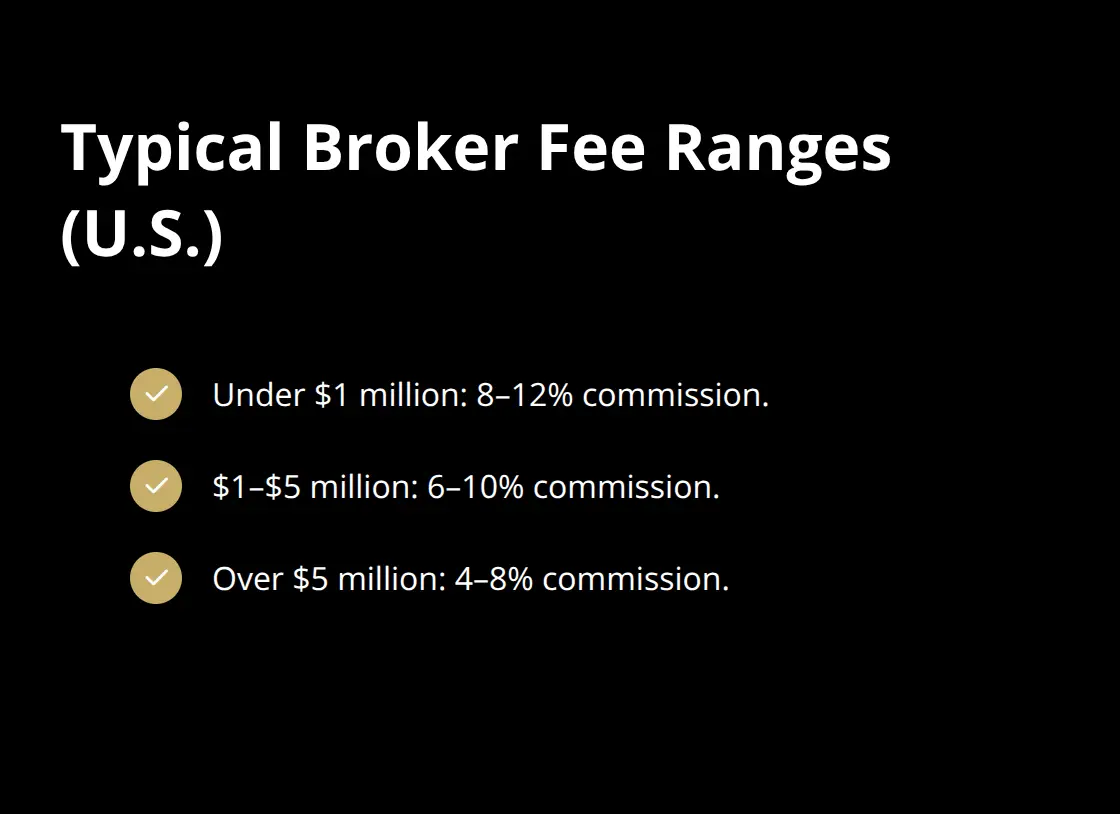
Unlicensed advisors create openings for bad actors. Without regulatory oversight, nothing stops someone from misrepresenting buyer credentials, inflating offers to keep you engaged, or steering you toward deals that benefit them rather than you. Licensed brokers must disclose their fee structure upfront-typical ranges run 8–12% under $1 million, 6–10% for $1–5 million, and 4–8% over $5 million. You know exactly what you’re paying.
Unlicensed operators sometimes bury surprise fees or take undisclosed success payments from buyers, creating hidden incentives that work against your interests. Credentials like the Certified Business Intermediary designation from the International Business Brokers Association signal that a broker completed specialized training, passed rigorous exams, and maintains continuing education. This verification process weeds out inexperienced operators. When you verify licensing status through your state’s Department of Real Estate or check CBI credentials through the IBBA, you confirm that someone has met standardized competency requirements and submitted to ongoing oversight.
The stakes in choosing your broker extend far beyond commission rates. Your next step involves understanding what happens when you work with the wrong partner-and how to spot the warning signs before they cost you money.
What Unlicensed Brokers Cost You
Legal and Compliance Exposure
Unlicensed brokers create real legal and financial exposure that extends far beyond a single bad transaction. When a broker operates without state registration or securities compliance, your deal sits in a gray zone where regulations don’t apply to them-but they still apply to you. If a buyer’s counsel discovers your broker collected a success fee without proper registration, the buyer can challenge the fee entirely, forcing you to cover the cost or watch the deal collapse. The SEC has pursued unlicensed intermediaries in real transactions, triggering regulatory scrutiny that stalls closings and creates litigation risk neither you nor the buyer anticipated. One cross-border deal involving an unregistered intermediary faced state regulator investigation, causing months of delays and legal fees that exceeded the broker’s entire commission. Your state’s Department of Real Estate may also question whether the sale itself violated licensing requirements, particularly if real property or a lease transferred hands. This compliance gap means you absorb the legal risk while the unlicensed operator faces minimal consequences.
Weak Buyer Networks and Lower Valuations
Limited networks force unlicensed brokers to rely on online marketplaces, cold outreach, and passive listings that attract tire-kickers rather than serious buyers with capital. A broker without established relationships to private equity groups, family offices, or strategic acquirers cannot generate the competitive dynamics that drive higher valuations. Unrepresented businesses selling for significantly lower valuations reflects this market reality, and unlicensed operators fall into this lower tier because their buyer access remains fundamentally constrained. When negotiations stall, unlicensed brokers lack the professional framework and credibility to resolve disputes fairly.
Licensed brokers trained through programs like the Certified Business Intermediary curriculum from the International Business Brokers Association follow standardized negotiation protocols, maintain errors and omissions insurance, and have reputational stakes in closing deals properly. An unlicensed operator with no credentials and no oversight has no incentive to push through tough negotiations or protect your interests when buyer pressure mounts. The combination of limited market access and weak negotiation leverage means your business sits longer on the market, attracts lower-quality offers, and faces higher odds of the deal falling apart entirely.
These risks compound when you consider what a credentialed broker actually brings to the table-and how to identify one before you sign an agreement.
How to Verify Broker Credentials and Choose the Right Partner
Search Your State’s Official Records First
Start with your state’s Department of Real Estate. Search the broker’s name and license number in your state’s official database-this takes five minutes and confirms whether someone actually holds an active license or operates illegally. Many states publish searchable registries online; if your state doesn’t, call the department directly and request verification. Licensed brokers appear in these systems with clear status indicators. Unlicensed operators won’t appear at all, which signals your first red flag. If the broker claims licensing but doesn’t show up in your state’s records, walk away immediately.
Verify Professional Designations and Insurance
Next, confirm any professional designations like the Certified Business Intermediary credential through the International Business Brokers Association website. The CBI designation requires completing specialized training, passing rigorous exams, and maintaining continuing education-it’s not something anyone can claim without documented proof. Ask your broker which state or federal licenses they hold and request written documentation. A legitimate professional answers this question without hesitation.
Check whether your broker holds errors and omissions insurance by asking directly and requesting a certificate. This insurance protects you if the broker makes mistakes during the sale process; unlicensed operators typically carry none. Credentials filter out the worst operators first, but track record matters more than credentials alone.
Evaluate Track Record and Industry Specialization
Request references from at least three recent clients who sold businesses similar in size and industry to yours. Call these references directly and ask specific questions: Did the broker deliver the promised buyer network? How long did the sale actually take compared to the initial timeline? Did the final sale price match the broker’s valuation estimate? Were there surprise fees or unexpected costs?
A broker representing businesses in your industry has tested knowledge of your market, understands your buyers, and knows realistic valuations. Brokers who dabble across unrelated industries lack this specialization. Ask how many deals the broker closed in the past 12 months-top performers close deals regularly, while struggling brokers close fewer than five.
Demand Transparent Fee Structures in Writing
Verify fee structures in writing before signing anything. Request a detailed fee agreement that lists every possible cost, including earnest money handling, marketing expenses, and legal document preparation. If a broker resists putting fees in writing or becomes vague about costs, that’s a warning sign. Transparent pricing from day one prevents costly surprises later.
Final Thoughts
Choosing a licensed business broker determines whether you walk away from your sale with maximum value or face legal complications and financial losses. Broker-represented sales close at 60–85% compared to 20–30% for unrepresented businesses, and represented companies achieve 50–70% higher valuations. Licensed professionals bring regulatory accountability, access to serious buyer networks, and transparent fee structures that protect your interests from start to finish.
Unlicensed operators create unnecessary risk because they lack state oversight, operate without insurance protection, and often hide fees or conflicts of interest that work against you. When disputes arise, you have no recourse, and when deals collapse, you’ve wasted months with someone who couldn’t deliver qualified buyers. The cost of choosing wrong extends far beyond a single transaction-it affects your exit timeline, your final sale price, and your legal exposure.
Start your verification process by searching your state’s Department of Real Estate database to confirm licensing status, then request professional credentials like the Certified Business Intermediary designation and proof of errors and omissions insurance. Call references from recent sales in your industry and ask direct questions about timelines, valuations, and unexpected costs. We at Unbroker offer transparent alternatives through our Full Service Business Sale and Assisted Business Sale options, both designed to protect your confidentiality and connect you with serious buyers-explore how modern platforms can deliver professional support without traditional markups.