Business owners are waking up to a hard truth: traditional brokers take 5–10% of your sale price while dragging out the process for 12–18 months. That’s money left on the table.
At Unbroker, we’ve seen thousands of business owners discover faster, cheaper alternatives that traditional advisors actively ignore. Exit innovation isn’t just about saving on commissions-it’s about reclaiming control of your sale timeline and buyer relationships.
Why Traditional Brokers Cost You Thousands
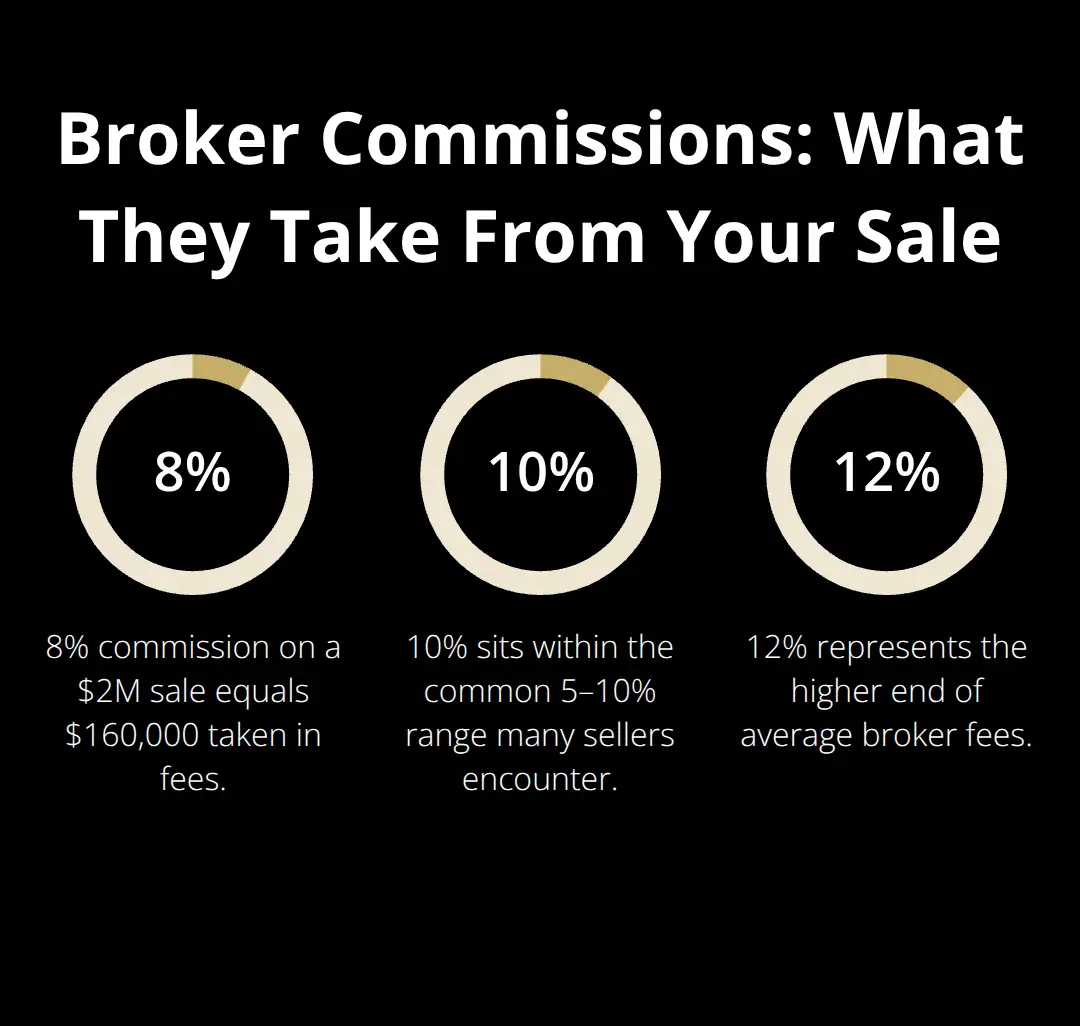
The math is brutal. A broker taking 8% of a $2 million sale removes $160,000 from your pocket. That’s not a small fee-it’s the difference between comfortable retirement and scrambling for cash flow. Traditional brokers claim they handle everything, but the reality is far messier. Most business owners spend 12–18 months in limbo while brokers shop their business to a limited pool of contacts, many of whom aren’t serious buyers. The process breeds uncertainty. You can’t move forward with your personal plans because you don’t know when or if a deal will close. Meanwhile, the broker controls the narrative with your buyers, limiting your ability to negotiate directly and understand what potential acquirers actually want from your business.
The Broker’s Hidden Drain on Deal Value
Traditional brokers operate on outdated models that assume business owners have no other options. They control access to buyers, which gives them leverage to demand premium commissions. What they don’t tell you is that their buyer networks are often shallow. Business brokers charge anywhere from 8% to 12% on average, meaning your business receives limited exposure. When multiple serious buyers don’t compete for your deal, your sale price suffers. You lose negotiating power.
Brokers also inflate timelines because a longer process justifies their fees. Deals that could close in 4–6 months stretch to 18 months while brokers conduct redundant due diligence and shuffle paperwork between parties. Each month of delay costs you-lost revenue opportunities, management distraction, and the mental weight of uncertainty. Some brokers also bury earn-out structures into deals, meaning you don’t receive the full sale price upfront. You become dependent on the buyer’s future performance to collect your money, shifting risk entirely to you.
Why Limited Buyer Access Weakens Your Negotiating Position
A broker’s network isn’t transparent. You never know how many qualified buyers they’ve actually contacted or why certain leads went nowhere. This opacity works against you. When you lack visibility into buyer interest, you can’t accurately assess whether the offer on the table is competitive. The broker benefits from this information asymmetry. They control what buyers know about your business and what you know about buyer interest.
Digital platforms and direct-sale approaches eliminate this bottleneck. Limited buyer access weakens negotiating position because a small buyer pool suppresses sale price. This creates real competition for your deal, which drives price up. Transparency matters. When you see actual buyer interest data, engagement metrics, and multiple offers, you negotiate from a position of strength instead of hoping the broker found someone willing to pay a reasonable price.
What Modern Alternatives Offer Instead
The shift away from traditional brokers accelerates because alternatives address every pain point. Lower-cost platforms reduce the commission drain significantly. Faster timelines let you move forward with your life. Direct access to buyers means you understand market demand and can negotiate terms that actually serve your interests. You control the information flow instead of relying on a broker’s filtered version of reality. These advantages compound when you combine them-lower costs, faster sales, better terms, and genuine control over your exit. The next section shows how to execute this modern approach step by step.
How Modern Platforms Transform Business Sales
Online marketplaces and digital sale platforms operate on fundamentally different economics than traditional brokers. Lower-cost models remove the broker’s incentive to drag out negotiations or artificially suppress buyer interest. Instead of the steep double-digit commissions traditional brokers charge, platforms like Unbroker charge a single 6% success fee, paid only when your business actually sells. You keep more of what you earn. The transparency here matters more than most business owners realize.
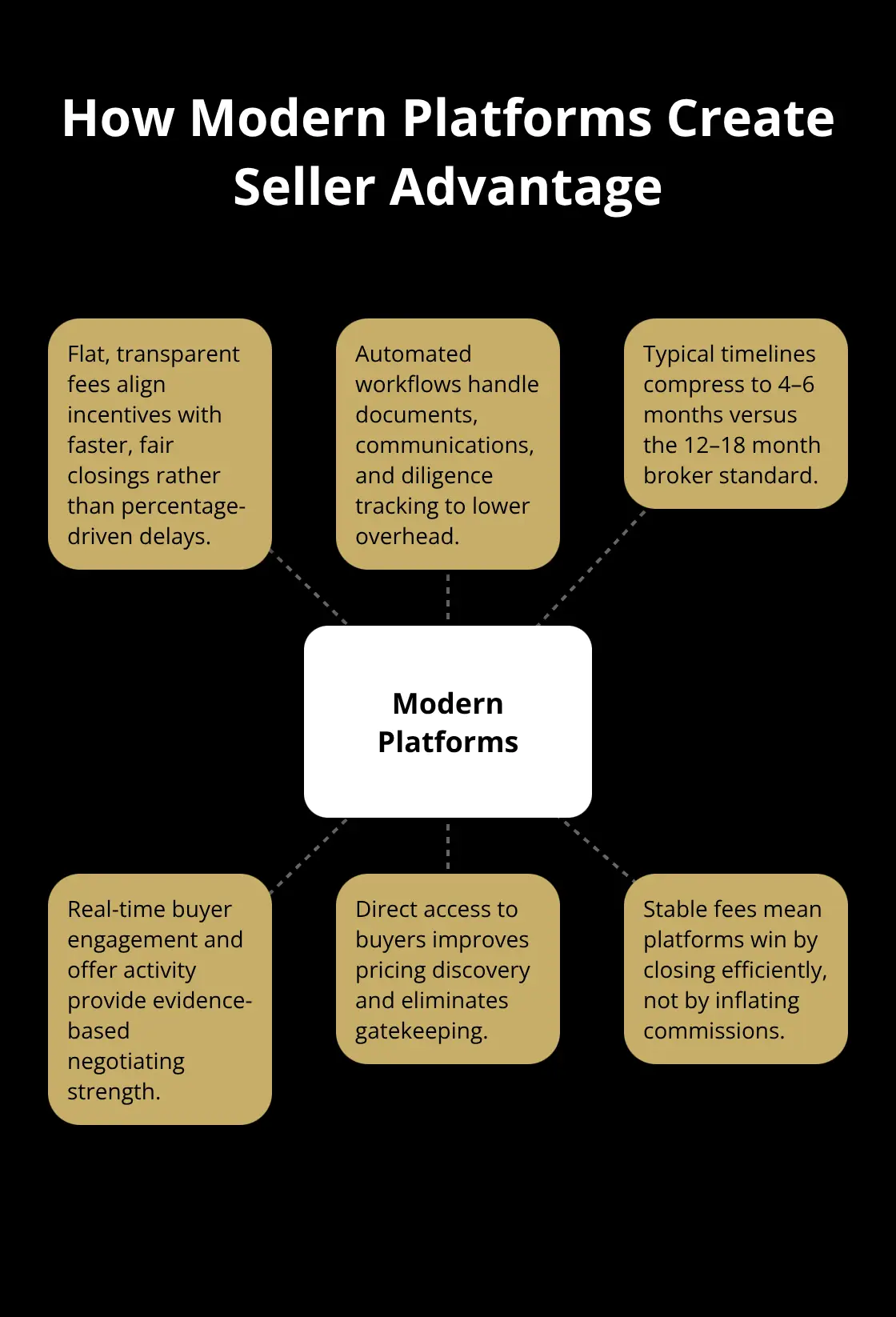
When the fee stays low and success-based, the platform’s incentive is to close deals quickly and fairly, not to maximize commission percentages. Platforms also reduce overhead through automated systems that handle document management, buyer communications, and due diligence tracking. This efficiency cuts months from typical timelines. Most digital platforms close deals in 4–6 months compared to the 12–18 month broker standard, giving you control over your personal timeline instead of waiting indefinitely.
Why Transparent Pricing Changes Buyer Behavior
Buyers respond differently when they see clear, predictable costs. Traditional brokers hide their fees in the background, which creates suspicion. Digital platforms display pricing upfront, building confidence that the process isn’t designed to extract hidden value. Buyers know exactly what they’re paying and what they’re getting, which accelerates their decision-making. When both sides understand the cost structure, negotiations focus on actual business value instead of commission negotiations.
Platforms also provide real-time visibility into buyer engagement and offer activity. You see how many qualified buyers viewed your listing, how long they spent reviewing materials, and whether multiple offers are coming in. This data transforms your negotiating position. Instead of trusting a broker’s word about market interest, you have concrete evidence of demand. If three serious buyers compete for your business, you negotiate from genuine strength. If interest is weak, you know early enough to adjust your asking price or improve your marketing rather than hoping the broker eventually finds someone.
How AI-Driven Matching Accelerates Deal Flow
AI-driven matching connects your business with buyers actively seeking companies like yours, not just contacts in a broker’s rolodex. The algorithm identifies qualified purchasers based on industry, size, revenue profile, and strategic fit. This targeted approach produces faster deal flow and better price discovery. Negotiations happen based on real market signals instead of broker gatekeeping. Buyers who match your business profile move through the process faster because they already understand your industry and see immediate strategic value. The result is a compressed timeline and stronger offers from serious, well-qualified purchasers who actually want what you’re selling.
Direct Access Eliminates Information Asymmetry
Traditional brokers control what buyers know about your business and what you know about buyer interest. This opacity works against you. When you lack visibility into buyer interest, you can’t accurately assess whether the offer on the table is competitive. The broker benefits from this information asymmetry.
Digital platforms eliminate this bottleneck entirely. You see actual buyer interest data, engagement metrics, and multiple offers. This transparency means you negotiate from a position of strength instead of hoping the broker found someone willing to pay a reasonable price. Direct access to buyer communications lets you understand what purchasers actually value about your business. You hear their concerns firsthand and address them directly, rather than having a broker filter and reinterpret every conversation. This direct relationship accelerates trust-building and deal momentum.
What This Means for Your Exit Timeline
The shift away from traditional brokers accelerates because modern alternatives address every pain point simultaneously. Lower-cost structures reduce the commission drain significantly. Faster timelines let you move forward with your life. Direct access to buyers means you understand market demand and can negotiate terms that actually serve your interests. You control the information flow instead of relying on a broker’s filtered version of reality. These advantages compound when you combine them-lower costs, faster sales, better terms, and genuine control over your exit. The next section shows how to execute this modern approach step by step, starting with the financial preparation that positions your business for maximum buyer interest.
How to Prepare Your Business for a Non-Traditional Sale
Organize Financial Documentation That Buyers Actually Need
Sale readiness starts with financial documentation that matters to purchasers. Most business owners hand over tax returns and call it done. That approach fails. Buyers want to see 3 years of detailed financial statements, including profit-and-loss statements broken down by revenue stream, balance sheets showing asset quality, and cash flow statements that reveal the actual money your business generates. Include customer acquisition costs, lifetime value metrics, and churn rates if you operate on recurring revenue. The more granular your documentation, the faster buyers assess value without requesting endless follow-ups.
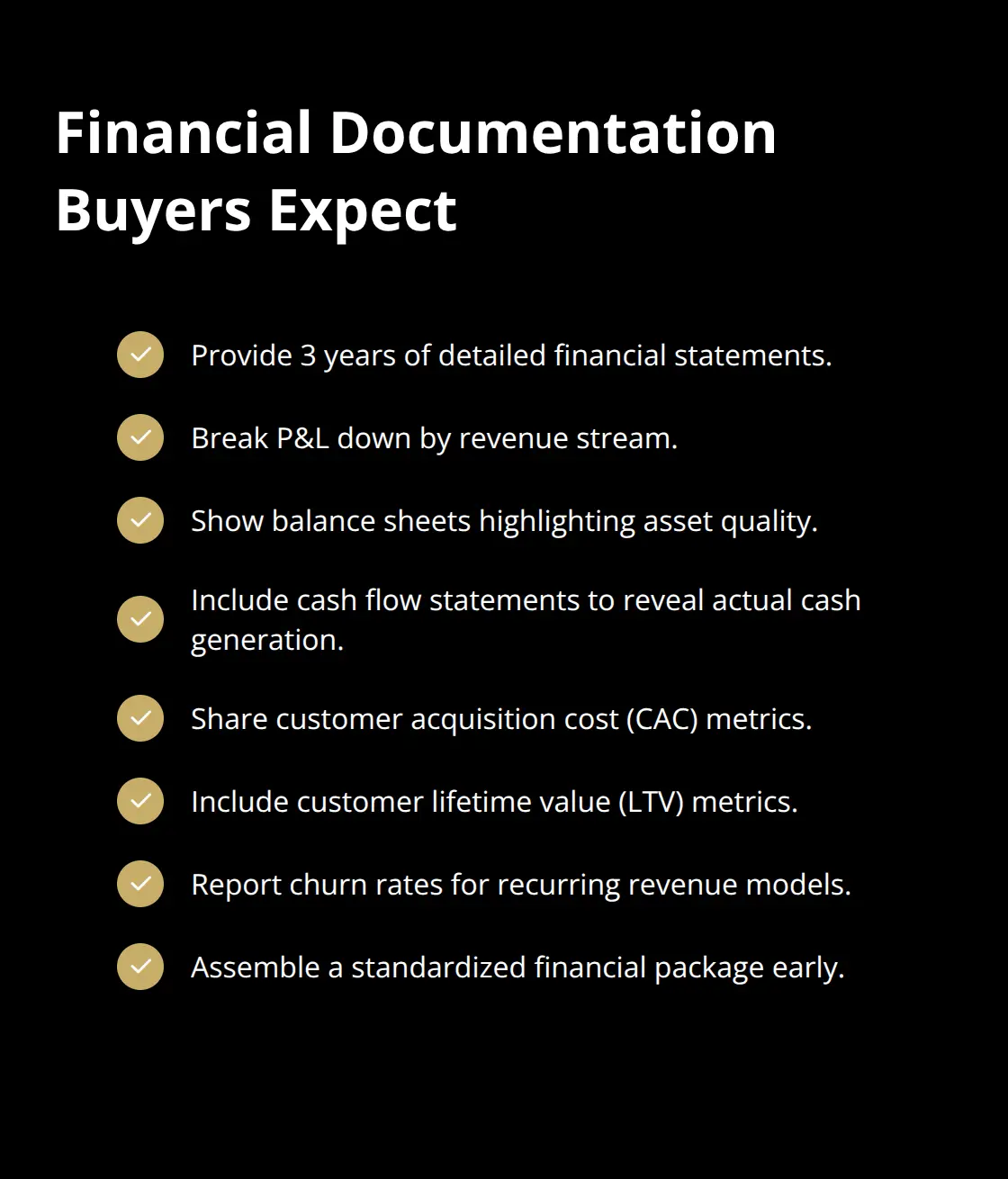
Many platforms now require standardized financial packages upfront, which means you’ll prepare these documents regardless-doing it early gives you weeks of advantage.
Calculate Realistic Valuations Using Multiple Methods
Valuation accuracy prevents you from listing too high, which kills buyer interest, or too low, which leaves money on the table. The earnings multiple approach depends on the size of your company, its profitability, its growth prospects, and the industry in which it operates. According to data from the Exit Planning Institute, valuations typically range from 1x to 3x gross revenue, though this varies significantly based on AUM size, client retention rates, and recurring revenue stability. Use online valuation tools to establish a realistic baseline, then compare against comparable sales in your industry. Document everything that makes your business valuable but isn’t obvious from financial statements-customer contracts with multi-year terms, proprietary processes, key employee agreements, or exclusive partnerships. Buyers want to understand what they’re actually purchasing beyond revenue numbers.
Target Strategic Buyers With Precision Marketing
Marketing your business to the right buyers requires precision that traditional brokers simply don’t deliver. Digital platforms let you target specific buyer profiles based on industry, size, and acquisition strategy. Rather than hoping a broker’s network includes someone interested, you actively reach strategic buyers who have demonstrated acquisition appetite. Create a compelling business summary that answers the questions buyers actually ask: What problem does your business solve? How defensible is your market position? What’s your customer concentration risk? What happens when you leave? Buyers skip vague listings and respond to specificity. Use platform analytics to track which buyer segments engage most with your listing-if financial buyers show more interest than strategic acquirers, adjust your messaging accordingly.
Negotiate Terms With Direct Access and Legal Templates
Direct access to buyers eliminates the need to hire expensive attorneys for standard documents. Most non-traditional platforms provide purchase agreements and seller financing templates that comply with your jurisdiction (this doesn’t replace legal review, but it removes the $5,000 to $15,000 cost of having an attorney draft agreements from scratch). You can negotiate directly with qualified buyers instead of filtering conversations through intermediaries. Ask specific questions about their acquisition timeline, financing structure, and integration plans. Understand whether they’re offering all-cash or requiring seller financing-this dramatically impacts your actual proceeds and post-sale involvement. Establish clear walk-away points before negotiations start. Know your minimum acceptable price, maximum acceptable earn-out percentage, and deal timeline flexibility. Buyers respect sellers who negotiate decisively rather than endlessly reconsidering terms.
Final Thoughts
Business owners abandon traditional brokers because the math no longer favors them. An 8% commission on a $2 million sale costs you $160,000 while consuming 12–18 months of your life-that’s not a service, it’s a penalty for not knowing better. Exit innovation means reclaiming both your money and your timeline by selecting platforms that align their interests with yours instead of maximizing commission percentages.
The financial impact of lower-cost exit options compounds rapidly. You save $160,000 in commissions and close your sale six months faster, which means you keep more cash and reclaim months to plan your next chapter. Strategic buyers who match your business profile move faster and offer stronger terms because they see immediate value, and you negotiate from genuine strength since you access real buyer interest data rather than trusting a broker’s filtered version of market demand.
Start your exit planning today by exploring how modern platforms work differently than traditional brokers. We at Unbroker offer both full-service and assisted options designed to eliminate the traditional broker model entirely, and you’ll pay transparent fees upfront instead of watching a percentage of your sale price disappear.