Selling a business is one of the biggest financial decisions you’ll make. Most business owners underestimate how much work goes into preparing for a sale, marketing to buyers, and closing the deal.
We at Unbroker have helped countless entrepreneurs navigate this process. This guide walks you through each stage, from valuation to handover, so you can sell with confidence.
Getting Your Business Ready to Sell
Gather and Organize Your Financial Records
The first mistake most business owners make is rushing into the sale process without proper preparation. You need a clear picture of what your business is actually worth before you talk to any buyers. Start by gathering your last three years of tax returns, profit and loss statements, and balance sheets. Buyers will request these documents anyway, and having them organized saves weeks of back-and-forth. Many sellers discover during this phase that their financial records are scattered across multiple systems or even paper files-that’s a red flag that needs fixing now, not when a serious buyer is waiting for information.
Calculate Your Business Valuation Accurately
Your valuation should be based on concrete financial metrics, not guesswork. Common multiples for mid-sized businesses are three to six times EBITDA depending on your industry and growth rate. Software companies often command higher multiples, while service businesses tend to be lower. This metric gives potential buyers a standardized way to evaluate your business against others in your sector.
Identify Operational Red Flags
Walk through your operations and honestly identify what’s broken. Are there customer concentration issues where one client represents more than 30–40% of revenue? That’s a major red flag that will tank your valuation. Do you have outdated technology, high employee turnover, or compliance issues? Address these problems now. Buyers conduct thorough due diligence, and they’ll find these issues anyway-you’re just giving them ammunition to negotiate a lower price if you don’t fix them first.
Fix Problems Before Marketing Starts
Clean up your customer contracts, ensure all licenses and permits are current, and document your standard operating procedures. If your business relies heavily on you personally, work on transitioning key relationships to other team members. Tackle operational weaknesses three to six months before you start marketing your business, giving you time to show improvement in your financial records without appearing rushed.
With your house in order, you’re ready to present your business to the market in the strongest possible light.
Marketing Your Business to Potential Buyers
Create a Confidential Business Profile That Stands Out
Most sellers list their business on a single platform and expect results. That approach fails. You need a multi-channel strategy that reaches multiple buyer types at once.
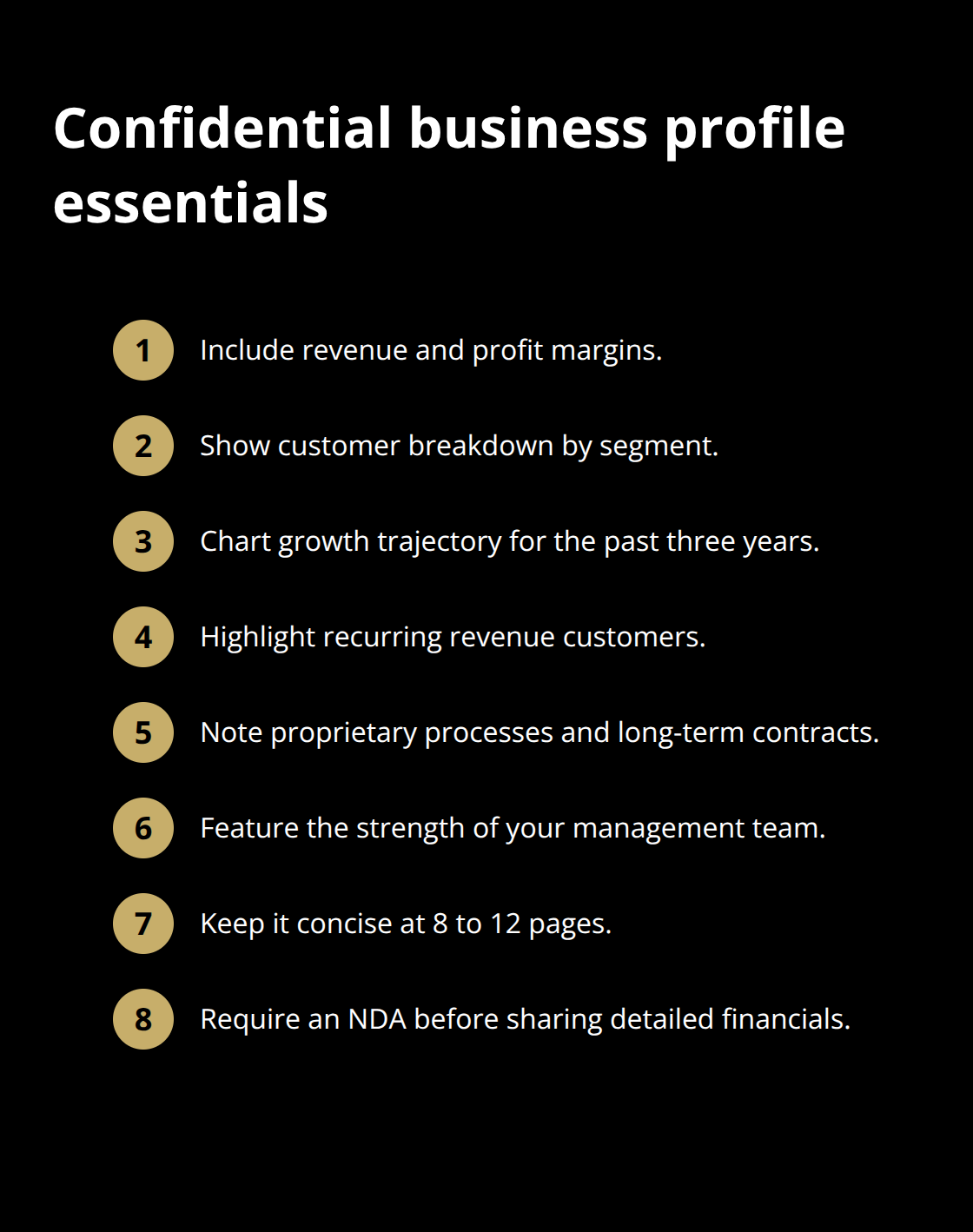
Start by creating a confidential business profile that tells your story without revealing your identity. This document should include your revenue, profit margins, customer breakdown, and growth trajectory over the past three years. Avoid generic descriptions. Instead, highlight what makes your business defensible: recurring revenue customers, proprietary processes, long-term contracts, or a talented management team.
Include specific numbers. State that you have 47 enterprise clients with an average contract value of $12,000 annually, not just that you have strong enterprise relationships. Buyers want facts they can analyze, not marketing fluff. Keep your profile to 8 to 12 pages maximum-longer documents get skimmed. Attach a non-disclosure agreement that all potential buyers must sign before accessing detailed financials. This protects your competitive position and prevents customers or employees from discovering the sale before you’re ready to announce it.
Distribute Across Multiple Channels and Platforms
Distribution matters as much as the profile itself. Successful business sales leverage multiple marketing channels including industry-specific marketplaces, broker networks, and direct outreach to strategic buyers. Syndication partners amplify your reach by listing your business across multiple platforms simultaneously, which exposes your opportunity to thousands of potential buyers at once. This multi-channel approach significantly increases your chances of finding the right buyer who will pay a premium price.
Target Your Marketing to Buyer Type
Different buyers have different priorities, and your marketing approach should reflect that. Strategic buyers in your industry value the synergies they can create, such as cost savings or increased market share, so emphasize how your business complements their existing operations. Financial buyers and private equity firms care about cash flow stability and scalability, so highlight your recurring revenue and unit economics. Smaller competitors or entrepreneurs focus on market share, so feature your customer relationships and brand.
Work With Advisors Who Know Your Industry
The right advisor identifies which buyer types are most likely to pay premium prices for your business. Industry-specific knowledge matters because advisors understand the nuances of your sector and can position your business accordingly. They also maintain relationships with serious buyers who have the capital and motivation to close quickly. This guidance ensures your business reaches the right people at the right time.
With your business positioned in front of qualified buyers, you’ll soon face questions and information requests that require careful handling.
Navigating Buyer Questions and Due Diligence
Prepare Your Data Room for Rapid Access
Once your business reaches qualified buyers, information requests arrive immediately. Expect detailed questions about revenue verification, customer contracts, employee agreements, tax returns, and operational metrics within the first week. Serious buyers-especially financial buyers and private equity firms-request access to your customer list, pricing data, and renewal rates to validate your growth claims.
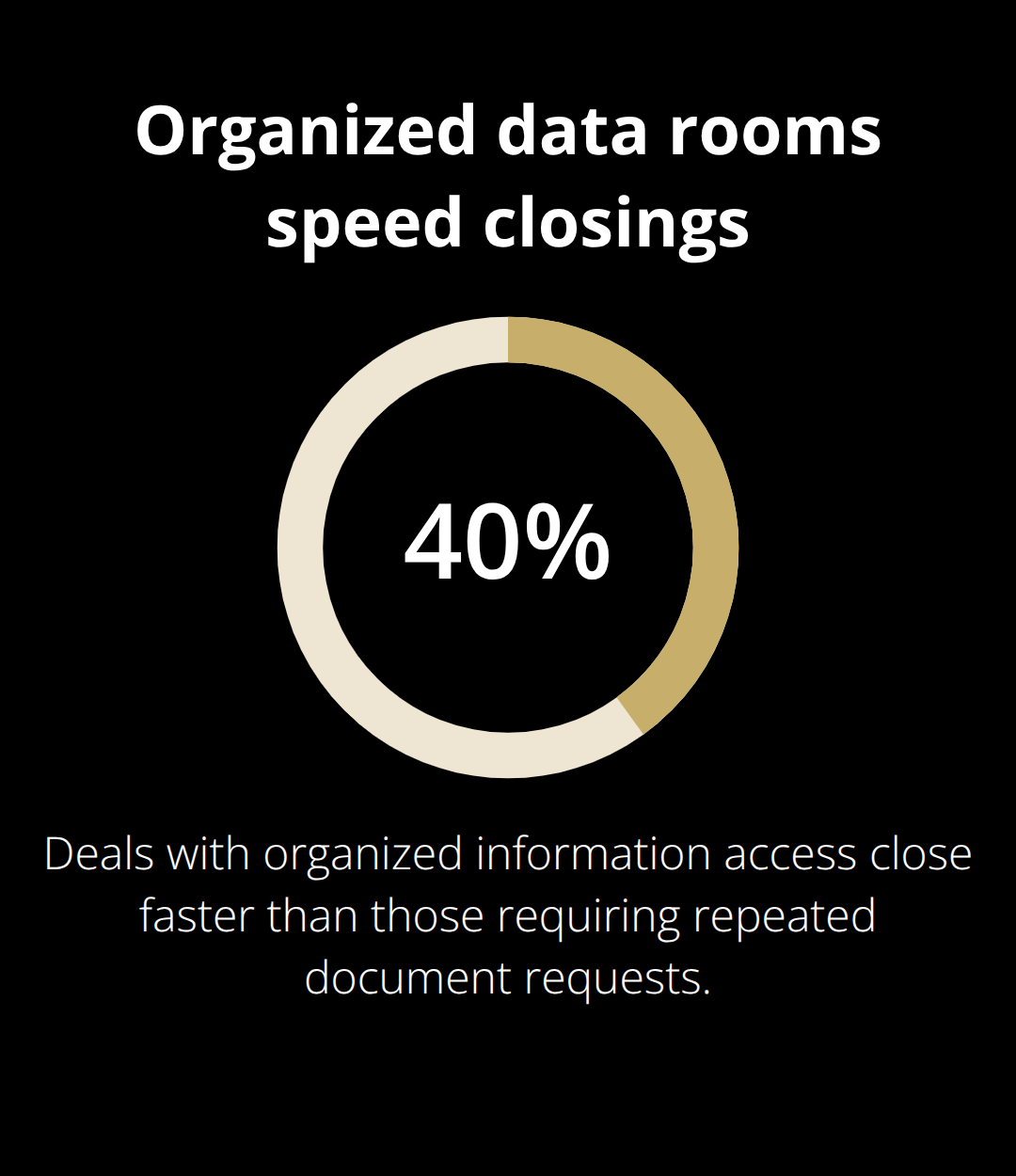
Prepare a data room with organized folders containing the last three years of tax returns, bank statements, customer contracts, a detailed customer spreadsheet showing revenue per client and contract terms, employee agreements, lease documents, and any compliance certifications. Label everything clearly and timestamp your responses. A McKinsey study found that deals with organized information access close 40% faster than those requiring repeated document requests.
Answer Sensitive Questions With Transparency
Many sellers panic when they realize their financial records aren’t as clean as they thought. This is the moment that separates successful sales from failed ones. When you encounter sensitive questions about customer concentration or employee retention, answer directly without defensiveness. If your top three customers represent 45% of revenue, state that fact and explain your strategy for diversification or why those relationships carry contractual protection.
Buyers will uncover this information during due diligence anyway, so transparency builds credibility. Slow or disorganized responses signal operational weakness and give buyers justification to lower their offers.
Research Your Valuation Before Negotiations Start
Negotiation starts before the official offer arrives, often during these information exchanges. Many sellers accept the first number buyers propose, assuming that’s the market rate. It rarely is. Research comparable business sales in your industry-SBA data and industry reports provide benchmarks for EBITDA multiples by sector.
If your software company generates $500,000 in EBITDA and the industry average multiple is 5.5x, your baseline valuation should be around $2.75 million, not the $2.2 million a buyer might initially suggest. Establish your walk-away number before negotiations begin. If you need $2.5 million to fund your next venture or retirement, know that figure before any serious conversation starts.
Structure Deals to Maximize Upfront Cash
Deal structure matters enormously-negotiation isn’t just about price. Buyers often propose seller financing, earnouts tied to future performance, or contingencies that protect them but expose you to risk.
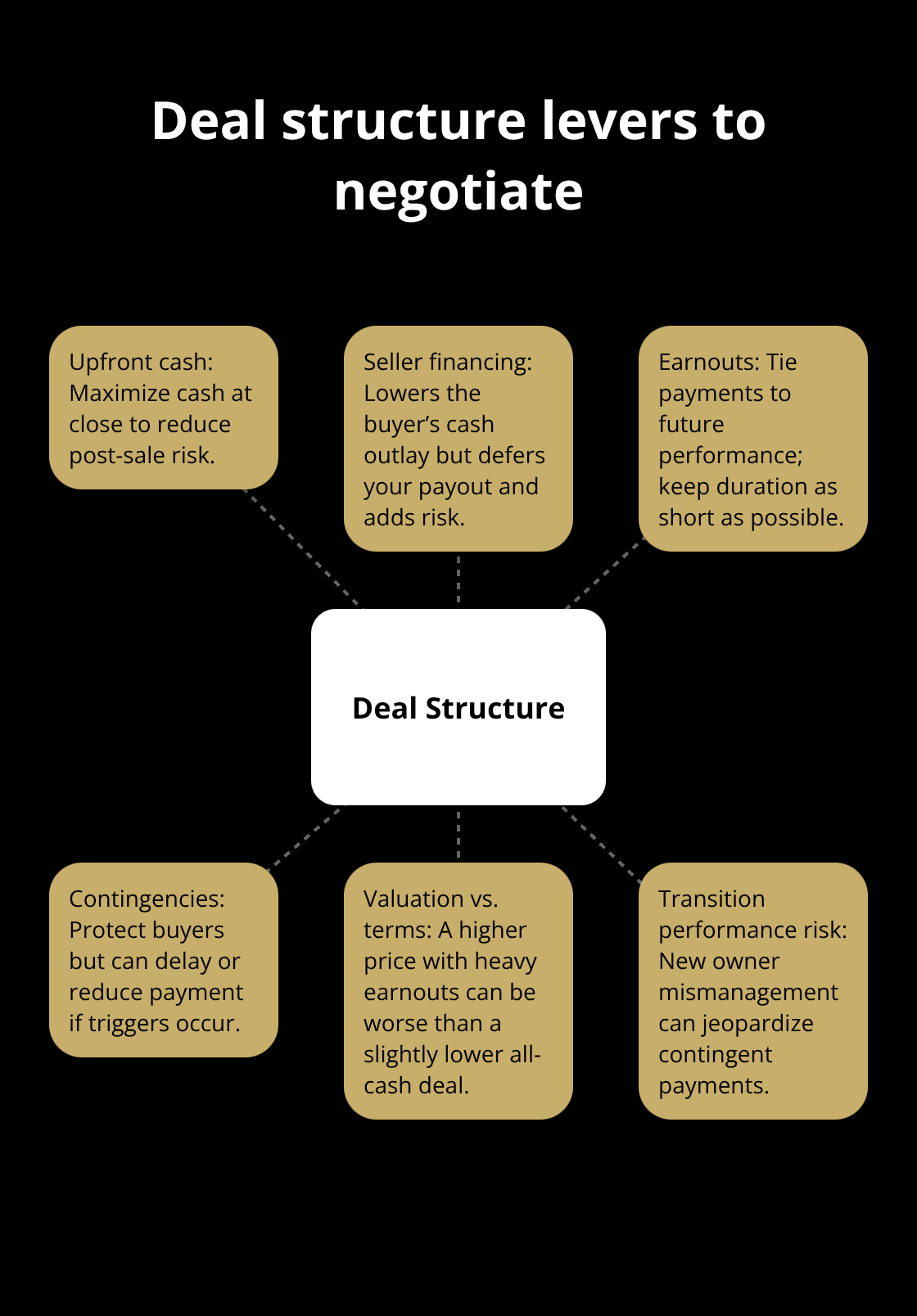
A $2.5 million deal structured as $1.5 million upfront plus $1 million over three years tied to revenue targets creates uncertainty you shouldn’t accept.
Push for maximum cash at close and minimize earnout periods. If a buyer insists on a $300,000 earnout, negotiate it down to one year instead of three. The longer your money remains contingent on future performance, the greater your risk if the new owner mismanages the business.
Leverage Professional Guidance for Negotiations
Professional advisors help you navigate these conversations with frameworks that reflect market standards for your industry. Legal templates and negotiation strategies protect your interests while keeping deals moving forward. This guidance proves invaluable when you face pressure to accept unfavorable terms or when you need to justify your valuation to skeptical buyers.
Final Thoughts
Legal documentation requires precision, and your purchase agreement must specify exactly what’s included in the sale, payment terms, representations and warranties, and any post-closing obligations. A business attorney should review all contracts before you sign, and you must resist the urge to rush this phase even if you’re eager to close. A poorly drafted agreement creates disputes months after the sale when you’re no longer involved, so take time to clarify your non-compete clause, tax filings, customer notifications, and vendor communications during the transition.
The handover period typically spans 30 to 90 days, and you should create a detailed transition plan that documents your standard operating procedures, introduces key customers and employees to the new owner, and transfers access to critical systems and accounts. Write down your pricing strategies, customer negotiation tactics, supplier relationships, and seasonal patterns because much institutional knowledge lives only in your head. The new owner’s success directly impacts any earnout payments you’re receiving, so your cooperation matters financially.
Selling how to sell a business successfully requires expert guidance at every stage, and we at Unbroker combine experienced advisors, AI-driven buyer matching, and national marketing to connect you with qualified buyers who pay premium prices. Our Full Service Business Sale charges a 6% success fee, paid only when your business sells, so start your confidential process with Unbroker today.