Selling your business is one of the biggest decisions you’ll make as an owner. Without a clear exit planning roadmap, you risk leaving money on the table or facing unexpected obstacles when it matters most.
We at Unbroker have guided hundreds of business owners through this process. This guide walks you through each stage, from defining your exit goals to positioning your business for maximum buyer interest.
What Your Exit Actually Looks Like
Your exit isn’t one-size-fits-all, and the biggest mistake owners make is treating it that way. Some want a complete break from their industry. Others want to stay involved for years post-sale. Some need maximum cash upfront. Others prioritize ongoing payments. These differences matter enormously because they shape every decision that follows.
Start With Your Personal Financial Target
Start with your personal financial target, not your business valuation. Ask yourself this: what number actually changes your life? Not what you think your business is worth, but what you need to walk away with after taxes, legal fees, and broker costs.
Most business owners underestimate their tax burden by 20-30%, so work backward from your net number with a tax professional before you do anything else. If you need $2 million net and your business might sell for $3.5 million, that changes your strategy significantly. If you need $2 million and your business might sell for $2.2 million, you’re in a completely different situation. The difference between these scenarios determines whether you should sell now, build more value first, or explore alternative structures like earn-outs or seller financing.
Timeline Shapes Your Valuation
Your exit timeline shapes your valuation more than almost anything else. If you’re thinking about exiting within six months, you’re already working with a significant disadvantage.
The market needs time to find the right buyer, and buyers need time to conduct due diligence without pressure. If you have a specific date in mind-retirement at 65, a major life event, or market conditions you’re watching-work backward from that date and build your preparation schedule accordingly. Some owners discover they need three years to get their business sale-ready. Others find they’re ready in nine months. That timeline determines everything from when you should strengthen your financial records to when you start marketing to potential buyers.
What Buyers Actually Pay For
Business valuation formulas exist, but they’re starting points, not endings. Buyers typically value businesses using a multiple of EBITDA, usually ranging from three to six times annual earnings depending on your industry and growth trajectory. A software-as-a-service company might command a 6-8x multiple. A service business might sell for 2-3x.
But multiples only tell part of the story. Buyers also evaluate your customer concentration, team retention, recurring revenue, and operational documentation. If one customer represents 30% of your revenue, expect a significant valuation haircut. If your business depends entirely on you, buyers price in risk.
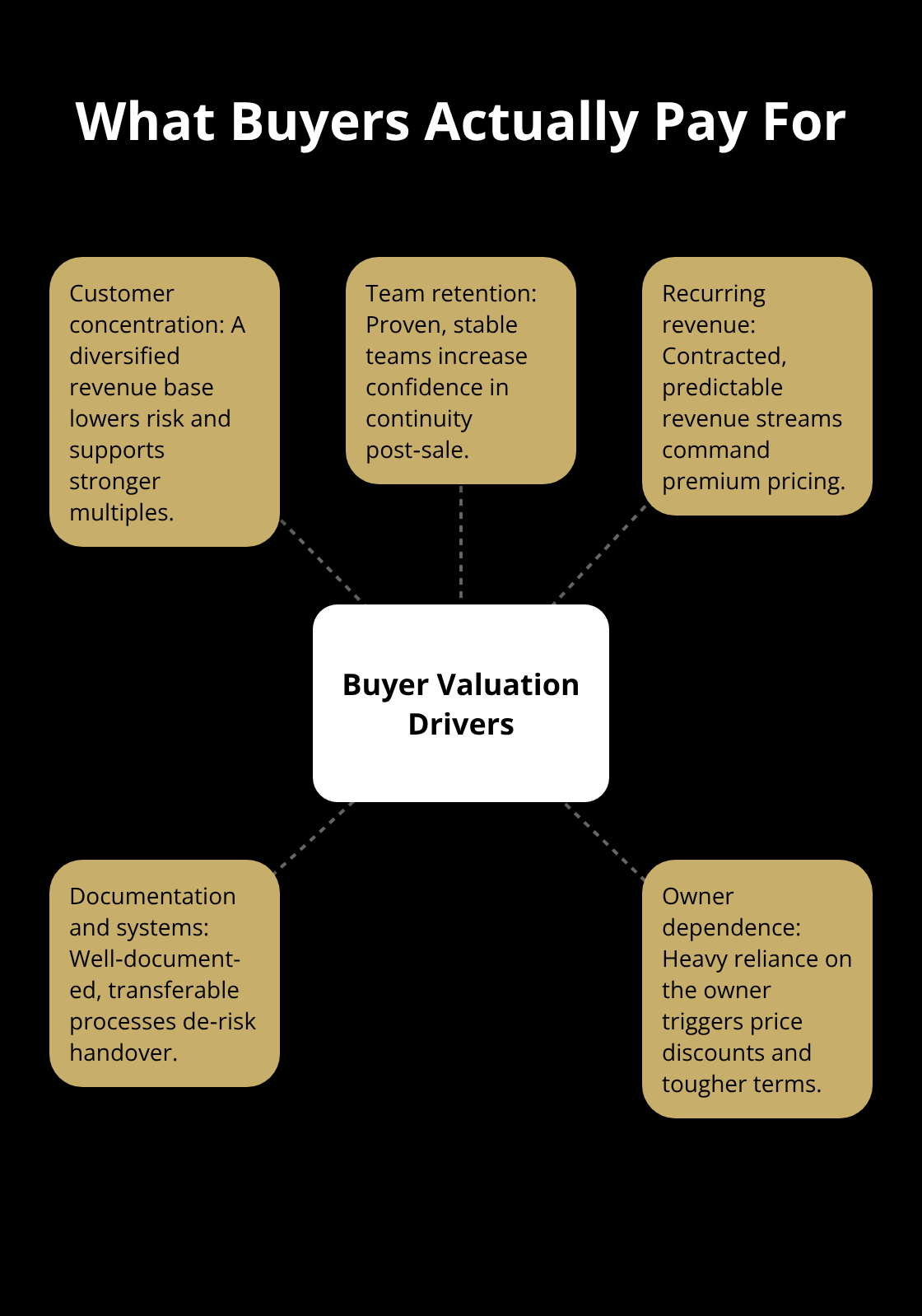
If you’ve built systems that work without you and documented them thoroughly, that’s worth real money. This is why assessing your actual business strength matters before you even think about the asking price-it determines whether you need to strengthen your foundation before marketing your business to potential buyers.
Getting Your Business Sale-Ready
Most owners think preparation means organizing their financials. That’s part of it, but real preparation runs much deeper. Your business needs to operate without you, your financial records need to tell a clear story, and your team needs to function as a unit that buyers want to keep.
Financial Records Tell the Real Story
Buyers in 2026 are data-driven. You need to make their investigation straightforward.
Start with your financial records now, even if you’re not planning to sell for two years. Most owners spend three to six months cleaning up financial records alone. Pull together tax returns for the last three years, detailed P&L statements, balance sheets, and cash flow documentation.
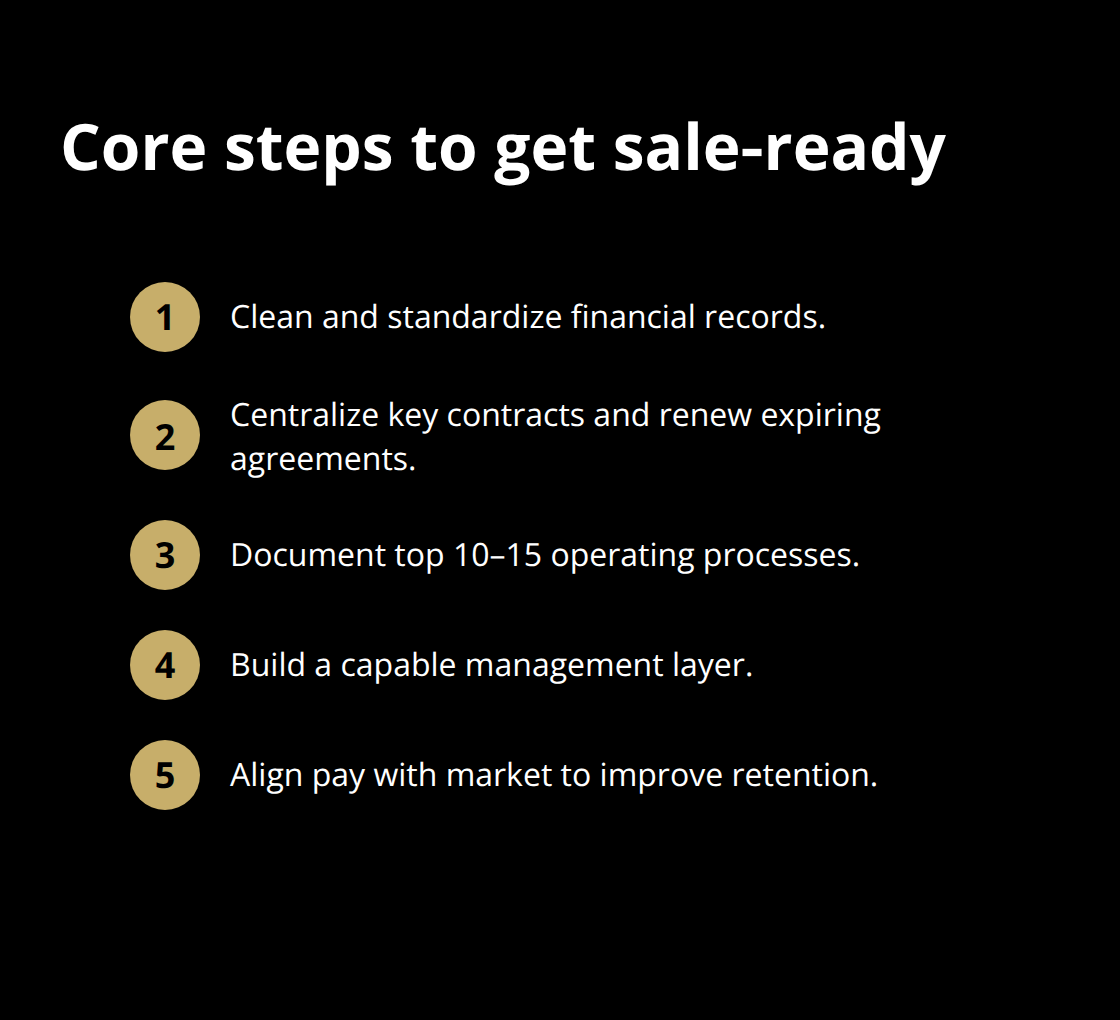
Create a clean, consistent accounting system if you haven’t already.
Buyers want to see that your revenue is real, your expenses are accurate, and your profit margins are sustainable. If your accounting has been loose, inconsistent, or heavily reliant on spreadsheets you created yourself, hire a CPA to audit and standardize everything now. This costs $3,000–$8,000 but saves you from negotiating with a skeptical buyer who questions every number.
Document What Stays and What Goes
Document your customer contracts, supplier agreements, lease terms, and any recurring revenue arrangements. Buyers want to know which revenue is locked in and which might walk away. If you have customers on verbal agreements, put them in writing immediately. If you have long-term contracts expiring within a year of the sale, that reduces your valuation because buyers see revenue risk.
Build Systems That Work Without You
Buyers evaluate whether the business depends on you or whether it can function with competent management in place. If you’re the only person who knows how to service your top clients, manufacture your product, or manage your suppliers, your business is worth less and takes longer to sell.
Document your core processes now. Create written procedures for your top 10–15 business processes, from client onboarding to product delivery to financial management. This doesn’t need to be elaborate, but it needs to be specific and testable. A buyer looking at your business should be able to hand these documents to someone new and have them understand how things actually work.
Strengthen Your Management Team
Build your management team before you sell. This might mean promoting someone who’s been in your company for years, or it might mean hiring a strong general manager if you’ve been doing everything yourself. You don’t need a massive team, but you need people in key positions who can demonstrate competence and continuity.
Buyers often want to retain core team members, and they’re more confident doing that when those people are already leading departments or functions. If your top salesperson is also your only salesperson, that’s a risk factor. If you have two salespeople who’ve each built their own relationships, that’s stronger. If your operations manager has documented the processes and trained others, that’s even better.
Salary and retention matter here too. If your team is significantly underpaid compared to market rates, plan to increase compensation before selling. A buyer running your business profitably will need to pay competitive salaries anyway, so you might as well show them what the real economics look like. This transparency builds trust and often leads to better offers because buyers aren’t surprised by hidden costs after closing.
With your financial records cleaned up, your processes documented, and your team in place, you’re ready to position your business in front of the right buyers-and that’s where the real marketing work begins.
Marketing Your Business to the Right Buyers
Create a Confidential Business Profile That Attracts Serious Buyers
Your first step is building a confidential business profile that tells your story without revealing your identity. This document should highlight your revenue trends over the past three years, your profit margins, customer retention rates, and what makes your business defensible against competitors. Include your growth trajectory, not just your current numbers-if you’ve grown 15% year-over-year, that matters. If your customer churn sits below 5%, that’s worth mentioning.
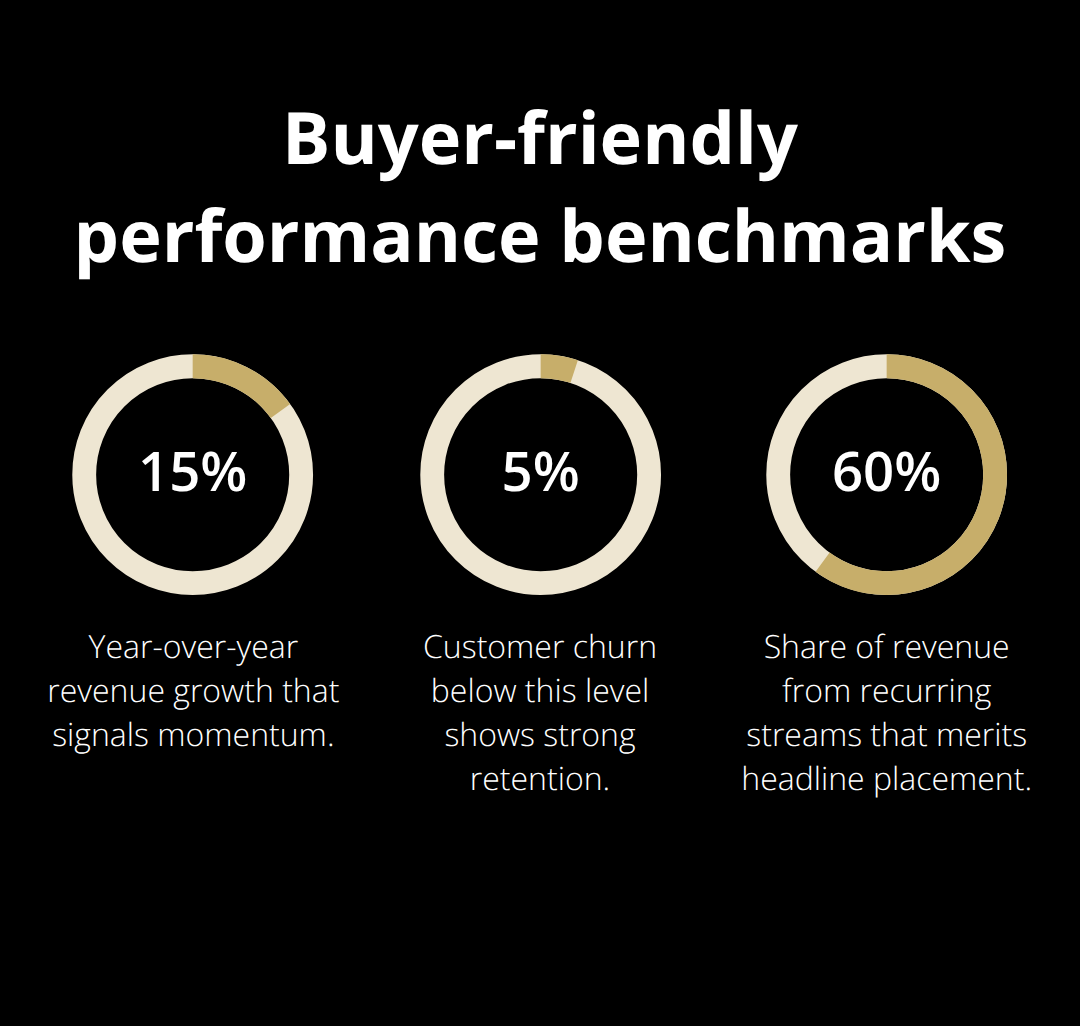
Buyers want to see momentum and stability, not just a snapshot of today’s performance. Your profile should also address the elephant in the room: why you’re selling. Buyers assume owners hide something, so get ahead of that narrative. If you’re retiring, state it. If you’re pursuing a different opportunity, explain it. Transparency builds confidence and eliminates deals that would fall apart during due diligence anyway.
Reach Qualified Buyers Through Multiple Channels
Marketing to qualified buyers requires multiple channels working together. Syndication partners expose your listing to thousands of potential buyers, but local brokers and industry-specific networks often find the best matches because they understand your sector deeply. If you’re selling a manufacturing business, reaching out to private equity firms that focus on manufacturing makes more sense than hoping a random buyer finds you online.
Industry associations, trade publications, and professional networks in your space are where serious buyers actually search. Work with a business broker or advisor who has existing relationships with buyers in your industry-their warm introductions convert at far higher rates than cold marketing. These relationships matter more than broad exposure because they connect you with people who can actually close a deal.
Position Your Business as a Defensible Investment
When positioning your business, lead with what makes it different from competitors. If you’ve built recurring revenue streams that represent 60% of your sales, that’s your headline, not an afterthought. If your business operates with predictable seasonality that management can navigate, state that upfront.
Buyers are increasingly sophisticated about operational due diligence, so show them you understand your business’s strengths and weaknesses better than they do. This honesty positions you as a credible seller and accelerates negotiations because buyers spend less time questioning your claims and more time evaluating whether the deal makes sense for them. Sophisticated buyers (particularly those in private equity or strategic acquisitions) respect owners who present realistic assessments rather than inflated narratives.
Final Thoughts
Your exit planning roadmap takes years to build, not months. Owners who achieve the best outcomes treat their exit as a structured project with clear milestones, not as an event that happens to them. Start strengthening your financial records now if you plan to sell within three years, focus on building systems and documenting processes if you’re five years out, and accept that selling within six months puts you at a competitive disadvantage.
Common mistakes happen when owners skip preparation steps. They attempt to sell without cleaning up financial records, which makes buyers question every number. They fail to document processes, signaling to buyers that the business is fragile. They neglect to build a management team, which reduces valuation because the business depends entirely on them. They also underestimate their tax burden and face shock when they see what they actually walk away with after closing costs.
The biggest mistake is waiting too long to start preparing. Most owners spend three to six months organizing their financials alone, then another three to six months strengthening operations and building their team, then additional time for marketing and negotiations. If you’re thinking about exiting in two years, you should be preparing now. Unbroker works with business owners at every stage of this process, combining expert advisors with AI-driven buyer matching to connect you with the right buyers and handle your entire sale.