Selling your business shouldn’t mean waiting months or losing money to unnecessary fees. Most business owners accept slow timelines and hidden costs as inevitable, but they’re not.
At Unbroker, we’ve seen how outdated processes and inefficient marketing drag out sales and suppress valuations. Sale acceleration is possible when you have the right strategy and support.
Why Sales Drag On
The typical business sale takes six to eleven months after preparation begins. That timeline isn’t random-it’s baked into how traditional brokers operate. Most brokers list your business on their own portal, wait for inbound inquiries, and then manually coordinate showings, negotiations, and paperwork. Each step requires back-and-forth emails, scheduled calls, and human handoffs. A buyer interested in your business might wait days or weeks for a broker to respond to questions. A broker might take two weeks to compile financial documents that should take two days. These delays compound. What should be a three-month process becomes nine months because no one is accountable for speed.
The Real Cost of Conventional Brokerage
Traditional brokers charge 8 to 10 percent of the sale price. On a $2 million business, that’s $160,000 to $200,000 gone before you see a dime. Add in legal fees, accountant fees, escrow costs, and transfer taxes, and you’re looking at another $30,000 to $50,000 in expenses. These fees exist partly because brokers move slowly and need to cover overhead.
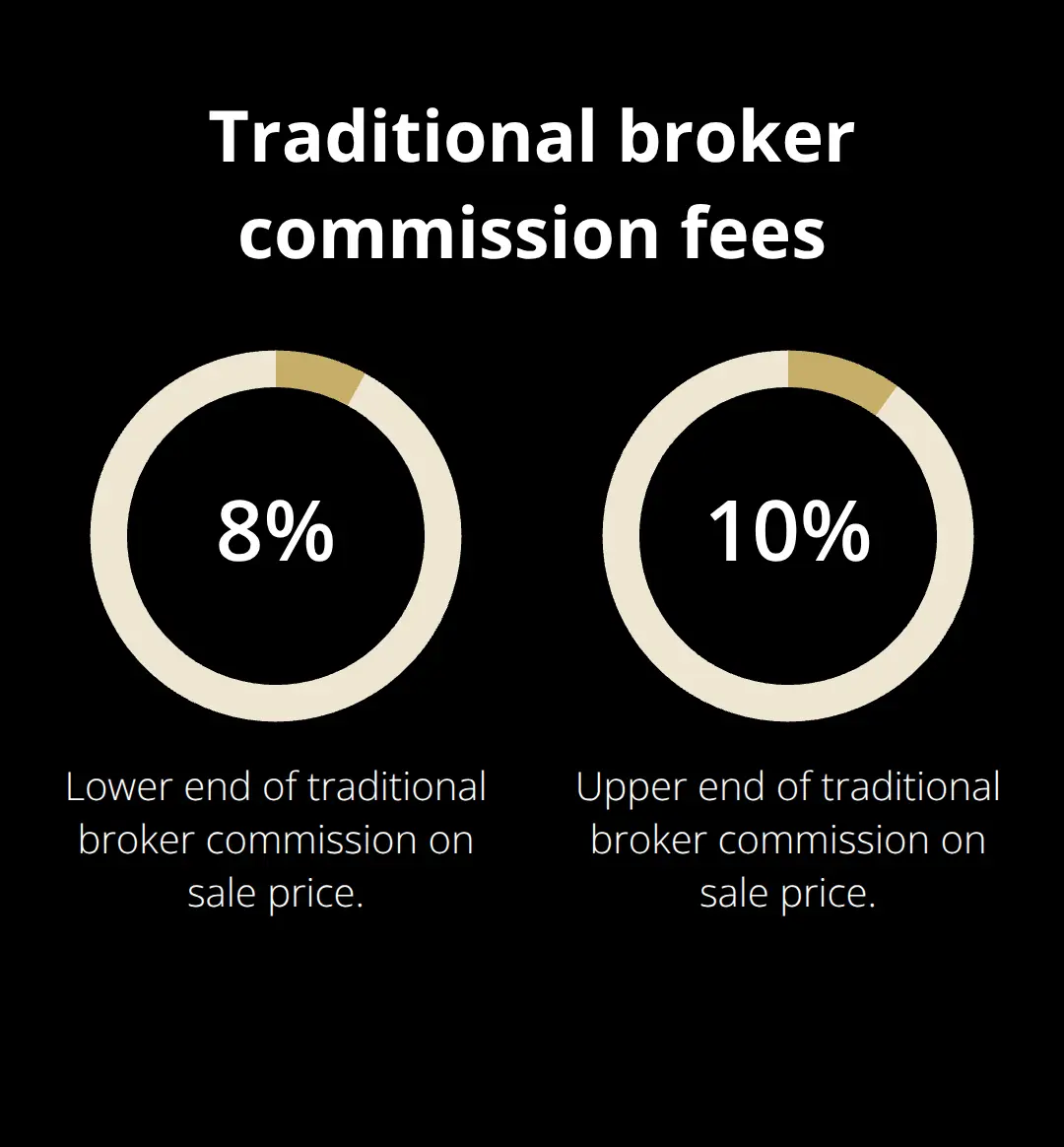
They also exist because transparency isn’t standard-many brokers bury costs in fine print or reveal them late in the process. You don’t know the true net proceeds until closing day.
Some brokers also take longer because they shop your business to a limited buyer pool. They control the narrative and the timeline, not you. Slower sales also mean longer exposure to market risk. If the economy shifts or your industry faces headwinds during those extra months, your valuation can drop. A buyer who would have paid $2 million in month three might offer $1.8 million in month nine because conditions changed.
Outdated Systems Still Dominate
Most brokers still rely on email, spreadsheets, and phone calls to manage sales. Buyer information lives in disconnected systems. Marketing happens through static listings rather than targeted outreach to qualified buyers. Legal documents use templates that require manual customization for each deal. Negotiations happen in email threads that are hard to track. This fragmentation slows everything down.
A qualified buyer might never see your business because the broker’s marketing didn’t reach the right audience. Documents get lost in email. Negotiation points from week two disappear by week six. Modern platforms use AI-driven buyer matching to connect you with serious, pre-qualified buyers instead of hoping someone finds your listing. They automate document workflows so legal paperwork moves from draft to signature in days, not weeks. They centralize all communication so nothing gets lost. They track every step of the sale so you know exactly where you stand.
What Modern Platforms Change
The gap between traditional and modern approaches keeps widening. Modern platforms eliminate the friction that traditional brokers accept as normal. They replace manual processes with automation. They replace limited buyer networks with AI-powered matching that reaches qualified prospects at scale. They replace hidden fees with transparent pricing. They replace slow email chains with centralized workflows where every stakeholder sees real-time progress.
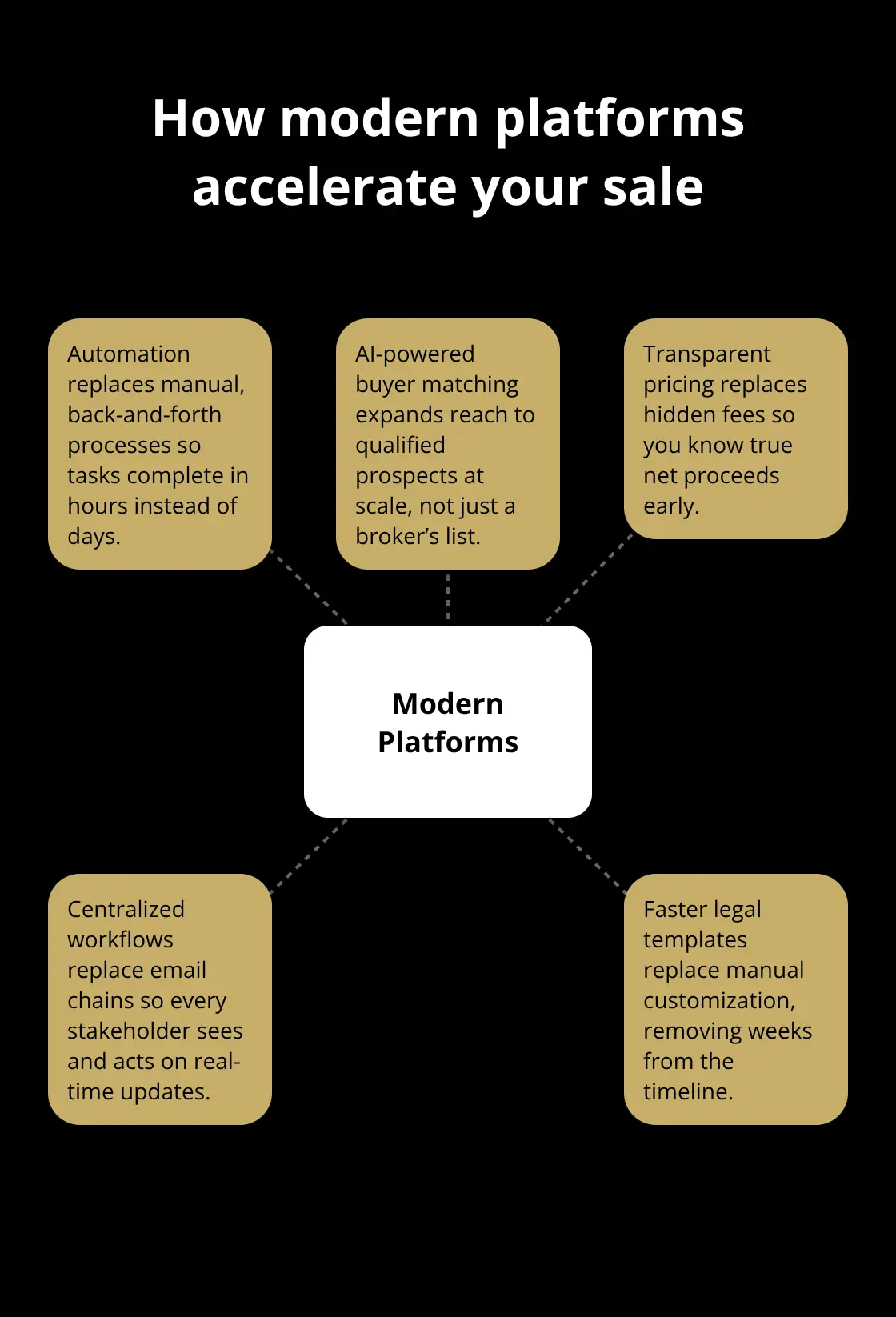
This shift matters because speed and clarity work together. When you know where your sale stands and what happens next, you can make faster decisions. When buyers receive quick responses and clear information, they move forward instead of shopping around. When legal documents flow through automated templates instead of manual customization, weeks disappear from your timeline.
How to Get Your Business Sale-Ready and Find Qualified Buyers Faster
Prepare Your Financials and Operations
Gather and verify all financial documents: annual revenue, profits, tax returns, inventory levels, and asset registers. Then normalize your financials by removing owner-specific expenses and non-recurring costs so the numbers reflect what a new owner will actually earn. If you own the real estate alongside the business, document lease terms, rent escalations, occupancy rates, and tenant mix separately because these details significantly affect buyer confidence and valuation. A supermarket or similar retail business with attached property needs clear documentation showing how the business generates cash flow independent of owner involvement.
Before you market the business, push for higher net operating income by cutting discretionary costs and improving operational efficiency. This isn’t about faking numbers-it’s about showing buyers the real earning potential. Develop a credible growth narrative with stable revenue, expansion opportunities, and resilience to market shifts. Clean operations matter too: resolve personnel issues, ensure taxes are current, tidy offices, and maintain clean record-keeping because red flags kill deals faster than anything else.
Reach Qualified Buyers at Scale
Traditional brokers shop your business to a limited network they’ve built over years, which means qualified buyers who exist outside that network never see your listing. Modern platforms use AI-driven matching to identify serious, pre-qualified buyers at scale based on industry, geography, financing capacity, and strategic fit. This matters because it eliminates tire-kickers-the prospects who inquire but lack the financial ability or genuine interest to close.
The buyer matching process accelerates dramatically when you use modern platforms instead of traditional brokers. You gain access to a vastly larger pool of potential buyers rather than waiting for someone to stumble across your listing. Qualified prospects who match your business profile receive targeted outreach instead of hoping your business appears in their search results.
Streamline Negotiations and Legal Workflows
Most brokers still customize legal documents manually for each deal, which introduces delays and inconsistency. Modern platforms provide templates that adapt to your specific situation in hours rather than days. Negotiations themselves move faster when all communication happens in one centralized place instead of scattered email threads.
A buyer question about lease terms doesn’t get lost in your inbox for three days; it appears in a shared workspace where you and your advisors see it immediately and respond the same day. When you control the timeline and information flow, you control the sale. You know exactly where negotiations stand, what documents are pending, and what happens next. That clarity lets you make faster decisions and keeps momentum moving forward instead of stalling while waiting for someone to respond to an email.
The speed gains compound across every stage of the sale process. Faster buyer matching means more qualified prospects enter the pipeline. Faster document workflows mean fewer delays between offer and signature. Faster communication means fewer misunderstandings that derail deals. These improvements stack on top of each other, which is why modern platforms can cut months off your timeline. The next step involves protecting that momentum through smart negotiation tactics and strategic pricing decisions that keep buyers moving forward without leaving value on the table.
What Kills Deals Faster Than a Slow Timeline
Most business sales fail not because the business is weak but because owners make preventable mistakes in three areas: pricing, documentation, and professional guidance. These mistakes compound each other and create a death spiral where slow timelines meet low valuations, buyers lose confidence, and deals collapse entirely. The difference between a sale that closes in three months at full value and one that drags for a year at a discount often comes down to these three controllable factors.
Pricing Without Market Reality
Overpricing kills deals faster than almost anything else. Businesses priced too high often sit on the market longer, attract fewer buyers, and face failed negotiations. Tire-kickers may inquire out of curiosity, but qualified buyers move on immediately to businesses priced in line with market data. This creates a vicious cycle: fewer serious inquiries arrive, so you assume the price must be right and wait longer for the right buyer, which extends your timeline and exposes you to market risk. A business worth $2 million in month two might fetch $1.8 million in month eight if economic conditions shift during those extra months of exposure.
The cost of overpricing isn’t just the lost months-it’s the actual dollar loss when you finally accept a lower offer after months of waiting. Conversely, underpricing closes fast but leaves substantial value on the table permanently. The solution is obtaining an accurate valuation from experienced professionals who consider comparable sales, your company’s condition, current market conditions, and your timeline. Multiple valuation approaches-asset-based, income-based using SDE or EBITDA multiples, and market-based comparables-provide a credible range rather than a single number. This range becomes your anchor for negotiations. When a buyer makes an opening offer, you can respond with confidence because you know the defensible range and can explain your reasoning using market data rather than emotion or hope.
Documentation That Costs You Credibility and Time
Poor financial documentation and disorganized records create friction at precisely the moment you need momentum. A buyer conducting due diligence will request tax returns, profit and loss statements, balance sheets, accounts receivable aging, inventory records, lease agreements, and customer contracts. If these documents scatter across different systems, remain incomplete, or show inconsistencies with each other, the buyer’s confidence erodes immediately. What should be a straightforward verification process becomes a weeks-long investigation where the buyer questions every number and assumes you’re hiding problems. This skepticism translates directly into lower offers and extended timelines as the buyer’s accountant and lawyer demand increasingly detailed explanations.
Start organizing financial records now, not when you’re ready to sell. Normalize your financials to remove owner-specific expenses (your excessive salary, personal vehicle costs, charitable donations that won’t transfer to a new owner) and non-recurring items so the numbers reflect what an incoming owner will actually earn. If you own the real estate alongside the business, separate the property financials from the operating business financials-document lease terms, rent escalations, occupancy rates, and tenant quality independently because these affect valuation differently than operational earnings. A buyer evaluating a supermarket with attached retail property needs to see how much cash the business generates independent of real estate income. Clean records also signal operational competence. When a buyer sees organized, accurate documentation, they assume the business itself is well-managed. When they see chaos, they assume operational chaos exists everywhere and price accordingly.
Professional Support Matters More Than You Think
Attempting to sell without professional guidance is false economy. Many owners try to avoid paying brokers through self-handling or relying on informal advisors, which typically results in a slower, lower-value outcome that costs far more than professional fees would have. A competent professional-whether a broker, investment banker, or modern platform provider-brings three things you can’t replicate alone: access to a qualified buyer network, knowledge of deal structure that maximizes your net proceeds, and accountability for moving the process forward.
Without professional support, you market to whoever finds your listing organically, which is a tiny fraction of serious buyers. You also make structural decisions-how much to ask for cash versus seller financing, how to value non-cash components, what tax implications matter most-without expert input, which often costs you tens of thousands in suboptimal deal structure. The transparency issue matters equally. When you work without professional intermediaries, every negotiation involves direct conflict between you and the buyer. You defend your price while they attack it, which makes it harder to move toward agreement. A professional intermediary creates distance and provides credibility. When a professional says your valuation is market-rate, it carries more weight than you saying it yourself. When a professional explains why a particular deal structure benefits both parties, buyers believe it more readily.
Traditional brokers bury fees in fine print and reveal true costs late in the process. Modern platforms publish pricing clearly with no hidden charges, letting you compare true net proceeds across different sales approaches rather than discovering surprise costs at closing.
Final Thoughts
Selling your business fast does not require accepting a lower valuation. The two outcomes are not linked. What actually matters is eliminating the friction that traditional brokers built into their processes and accepted as inevitable. When you prepare your financials properly, reach qualified buyers through modern matching, and streamline negotiations with transparent workflows, sale acceleration happens naturally without sacrificing value. The businesses that sell quickly at strong prices share three characteristics: they are priced using market data, not hope; their financial records are clean and organized so due diligence moves in weeks instead of months; and they receive support from professionals who create accountability for speed and clarity.
You control your timeline and your proceeds. Traditional brokers benefit from slow sales because extended timelines justify their fees, so they have no incentive to accelerate. Modern platforms operate differently and charge transparent, low-cost fees upfront rather than taking a percentage of your sale price, which means they benefit when you close faster and at higher valuations. AI-driven buyer matching reaches qualified prospects at scale instead of hoping someone finds your listing, legal templates adapt to your situation in hours, and negotiations happen in centralized workspaces where nothing gets lost.
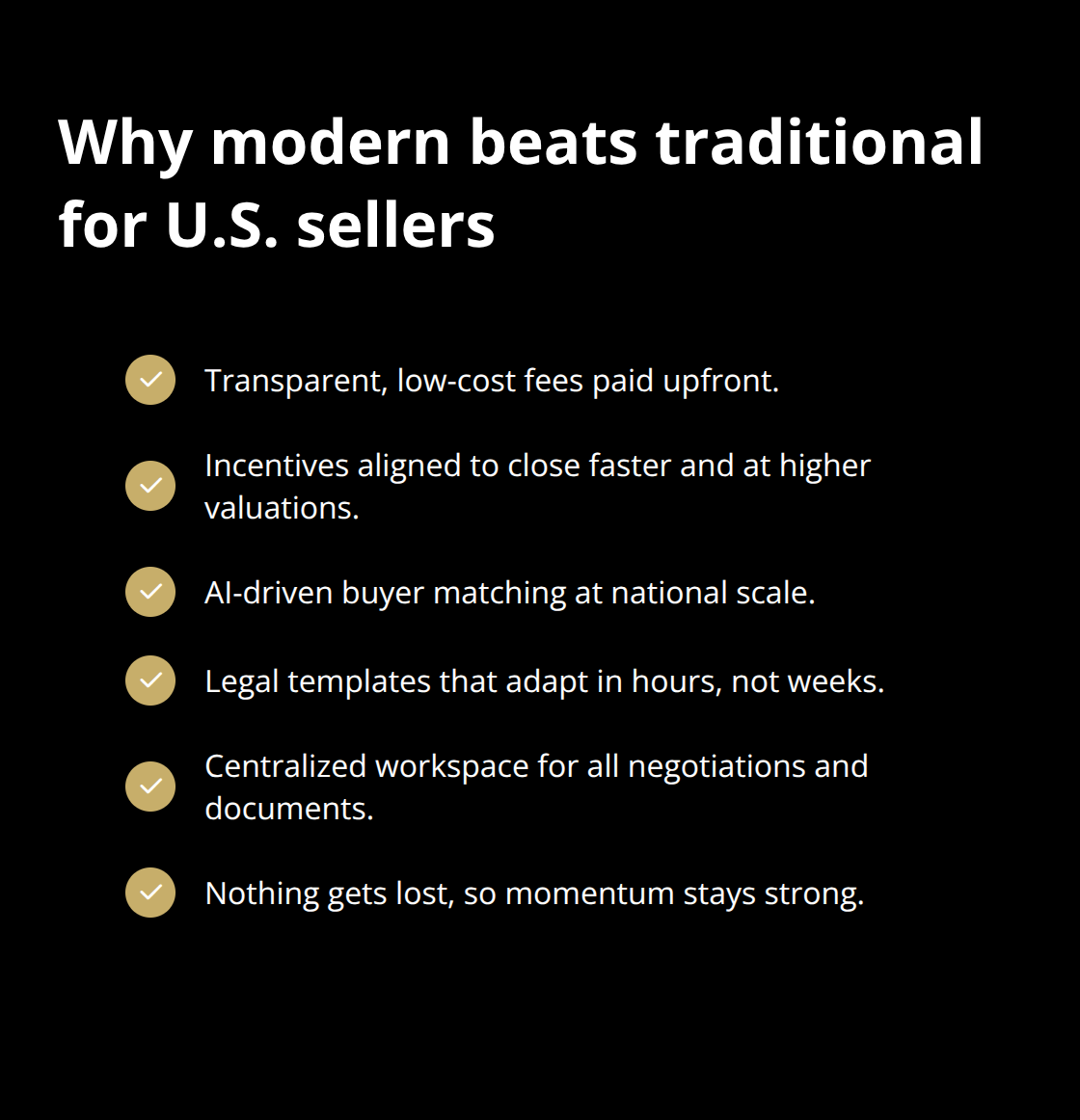
This combination cuts months from your timeline while protecting the value you have built. Unbroker offers Full Service for a 6% success fee, paid only when your business sells-no hidden fees appear at closing. The choice is yours: accept the traditional timeline and fees, or take control of your sale with modern tools and transparent support.