Selling your business is one of the biggest financial decisions you’ll make. Without proper exit planning for owners, most sellers leave money on the table or face unexpected complications at the last moment.
At Unbroker, we’ve seen firsthand how early preparation transforms the entire process. This roadmap walks you through each stage, from valuing your business correctly to closing with confidence.
Why Exit Planning Actually Changes Your Sale Price
Your business is likely your largest financial asset. Studies show that up to 80% of a business owner’s net worth ties directly to the company, yet most owners have no formal plan for what happens next. The Exit Planning Institute found that businesses with a documented exit strategy sell for approximately 71% more than those without one. That’s not a small difference-it’s the gap between a comfortable retirement and financial stress. Only 42% of business owners maintain a formal exit or transition plan, leaving the majority exposed to last-minute decisions that cost them significantly.
What Happens Without a Plan
Owners who skip exit planning face predictable problems. A business without an exit plan typically sells for less because buyers see operational risk, unclear processes, and dependency on the owner. Without clean financial documentation, buyers lose confidence and offer lower prices. Without clear operational systems, the business appears dependent on you as the owner, which reduces its appeal and valuation. Tax inefficiencies emerge because the deal structure wasn’t optimized in advance. Studies show that 81% of owners regret not investing more time in preparing for the sale, and roughly 75% of businesses either never sell or sell for less than desired. These aren’t theoretical outcomes-they’re concrete financial losses that happen repeatedly across industries.
Illness, disputes, or economic downturns can force an unplanned exit, leaving owners with no leverage and fewer options. A buyer knows when you’re desperate, and they’ll use that against you in negotiations.
The Three to Ten Year Advantage
Early planning isn’t about panic; it’s about control. Starting your exit strategy three to ten years before a transaction gives you time to strengthen the business in ways that buyers actually value. You can improve profitability and document processes to increase buyer valuation. You can reduce debt, clean up your financial records, and build leadership depth. Each of these moves increases what buyers will pay.
The timing matters because a strong business with independent systems and prepared teams negotiates better deal structures and outcomes. Early planning also gives you flexibility-you can capitalize on favorable partnership offers, market conditions, or acquisition interest when it appears, rather than accepting whatever comes along.
What Comes Next in Your Exit Strategy
The real work starts when you understand your business’s true value and recognize the cost of waiting. The next step involves preparing your business to meet buyer expectations and stand up to scrutiny.
Getting Your Business Ready for Buyer Scrutiny
Clean Financial Records Build Buyer Trust
Buyers don’t trust what they can’t verify. The moment you decide to sell, your business enters a period of intense examination where financial records, operational processes, and leadership structures face scrutiny. Messy finances kill deals faster than anything else. If your accounting doesn’t match your bank statements, if tax returns conflict with operational reality, or if expense categories seem arbitrary, buyers assume you’re hiding something.
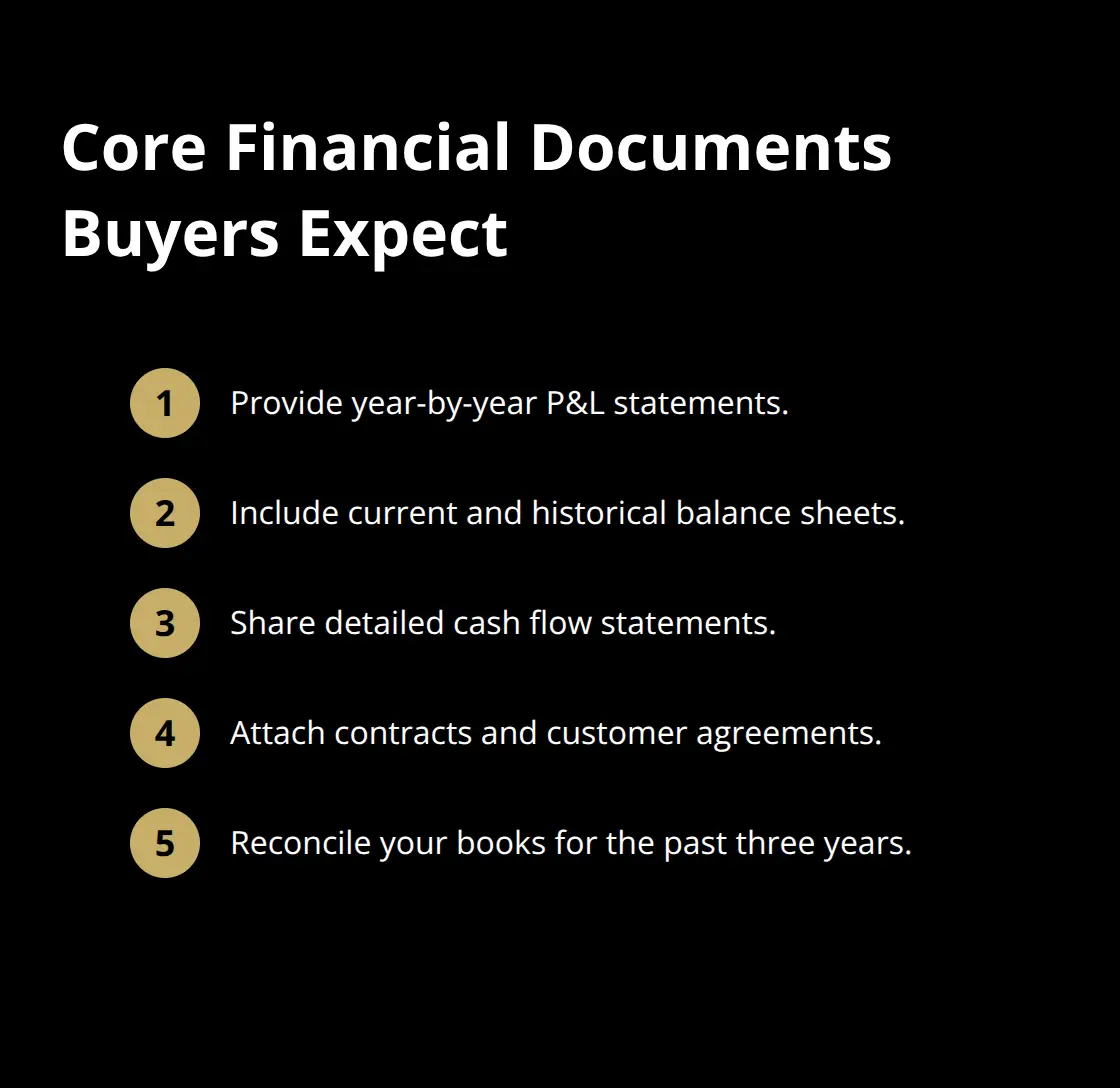
Start by having an accountant reconcile your books for the past three years minimum. Separate personal expenses from business expenses completely. Document all revenue streams with supporting contracts and customer agreements. Buyers will request detailed P&L statements, balance sheets, and cash flow statements, and these documents need to tell a consistent story. If you’ve run the business informally, this cleanup takes time-which is exactly why the three to ten year planning window matters. You can’t rush financial credibility in the final months before a sale.
Build systems That Function Without You
Operational independence separates a business from a job. If the business only functions because you make decisions, handle key relationships, or manage critical processes, buyers see risk. They’ll either pay significantly less or walk away entirely.
Document your core processes in writing, even if they feel obvious to you. Create procedure manuals for sales, customer service, fulfillment, and financial management. Cross-train at least one other person on every critical function so the business doesn’t collapse if you leave. Identify which customers, suppliers, or contracts depend on your personal relationships and develop transition plans to transfer those relationships to your team. Buyers want to see a business that runs on systems and people, not on you.
During due diligence, buyers will request organizational charts, job descriptions, employee retention agreements, and evidence that your team can execute without you. If your key people have already left or your processes exist only in your head, you’ve created a valuation problem that’s expensive to fix quickly. Start building this operational independence now by deliberately stepping back from day-to-day decisions and delegating to your team.
Prepare your team for Transition
Your leadership bench strength matters enormously to buyers. A business with depth in management and clear succession pathways commands higher valuations than one where everything flows through you. Document the skills, experience, and responsibilities of each team member. Create development plans for high-potential employees so they’re ready to step into larger roles. Establish retention agreements with key personnel to prevent departures during the sale process-buyers want confidence that your team stays in place.
When you strengthen your team now, you accomplish two things simultaneously: you make your business more valuable to buyers, and you make your exit smoother because your team can actually run the operation. This operational readiness directly influences how much a buyer will pay and how quickly the sale closes.
Finding the Right Buyer and Closing the Deal
Finding the right buyer matters more than finding any buyer. Most business owners accept the first serious offer, assuming all qualified buyers are equal. They’re not. A buyer who understands your industry, respects your team, and has the capital to close quickly will pay more and create fewer headaches than a buyer who’s desperate, underfunded, or planning to strip the business for parts. The Exit Planning Institute data shows that 66% of certified exit planning advisors structure deals across multiple phases, which means they match sellers with buyers who fit their specific situation rather than rushing to close with whoever appears first.
Identifying Qualified Buyers in Your Market
Start by defining what you actually want from a buyer beyond price. Do you care whether your team stays employed? Do you want your brand to continue in its current form? Are you open to a partial sale with an earnout, or do you need all cash at closing? These preferences narrow your buyer pool significantly, and that’s intentional.
A strategic buyer in your industry might pay more because they see synergies with their existing operation. A financial buyer might structure the deal differently to optimize your tax outcome. A management team within your company might value continuity and culture in ways external buyers won’t. Consider which buyer profile aligns with both your financial goals and personal priorities, because finding the right buyer requires evaluating their financial capacity, strategic fit, and cultural alignment.
Structuring the Deal to Maximize Your Proceeds
Deal structure determines what you actually take home, not just what the purchase price says. Two identical businesses might sell for the same headline number, but one owner walks away with significantly more cash because the deal was structured smarter. Common structures include all cash at closing (rare and usually requires a discount because the buyer carries all the risk) and a combination of cash at closing plus an earnout, where you receive additional payments over time if the business hits certain performance targets.
Earnouts sound good until you realize you’ve essentially agreed to work for the buyer after the sale to earn your full price. Tax-efficient structures matter enormously. Deal structure and tax efficiency determine your final proceeds, with asset sales allowing buyers to select specific assets while avoiding unwanted liabilities. This is why involving a tax professional early isn’t optional.
Negotiate payment terms carefully. A buyer offering 70% cash at closing and 30% over two years creates risk for you if the business underperforms and they claim they don’t owe the earnout. Insist on reps and warranties insurance, which protects you from post-closing claims that the buyer uses to reduce your final payment. This insurance typically costs 3-6% of the purchase price but pays for itself the moment a buyer makes an unfounded claim about your financial statements or customer contracts.
Legal Documents and Closing Requirements
The legal documents determine what you’re actually selling and what happens if something goes wrong after closing. Most sellers focus on the purchase agreement and miss equally important documents like employment agreements, non-compete clauses, intellectual property assignments, and customer contract transitions. If you’ve promised customers that you’ll remain involved, that promise needs to be documented and either transferred to the buyer or explicitly released.
If you own patents, trademarks, or proprietary processes, the purchase agreement must clearly assign those to the buyer with proper documentation. Non-compete agreements prevent you from starting a competing business for a specified period, which is standard, but the scope matters enormously. A non-compete that prevents you from working in your entire industry for five years in a multi-state region is far different from one that applies only to your specific geographic market for two years.
Closing requirements vary by business type and location, but they universally include title verification, insurance policies transferring to the new owner, employee benefit plan transitions, and final accounting reconciliation. Establish a closing checklist with your attorney weeks before the actual closing date so nothing surprises you at the last moment. Confirm that all customer contracts, supplier agreements, and licenses transfer properly or that the buyer has obtained new agreements. Verify that any debt you’re responsible for gets paid off from sale proceeds before you receive your final payment.
The closing process includes finding a buyer, negotiating a letter of intent, preparing the purchase agreement, and completing due diligence. During this window, the buyer conducts final due diligence and may request additional documentation or clarifications. Respond quickly and completely to these requests because delays cost money and create opportunities for the buyer to renegotiate. Have all documentation organized and accessible before the buyer even requests it, which signals professionalism and reduces their perceived risk in completing the deal.
Final Thoughts
Exit planning for owners shapes every business decision you make today, not just the ones you tackle months before selling. You move from understanding your business’s true value, through preparing it for buyer scrutiny, to closing a deal that reflects what you’ve built. Each stage builds on the previous one, and skipping steps costs you money.
Start with a professional business valuation so you know what you’re working with. Clean your financial records and document your core processes within the first year. Over the next two to five years, build operational independence by developing your team and removing yourself from day-to-day decisions so that when you’re ready to sell, buyers trust your business and pay premium prices for it.
We at Unbroker understand that selling a business feels overwhelming without the right support, which is why we’ve built a platform that combines transparent pricing with expert guidance. Unbroker offers flexible options designed to eliminate high brokerage fees while connecting you with qualified buyers through legal templates, negotiation support, and AI-driven processes. Start now with a clear understanding of your business’s current value and your personal financial goals after exit, then move methodically through preparation knowing that each improvement increases your sale price and reduces your stress when buyers arrive.