Selling your business without a broker means taking control of the process-and the outcome. At Unbroker, we’ve seen firsthand that DIY sellers who use the right tools can compete with traditional brokers on price and speed.
This guide covers the essential DIY selling resources you need to value your business accurately, market it effectively, and close the deal with confidence.
What Tools Do You Actually Need to Sell Your Business?
The One Test That Matters
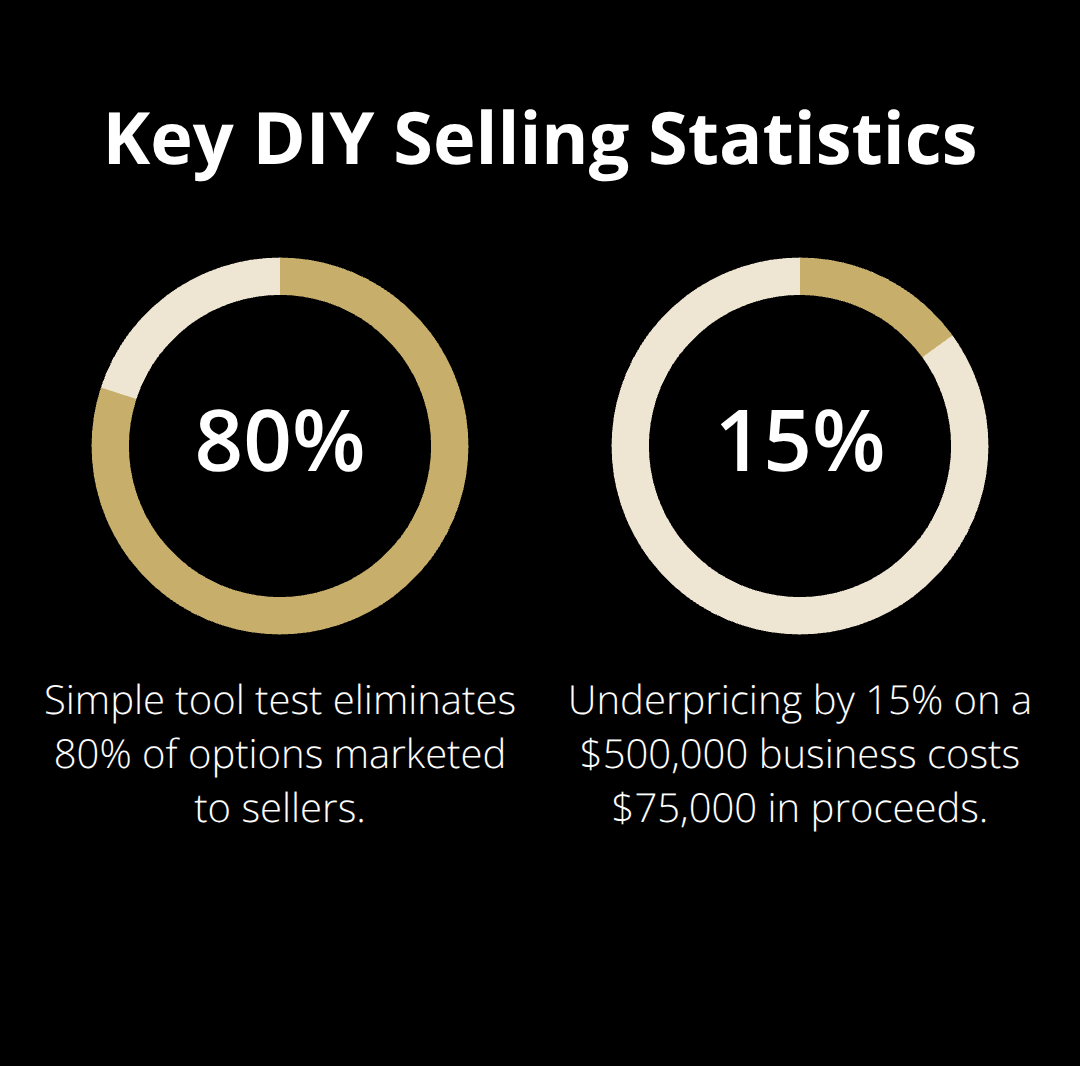
Selling a business without a broker forces you to make a critical decision upfront: which tools actually move the needle, and which ones waste your time? Most DIY sellers accumulate software subscriptions and templates they never use. The reality is simpler. You need three categories of tools, and you should evaluate each one against a single test: can you implement it today with your current team? This filter eliminates 80% of the options marketed to business sellers.
Valuation Software: Price Anchors Everything
Financial valuation software like Pave or Quiet Light Valuation Tools helps you establish fair market value, which is non-negotiable. These platforms typically cost $100–500 and guide you through income, market, and asset approaches to valuation. The SBA recommends establishing fair market value before any sale, and this step prevents you from leaving money on the table or pricing yourself out of the market. Valuation software moves first because price anchors everything else in your sale.
Document Templates: Legal Mistakes Cost More Than Templates
For document management, templates from LegalZoom or Rocket Lawyer cover sales agreements, asset purchase agreements, and confidentiality agreements starting at $50–200 per document. The alternative is hiring a lawyer at $3,000–10,000 for the same documents, which eats directly into your proceeds. Document templates come second because legal mistakes cost far more than template fees. You protect your interests without the lawyer’s bill.
Marketing Platforms: Visibility Requires the Right Channel
Marketing and listing platforms determine whether buyers ever see your business. BizBuySell and Flippa charge listing fees between $100–500 and connect you to active buyer networks, though their reach varies by industry. Marketing platforms come third because they only matter if your price and documents are solid. Choose one or two platforms based on your industry rather than subscribing to every option available.
Skip the Software That Promises Too Much
Skip tools that promise to automate buyer screening or generate negotiation strategies-these require judgment that software cannot replace. Your time is better spent qualifying buyers manually through phone calls and checking references than parsing through algorithmic recommendations. The SBA’s guidance on business sales emphasizes that owner involvement in screening and negotiation typically yields better outcomes than delegating to software. Start with a valuation tool, add one document management service, and choose one or two listing platforms based on your industry. Most successful DIY sales happen with fewer than five paid tools.
Adding more complexity does not improve outcomes; it fragments your attention and inflates costs. You now have the foundation to price your business, protect yourself legally, and reach qualified buyers. The next step is managing the actual sales process-screening buyers, negotiating terms, and preparing for due diligence-which demands your direct involvement and cannot be outsourced to software.
How to Screen Buyers and Negotiate Without Losing Control
Qualify Buyers Before You Share Anything
Screening buyers manually takes more time than posting your listing and waiting, but it saves you from wasting weeks on tire-kickers and lowball offers. The first filter is simple: require a non-disclosure agreement before sharing financial details. This step alone eliminates buyers who are not serious. Once they sign, ask for proof of funds or financing pre-approval before scheduling a call. Verified financing status separates genuine buyers from curiosity seekers. Phone the qualified prospects directly rather than relying on email exchanges.
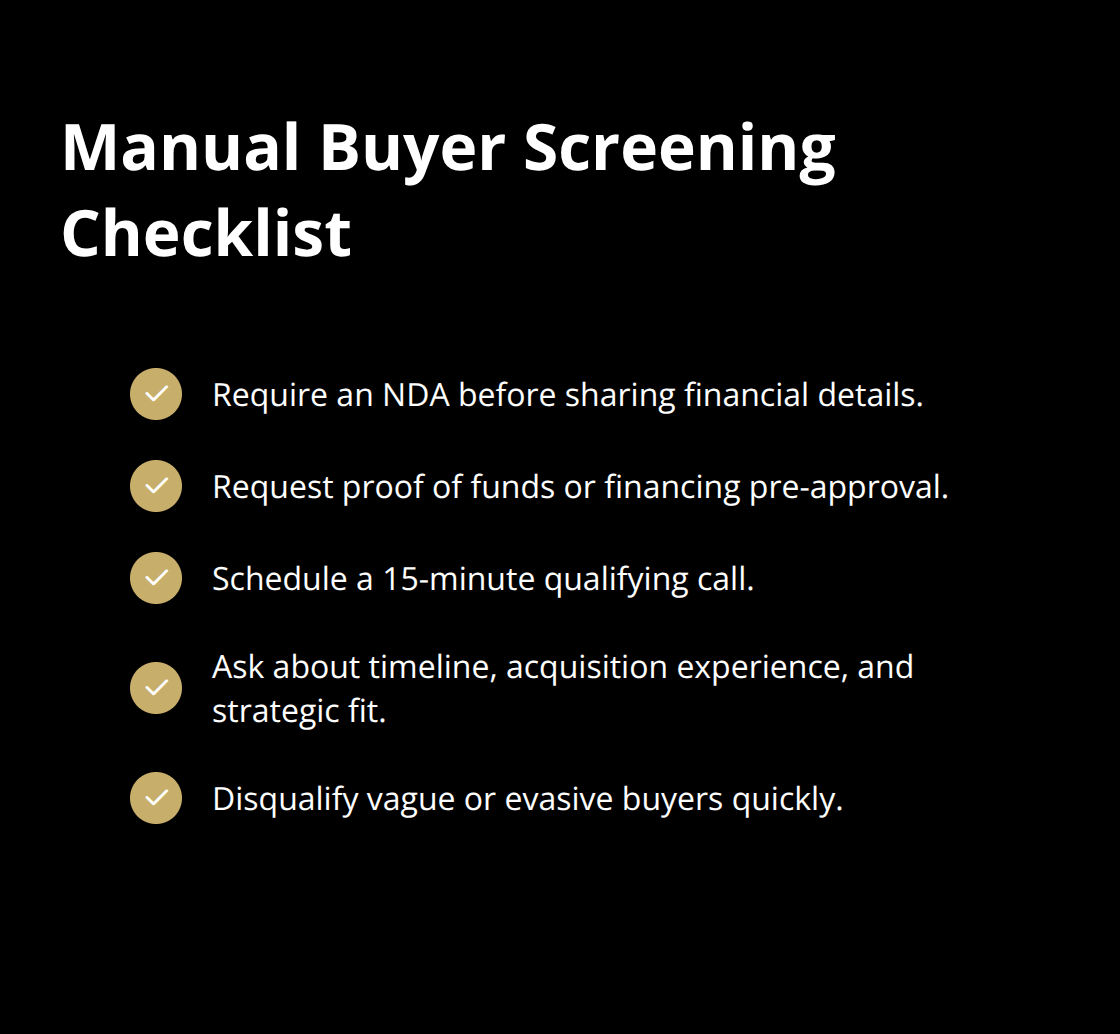
A 15-minute call reveals whether they understand your industry, have realistic expectations, and can actually close a deal.
Ask the Right Questions on Your First Call
Ask about their timeline, their experience acquiring businesses, and why they are interested in your specific business. Buyers motivated by strategic fit or cash-flow potential answer these questions clearly. Buyers who are vague or evasive about their plans are not worth your time. Disqualify anyone who cannot articulate why your business matches their goals within the first conversation. This filtering approach reduces your pipeline from dozens of inquiries to three or four serious candidates in weeks rather than months.
Set Your Walk-Away Price Before Any Offer Arrives
Negotiation without a broker means you control the narrative, but you must establish your walk-away price before the first offer arrives. The asset gap framework compares your current business value to your retirement needs and determines this number. If your business is worth $800,000 and you need $1,000,000 to retire, you either stay longer, sell for what you can get, or build business value before exit. Knowing this number prevents emotion from hijacking your decision when a buyer makes their opening bid.
Structure the Deal Around Your Priorities
Structure the deal around what matters most to you: if you need cash upfront, push for a higher purchase price with minimal seller financing. If you can absorb some risk, a seller-financed component at 6% to 10% interest with a 5 to 7 year term can close deals that otherwise stall. Most DIY sellers accept 10% to 25% seller financing to bridge the gap between buyer financing and asking price. Document every term in writing immediately, even informal agreements, because verbal understandings collapse under pressure.
Organize Your Records Now, Not Later
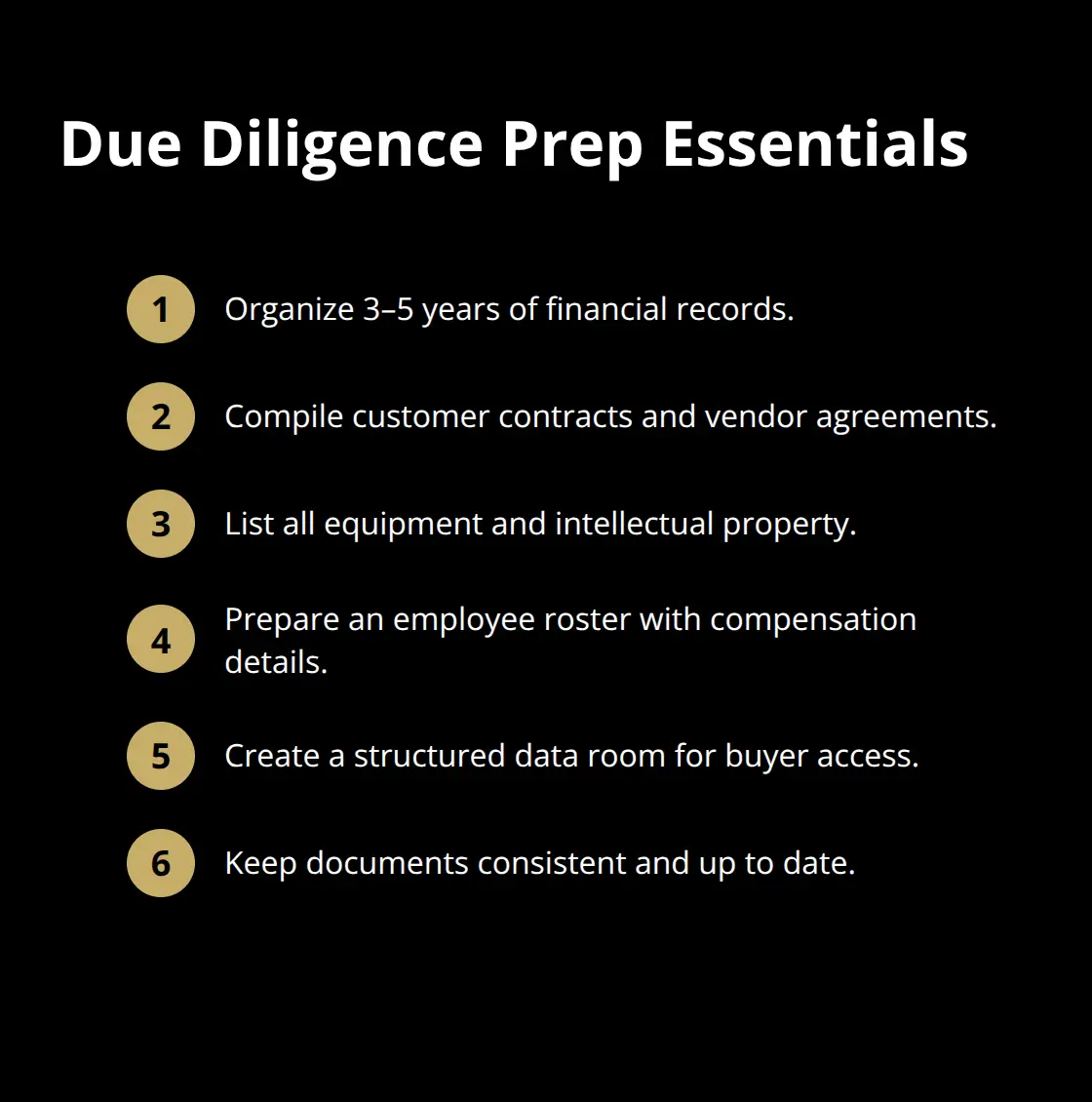
Due diligence preparation starts now, before you receive an offer. Organize your financial records for the past three to five years, compile customer contracts and vendor agreements, list all equipment and intellectual property, and prepare an employee roster with compensation details. Buyers will request these documents systematically during due diligence, and having them organized cuts weeks off the timeline. Unorganized records signal weak management to buyers and invite deeper scrutiny that uncovers problems you did not know existed. Buyers who encounter friction during due diligence often renegotiate downward or walk away entirely. Your preparation directly protects your sale price and moves you closer to the final stage where legal and tax considerations determine whether you keep what you earn.
Where DIY Sellers Lose Money
Underpricing happens because DIY sellers lack market confidence. Without a broker validating your asking price, you second-guess the valuation software output and drop your price before the first offer arrives. This self-sabotage costs you directly. A business worth $500,000 underpriced by 15% nets you $75,000 less, and you cannot recover that gap in negotiation. The fix is brutal honesty: run your valuation through at least two platforms, document your EBITDA normalization, and then commit to your number. Do not adjust downward until a qualified buyer makes a written offer. Underpricing also signals weakness to buyers, who interpret low asking prices as hidden problems or desperation. They dig deeper, negotiate harder, and often walk away convinced something is wrong.
Limited Visibility Kills Deals Before They Start
Marketing your business on a single platform guarantees you miss serious buyers shopping elsewhere. BizBuySell reaches one audience, Flippa targets another, and industry-specific marketplaces attract buyers your general listing never reaches. List on three to five platforms matched to your industry and buyer type rather than spreading yourself thin across ten options. Each platform charges $100 to $500 for listing, but the cost compounds if you only reach tire-kickers. A cash-flow buyer shopping private equity databases will never see your listing on a consumer-facing marketplace. A strategic competitor searching industry acquisitions may never check the same platform as a retiring entrepreneur. Limited reach means your sale takes longer, and longer timelines create fatigue that leads to price concessions. Identify which buyer types exist in your industry first, then choose platforms they actually use.
Sloppy Documentation Invites Renegotiation
Buyers expect organized financial records, clean contracts, and documented processes during due diligence. Disorganized records do not just slow the process; they invite suspicion and renegotiation. A buyer encounters missing invoices, conflicting employee records, or undocumented customer agreements and immediately assumes you hide problems. They lower their offer to account for unknown liabilities. You lose leverage because the buyer controls the narrative once doubt enters the room. Worse, incomplete documentation sometimes reveals actual problems you did not know existed-like expired vendor contracts, unpaid tax liens, or customer accounts at risk of leaving. Start organizing documents now, not when an offer arrives. Create a data room with three years of financials, all customer and vendor contracts, employee agreements, equipment lists, and intellectual property documentation. A well-organized due diligence process signals professional management and justifies your asking price.
Final Thoughts
DIY selling works when you focus on what actually matters: accurate pricing, organized records, and direct buyer engagement. The three categories of DIY selling resources-valuation software, document templates, and listing platforms-form a complete toolkit without unnecessary complexity. You do not need dozens of tools or expensive consultants to sell your business successfully.
The biggest mistake DIY sellers make is underestimating the value of preparation. Buyers notice disorganized records, vague pricing, and weak marketing immediately, and these signals invite renegotiation and lower offers. Conversely, sellers who arrive at the negotiation table with clean financials, a justified asking price, and proof of serious buyer interest close deals faster and at higher valuations.
We at Unbroker built our platform specifically for DIY sellers who want expert support without traditional broker fees. Unbroker offers transparent pricing and access to buyer networks alongside legal templates, negotiation assistance, and marketing tools that fit your situation and budget.