Selling your business is one of the biggest financial decisions you’ll make. The platform you choose directly impacts your timeline, costs, and final outcome.
We at Unbroker have seen founders lose hundreds of thousands of dollars by picking the wrong business sale platform. This guide breaks down what actually matters when evaluating your options.
What You Actually Pay to Sell Your Business
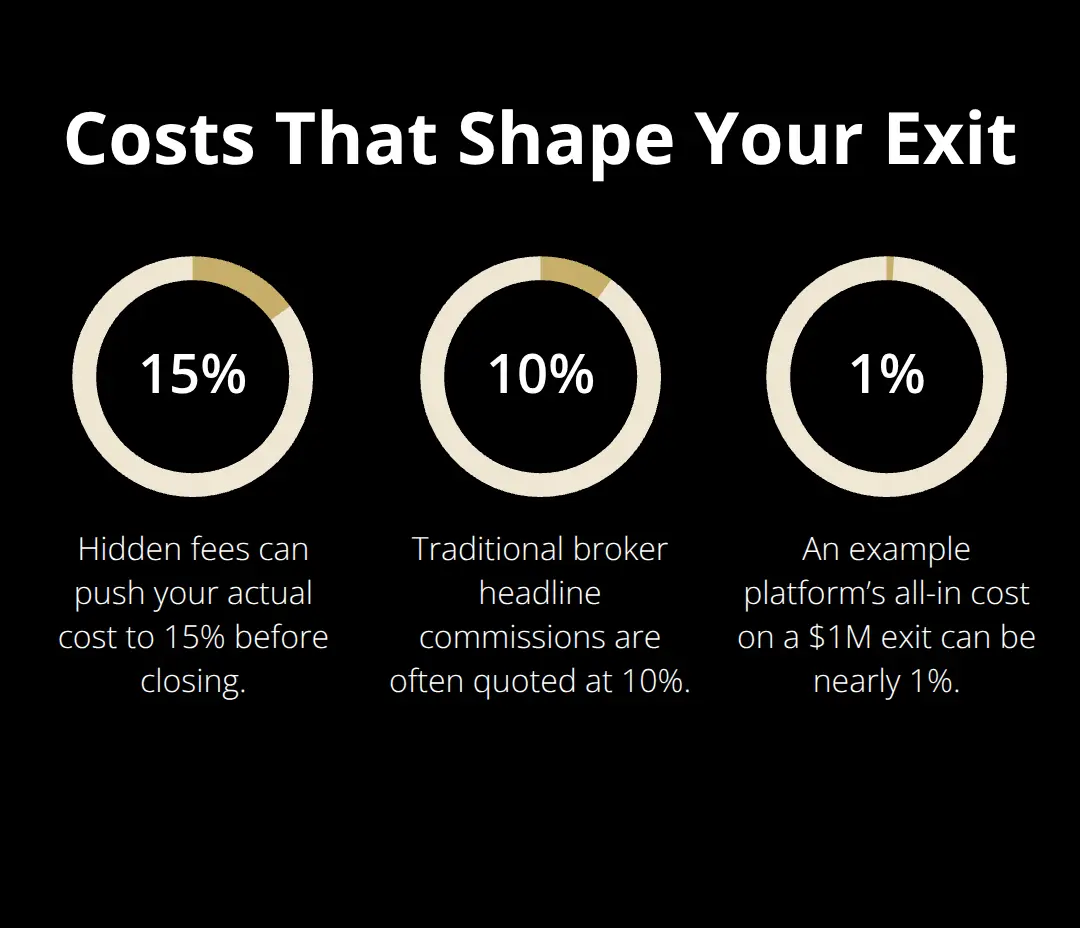
Business broker fees range from 8-12% of your sale price, which on a $2 million exit costs you $160,000-$240,000 before you see a dime. Modern platforms flip this model entirely. Syndication partners, for example, operate on marketplace mechanics rather than percentage-based commissions. The shift matters because it removes the broker’s incentive to drag out negotiations or push you toward higher valuations that don’t reflect reality. You no longer pay someone who benefits from maximizing deal size; you pay for access to infrastructure. Traditional brokers also bury costs in escrow fees, legal document charges, and consulting time that only surface during the process. A $5,000 escrow fee here, a $3,000 legal review there, and suddenly your actual cost hits 15% before closing. Modern platforms operate with transparent pricing that eliminates the hidden-cost trap entirely.
Speed and Buyer Access Separate Winners From Laggards
Traditional brokers maintain relationships with a handful of repeat buyers and often work exclusively, meaning your deal sits with one firm. Flippa processes AI-powered buyer matches across its network, illustrating how modern platforms expose your business to vastly more potential acquirers simultaneously. Faster buyer discovery compresses your timeline from 6-12 months down to 3-4 months in many cases. Traditional brokers justify their fees by claiming exclusive relationships and personalized guidance, but that exclusivity often means slower exits and lower final prices. Modern platforms provide standardized data rooms, benchmarking tools, and due-diligence workflows that let multiple qualified buyers evaluate your business in parallel. The platform approach also removes gatekeeping-you interact only with pre-qualified prospects, which cuts through noise and accelerates serious offers.
Transparent Pricing Replaces Hidden Fees
Traditional brokers bury additional costs throughout the sale process. Escrow fees, legal document charges, and consulting time only surface during the process, inflating your total cost well beyond the stated percentage. Modern platforms operate with fixed, transparent pricing that eliminates surprises at closing. You know exactly what you pay upfront rather than discovering additional charges as negotiations progress. This structure protects your margin and lets you calculate your true net proceeds before you commit to a sale.
Support Matches Your Actual Needs
Traditional brokers sell you on their services but then assign a junior team member to your deal once you’ve committed. Modern platforms offer tiered support that matches your actual requirements. If you sell a website or small SaaS product, you don’t need a $15,000-per-month advisory team; you need templates, marketing materials, and someone to answer questions when negotiations hit a snag. Flippa’s marketplace curates buyers into categories like Beginner Sites and Recession-Proof categories, helping you target the right audience without broker intermediation. This flexibility means you pay for what you use rather than subsidizing a broker’s overhead. The legal support matters too-modern platforms provide standardized term sheets and due-diligence checklists that reduce surprises during closing, whereas traditional brokers often delay legal work until late in the process when changes become expensive.
Why Platform Features Actually Impact Your Bottom Line
The differences between traditional and modern platforms extend beyond fees. Modern platforms provide premium marketing tools, legal document templates, and negotiation assistance that traditional brokers reserve for their highest-value deals. You also gain access to vast buyer networks enhanced by AI-driven processes, which surfaces qualified prospects you’d never reach through a single broker’s rolodex. Confidentiality protections and satisfaction guarantees matter because they reduce your risk if the sale stalls or terms shift unexpectedly. Traditional brokers offer none of these protections; you’re locked into their process with limited recourse if results disappoint.
The platform you select determines not just what you pay, but how quickly you sell and to whom. Understanding these structural differences helps you avoid the trap of choosing based on brand reputation alone. Next, we’ll examine what specific features and capabilities actually matter when you’re evaluating your options.
What Actually Matters When Evaluating a Sale Platform
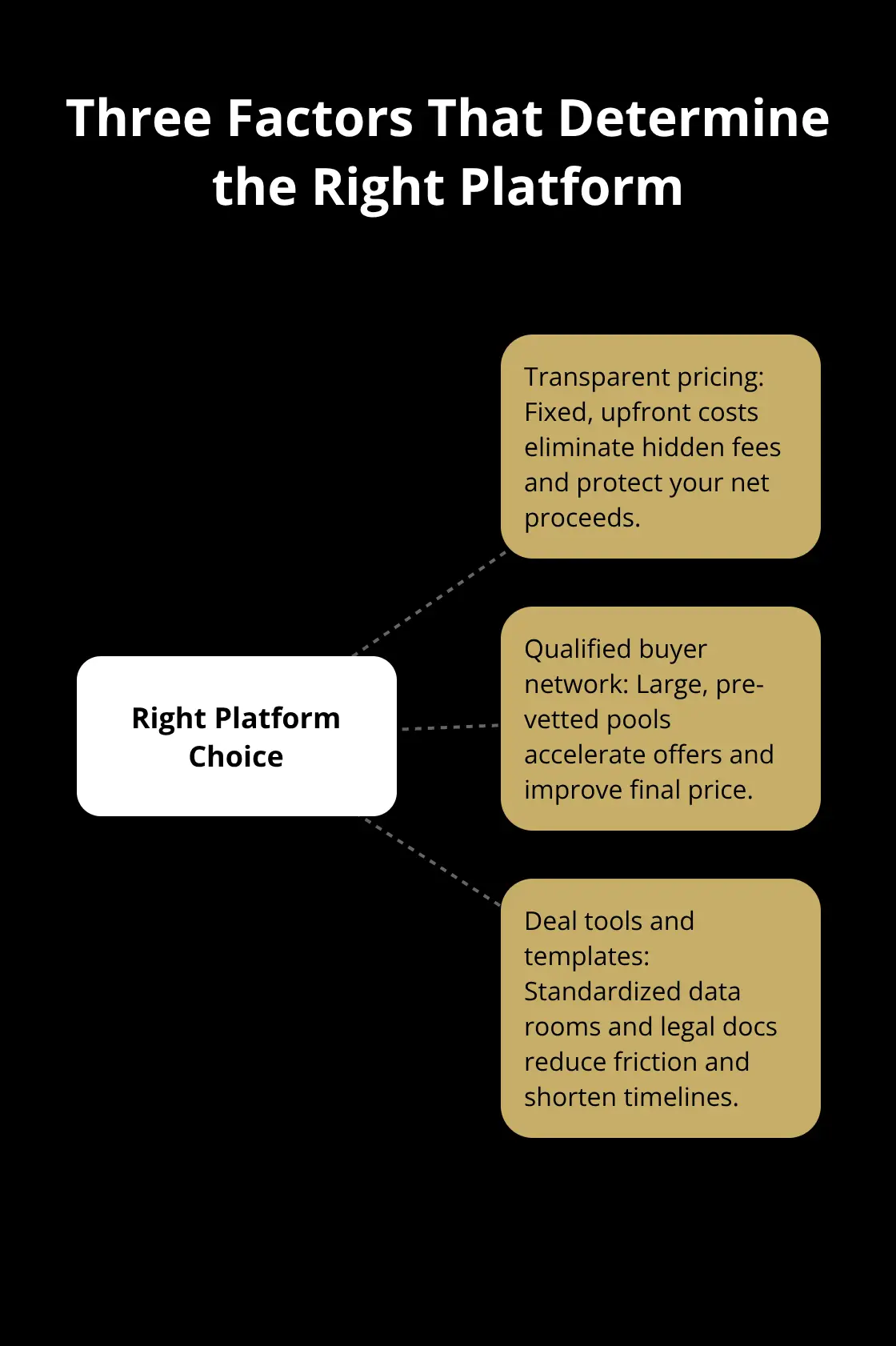
Knowing the difference between traditional brokers and modern platforms is one thing. Actually evaluating which platform works for your specific exit is another. Most founders waste time comparing surface features when they should focus on three concrete factors that determine whether you’ll regret your choice months from now.
Pricing Transparency Eliminates Hidden Traps
Pricing transparency eliminates hidden traps because hidden fees are where founders get trapped. A platform that charges a straightforward 6% success fee, paid only when your business sells, lets you calculate your exact net proceeds before you commit. Compare this to a broker quoting 10% commission with vague language around escrow and legal fees, and you’ll see why transparency eliminates the guesswork. Traditional brokers bury additional costs throughout the sale process-escrow fees, legal document charges, and consulting time only surface during negotiations, inflating your total cost well beyond the stated percentage. Modern platforms operate with transparent pricing that protects your margin and lets you know exactly what you pay before discovering additional charges at closing.
Buyer Network Size Drives Offer Velocity
Buyer network size drives how many qualified offers you receive and how quickly. Online platforms consistently sell faster than traditional brokers for most small and mid-sized businesses, which means your listing gets exposure to a vastly larger audience than any single broker’s relationships could provide. A platform’s buyer network size directly correlates to offer velocity and final price, so ask for concrete numbers on active buyers in your category before signing up. Traditional brokers maintain relationships with a handful of repeat buyers and often work exclusively, meaning your deal sits with one firm while competitors expose their businesses to thousands of prospects simultaneously. Modern platforms remove gatekeeping-you interact only with pre-qualified prospects, which cuts through noise and accelerates serious offers.
Tools and Templates Reduce Friction
Tools and templates reduce friction during due diligence and negotiations. Standardized legal document templates, data room structures, and benchmarking tools let multiple buyers evaluate your business simultaneously without requiring a broker to intermediate every conversation. Modern platforms provide premium marketing materials, legal document templates, and negotiation assistance that traditional brokers reserve for their highest-value deals. You also gain access to vast buyer networks enhanced by AI-driven processes, which surfaces qualified prospects you’d never reach through a single broker’s rolodex. Confidentiality protections and satisfaction guarantees reduce your risk if the sale stalls or terms shift unexpectedly.
How to Evaluate Platforms Effectively
When you’re evaluating platforms, request a sample data room structure and review the legal templates they provide. Ask how the platform handles buyer qualification so you’re not fielding inquiries from tire-kickers. Check whether they offer marketing materials and listing optimization, since poor marketing kills even good businesses. Verify that pricing is truly fixed with no surprise escrow or legal fees hiding in the fine print. Demand transparency on total cost of ownership, concrete numbers on buyer network size, and evidence of actual tools that streamline the sale process. Avoid any platform that bundles services you don’t need or refuses to quote all-in pricing upfront.
The platforms that survive your evaluation will share one trait: they make their economics transparent and their buyer networks visible. Once you’ve narrowed your options based on these factors, the next step involves understanding which mistakes most founders make during the selection process itself-and how to avoid them.
Common Mistakes When Selecting A Sale Platform
Total Cost of Ownership Trips Up Most Founders
Most founders calculate total cost of ownership incorrectly and pay the price for it. A founder sees a platform charging 8% commission and compares it to another charging a lower headline rate, then picks the second option thinking they’ve saved thousands. What they miss is that the lower-rate platform might tack on charges for escrow, legal document preparation, data room setup, and buyer qualification services. Suddenly the all-in cost climbs back up toward that original 8%, quietly eating into the savings they thought they’d locked in on a $1 million exit.
Traditional brokers exploit this confusion deliberately. They quote a headline fee, then layer on additional charges throughout the process when you’re emotionally invested and can’t walk away. Request a complete fee schedule that includes escrow, legal services, marketing materials, data room access, buyer qualification, and any post-close support. Ask the platform to quote a hypothetical $1 million exit with all costs itemized. If they won’t provide this breakdown upfront, that’s a red flag.
Brand Recognition Masks Platform Weakness
The second mistake is choosing based on brand recognition rather than platform capability. A well-known broker name feels safer, but brand reputation doesn’t correlate with faster exits or better prices for small and mid-market businesses. What matters is whether the platform actually connects you with qualified buyers in your category, provides tools that reduce friction during due diligence, and handles legal documentation without delays.
Test the platform’s data room interface yourself. Review their legal templates. Ask how many active buyers they have in your specific business category. Request a sample listing to see whether their marketing materials actually showcase your business effectively. These factors determine your exit timeline far more than the broker’s reputation does.
Platform Features Directly Impact Your Timeline
The third mistake is ignoring platform features entirely and assuming all sale platforms operate identically. They don’t. Some platforms offer AI-driven buyer matching that surfaces prospects you’d never find through manual outreach. Others provide benchmarking data showing what similar businesses sold for, which strengthens your negotiating position. Many platforms now include standardized legal templates and data room structures that compress timelines from months to weeks.
Platforms lacking these tools force you to build infrastructure yourself or hire consultants to fill the gaps, which erodes your savings. Spend 30 minutes testing each platform’s core features before you commit. Check whether they offer marketing materials and listing optimization, since poor marketing kills even good businesses. Verify that pricing is truly fixed with no surprise escrow or legal fees hiding in the fine print. Avoid any platform that bundles services you don’t need or refuses to quote all-in pricing upfront.
Final Thoughts
Selecting the right business sale platform comes down to three concrete factors: transparent pricing that eliminates hidden costs, access to a qualified buyer network that accelerates your timeline, and tools that reduce friction during due diligence. Most founders waste time comparing brand reputation when they should focus on total cost of ownership, actual buyer network size, and whether the platform provides the infrastructure to close faster.
The mistakes that cost founders money are predictable-calculating fees incorrectly, choosing based on brand alone, and ignoring platform features that directly impact your exit timeline.
Modern platforms deliver value by removing the traditional broker model entirely. Instead of paying 8-12% commission plus buried fees, you access transparent pricing with a single 6% success fee paid only when your business sells. Instead of waiting months for a single broker to find buyers, you gain exposure to vast networks enhanced by AI-driven matching. Instead of hiring consultants to build data rooms and legal templates, the platform provides these tools as standard infrastructure.
Your next step is straightforward: request complete fee schedules from platforms you’re considering and ask them to quote a hypothetical exit with all costs itemized. Test their data room interface and review their legal templates, then ask for concrete numbers on active buyers in your business category. If you’re ready to explore a modern approach to selling your business, visit Unbroker to see how transparent pricing and AI-driven buyer networks can accelerate your exit.