Selling your business quietly is harder than it sounds. The moment word gets out, employees start updating their resumes, customers question their contracts, and competitors circle like sharks.
At Unbroker, we’ve seen how a confidential business sale protects what makes your company valuable while still attracting serious buyers. The right approach keeps your leverage intact and your options open.
Why Confidentiality Protects Your Leverage
Losing control of your sale narrative costs real money. When information leaks before you’re ready, employees panic and start job hunting, customers delay renewal decisions, and competitors learn exactly what you’re selling and for how much. The financial impact is immediate and measurable. Studies on mergers and acquisitions show that uncontrolled disclosure can reduce deal value because buyers sense desperation and adjust their offers downward. Your competitive position weakens the moment word spreads. Suppliers may tighten payment terms, key talent receives recruitment calls from interested parties, and your negotiating position shifts from strength to vulnerability.
Trade Secrets Are Your Hidden Assets
Your business holds information that competitors would pay to access: customer acquisition costs, retention rates, supplier relationships, pricing strategies, product roadmaps, and operational workflows. These details form the foundation of your valuation. Once disclosed publicly, they lose protection and value. A confidentiality agreement legally binds potential buyers before they see anything sensitive, defining exactly what constitutes confidential information and imposing penalties for misuse or breach. The agreement should specify that recipients cannot disclose the transaction itself, the buyer’s identity, or any sensitive details to third parties. This legal framework isn’t just paperwork-it’s your enforcement mechanism if someone talks out of turn. Without it, you have no recourse and no leverage.
Employees Need Information Control, Not Rumors
Your team’s productivity and loyalty depend on clarity, but early disclosure creates the opposite. When employees hear through office gossip that the company might sell, turnover accelerates dramatically. People start interviewing elsewhere, productivity drops, and institutional knowledge walks out the door. The solution isn’t silence-it’s controlled disclosure at the right moment with the right message. Many owners wait until a deal is substantially finalized before they tell employees, then frame the transition positively with details about job security, new opportunities, and timeline. This approach preserves operations while your team adjusts. Customer relationships follow the same principle. Long-term contracts often include change-of-control provisions that allow customers to renegotiate or exit if ownership transfers. Rumors trigger these reviews early. Keeping the process confidential until terms are locked prevents customers from using a potential sale as leverage to demand better rates or concessions they wouldn’t otherwise request.
How Information Leaks Damage Your Position
Uncontrolled disclosure shifts power to the buyer. Once word spreads that you’re selling, interested parties know you face pressure to close a deal. They lower their offers, knowing you have limited alternatives. Employees who learn about a potential sale through rumors rather than official channels lose confidence in leadership. This uncertainty causes your best people to explore other opportunities before the transition even happens. Customers who hear rumors about ownership changes start questioning the stability of their supplier relationship. They may accelerate contract reviews or demand price reductions as protection against unknown risks. Competitors gain intelligence about your business model, customer base, and financial performance-information they can use to poach clients or undercut your market position.
Controlling the Information Flow Preserves Value
The timing and scope of what you reveal determines your negotiating strength. In the initial stage, share only high-level information (industry, location, general financial health) without revealing ownership details or specific numbers. Once a potential buyer signs a confidentiality agreement and demonstrates serious interest, you can share deeper financials and operational details. Full disclosure, including ownership structure and employee information, happens only in the final negotiation stage. This phased approach protects your business while allowing qualified buyers to assess the opportunity. A professional intermediary (such as a business broker or modern platform) serves as a buffer between you and potential buyers, keeping communication confidential and strategically controlled.
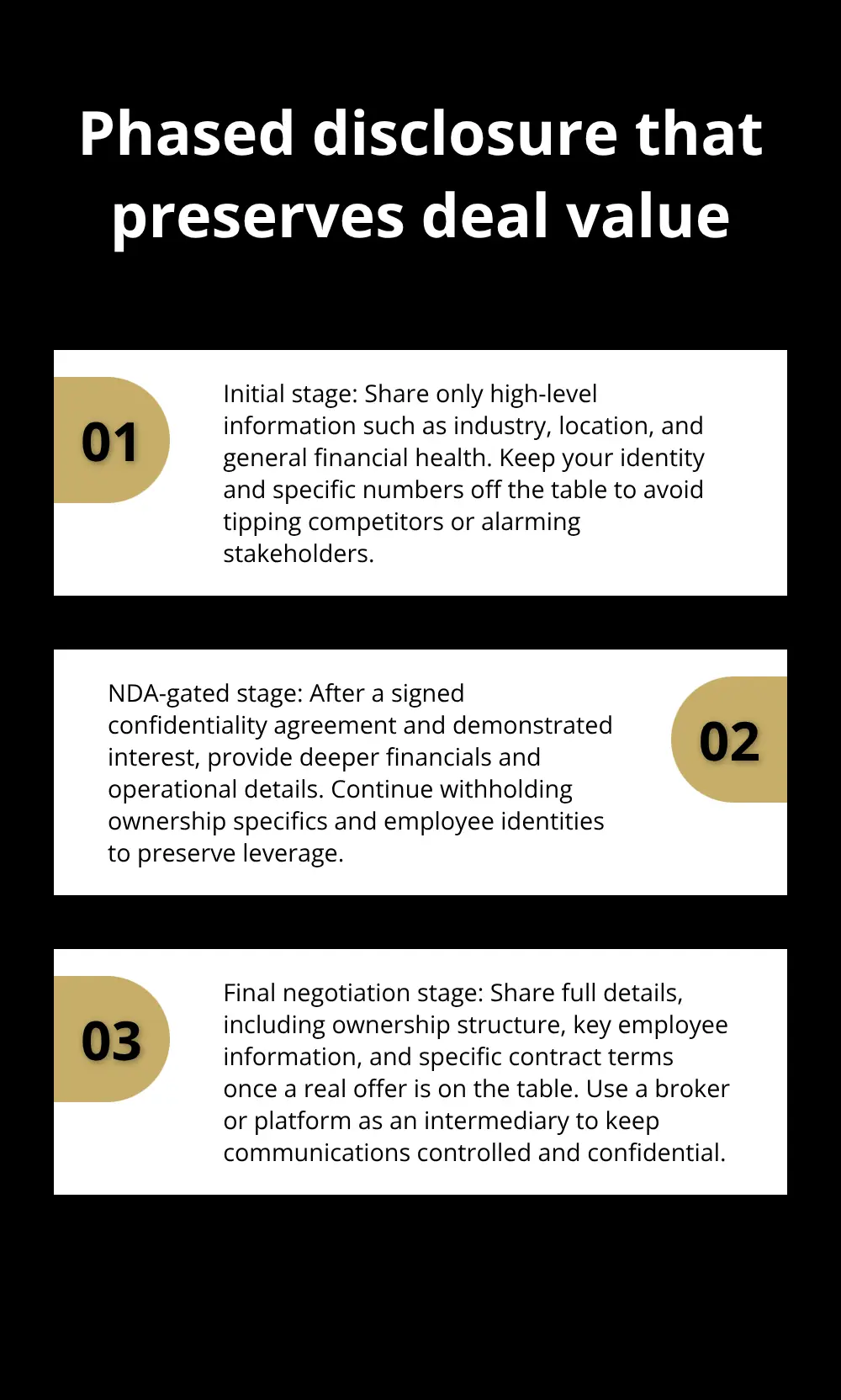
This separation maintains your leverage and reduces the risk that sensitive information reaches the wrong people.
The next step in protecting your sale involves the specific tools and agreements that keep information secure while attracting serious buyers.
How to Protect Your Deal From Leaking
Set Up a Non-Disclosure Agreement Before Sharing Anything
A non-disclosure agreement is your first line of defense, and you must have it in place before you share anything sensitive. The agreement should define what counts as confidential information with specificity: customer lists, financial data, pricing strategies, supplier agreements, product roadmaps, and operational workflows. It must explicitly prohibit the recipient from disclosing the transaction itself, the buyer’s identity, or any sensitive details to third parties. You should also require that anyone at the buyer’s organization who accesses your information remains bound by the same confidentiality obligations. Most agreements specify a term of five years, though some sectors move faster and benefit from shorter periods. Include an indemnity clause so the buyer covers losses if they breach the agreement, and specify that violations allow you to seek injunctive relief immediately rather than waiting for a lawsuit to resolve. Courts recognize that monetary damages alone won’t compensate for trade secret theft, so the ability to stop unauthorized disclosure matters more than damages language.
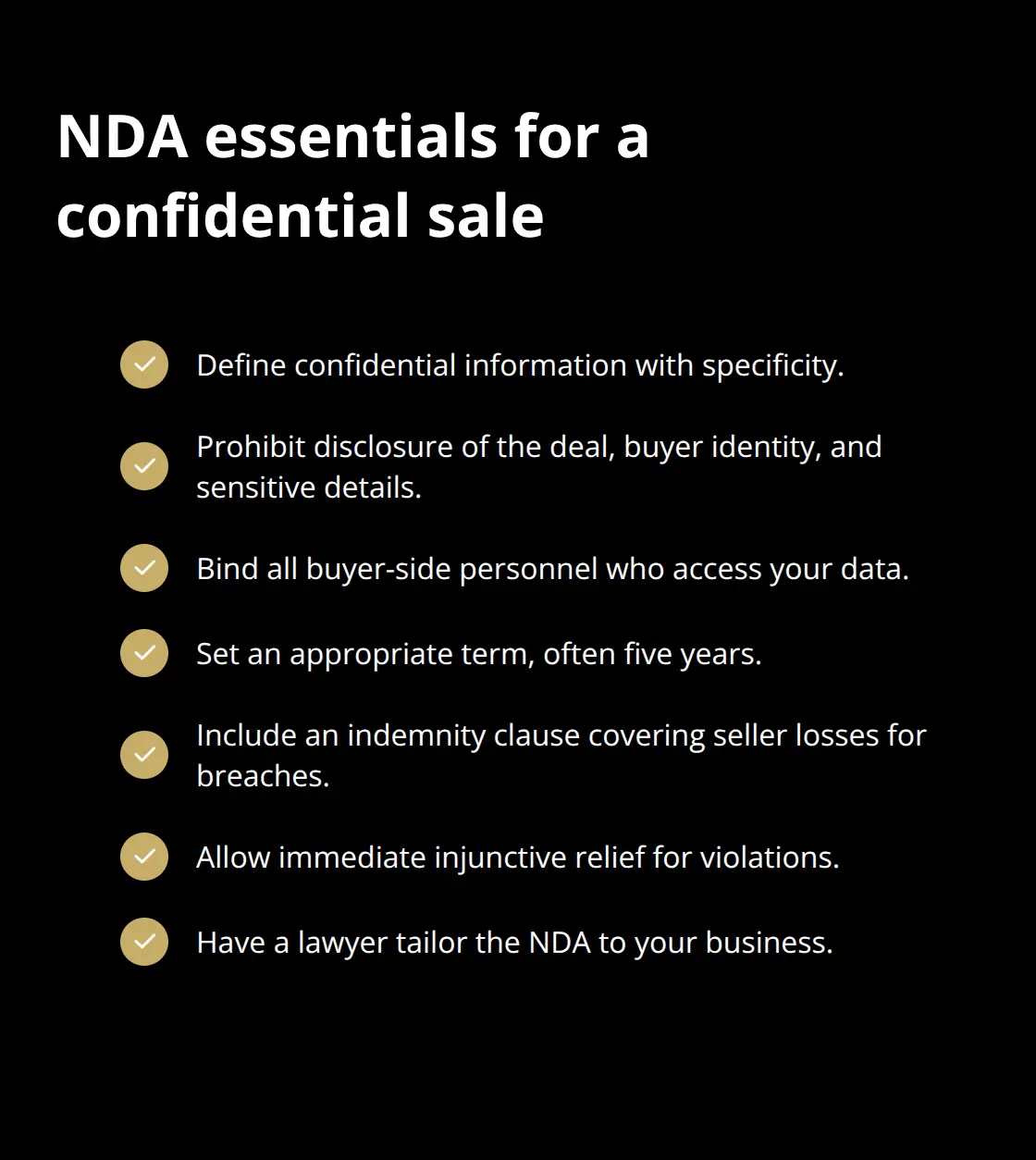
Work with a lawyer to customize the agreement rather than using a generic template, because your specific business details and concerns need protection tailored to your situation.
Control Information Timing to Win Negotiations
Information timing in business negotiations wins deals. Start with anonymous marketing that attracts serious buyers without revealing your identity, sharing only industry sector, general location, and high-level revenue range. Once a prospect demonstrates genuine interest and signs the confidentiality agreement, move to deeper financial statements, customer concentration data, and operational metrics. Reserve final disclosure of ownership structure, key employee names, and specific contract terms for the negotiation stage when a buyer has made a real offer. A professional broker or modern platform serves as your intermediary and keeps this information flow controlled and confidential, preventing the information leakage that comes with direct contact. The broker or platform handles communication, screens buyers for financial capability and industry fit, and manages the staggered disclosure process. This separation protects your operational security and ensures that only qualified, serious buyers access sensitive data.
Use Technology to Limit Exposure
Platforms with AI-driven buyer matching reduce the number of prospects who need to see your information in the first place, limiting exposure to people most likely to close. This targeted approach means fewer people handle your sensitive data, which lowers the risk that information reaches competitors or the wrong parties. A modern platform also creates a documented record of who accessed what information and when, making it easier to detect leaks early if they occur. The next step involves presenting your financial information strategically while maintaining the confidentiality protections you’ve established.
How to Present Your Business Without Giving Away the Store
Buyers expect to see financial proof before they commit, but showing too much too soon hands them negotiating leverage they shouldn’t have. The strategy is selective transparency: you reveal enough to demonstrate value and profitability while protecting operational details that competitors could weaponize.
Start With Numbers That Matter
Serious buyers focus on consistent revenue, profit margins, and growth trajectory over the past three to five years. Present this data in clean summaries rather than raw accounting records. A buyer evaluating your business wants to see that revenue grew 15 percent year-over-year and operating margins sit at 22 percent, not every single transaction and expense line item. This approach shows strength without exposing the customer acquisition costs or supplier contracts that form your competitive moat.
When you move to deeper financial discussions, frame numbers around what the buyer cares about: recurring revenue, customer lifetime value and churn rates. These metrics tell a buyer whether your business generates predictable income and whether customers stay long-term. If your business retains 85 percent of customers annually, that signal demonstrates your product or service solves real problems and creates switching costs.
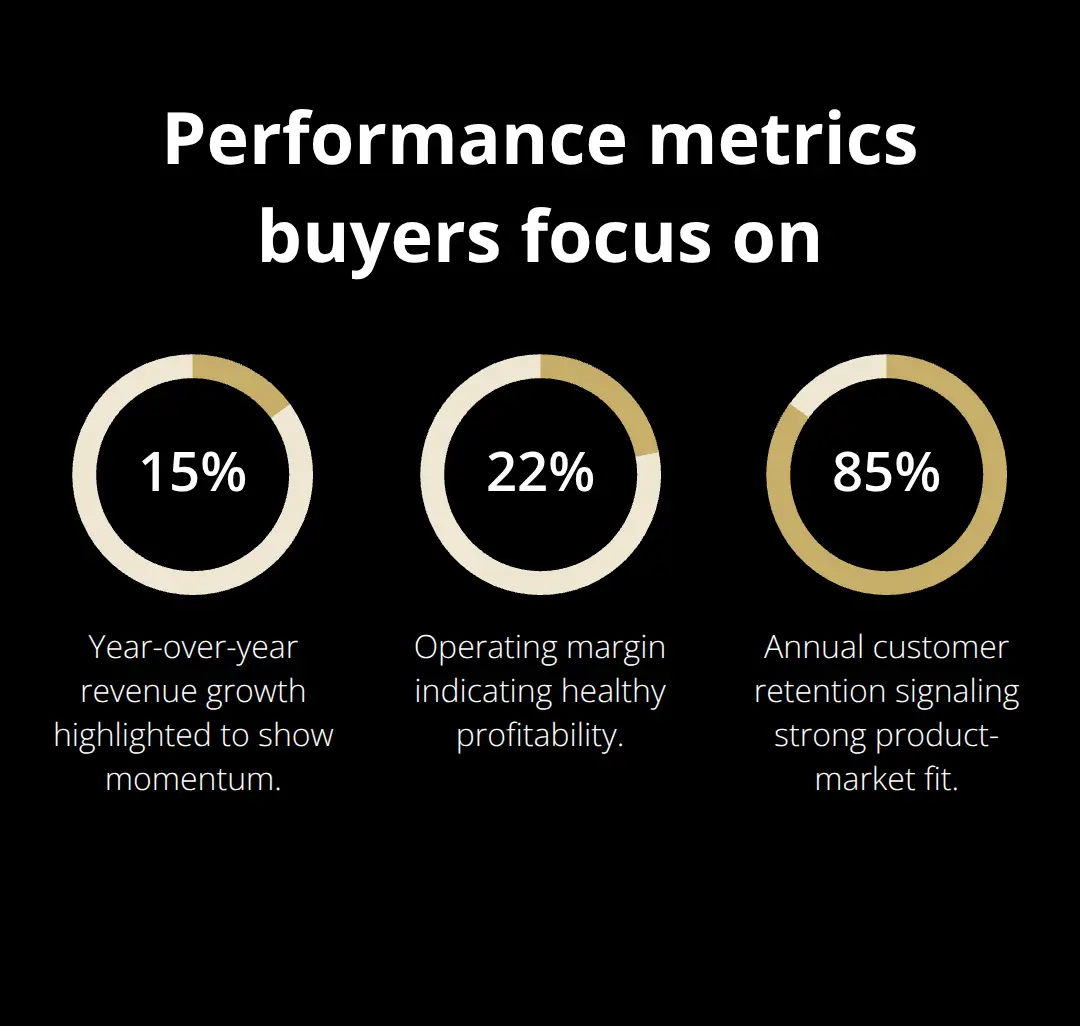
Emphasize this rather than revealing the specific pricing model or discount structure you use to retain them.
Invest in Professional Financial Statements
Financial statements prepared by a CPA or auditor carry more weight than owner-prepared statements because buyers trust third-party verification. The cost of a reviewed financial statement typically ranges from $3,000 to $8,000 depending on complexity, but this investment pays for itself through faster due diligence and stronger justification for your asking price. Buyers move faster and negotiate less aggressively when they see professional-grade financials because the documentation reduces their perceived risk.
Highlight Competitive Advantages Without Exposing Tactics
Your unique assets and operational advantages matter more than revealing how you built them. If you’ve developed proprietary software, customer relationships, or market positioning that competitors can’t easily replicate, highlight the competitive advantage without exposing implementation details. Tell a buyer that your customer retention rate demonstrates strong performance-a statistic that signals value-but don’t explain the specific retention tactics or customer communication workflows that create it. The same principle applies to supplier relationships, brand positioning, and operational efficiencies. A buyer invests in outcomes, not in copying your playbook.
Access Qualified Buyers Through Confidential Networks
When you work through a confidential buyer network (whether through a professional broker or a modern platform), you gain access to qualified prospects who’ve already been screened for financial capability and industry fit. This targeted exposure means your information reaches people with genuine purchase intent rather than spreading widely to competitors and casual browsers. Platforms using AI-driven matching further narrow the field by identifying buyers whose strategic goals align with your business profile, reducing the number of people who need sensitive data access. The result is faster deal closure, fewer information leaks, and stronger negotiating positions because you’re talking to serious contenders rather than tire-kickers.
Filter Buyers Through Commitment Signals
Buyers in confidential networks expect limited initial disclosure and understand that deeper financial access comes only after they’ve demonstrated real commitment through signed agreements and formal offers. This creates a natural filtering mechanism where only qualified buyers invest time in the process, and you spend your energy on conversations with people likely to close.
Final Thoughts
A confidential business sale succeeds when you balance protecting sensitive information with building buyer confidence. Information control determines your negotiating strength, and leaks cost money through lower offers, employee turnover, and customer uncertainty. Strategic disclosure builds trust with serious buyers without exposing trade secrets or operational vulnerabilities.
The core principle is simple: share what matters to valuation, withhold what matters to competition. Buyers need proof of revenue, profitability, and growth trajectory, but they don’t need your customer acquisition playbook, supplier contracts, or pricing mechanics. Professional financial statements, confidentiality agreements, and phased information release accomplish both goals simultaneously. Timing matters as much as content-early-stage prospects see high-level metrics, qualified buyers who sign agreements access deeper financials, and only serious contenders in final negotiations learn ownership structure and employee details.
Managing confidentiality alone takes time and expertise that most owners lack. A professional intermediary removes the burden of direct buyer contact, screens prospects for financial capability, and maintains the information barriers that protect your position. Connect with a platform or broker who understands confidential sales and can execute the process without exposing your business to unnecessary risk.