Selling a business quietly isn’t easy. You need to protect trade secrets, keep employees calm, and avoid spooking customers and suppliers before a deal closes.
At Unbroker, we’ve seen how confidential business listings can make the difference between a smooth sale and a messy one. The right approach keeps your business running normally while you find serious buyers behind the scenes.
Why Confidentiality Protects Your Sale
A leaked sale announcement costs money. When news spreads that your business is on the market, competitors immediately start recruiting your staff, customers begin exploring alternatives, and suppliers tighten credit terms. Built to Sell Radio tracked the typical funnel in discreet sales: roughly 250 potential buyers narrow down to 40 who sign NDAs and about 10 who express serious interest. Without confidentiality controls, that funnel collapses fast. Employees hear rumors and update their resumes.

Key clients call their account managers asking if they should find new vendors. Lenders see instability and demand higher rates or faster repayment. Each of these events chips away at what a buyer will pay. A confidential approach lets your business operate as normal while you vet serious buyers behind the scenes, preserving the perception that nothing has changed.
Trade Secrets Stay Protected
Your pricing models, supplier relationships, customer acquisition costs, and operational processes hold real value only if they remain proprietary. Once competitors or potential acquirers see these details, the advantage vanishes. A strong non-disclosure agreement with clear breach consequences creates legal teeth. Include a clause that restricts contacting customers or employees without written permission. Track all document access with unique IDs so you know exactly who viewed what. Information shared in a secure data room, staged in phases and only to qualified buyers who have signed NDAs and demonstrated serious intent through a letter of intent, minimizes exposure. Share financials or client lists with unvetted prospects, and trade secrets leak.
Employees Perform Better When Kept in the Dark
Staff productivity tanks when rumors spread that the company is being sold. People spend time updating LinkedIn, interviewing elsewhere, or mentally checking out. A confidential process keeps the business running at full capacity. Timing matters here: employees learn about the sale only after the deal is legally certain and funded, typically at or after closing. Until then, a plausible cover story like a strategic partnership or refinancing refinement explains extra workload or your absence. Maintain normal operations during the sale window-this is not optional. Buyers pay premiums for stable, performing businesses. If revenue dips or key people leave before closing, buyers renegotiate aggressively or walk away entirely.
How Information Leaks Destroy Deal Value
Competitors waste no time poaching your best talent once they hear the business is for sale. Customers renew contracts elsewhere or demand better terms from the new owner. Suppliers tighten payment windows or demand cash upfront, straining working capital. Lenders see the transition as a risk event and increase rates or demand faster repayment. These cascading effects reduce what any buyer will offer. A confidential sale prevents this domino effect. Serious buyers expect protection of trade secrets and sensitive financial data. They trust advisors and platforms that maintain strict access controls and staged information release. The moment you share client lists or operational details with unvetted prospects, you lose leverage and invite low-ball offers.
Staged Disclosure Protects Momentum
Information flows in phases, not all at once. Start with high-level data-revenue, EBITDA, industry, and business type-shared through anonymous listings or blind ads that do not reveal your company name. Only after a prospect signs an NDA and demonstrates serious intent (typically through a letter of intent) do you share deeper proprietary information. This staged disclosure approach filters out tire-kickers and keeps your competitive advantages safe. Secure data rooms track who accesses what, creating an audit trail if a breach occurs. Unique identification numbers on each document help you identify the source of any leak. This controlled process balances buyer questions with privacy, allowing you to move forward with genuine prospects while protecting what makes your business valuable.
How to Control Information Flow in a Discreet Sale
Selling confidentially online means controlling exactly who sees what and when. The mechanics matter more than the philosophy. Start with anonymous listings that describe your business type, revenue range, and industry without naming the company or revealing contact details. Use a separate non-business email address and anonymous phone line for initial inquiries. Most listing platforms offer identity-protecting features that hide your business name until you decide to reveal it. This initial screening filters out tire-kickers and competitors fishing for intelligence. Those who remain serious enough to ask follow-up questions warrant further vetting. The goal is simple: gauge genuine buyer interest before exposing your identity or sensitive data.
Strengthen Access Controls with Staged Data Release
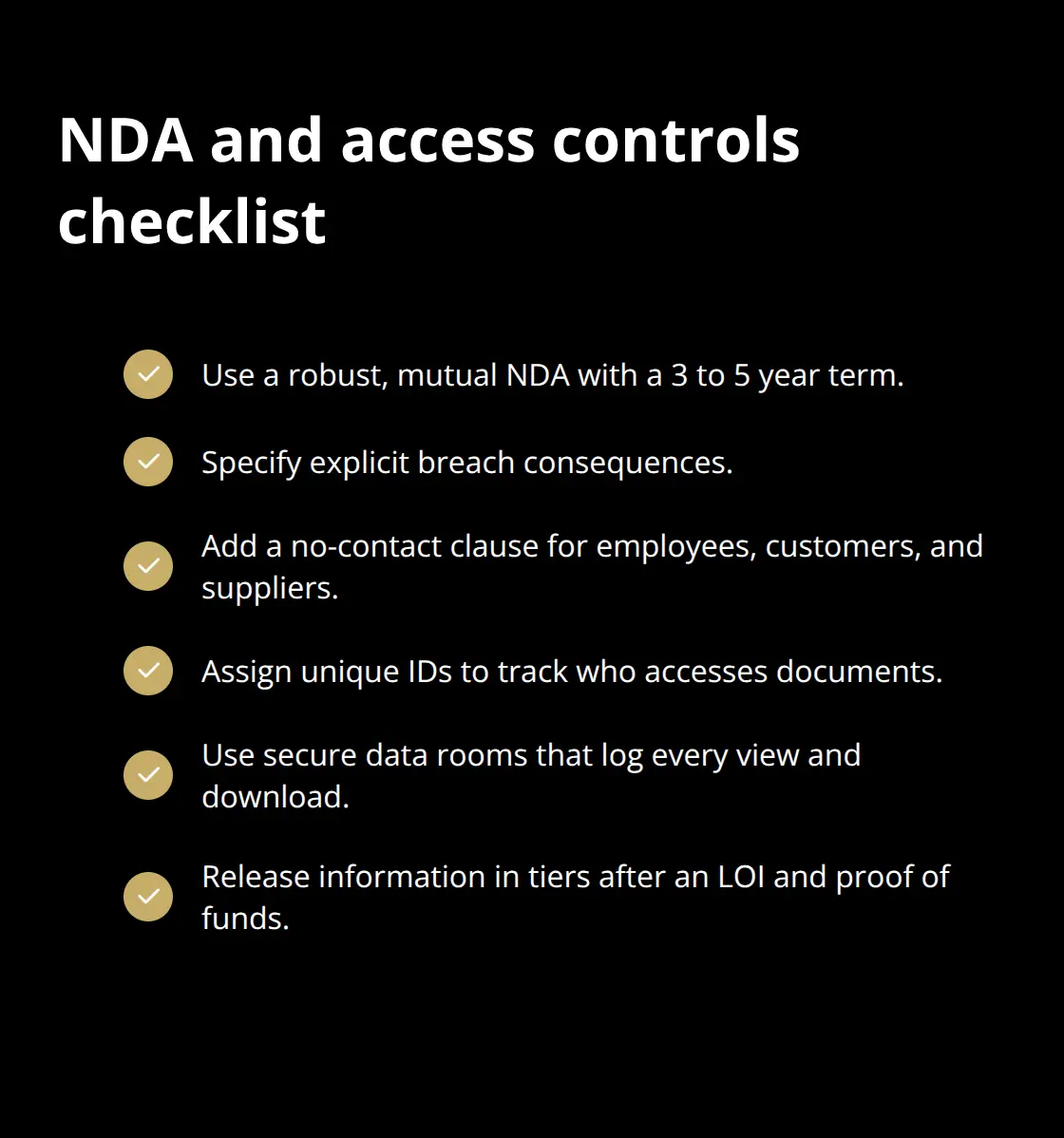
Once a prospect signs a non-disclosure agreement and submits proof of funds, move to the next phase. A signed letter of intent must precede any sharing of proprietary information like client lists, supplier contracts, or operational procedures. The NDA itself must be robust and mutual, with a 3 to 5 year expiration date and explicit consequences for breach. Include a no-contact clause that restricts the buyer from reaching out to your employees, customers, or suppliers without written permission. Track document access through unique identification numbers assigned to each prospect, so if confidential information leaks, you know who accessed what. Secure data rooms accomplish this automatically, logging every download and view.
Information flows in tiers: high-level financials first, then operational details, then trade secrets only after an LOI is signed and the buyer has demonstrated serious intent through financial verification.
Meet Off-Site and Limit Internal Involvement
Never conduct meetings at your place of business. Meet at a neutral location like your accountant’s office, attorney’s office, or a broker’s facility. This separation protects your daily operations and prevents staff from noticing unusual activity. Involve as few employees as possible in due diligence. If team members must participate, explain the confidentiality risks explicitly and require them to sign additional NDAs. Weekend facility tours or video calls scheduled outside business hours minimize disruption and reduce the chance that other staff members notice something is happening. Your M&A advisor or business broker should lead these conversations, not you directly. This insulates you from direct contact with prospects and keeps your focus on running the business. A skilled intermediary manages buyer questions, vets financial capability, and screens for red flags like litigation history or past acquisition disputes. The advisor also handles document organization, ensuring each prospect receives only the information appropriate for their stage in the process.
Choose Platforms That Enforce Confidentiality
The platform you select determines how well your data stays protected. Look for services that encrypt sensitive documents, assign unique tracking IDs to each prospect, and maintain audit trails of who accessed what information and when. Platforms with built-in NDA workflows and secure messaging reduce the risk of information leaks through email or phone calls. Some marketplaces offer AI-driven matching systems that pre-qualify buyers before they ever see your listing, filtering for financial capability and serious intent. This pre-screening means fewer unqualified prospects reach you, and fewer people know your business exists. The best platforms also provide legal document templates for NDAs and letters of intent, saving you time and ensuring your agreements meet legal standards. Your choice of platform directly impacts how many people learn about your sale and how tightly you control information access.
Digital Marketplaces and Professional Intermediaries for Confidential Sales
The platform you select determines whether your confidential sale stays secure or falls apart. Digital marketplaces designed specifically for business sales offer encryption, document tracking, and NDA workflows that prevent leaks. Flippa operates a network of roughly 600,000 buyers and investors and reports over 100,000 transactions on the marketplace. Their platform uses unique identification numbers on each document shared with prospects, creating an audit trail if information breaches. Weekly AI buyer matching reaches 425,000 potential acquirers, enabling you to target serious buyers without posting your company name publicly. The Off-Market Deal Sourcing feature powered by LaurenAI lets you source discreet opportunities and initiate contact through direct messaging rather than public listings. This approach filters tire-kickers before they ever see sensitive details.

Flippa also provides a secure Deal Room for private discussions, call scheduling, and due-diligence options, plus an AI-driven valuation calculator that prices your listing appropriately using profit and revenue multiples. Verified Listings help buyers identify legitimate confidential opportunities, reducing risk on both sides. When you need professional support, Flippa’s global broker network includes regional M&A advisors across the US, UK, Philippines, and other markets who specialize in managing confidential transactions.
How Brokers Screen Buyers Before Exposure
Professional intermediaries and business brokers operate differently than marketplaces. They screen buyers directly, conduct reference calls with previous sellers, and perform background checks for litigation history before any prospect sees your business details. A skilled broker verifies proof of funds from serious buyers, confirming they can actually close rather than wasting your time with unqualified prospects. They also negotiate the letter of intent that precedes deeper disclosures, anchoring expectations on price and timeline before due diligence starts. The advantage of working with a broker or advisor is that they handle initial conversations, protecting you from direct contact with unvetted prospects and keeping your focus on running the business.
Document Organization and Tracked Access
Brokers organize documents systematically, assign unique tracking IDs to each prospect, and manage the staged information release that protects your trade secrets. They maintain secure systems that log every download and view, creating proof of who accessed what information and when. This documentation becomes critical if a breach occurs-you can identify the source immediately and take legal action. Brokers also handle the mechanics of information flow, releasing high-level financials first, then operational details, then trade secrets only after an LOI is signed and the buyer demonstrates serious intent through financial verification.
Unbroker’s Transparent Approach to Confidential Selling
Unbroker combines transparent, low-cost options with confidential selling support. The Full Service Business Sale charges a 6% success fee, paid only when your business sells, and handles hands-off selling from start to finish. Both services promise confidentiality, no hidden fees, and access to a vast buyer network enhanced by AI-driven processes. You receive premium marketing tools, legal document templates, negotiation assistance, and a satisfaction guarantee. The platform eliminates high brokerage fees while maintaining the security protocols that protect your sensitive information.
Selecting the Right Platform for Your Needs
Whether you choose a marketplace, a broker, or a combination, the key is selecting a platform or advisor with proven confidentiality protocols, encrypted document sharing, and audit trails that prove who accessed what information and when. Look for services that assign unique tracking IDs to each prospect, maintain secure messaging systems, and provide legal document templates for NDAs and letters of intent. The best platforms also offer AI-driven buyer pre-screening that filters for financial capability and serious intent before prospects ever see your listing. This reduces the number of unqualified buyers who learn about your sale and tightens control over information access. Your choice of platform directly impacts how many people learn about your business and how securely you can manage the entire transaction.
Final Thoughts
Confidential business listings protect what matters most: your competitive position, your team’s stability, and your deal value. You control who sees what and when through staged disclosure, secure platforms, and strong NDAs. You meet off-site, involve minimal staff, and let intermediaries handle buyer screening. You track document access with unique IDs and release sensitive information only after prospects sign agreements and prove financial capability.
Modern platforms have simplified the process considerably. Marketplaces like Flippa offer encrypted document sharing, AI-driven buyer matching, and secure deal rooms that automate confidentiality controls. Professional brokers add human judgment, conducting reference checks and background screening before any prospect learns your company name. Both approaches eliminate the guesswork and reduce the risk that information spreads to competitors, employees, or suppliers before you’re ready.
When your business appears stable and performing well, buyers pay more. Confidentiality preserves momentum and protects the perception that nothing has changed, which is exactly what serious buyers want to see. We at Unbroker understand that selling your business confidentially shouldn’t require paying traditional brokerage fees or sacrificing control-our platform combines transparent pricing with the security protocols that protect your sensitive data. Start your confidential sale with Unbroker and explore how modern, low-cost selling works in practice.