Selling a business privately keeps your sale out of the public eye, protecting your operations and relationships while you negotiate. At Unbroker, we’ve seen how discretion changes the outcome-fewer disruptions, stronger employee confidence, and better control over your company’s story.
The right approach to a private sale requires strategy, not just secrecy. We’ll walk you through the practical steps that work.
Why Private Sales Protect Your Business Value
Selling privately stops information leaks that damage your company before negotiations even begin. When word spreads that your business is for sale, customers start questioning their contracts, employees update their resumes, and competitors circle like sharks. A study from Built to Sell Radio found that in a typical discreet sale process, starting with 250 potential buyers, only about 40 sign NDAs and roughly 10 express serious interest. That dramatic funnel happens because confidentiality works. The moment your sale becomes public knowledge, you lose control of the narrative entirely. Employees hear rumors and productivity drops. Suppliers demand better terms or payment upfront. Customers wonder if they should find alternatives. Your leverage evaporates.

A private sale lets you control exactly who knows what and when they know it. You decide the timing of any announcement, which means you frame the transition on your terms, not through office gossip or industry chatter.
The Real Cost of Information Leaks
Information leaks destroy deal momentum faster than almost any other factor. When competitors learn you’re selling, they may poach your best people with counter-offers. Customers who hear rumors might accelerate contract renewals elsewhere to avoid uncertainty. Creditors may tighten terms or demand payment guarantees. These cascading problems don’t just slow your sale-they reduce what buyers will pay. A private approach lets you move through early conversations with qualified prospects before anyone outside your circle knows anything happened. You screen buyers carefully, require signed NDAs before sharing sensitive details, and control the information flow in stages. This staged disclosure means you only reveal financial records, client lists, and trade secrets to buyers who have already demonstrated serious intent and financial capacity. That’s the opposite of a public market listing where anyone can access your information and spread rumors.
Managing Your Team Through a Discreet Sale
Your employees deserve stability, not anxiety. A private sale gives you the option to keep the process quiet until key terms are finalized, which prevents months of uncertainty that tanks morale and causes departures. When you eventually announce the sale, you can frame it as a planned transition to a buyer who shares your values and vision, not as a desperate scramble to exit. This matters enormously because your management team and top performers represent real value to any buyer. If your best people jump ship during a protracted public sale process, you’ve just handed the buyer a weaker business. A private approach lets you protect that human capital. You can involve a trusted senior manager or two in early conversations, bind them with NDAs, and prepare them for the transition before general staff finds out. That preparation window prevents panic and keeps operations running smoothly. When the announcement finally comes, your team hears it directly from you with context about continuity and next steps, not through leaked emails or industry gossip.
Preparing for the Next Steps in Your Private Sale
You now understand why confidentiality protects your business value and your people. The real work begins when you identify which buyers to approach and how to structure those conversations without triggering leaks. The next section walks you through the practical mechanics of executing a private sale successfully.
How to Execute a Private Sale Without Losing Control
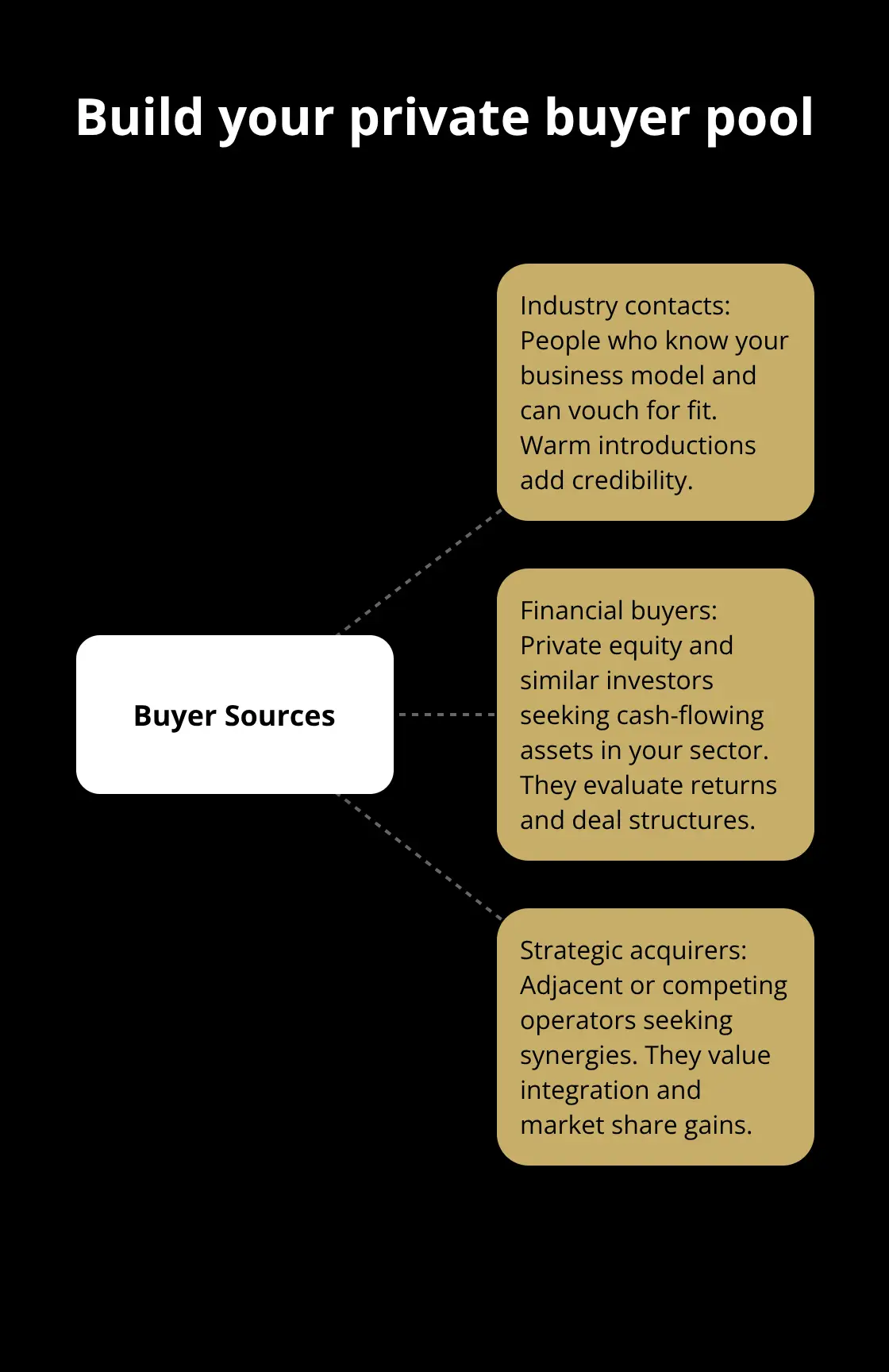
Starting a private sale means identifying the right buyers before anyone else knows your business is available. The quality of your buyer pool determines everything-price, speed, and whether your sale stays confidential. Build your initial list from three sources: industry contacts who understand your business model, financial buyers looking for cash-flowing assets in your sector, and strategic acquirers who compete in adjacent markets.
According to research from Built to Sell Radio, a typical private sale process begins with 250 potential buyers, narrows to 40 who sign NDAs, and further contracts to 10 expressing serious interest. That funnel works because you screen for fit and financial capacity simultaneously.
Map your network ruthlessly. Who has bought similar businesses? Which competitors have acquisition budgets? What private equity firms focus on your industry? LinkedIn and industry databases help, but direct introductions from your accountant, lawyer, or trusted advisors carry more weight because they come with credibility. Once you identify 15 to 25 serious candidates, reach out through a trusted intermediary rather than directly from your company. An advisor or broker can field inquiries and describe your business type without mentioning your company name, preserving anonymity in these early conversations. This separation matters because if a prospect isn’t serious, they’ll never know your identity.
Protect Information With Real NDAs
Non-disclosure agreements aren’t optional paperwork-they’re your legal shield against leaks. Many sellers skip this step or use weak templates, then wonder why their sale details spread through their industry. A proper NDA must include mutual confidentiality obligations, an explicit expiration date (typically three to five years), and clear consequences for breach.
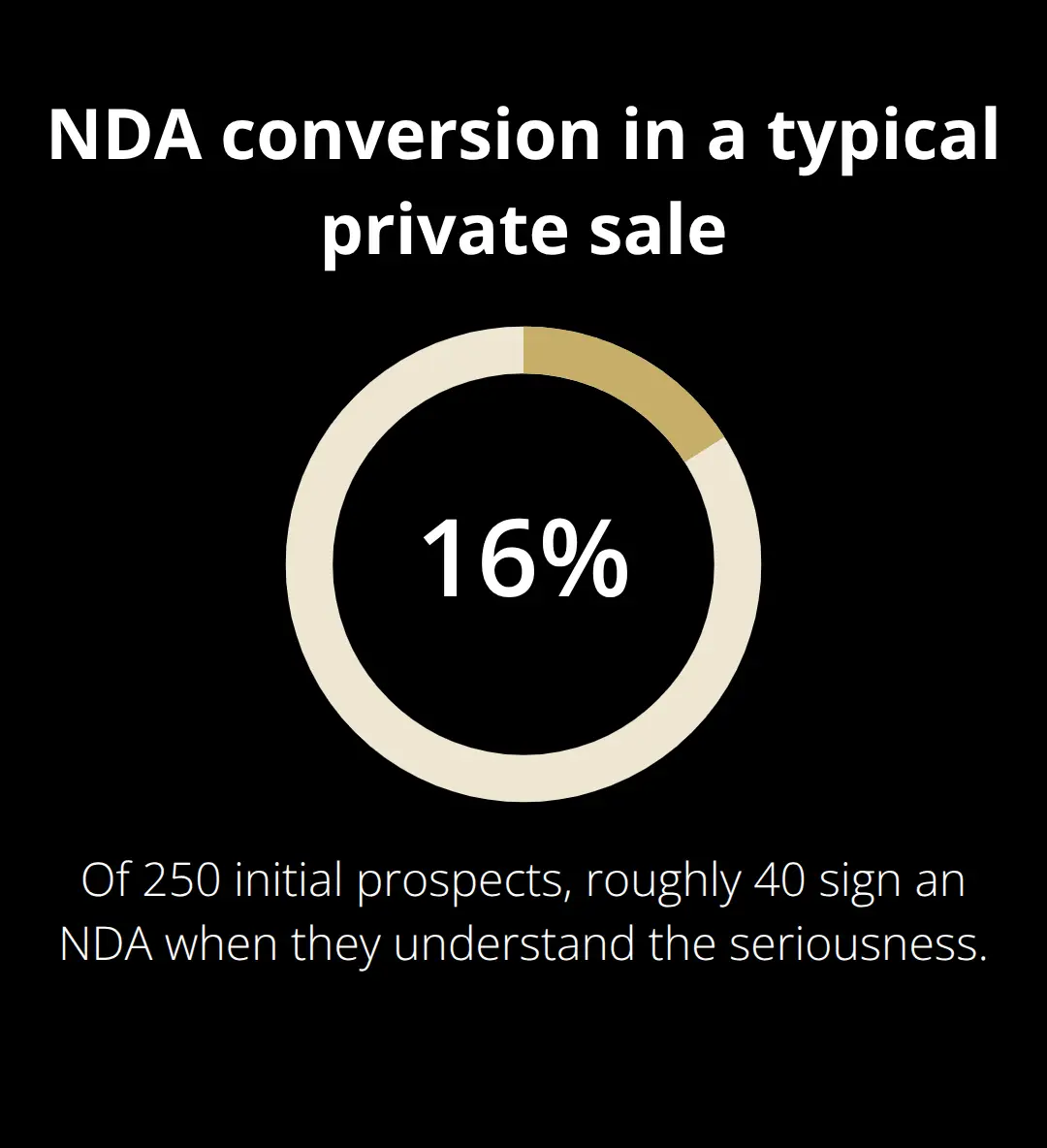
Before you share any financial data, client lists, or operational details, every prospect signs the NDA. Built to Sell Radio data shows that of 250 initial prospects, roughly 40 will sign an NDA when they understand the seriousness. That 16 percent conversion rate filters out tire-kickers immediately. The NDA should also specify that the prospect cannot contact your customers, employees, or suppliers without explicit written permission.
This clause prevents buyers from running their own due diligence outside your controlled process.
Use a tracking system with unique identification numbers for each document and buyer, so you know exactly who accessed what information and when. Store sensitive materials in a secure digital data room rather than emailing PDFs. Your lawyer should draft or review your NDA before you use it, but templates from BizBuySell provide solid starting points if you’re cost-conscious. The investment in proper legal documentation prevents far costlier problems later.
Work With Advisors Who Protect Your Interests
Selling alone is possible but risky. An experienced M&A advisor or business broker who specializes in discreet sales handles the screening, manages information flow, and negotiates on your behalf-all while maintaining confidentiality. They’ve built relationships with qualified buyers, understand market dynamics, and know how to structure conversations to maximize your leverage. A seasoned M&A professional minimizes leak risk by controlling who talks to whom and what gets disclosed at each stage. They also handle the emotional weight of negotiation. Sellers often make concessions when they’re tired or frustrated; advisors keep discussions rational and focused on your financial and legacy goals.
When you select an advisor, ask specifically about their confidentiality track record and how they’ve handled discreet sales. Do they have experience in your industry? Have they maintained confidentiality for other sellers? What’s their buyer network size and quality? An advisor with shallow connections or a reputation for loose lips will hurt you.
Choose an advisor or platform aligned with your priorities: speed, price, or confidentiality. Most sellers prioritize confidentiality first, then negotiate the other two variables. Whether you work with a traditional M&A firm or a modern platform, the right partner handles the mechanics of buyer outreach so you can focus on running your business through the sale process.
Move From Screening to Serious Conversations
Once you’ve identified qualified prospects and secured signed NDAs, you transition from anonymous outreach to substantive discussions. The prospects who sign NDAs have already demonstrated seriousness-they’ve committed to confidentiality and shown enough interest to take a legal step. Now you share more detailed information through your secure data room, including financial statements, operational metrics, and client composition.
At this stage, an advisor becomes invaluable. They conduct initial phone conversations with interested buyers, answer preliminary questions, and gauge whether each prospect has the financial capacity and strategic fit to move forward. These conversations happen off-site, never at your business location. Your advisor protects your identity longer in these early calls, using code names or generic descriptions if needed. Only after a prospect demonstrates serious intent and financial credibility do you meet face-to-face, and even then, meetings happen at your advisor’s office, your accountant’s office, or your attorney’s office-anywhere but your company. This staged approach keeps your business running normally while you explore options with qualified buyers who’ve already committed to confidentiality. The next section covers what happens when multiple buyers express serious interest and you must navigate offers and negotiations without losing control of the process.
Common Pitfalls in Private Business Sales
Most sellers who rush a private sale do so because they’re exhausted, anxious about leaks, or facing pressure from advisors to close quickly. That urgency is exactly when you accept the first offer that looks reasonable, which is almost always below market rate. A buyer who moves fast typically has leverage they’re using against you. Multiple offers push price up. A single buyer or a rushed process does the opposite. If you accept an offer after talking to only two or three prospects, you leave money on the table. The funnel works because volume creates options. Patience becomes your leverage in a private sale. Set a realistic timeline before you start-typically four to six months for a full process-and stick to it regardless of how eager the first buyer seems.
Vet Buyers With Discipline and Rigor
Vetting buyers properly takes discipline that many sellers skip because it feels tedious compared to the excitement of receiving an offer. You must verify that every prospect has the financial capacity to close, not just the stated interest in buying. Ask for proof of funds, bank statements, or a letter from their financial advisor confirming they can access the purchase price. A serious buyer will provide this without hesitation. If they dodge the question or claim it’s premature, they’re not ready. You should also investigate whether their stated intentions align with your legacy. A buyer who plans to immediately cut costs, lay off your team, or gut the company culture is a bad fit even if they offer top dollar. Conduct reference calls with other business owners they’ve acquired. Ask how they treated employees, whether they honored integration plans, and if the sellers would recommend them. These conversations reveal whether a buyer respects what you’ve built. Finally, run a basic background check and search for any litigation history. A buyer with a pattern of lawsuits or failed acquisitions signals trouble ahead. The time you invest in vetting now prevents months of regret after closing.
Secure Legal Documentation Before Sharing Sensitive Information
Neglecting legal work during a private sale costs sellers far more than they save. Your NDA must be ironclad, but equally important is the letter of intent that precedes the purchase agreement. A letter of intent should specify binding obligations around confidentiality, exclusivity, and timeline, plus non-binding terms about price and structure. Many sellers skip the LOI entirely and move straight to a purchase agreement, which creates ambiguity and negotiation chaos. Insist on a written LOI before you share proprietary information, client lists, or trade secrets. The LOI also locks in a timeline for due diligence and closing, which prevents a buyer from dragging out the process indefinitely while they extract information from you.
Address Tax Implications Early With Your Accountant
Tax implications deserve attention before you commit to any deal structure. Depending on how you structure the sale-asset sale versus stock sale, installment payments versus lump sum-your tax liability varies significantly. An accountant who understands M&A should review the deal structure before you sign anything. Some sellers lose thousands because they didn’t anticipate capital gains tax, state taxes, or recapture provisions. Have these conversations with your CPA early, not after you’ve already negotiated terms. Your lawyer should also review non-compete and non-solicitation clauses. If a buyer wants you locked out of your industry for five years, that affects your next move. These legal details feel bureaucratic, but they determine whether you walk away with what you actually negotiated or if loopholes allow a buyer to renegotiate post-closing.
Final Thoughts
A private business sale succeeds when you combine strategy with discipline. The steps we’ve outlined-building a qualified buyer pool, protecting information with real NDAs, involving experienced advisors, and vetting prospects thoroughly-work together to maximize your price while maintaining confidentiality. Speed and secrecy often feel like opposites, but they’re not. A well-executed private sale moves faster than a public listing because you talk to genuinely interested buyers rather than tire-kickers.
The difference between a successful private sale and a frustrating one usually comes down to professional guidance. An advisor who understands your industry, has built relationships with qualified buyers, and knows how to structure conversations protects your interests in ways that DIY sellers struggle to replicate. They handle the emotional weight of negotiation, prevent you from accepting the first offer out of exhaustion, and ensure legal documentation is airtight before you share sensitive information. Whether you work with a traditional M&A firm or a modern platform, the right partner makes the process smoother and typically recovers their cost through better terms.
When you sell a business privately, you control who buys your company, how the transition happens, and whether your team and customers are treated fairly. That control is worth the effort of a structured process. We at Unbroker built our platform specifically for sellers who want transparency, low costs, and confidentiality without traditional brokerage fees, and our Full Service Business Sale and Assisted Business Sale options give you flexibility to choose how much support you need while maintaining complete discretion.