Selling a business involves dozens of moving parts, from financial audits to buyer negotiations. Exit automation tools promise to handle much of this work, but the question remains: how much can actually be handed off to software?
At Unbroker, we’ve seen business owners chase full automation only to hit roadblocks that require human judgment. The truth is somewhere in the middle-and understanding where matters for your sale.
What Gets Automated and What Doesn’t
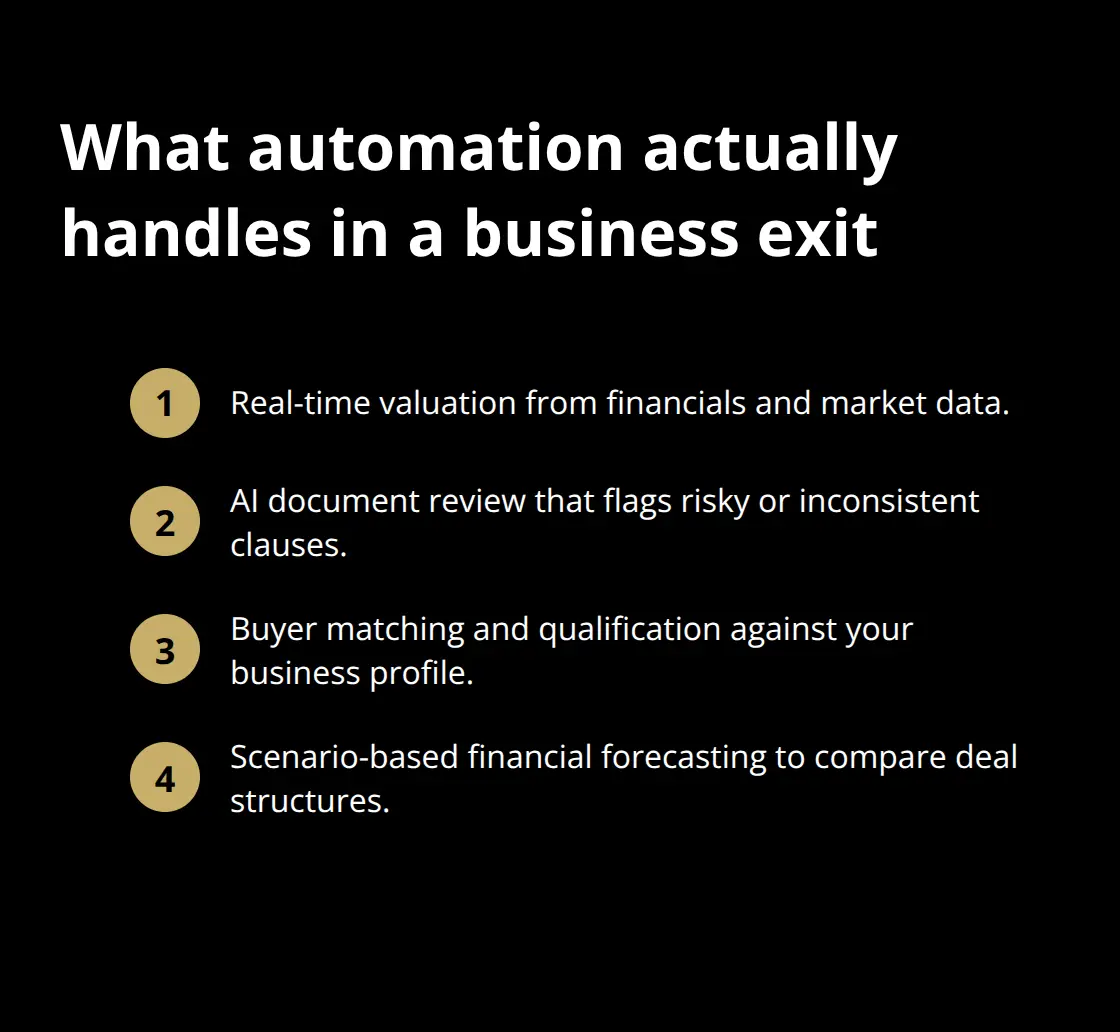
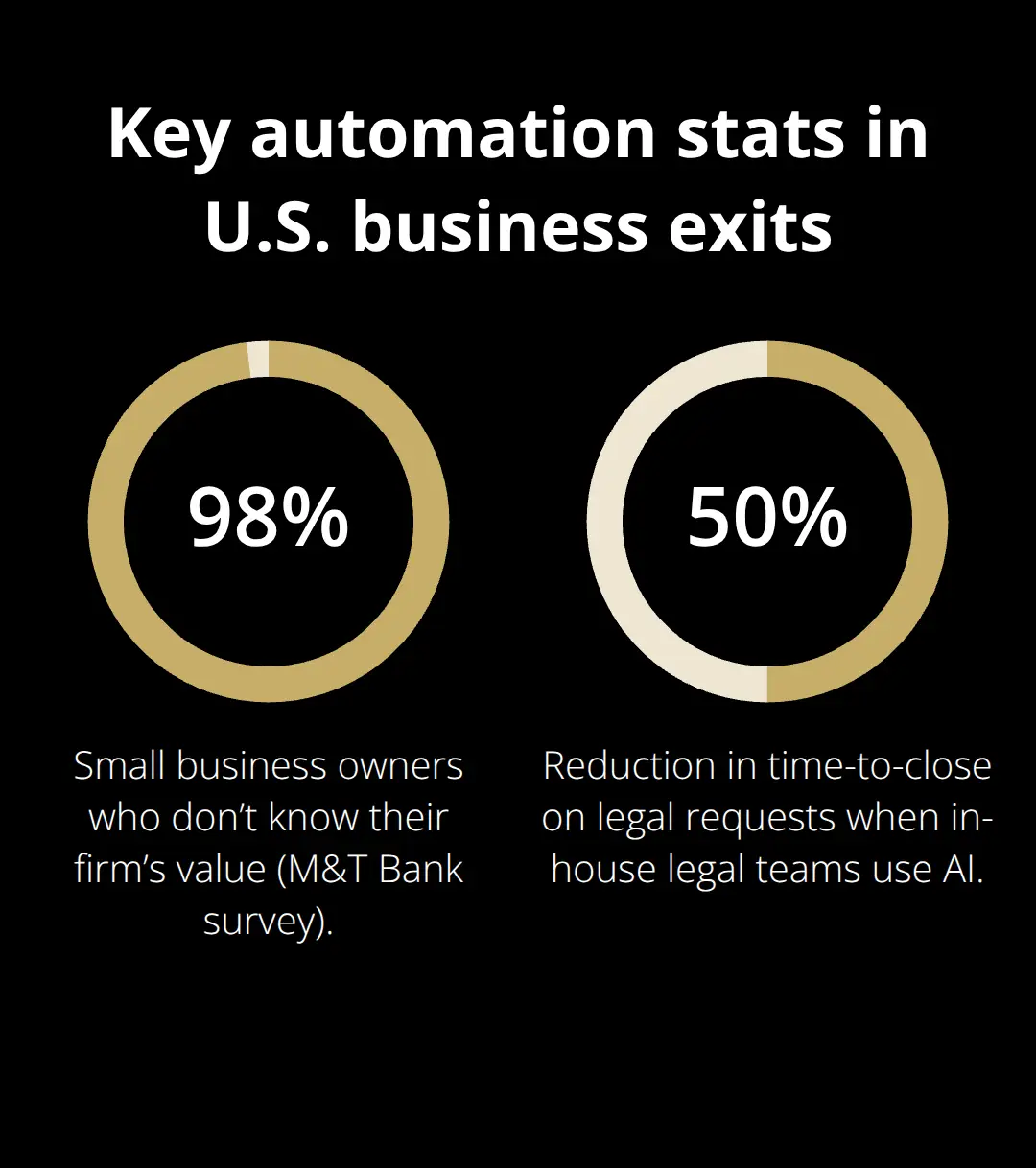
The automation landscape for business exits is far more selective than most owners realize. A M&T Bank survey found that 98% of small business owners don’t know their firm’s value, which is precisely where AI-powered tools step in. Platforms like BizEquity and Tegra Analytics now provide real-time valuations using multiple methods, analyzing historical financials, cash flow statements, and market conditions in hours instead of weeks. Document review automation has similarly transformed-AI can scan thousands of pages of contracts, employment agreements, and compliance records to flag inconsistencies and sensitive clauses that would take a legal team days to identify. Lead qualification and buyer matching have become genuinely automated; systems now screen potential buyers against your business profile, eliminating unqualified prospects before they waste your time. Financial forecasting tools use machine learning to model different exit scenarios, helping you understand which deal structure maximizes your proceeds under various market conditions.
Where automation hits its limits
However, several critical decisions remain firmly in human hands. Valuation tools provide data, but determining fair asking price requires judgment about your specific market position, competitive threats, and timing-factors no algorithm fully captures. Negotiation itself cannot be automated; buyers won’t negotiate with software, and the back-and-forth involves reading intentions, recognizing when flexibility matters, and making trade-offs that depend on your personal priorities.
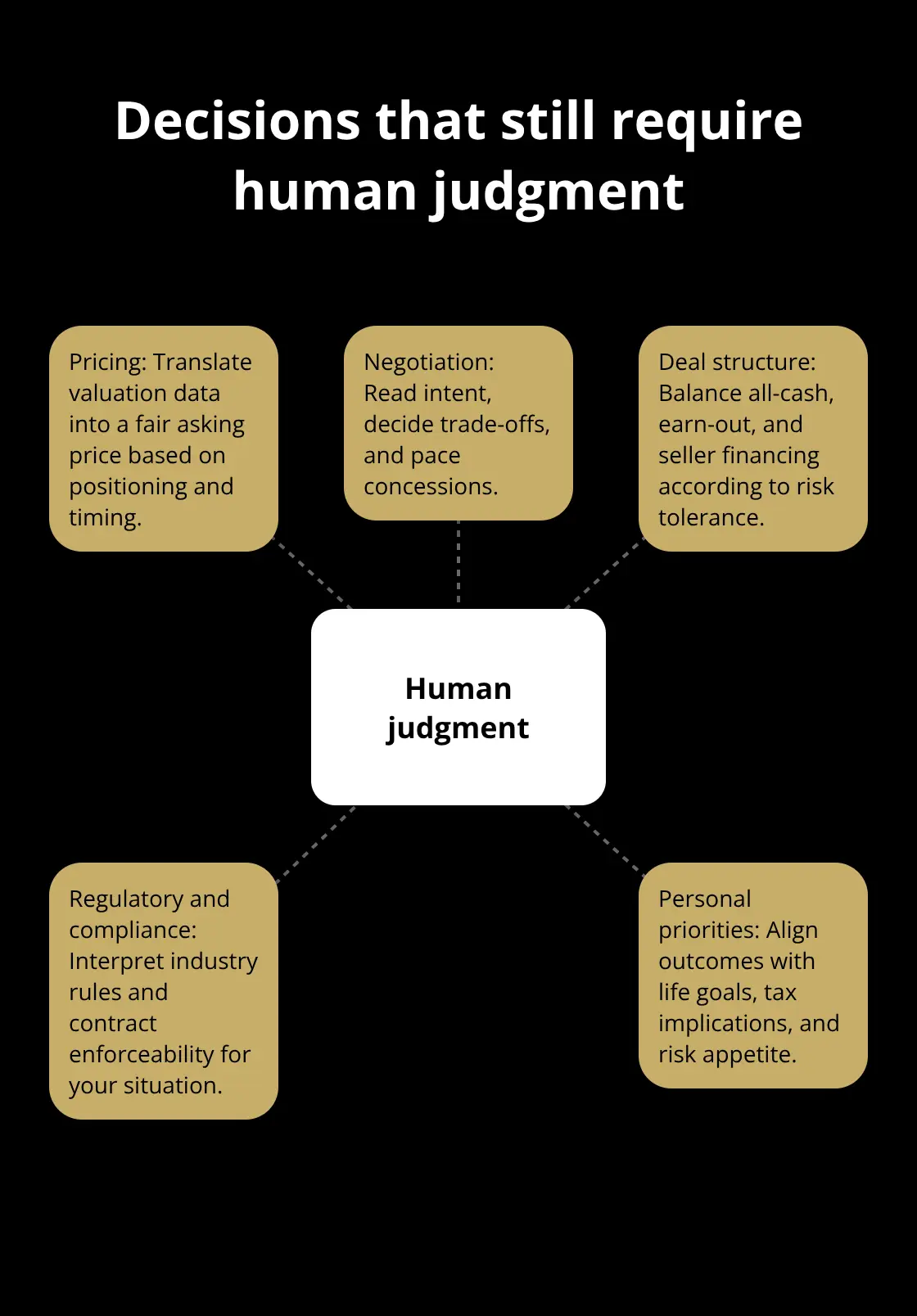
Strategic decisions about deal structure (whether to take an earn-out, accept seller financing, or demand all-cash) involve risk tolerance and life planning that only you can assess. Compliance and regulatory issues in your industry often require human expertise to interpret correctly. AI can flag that a contract contains a non-compete clause, but a lawyer must evaluate whether its terms are reasonable for your situation and enforceable in your jurisdiction.
Why human judgment catches what algorithms miss
The human element matters significantly for due diligence depth. While AI due diligence accelerates document review, experienced advisers catch subtle red flags in financial patterns or operational risks that automated systems miss. Your adviser brings context that no tool possesses-industry knowledge, market timing insights, and the ability to spot inconsistencies that suggest deeper problems. Automated systems remove many delays, yet responsible governance and strategic judgment remain non-negotiable throughout the process.
The path forward requires both
The most successful exits combine AI-driven efficiency with seasoned professional guidance at every stage. This hybrid approach lets you benefit from automation’s speed while maintaining the judgment that protects your interests. Understanding which tasks machines handle well and which ones demand human expertise shapes how you structure your exit team and timeline. The next section explores how to actually implement this balance in practice.
How Automation Speeds Up Your Sale
Document Preparation Transforms Contract Timelines
Document preparation and legal templates have become the fastest-moving automation opportunity in business exits. Tools like DocuSign and Ironclad now generate customized agreements from past transactions, pulling language from standard clauses and your specific deal parameters to produce contracts in days instead of weeks. In-house legal teams that utilize AI reduce the time-to-close on legal requests by up to 50% while maintaining quality and control.
When you feed AI systems your business structure, buyer profile, and deal terms, they generate initial drafts that your lawyer then reviews and refines rather than building from scratch. The real efficiency gain comes from reducing back-and-forth revisions; automated systems flag clause inconsistencies and missing sections before lawyers spend billable hours on corrections.
Buyer Matching Eliminates Unqualified Prospects
Buyer matching and lead qualification have transformed from manual screening to algorithmic precision. AI systems now analyze hundreds of potential buyers against your business profile in hours, ranking them by acquisition likelihood, financial capacity, and strategic fit. This eliminates the noise; instead of fielding inquiries from unqualified investors or competitors gathering intelligence, you focus conversations on serious buyers with genuine purchase intent. AI-driven target selection improves objectivity and reduces bias by basing decisions on data-driven insights rather than personal preference.
Negotiation Support Keeps Deals Moving
Negotiation support represents where automation becomes genuinely useful without replacing human judgment. Modern platforms now compare contract versions side-by-side, highlighting problematic clauses and tracking which terms changed between rounds. This keeps negotiations moving by eliminating manual document management and ensuring nothing gets lost in version control. Deal management systems centralize buyer communications, timelines, and contingencies in one place, reducing the coordination chaos that stretches exit timelines. However, the actual negotiation itself-deciding when to accept lower price for faster close, whether to take seller financing, or which contingencies matter most-remains entirely yours to determine.
Speed Without Sacrifice Requires Integration
These tools combined deliver speed without sacrifice. A typical business sale takes 6-9 months and keeps deal momentum from stalling on administrative friction. The catch is that these tools work best when integrated into your existing workflow rather than forcing you to adopt new systems. If your CRM already tracks buyer interactions, connecting it to deal management software multiplies the benefit. If your accountant uses specific financial reporting formats, templates that match those formats reduce rework. The sellers who waste automation’s potential are those who treat these tools as standalone solutions instead of extensions of their existing processes.
The key is starting with the administrative bottlenecks that consume time without adding strategic value-document generation, buyer screening, contract comparison-and letting those automations free your energy for the decisions that actually determine your outcome. This efficiency creates space for what comes next: understanding where automation reaches its limits and why certain decisions demand your personal attention and expertise.
Where Automation Stops and Strategy Begins
The moment a business owner assumes that automation handles the entire exit process is the moment they leave money on the table. Automation excels at speed and consistency, but it cannot evaluate whether accepting an all-cash offer at a lower valuation beats a higher earn-out with execution risk. It cannot read a buyer’s financial stability or predict whether they will honor post-sale obligations. AI transforms exploration, due diligence, and documentation in M&A transactions, yet governance and ethics considerations remain critical as adoption expands. This distinction matters enormously: a valuation algorithm tells you what your business is worth based on financials and market data, but only you decide whether that price aligns with your life goals, tax situation, and risk tolerance.
What Algorithms Cannot Assess
An AI system can flag that a buyer’s proposed earn-out structure contains problematic language, but your legal adviser must interpret whether those terms actually protect your interests or expose you to financial risk if the buyer’s performance falters post-acquisition. Automation cannot weigh the intangible factors that shape a successful exit-your industry’s competitive landscape, the buyer’s track record with acquisitions, or whether their stated integration plans align with your vision for the business you built. A financial model can project cash flows under different scenarios, but only you understand your personal risk tolerance and whether you can afford to wait for contingent payments or need liquidity immediately.
Why Advisers Catch What Machines Miss
Experienced advisers bring context that no tool possesses-industry knowledge, market timing insights, and the ability to spot inconsistencies that suggest deeper problems. They read between the lines of financial statements and buyer communications in ways algorithms cannot. An accountant who understands your specific tax implications can structure the deal to minimize your tax burden. A lawyer who knows your state’s contract enforcement history can negotiate terms that actually hold up if disputes arise. These professionals transform raw data into strategic decisions.
The Hybrid Model Delivers Results
The businesses that exit successfully treat automation as a foundation, not a replacement for judgment. A seller who uses AI to generate financial forecasts and buyer profiles still needs an accountant who understands their specific tax implications and a lawyer who knows their state’s contract enforcement history. A hybrid approach means your exit team includes both technology and people. The practical reality is that automation handles the administrative grind, freeing your advisers to focus on the strategic decisions that actually move your sale forward rather than drowning them in document management and version control. Sellers who maintain this balance close faster and with fewer last-minute disputes than those who rely entirely on either automation or traditional advisers alone.
Final Thoughts
Exit automation handles what it does best: generating valuations from financial data, screening unqualified buyers, comparing contract versions, and organizing documents. These tasks consume time without requiring strategic insight, so offloading them to software frees your energy for decisions that actually shape your outcome. A valuation platform tells you what your business is worth; you decide if that price aligns with your life goals.
The most effective exits combine both technology and human judgment. You use automation to eliminate administrative friction while maintaining advisers who understand your specific situation-your tax implications, your industry’s competitive dynamics, your personal risk tolerance. This hybrid model closes faster than traditional approaches alone and with fewer surprises than full automation would deliver.
Start by identifying which tasks consume your time without adding strategic value, then automate those ruthlessly. Invest in advisers who bring judgment to the decisions that matter: deal structure, negotiation strategy, risk assessment, and timing. We at Unbroker built our platform around this reality, combining AI-driven processes with expert support and access to a vast buyer network through our Full Service Business Sale and Assisted Business Sale options.