Seller negotiations fail when you can’t trust the buyer on the other side of the table. Manual vetting processes eat up weeks, qualified prospects slip through the cracks, and uncertainty stalls deals.
A buyer qualification platform changes this. We at Unbroker have seen firsthand how automated verification and real-time buyer status updates eliminate the guesswork and speed up your sales cycle dramatically.
Why Your Current Buyer Vetting Process Is Costing You Deals
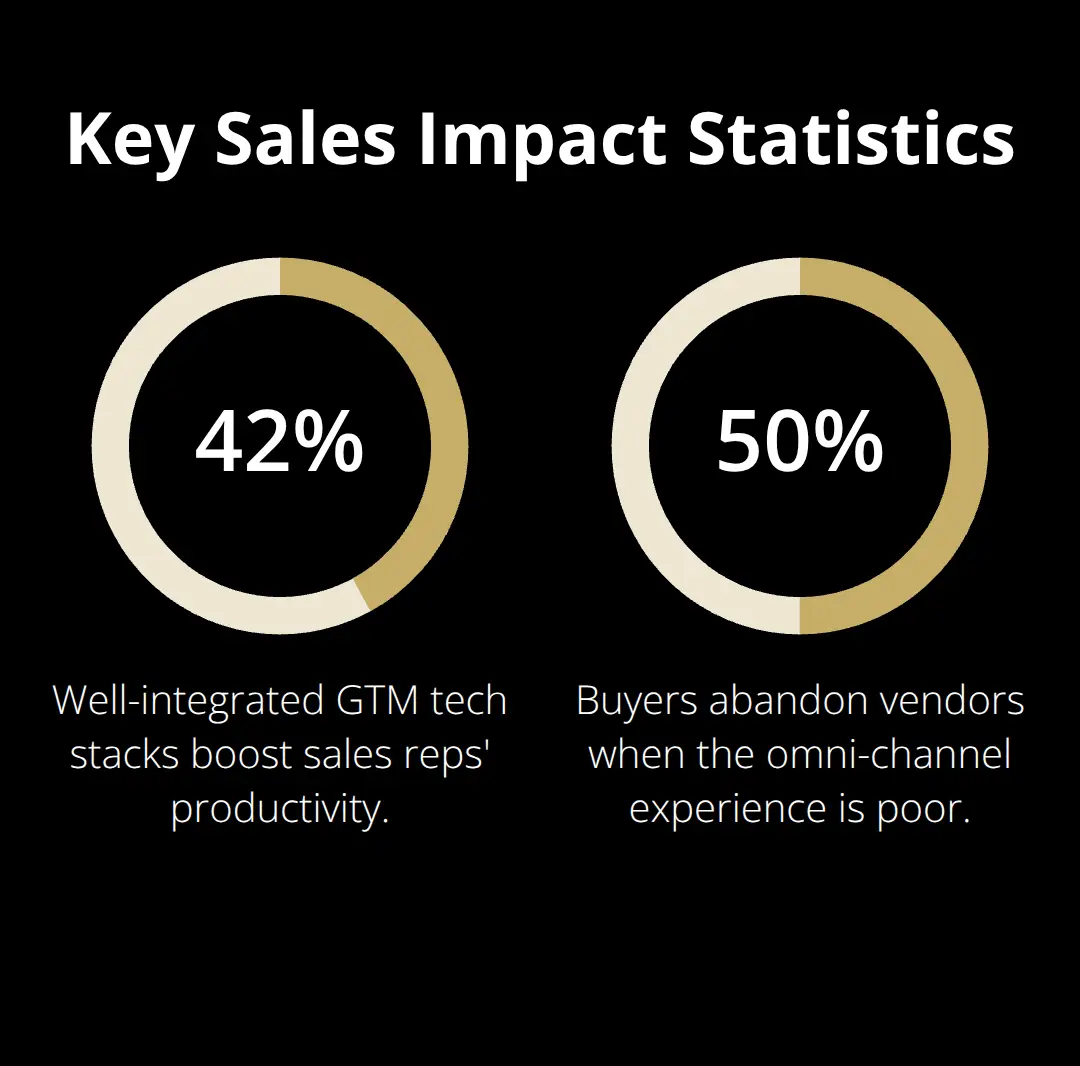
Manual vetting processes demand enormous time investments that most sales teams simply can’t sustain. Verifying financial capability alone requires gathering tax returns, bank statements, credit reports, and proof of funds-each document needs manual review, cross-checking, and validation. That’s time your team spends on paperwork instead of closing deals. According to Highspot’s State of Sales Enablement Report 2025, well-integrated GTM tech stacks boost sales reps’ productivity by 42%, yet most teams still rely on spreadsheets and email chains to track buyer qualifications. Your qualified prospects get lost in the shuffle, follow-ups slip through cracks, and deal momentum dies.
When Bad Buyers Waste Everyone’s Time
Unqualified buyers advance deep into negotiations constantly because manual vetting catches red flags too late. A buyer without proof of funds might get 30 days into due diligence before anyone realizes they can’t actually close. Another buyer might have the cash but lacks industry experience and a credible post-acquisition plan, yet nobody caught it during initial screening. McKinsey’s 2024 B2B Pulse Survey found that about 50% of buyers abandon vendors when the omni-channel experience is poor-but the reverse is equally true: sellers abandon buyers when qualification is weak. Financial due diligence checklists that require 3–5 years of tax returns, income statements, balance sheets, and current P&L statements only work if someone actually enforces them consistently. Most teams don’t. They skip steps, accept incomplete documentation, and hope for the best. That hope costs real money.
The Transparency Gap That Kills Deals
Sellers live in constant uncertainty with manual processes because nobody has a single source of truth about buyer status. You send a document request and wait days for a response. You never know if the buyer is actively pursuing other opportunities, if their financial situation changed, or if they’ve lost interest. Secure data-sharing practices, identity verification, and NDA automation should happen upfront-yet most manual workflows treat these as afterthoughts. Without real-time visibility into buyer engagement, communication frequency, and document completion, you can’t prioritize your pipeline intelligently. A buyer who goes silent for two weeks might still be serious, or they might be gone forever. You have no data to tell the difference. This opacity forces you to chase every lead equally, wasting resources on prospects who were never qualified in the first place.
What Modern Platforms Change
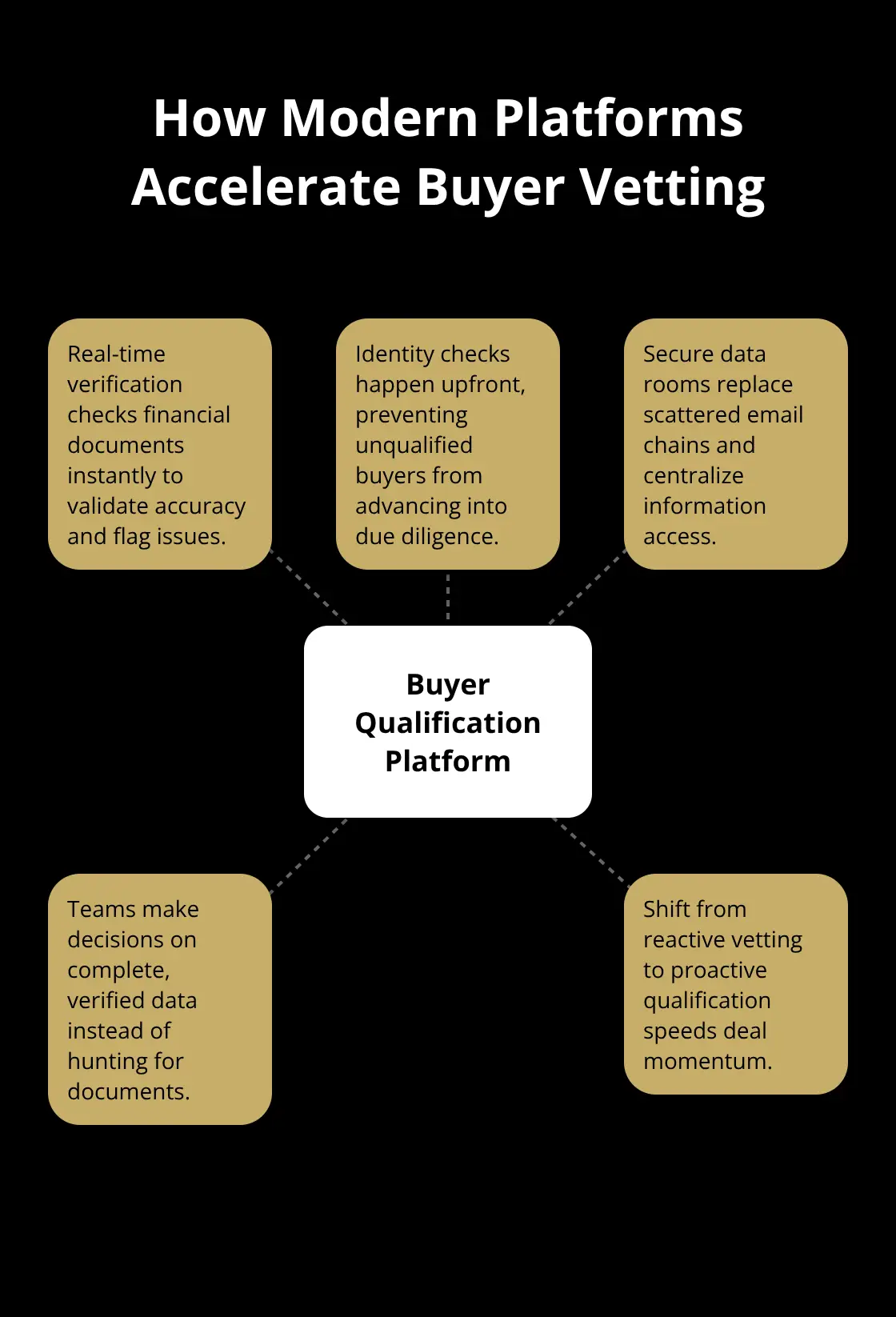
A buyer qualification platform eliminates these friction points by automating what manual processes can’t handle at scale. Real-time verification systems check financial documents instantly, identity checks happen upfront (not weeks later), and secure data rooms replace scattered email chains. Your team stops hunting for information and starts making decisions based on complete, verified data. The shift from reactive vetting to proactive qualification transforms how fast you move deals forward and which buyers actually make it to the negotiation table.
What Modern Platforms Actually Do for Buyer Vetting
Automated Verification Eliminates Manual Delays
Automated verification systems eliminate the weeks wasted on manual document review. When a buyer submits financial records, a modern platform instantly validates tax returns against IRS databases, cross-checks bank statements for accuracy, and flags inconsistencies in real time. Identity verification happens upfront through automated checks rather than weeks into due diligence, saving you from advancing unqualified buyers into serious negotiations. Financial pre-screening analyzes debt-to-income ratios, liquidity positions, and cash reserves automatically, comparing them against your qualification criteria. A buyer lacking sufficient working capital or carrying excessive debt gets flagged immediately. This automated layer catches what manual spreadsheet reviews miss: patterns that indicate financial instability.
Proof of funds verification requires current documentation within 90 days showing liquid assets across all accounts (excluding retirement funds and life insurance). Platforms automate this check, rejecting outdated or incomplete submissions without human intervention. Your team spends zero time on paperwork validation and focuses entirely on evaluating qualified buyers who’ve already passed financial screening.
Real-Time Status Tracking Reveals Buyer Intent
Real-time status tracking gives you visibility into every buyer’s engagement level and document completion. You see exactly which documents arrived, which remain pending, and how many days have passed since the last communication. Secure data rooms replace email chains, creating audit trails that show precisely when buyers accessed information and what they reviewed. This transparency reveals buyer intent through behavioral signals: a buyer downloading financial statements and visiting the data room multiple times signals serious interest, while one who goes silent after initial contact is clearly not advancing.
Integration with your existing CRM system means qualification data flows automatically into your sales pipeline without manual data entry. Your team stops managing separate spreadsheets and works from a single source of truth about each buyer’s status. Communication tracking within the platform shows response times and engagement frequency, helping you prioritize follow-ups on the most active prospects. When a buyer hasn’t engaged in two weeks, the system alerts your team, prompting either a re-qualification conversation or a decision to move on.
Data-Driven Decisions Replace Guesswork
Data-driven approach eliminates guesswork and forces accountability into your vetting process. No qualified buyer falls through cracks, and no unqualified buyer advances unnecessarily. Your sales team makes decisions based on verified financial information and documented engagement patterns rather than hunches or incomplete paperwork. The shift from reactive vetting to proactive qualification transforms how fast you move deals forward and which buyers actually reach the negotiation table. With complete visibility into buyer status and financial capability, your team can confidently prioritize the prospects most likely to close.
Which Platform Fits Your Business and Budget
Choosing the wrong platform wastes money and creates new bottlenecks instead of solving them. Start by mapping exactly where your current vetting process breaks down. If your team spends three weeks gathering financial documents, automated verification should be your priority. If deals stall because nobody tracks buyer engagement, real-time status visibility matters more than fancy identity checks. If your sales reps work in three different systems and manually copy buyer information between them, CRM integration becomes non-negotiable.
Audit Your Current Pain Points
Document how many hours your team spends on vetting each month, what documents you request most frequently, and which red flags you catch too late. This audit reveals what the platform must handle for your business. A platform strong in identity verification but weak on financial document analysis won’t solve your problem if financial screening is where you lose time. Most platforms focus narrowly on one function, while others bundle identity checks, NDA automation, secure data rooms, AI-based buyer matching, and CRM integration into a complete vetting workflow. The platform must match your specific pain points, not just offer the longest feature list.
Calculate Your True Pricing Impact
Pricing structures vary dramatically and trap many buyers into plans they don’t need. Some platforms charge per transaction or per qualified buyer, while others charge monthly subscriptions ranging from $99 to several hundred dollars. AgentiveAIQ pricing starts at $39 per month for a single agent and scales to $449 monthly for agencies with many agents, though that platform focuses on AI chatbots rather than comprehensive buyer vetting. Calculate your volume first: if you process two deals monthly, per-transaction pricing may cost less than a $300 monthly subscription.
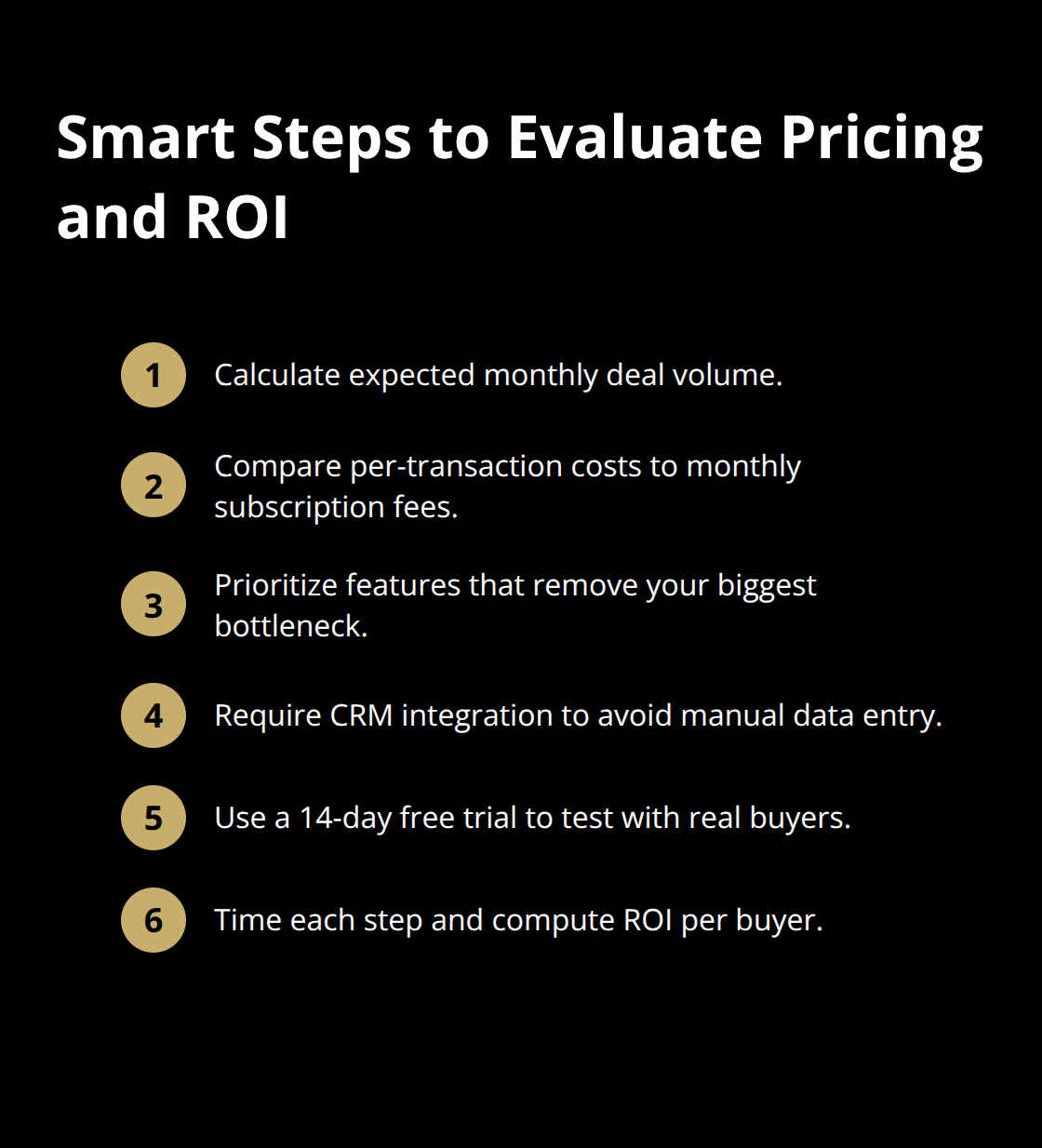
If you run ten deals monthly, a flat monthly fee becomes cheaper. Request a trial period before committing. Most legitimate platforms offer 14-day free trials without requiring a credit card, letting you test workflows with real buyers before paying anything.
During the trial, run your most recent buyer through the entire process and time how long each step takes. Compare that against your current manual timeline. If the platform saves your team six hours per buyer and you close ten deals yearly, the ROI calculation becomes straightforward.
Evaluate Support Quality and Implementation
Support quality matters enormously but gets overlooked constantly. Platforms with responsive support teams and documented onboarding processes cost more upfront but pay for themselves through faster implementation and fewer mistakes. Ask for references from companies similar to yours in size and industry. Call those references directly and ask specific questions: Did the platform integrate smoothly with your existing CRM? How long did onboarding take? Did support respond within your needed timeframe when issues arose? Generic reviews online rarely capture implementation realities.
Test Scalability and Customization Capabilities
Scalability determines whether a platform grows with your business or becomes a constraint. If you currently close five deals yearly but plan to triple that volume, the platform must handle the increase without requiring manual workarounds or expensive upgrades. Test this during your trial by simulating higher transaction volumes. Some platforms degrade in speed or functionality under load, while others charge exponentially more as volume increases.
Customization options matter when your vetting process differs from standard workflows. Some platforms force you into rigid processes that don’t match how your team actually works, while others allow custom fields, conditional logic, and workflow automation. If your deals require specialized verification steps beyond standard financial checks (such as industry-specific compliance requirements), customization capability becomes critical. Platforms offering no-code customization through drag-and-drop builders let your team adapt the system without IT involvement. Those requiring code changes slow down adjustments and lock you into vendor dependency.
Final Thoughts
Buyer qualification platforms transform how you move deals forward by replacing weeks of manual vetting with automated verification, real-time transparency, and data-driven decisions. The shift from reactive paperwork to proactive qualification eliminates unqualified buyers before they waste your time and catches red flags instantly instead of weeks into negotiations. Your sales team stops managing spreadsheets and starts closing deals with buyers who’ve already proven financial capability and serious intent.
When your vetting process catches financial instability, missing documentation, and weak buyer commitment upfront, you avoid costly deal failures and renegotiations. Your pipeline becomes predictable because you know exactly which buyers will actually close rather than guessing based on incomplete information. Sales reps gain confidence in their pipeline when they work only with qualified prospects, and your team’s productivity increases because nobody wastes time chasing unqualified leads.
Implementation starts with an honest audit of where your current process breaks down most. Test a buyer qualification platform with your next few deals during a free trial period (most platforms offer 14-day trials without requiring a credit card). If you’re selling a business, we at Unbroker combine buyer qualification with transparent, low-cost selling through our modern platform for business sales.