Becoming a business broker opens doors to a lucrative career helping entrepreneurs buy and sell companies. The industry is booming, with thousands of transactions happening annually and strong demand for qualified professionals.
At Unbroker, we’ve seen firsthand how the right credentials and strategy can launch a successful brokerage career. This guide walks you through licensing requirements, building your network, and the tools you’ll need to succeed.
What Business Brokers Actually Do
A business broker sits between a seller trying to exit their company and a buyer looking to acquire one. The broker estimates what the business is worth, finds qualified buyers, markets the sale, negotiates terms, and shepherds the deal to closing. This isn’t passive work-brokers analyze financial statements, cold-call prospects, manage confidentiality agreements, and solve problems that could kill a transaction.
How Brokers Earn and What Drives Commission Rates
Most brokers earn 8% to 12% of the sale price as commission, though rates vary by industry. Manufacturing deals typically run 10% to 12%, while technology transactions sit closer to 8% to 10%. Retail businesses often command 12% to 15% because they’re harder to value and sell. The commission structure aligns incentives: brokers only get paid when a deal closes, so they’re motivated to maximize the sale price and speed.
Some brokers also charge upfront valuation fees or retainers, depending on their practice model. The Texas Association of Business Brokers notes that skilled brokers with strong networks and negotiation abilities can command higher fees because they deliver faster closings and higher valuations. Commission rates also shift with market conditions. In a seller’s market, brokers may accept lower rates because deals move quickly. In a buyer’s market, rates often climb because brokers must work harder to attract buyers and justify their value.
The Real Market for Business Sales
Thousands of business transactions happen annually across the United States, with deal flow accelerating as baby boomers exit businesses and younger entrepreneurs acquire them. The International Business Brokers Association reports consistent demand for brokers who can navigate complex valuations, due diligence, and deal structuring. However, the industry is fragmented. Traditional brokerage firms dominate in many regions, but modern platforms are reshaping how businesses change hands.
Traditional Firms Versus Modern Platforms
If you join a traditional brokerage firm, you’ll inherit their buyer network and brand reputation, but you’ll split commissions and operate under their systems. If you build an independent practice or partner with a modern platform, you’ll control more of your earnings and have flexibility in how you serve clients. The choice depends on whether you value stability and training over autonomy and higher take-home rates. Modern platforms offer transparent, low-cost alternatives to traditional brokers, cutting out inflated fees and streamlining the sales process with AI-driven buyer matching and digital marketing tools.
This shift matters for your career path. Understanding which model fits your goals-and which clients you want to serve-shapes everything that comes next, from the credentials you’ll pursue to the networks you’ll build.
What Credentials Do You Actually Need
Texas Licensing: The Real Requirements
Texas has no standalone business broker license, which surprises most people entering the field. If your deals involve real estate or lease transfers-which most do-you need a Texas real estate salesperson’s or broker’s license to legally charge fees. This is a hard requirement, not optional. The Texas Administrative Code Rule §139.27 offers an M&A Dealer Exemption for qualifying transactions involving securities or stock transfers, but that exemption is narrow and requires strict compliance. You cannot build a sustainable practice without understanding these distinctions.
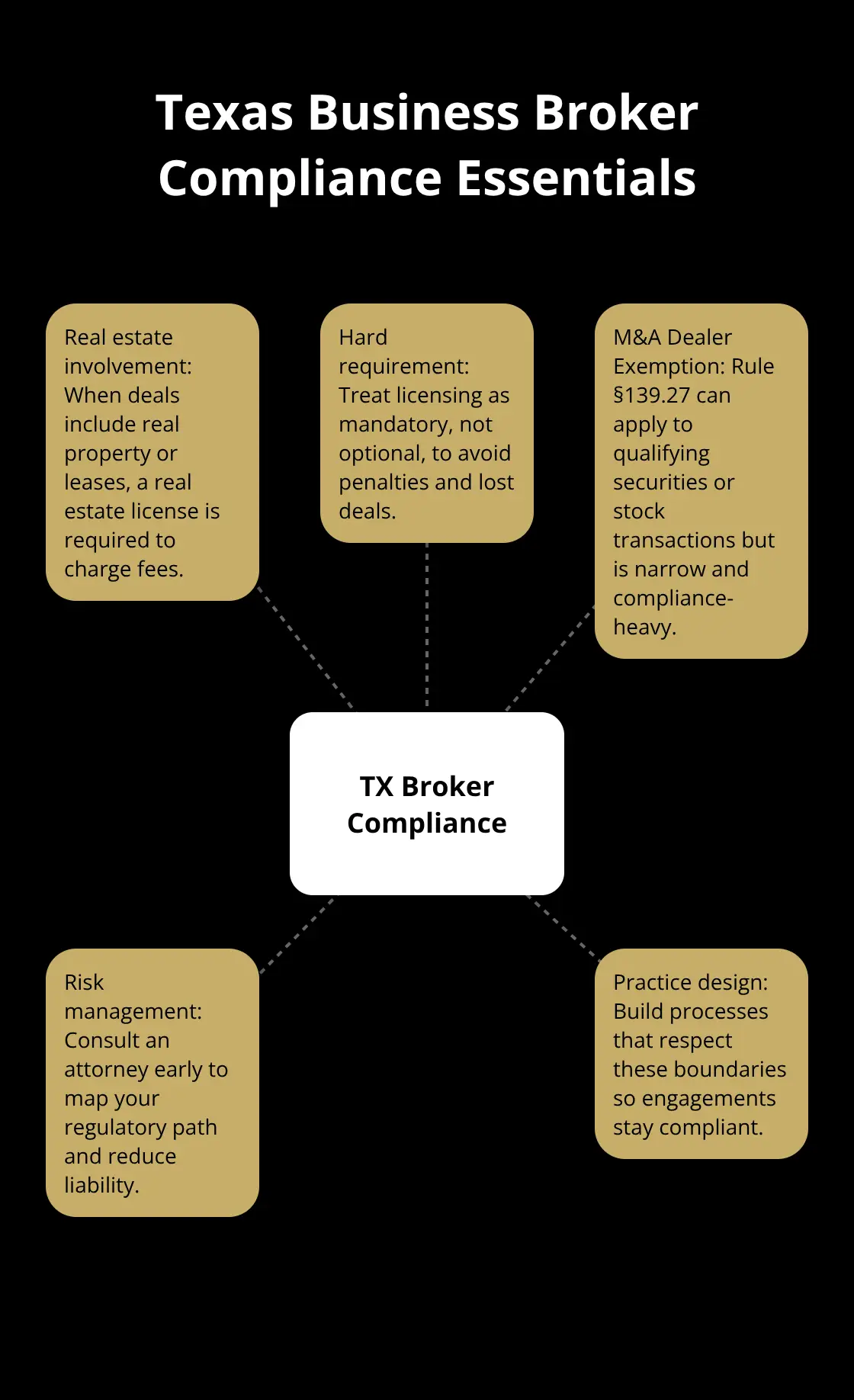
Consult an attorney early to map your specific regulatory path, because the wrong licensing choice exposes you to liability and costs you deals.
The Board Certified Broker Credential
The Board Certified Broker designation from the Texas Association of Business Brokers signals serious credentials in your market. TABB requires candidates to complete core education, pass a professional exam, prove relevant experience, and meet strict ethics standards. The BCB Path To Excellence schedules education to fit your timeline and budget, making the credential achievable without overwhelming your schedule. Alternatively, if you already hold a Certified Business Intermediary designation from the International Business Brokers Association, you can apply for automatic BCB recognition through TABB’s CBI/BCB program-a direct pathway that eliminates redundant coursework.
Why the BCB Matters for Your Career
The BCB framework emphasizes ethics codified in the TABB Code of Ethics, which distinguishes you from unlicensed competitors and builds immediate trust with buyers and sellers. Earning this credential typically takes six to twelve months depending on your starting point, but the investment pays dividends. Brokers with BCB designation command higher fees and close deals faster because clients perceive them as legitimate professionals, not part-timers. Maintaining BCB status requires ongoing continuing education and annual recertification, which keeps you current on valuation techniques, market trends, and regulatory changes. This continuous learning separates successful brokers from those who stagnate.
Getting Started With BCB Certification
Start by registering as a BCB Candidate with TABB, then commit to completing the Path To Excellence program on a schedule that works for your life. Once you hold your real estate license and pursue your BCB, you’ll have the foundation to attract serious clients and operate with confidence. The next step involves building the network and systems that turn credentials into actual deal flow.
How to Build Your Network and Land Your First Deals
Start With a Geographic Focus
Your credentials open doors, but your network closes deals. Most brokers spend their first year doing exactly one thing: talking to people. You need to identify who sells businesses in your market and who buys them, then stay in front of both groups consistently. Rather than trying to serve the entire state or region, focus on a specific geography. If you operate in Northeast Ohio, become the person everyone calls when they want to buy or sell a manufacturing business there. Local expertise beats national generalism every time.
Build Relationships Through Professional Associations
Join the Texas Association of Business Brokers immediately and attend their events, not to collect business cards but to find mentors who’ve already built successful practices in your area. These relationships accelerate your learning and lead to referral sources faster than any marketing campaign. Spend your first three months mapping your market: identify the top fifty business owners, ten accountants, five attorneys, and three commercial real estate agents in your territory. Call each one and introduce yourself. You’re not selling anything yet; you’re building relationships and learning what these gatekeepers see in the market. Most will remember you, and some will send you deals within six months because you made the effort.
Use Systems to Track Relationships and Opportunities
Tools matter less than consistency, but the right systems prevent you from drowning in paperwork. Use a customer relationship management platform like HubSpot or Pipedrive to track every conversation, follow-up date, and deal stage. When you manage multiple transactions simultaneously, a spreadsheet fails. You need alerts reminding you to call that accountant you met three months ago, or you’ll miss opportunities. Create a simple email template for introducing yourself to prospects and use it religiously. Personalize the opening line with something specific about their business, then offer value first: send them a recent article about exit strategies for their industry or a one-page checklist they can use to value their business. This positions you as helpful, not desperate.
Match Speed and Clarity in Your Client Communications
Modern platforms have changed buyer expectations by offering transparent pricing and streamlined processes, so traditional brokers who hide fees or drag out timelines lose deals to more efficient competitors. You don’t need to match their cost structure, but you do need to match their speed and clarity. When you take a listing, provide the seller with a written timeline showing when marketing starts, when you expect to see qualified buyers, and when you anticipate closing. Sellers respect professionals who set expectations and meet them.
Final Thoughts
Your path to become a business broker rests on three concrete actions: obtain your real estate license and BCB credential, build a geographic network through professional associations, and implement systems that track relationships and deal flow. These steps separate legitimate brokers from part-timers who fail within two years because credentials signal competence, networks generate deal flow, and systems prevent opportunities from slipping away. The business brokerage industry is shifting as modern platforms reshape how deals happen with transparent pricing and faster timelines, creating opportunity for brokers who understand both traditional and digital worlds.
Your first year will test your commitment through endless phone calls, networking events, and slower deal closings than you’d like. Focus on one geographic market, build relationships with gatekeepers like accountants and attorneys, and follow up consistently-you’ll have a pipeline by month six. The brokers who succeed treat this like a real business, not a side hustle, and they adapt as the market evolves around them.
Start with your state’s licensing requirements and TABB’s BCB program, then pick your market and start calling. Unbroker offers a modern alternative with transparent fees and AI-driven buyer matching that can help you understand how platforms compete and serve clients better. Your career as a business broker starts with action, not planning.