Most small business owners have no idea what their company is actually worth. We at Unbroker see this constantly-entrepreneurs operate without understanding the true value they’ve built.
Learning the basics of business valuation changes that. Whether you’re planning to sell, seeking investment, or simply want to know where you stand, knowing how to value your business is non-negotiable.
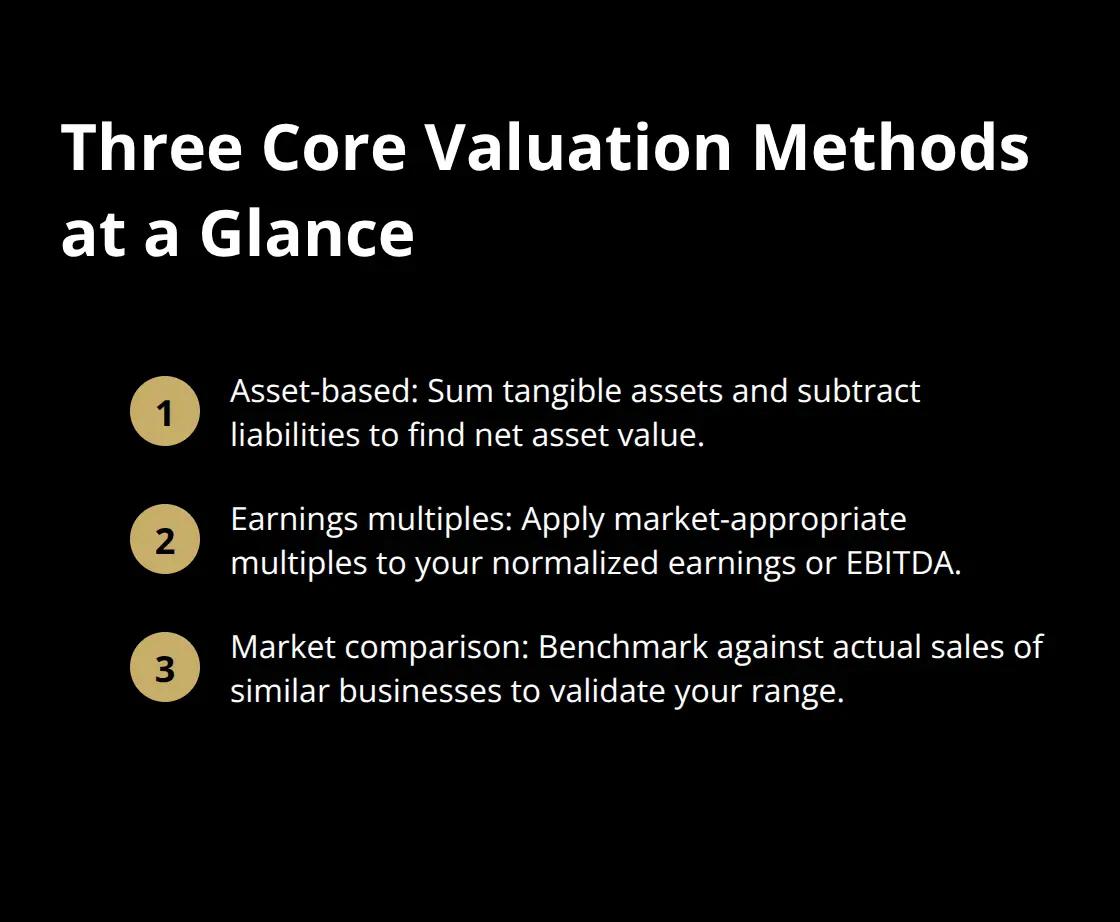
Three Ways to Value What You’ve Built
The Asset-Based Foundation
The asset-based approach starts with a straightforward calculation: add up everything your business owns-equipment, inventory, property, cash-then subtract what it owes. This gives you the net asset value, sometimes called book value. For asset-heavy businesses like manufacturing or retail, this method works reasonably well because tangible assets dominate the picture.
Asset-based valuation often underestimates what your business is actually worth. A consulting firm with minimal equipment but a strong client list might show a book value of $50,000 when the business generates $200,000 annually in earnings. The gap exists because intangible assets-your reputation, customer relationships, proprietary processes-don’t appear on a balance sheet but absolutely drive value. Treat asset-based valuation as a floor, not a ceiling. It tells you what you could recover if the business failed, but it rarely reflects the true worth of an operating company.
Earnings Multiples and What They Mean
Revenue and earnings-based methods anchor valuation to what your business actually produces. The simplest approach uses earnings multiples: if your business generates $100,000 in annual earnings and similar businesses in your industry sell for five times earnings, your business is worth roughly $500,000. This multiple varies dramatically by industry and profitability. A dental practice might command 4 to 5 times EBITDA while a struggling retail operation might fetch only 1.5 times.
The market comparison method takes this further by looking at actual sales of similar businesses. Two restaurants with identical revenue can have completely different values if one operates in a growing neighborhood while the other sits in a declining area. Location, customer retention rates, and management quality all shift the multiple up or down.
Finding Real Market Data
Most small business sales happen privately with no public disclosure of price, so you’ll need to talk with business brokers who track these transactions in your sector. They can tell you what multipliers apply to your industry right now, accounting for current market conditions and growth prospects. Online calculators that claim to value your business in minutes ignore context entirely and should be avoided.
Calculate your value using two or three methods, then see where they converge. If asset-based, earnings-based, and market comparison all point toward a similar range, you have confidence in that number. This triangulation approach reveals which factors matter most for your specific business and prepares you for the next critical step: understanding what actually moves the needle on your company’s value.
What Really Moves Your Business Value
Profitability Trumps Revenue Every Time
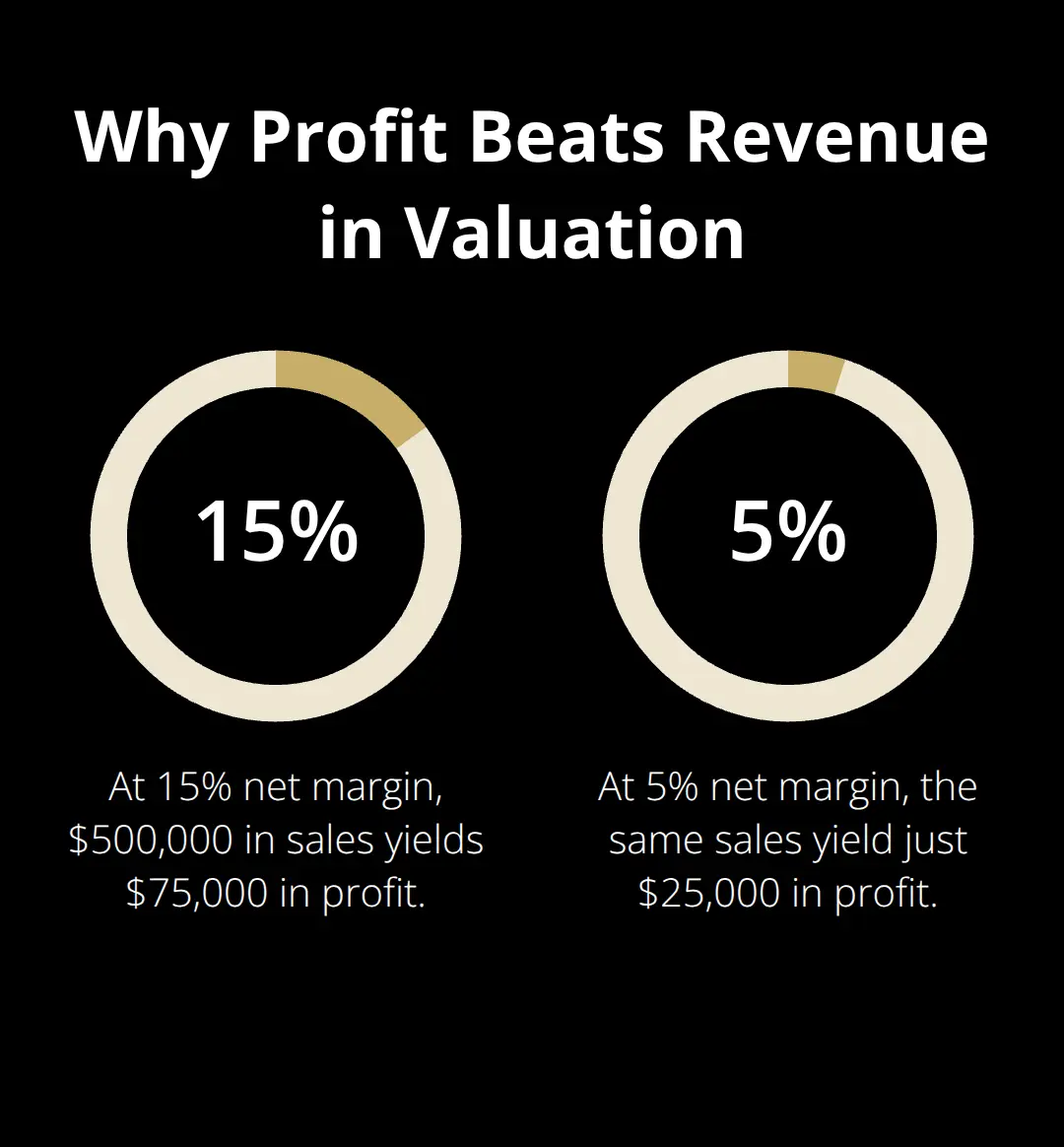
Profitability matters far more than revenue alone, and most small business owners miss this distinction entirely. Two restaurants generating $500,000 in annual sales can have wildly different values if one operates at 15% net margin while the other barely clears 5%. The first business produces $75,000 in annual profit; the second generates just $25,000. Using a standard 4x earnings multiple, the first business is worth $300,000 while the second is worth only $100,000-despite identical top-line revenue.
Buyers dig into your financials obsessively because they care about what you actually keep after expenses, not the gross dollars flowing through your bank account. Strip out your salary if it’s inflated, document your actual operating expenses accurately, and show consistent profitability over at least three years. Inconsistent earnings raise red flags that tank valuations.
Personal Dependencies Kill Valuation
Personal dependencies kill valuation. A consulting firm where the owner is the only person clients trust will sell for a fraction of what an identical firm would fetch if multiple consultants could service the client base. Buyers see personal dependencies as massive risk; they’re purchasing a business, not hiring a key employee.
You must build a team that can operate without you. Document your processes, train other staff members to handle client relationships, and prove that revenue continues even when you step back. This shift transforms your business from a job you own into an asset you can sell.
Customer Concentration and Revenue Stability
Customer concentration and revenue stability are equally critical levers. If your top three clients represent 60% of revenue, any buyer assumes at least one will leave post-sale. They’ll apply a significant discount to account for that risk. Conversely, a business with 200+ customers where no single client exceeds 5% of revenue commands premium multiples because the revenue stream looks stable.
Work to diversify your customer base before you sell. The more you reduce concentration risk, the higher multiple buyers will pay. This shift alone can add tens of thousands of dollars to your valuation.
Location and Market Position Drive Multiples
Geographic location and market trajectory directly influence your multiple. A service business in a growing metropolitan area with expanding demand will sell for 5x to 6x earnings, while an identical business in a declining rural town might fetch only 2x to 3x earnings. Location-driven demand and expansion potential are non-negotiable valuation drivers.
Market position matters equally-if you’re the category leader with recognizable branding and customer loyalty, you’ll command a 20% to 40% premium over a generic competitor. If you’re fighting on price and lack differentiation, buyers view you as replaceable and discount accordingly. Document your competitive advantages explicitly: proprietary processes, exclusive partnerships, brand recognition, or switching costs that lock in customers. These intangibles don’t show on your balance sheet but they absolutely show up in your valuation multiple.
What Buyers Actually Evaluate
Buyers evaluate far more than your current earnings when they assess your business. They examine your management team’s depth, the stability of your supply chain, your technology infrastructure, and your ability to adapt to market shifts. A business that relies on outdated systems or faces disruption from new competitors will command lower multiples than one positioned for growth. The stronger your competitive moat and the clearer your path forward, the more buyers will pay.
Where Valuations Go Wrong
Overestimating Growth Kills Your Multiple
Most small business owners inflate their growth projections when preparing for valuation, and buyers spot this immediately. You project 25% annual growth for the next five years based on optimistic market conditions, but buyers apply a discount rate of 10-15% to account for the risk that you won’t hit those numbers. The difference between your forecast and what actually materializes tanks your valuation multiple. A consulting firm projecting $500,000 in Year 3 revenue might see that forecast cut to $350,000 in the buyer’s model, reducing the enterprise value by $200,000 or more.
Ground your projections in historical performance instead of guessing. If you’ve averaged 8% growth over three years, claim 8-10% going forward, not 20%. Buyers respect conservative projections backed by data far more than aggressive ones that require everything to break perfectly.
Market Conditions Shape Your Valuation
Ignoring what happens in your industry and local market costs you real money. A home services business in a region experiencing population decline commands a significantly lower multiple than one in an expanding suburb, even with identical current earnings. The buyer isn’t purchasing today’s profit alone; they’re purchasing future profit. If your market shrinks, they apply a haircut to your valuation that can reach 30-40%.
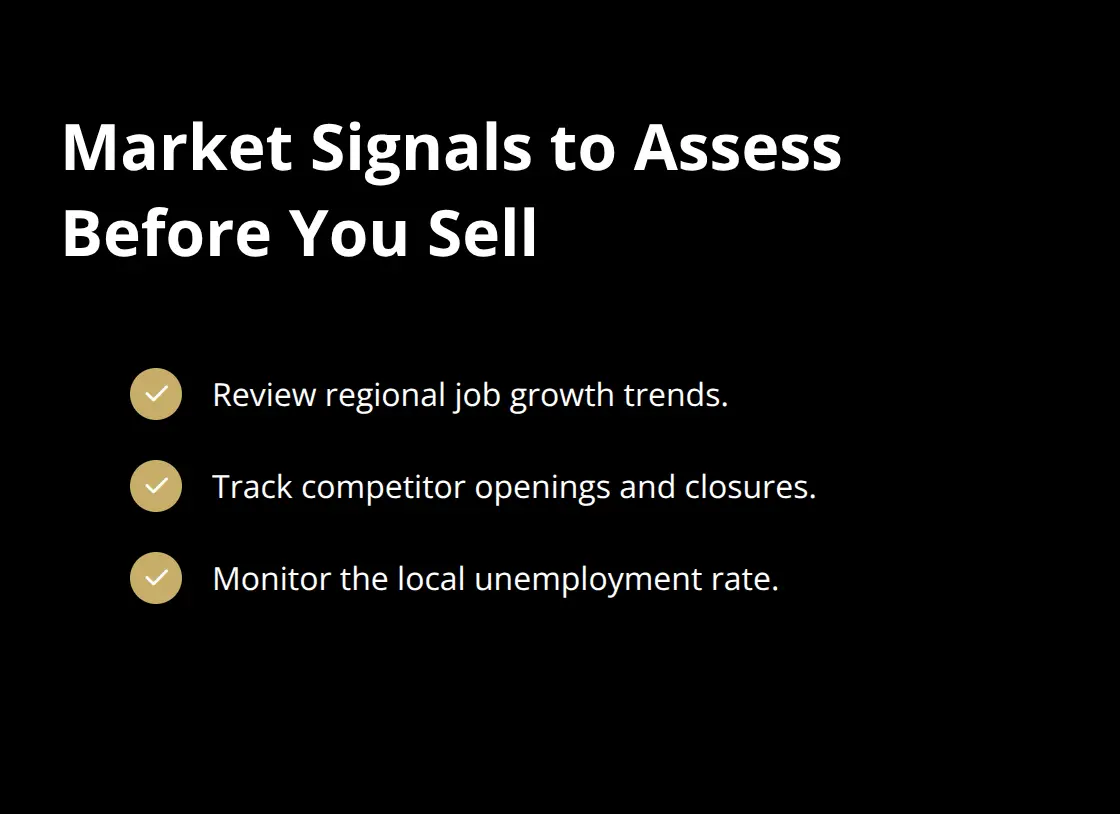
Check your local economic indicators before you sell. Is your region gaining or losing jobs? Are competitors opening new locations or closing? What’s the unemployment rate trend?
These factors matter more than your current performance. A business in a declining market needs to demonstrate either a unique competitive position that transcends local conditions or a clear path to serving adjacent markets. Without that story, your valuation suffers.
Owner Dependency Destroys Enterprise Value
Failing to account for how dependent your business is on you personally remains one of the most expensive mistakes. You’ve built everything around your relationships and expertise, so the business runs smoothly when you’re involved. The moment you step away, revenue drops because clients or customers follow you, not your business. Buyers quantify this risk by applying a valuation discount for owner dependency.
A business generating $300,000 in earnings might see significant value erosion in valuation if the buyer believes revenue walks out the door when you leave. Start documenting everything now. Write down your processes, train other team members to handle client relationships, and prove that revenue continues even during your vacation or time away. If you can show that your business generated consistent revenue for 12+ months while you were less involved, you eliminate this discount entirely and add back significant value to your valuation.
Final Thoughts
Understanding the basics of business valuation transforms how you think about your company. You now know that profitability matters more than revenue, that personal dependencies tank valuations, and that market conditions shape what buyers will actually pay. This knowledge positions you ahead of most small business owners who operate without ever calculating what they’ve built.
Valuation directly impacts your selling price. A business worth $500,000 using conservative assumptions might fetch $650,000 if you eliminate owner dependency and diversify your customer base. That $150,000 difference comes from understanding what moves the needle on valuation and fixing those issues before you sell.
Start preparing your business now, even if you’re not selling immediately. We at Unbroker offer a modern platform designed specifically for business owners like you-our Full Service Business Sale handles everything for a 6% success fee, paid only when your business sells. Visit Unbroker to explore how we can help you sell your business without the high fees traditional brokers charge.