Selling a business doesn’t have to take months. An auction-style sale platform compresses the entire process into weeks, letting multiple buyers compete in real time to drive your price higher.
We at Unbroker have seen firsthand how this approach beats traditional methods on speed, transparency, and final sale price. Whether you’re liquidating inventory or selling the entire operation, competitive bidding works in your favor.
How Auction Mechanics Drive Faster Sales and Higher Prices
Real-Time Bidding Creates Immediate Price Discovery
Real-time bidding exposes your business to multiple qualified buyers simultaneously and forces immediate price discovery. Instead of negotiating with one prospect over weeks, you set a starting price and let competitive tension push the final value upward. Each incoming bid must exceed the previous one, which forces bidders to reveal their true valuations quickly rather than dragging out negotiations. This compressed feedback loop shows you where market interest actually sits within days, not months. The global real-time bidding market was estimated at USD 14.37 billion in 2023 and is expected to reach USD 39.61 billion by 2030.
The speed advantage matters most when your business has time-sensitive factors-inventory that depreciates, seasonal demand windows, or cash flow pressure. Auction platforms with real-time bidding capabilities let you close deals in two to four weeks instead of the six to twelve weeks typical of traditional broker-led sales.

Competitive Bidding Increases Final Sale Prices
Competitive bidding fundamentally changes buyer behavior because bidders fear losing to rivals. This fear drives higher final prices than you would negotiate one-on-one with a single buyer. When bidders see active competition, they increase their offers more aggressively than they would in private negotiations where they control the pace. The platform displays the current highest bid openly, which creates transparency and accountability-every participant knows exactly where the price stands and what they must beat to win.
This visibility prevents hidden offers or back-channel deals that undervalue your business. Auction platforms with overtime extensions capture late-arriving bids and maximize final prices by preventing artificial cutoffs. The result is that businesses sold through auction-style platforms typically achieve sale prices closer to true market value because multiple buyers compete simultaneously rather than serially. You eliminate the leverage that comes from being a single buyer negotiating with a motivated seller, which traditional methods hand to purchasers.
Why Auction Formats Outperform Traditional Negotiations
The mechanics of auction sales remove the power imbalance that favors buyers in traditional transactions. A single buyer in a one-on-one negotiation controls timing and can wait you out if cash flow pressure mounts. Multiple simultaneous bidders eliminate that advantage entirely. Each bidder knows that hesitation means losing to a competitor, so they move faster and bid higher. The transparency of the process (visible bids, clear timelines, open competition) also builds confidence among buyers that they’re participating in a fair market, which attracts more serious participants and stronger offers.
Why Auction Sales Beat Broker-Led Transactions
Speed Collapses Traditional Timelines
Auction-style sales compress timelines in ways traditional brokers simply cannot match. A standard broker-led business sale takes six to twelve weeks from listing to closing, with most of that time spent waiting for qualified buyers to emerge and negotiate terms one after another. Auction platforms collapse this timeline because multiple buyers bid simultaneously rather than sequentially. This parallel competition means you get price discovery and deal closure faster, which matters enormously if your business faces seasonal demand windows, inventory depreciation, or immediate cash flow needs.
The speed advantage becomes even more pronounced for asset-heavy operations where holding costs accumulate daily. You avoid the extended marketing phase brokers typically charge for, which means your business reaches market-ready buyers immediately rather than sitting in a broker’s pipeline for weeks before serious interest materializes.
Commission Structures Favor Sellers in Auctions
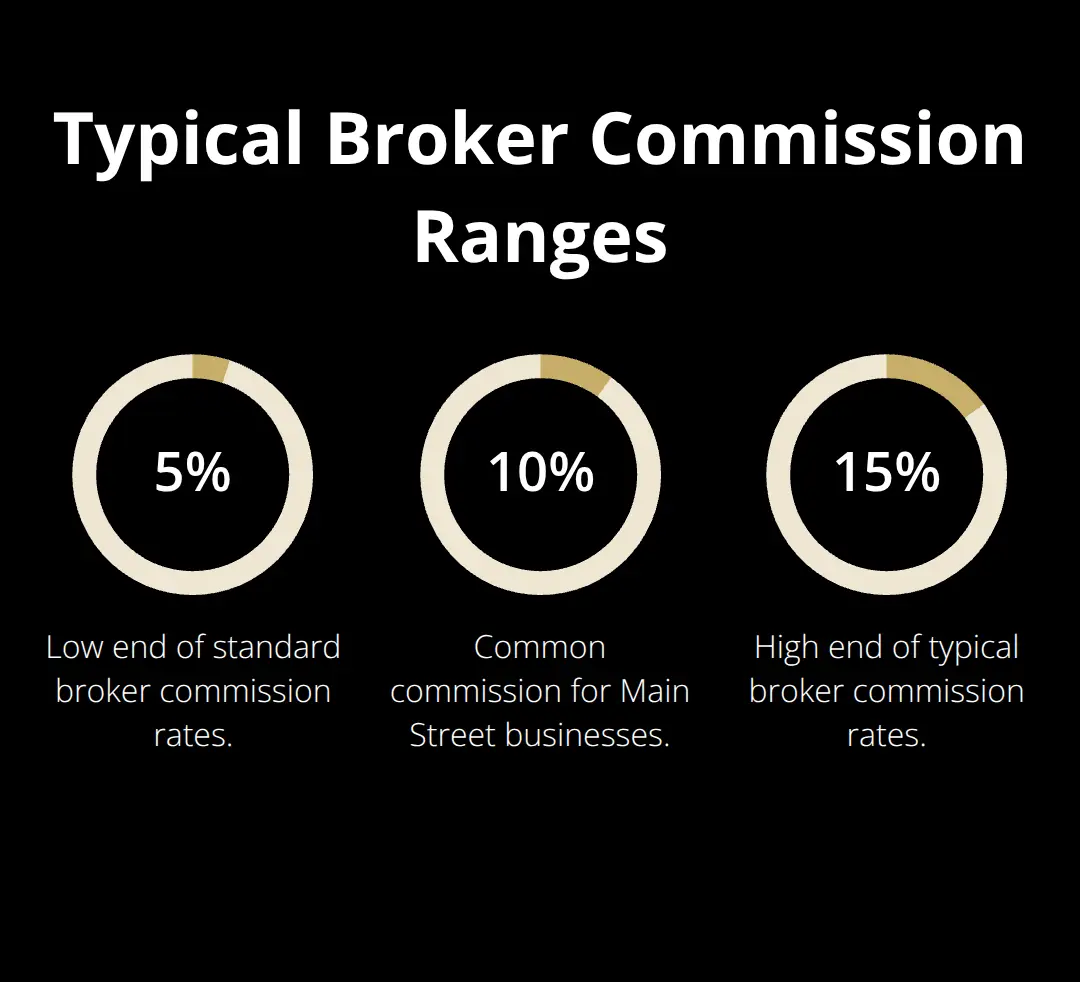
The cost structure of traditional business sales heavily favors the broker, not the seller. Standard broker commissions range from five to fifteen percent of the sale price, with ten percent common for Main Street businesses. Auction platforms eliminate these massive commissions entirely. You control your costs upfront without the broker markup that erodes your final proceeds.
Beyond commissions, brokers layer on additional fees for marketing, legal preparation, and transaction management that remain hidden until late in the process. Newer platforms operate with transparent, success-fee structures where you know your costs upfront—for example, a flat 6% fee paid only when the business actually sells. This pricing transparency extends to buyers as well, who see the actual competitive bids rather than negotiated offers that brokers control.
Market Transparency Attracts Serious Buyers
When buyers see multiple qualified competitors bidding in real time, they trust the final price represents fair market value rather than a broker’s estimate of what the market should bear. This openness attracts serious buyers because they verify that prices reflect genuine market competition, not artificially inflated asking prices that brokers use to anchor negotiations. The transparency of the process (visible bids, clear timelines, open competition) also builds confidence among buyers that they participate in a fair market, which attracts more serious participants and stronger offers.
The pricing transparency removes information asymmetry that traditionally favored brokers. Sellers and buyers both see the same competitive data, which eliminates the leverage brokers gain from controlling what information each party receives. This shift in power dynamics means your business reaches its true market value faster and with fewer intermediaries taking a cut along the way.
Industries and Business Types Best Suited for Auction Sales
E-Commerce and Retail Businesses Move Inventory Fast
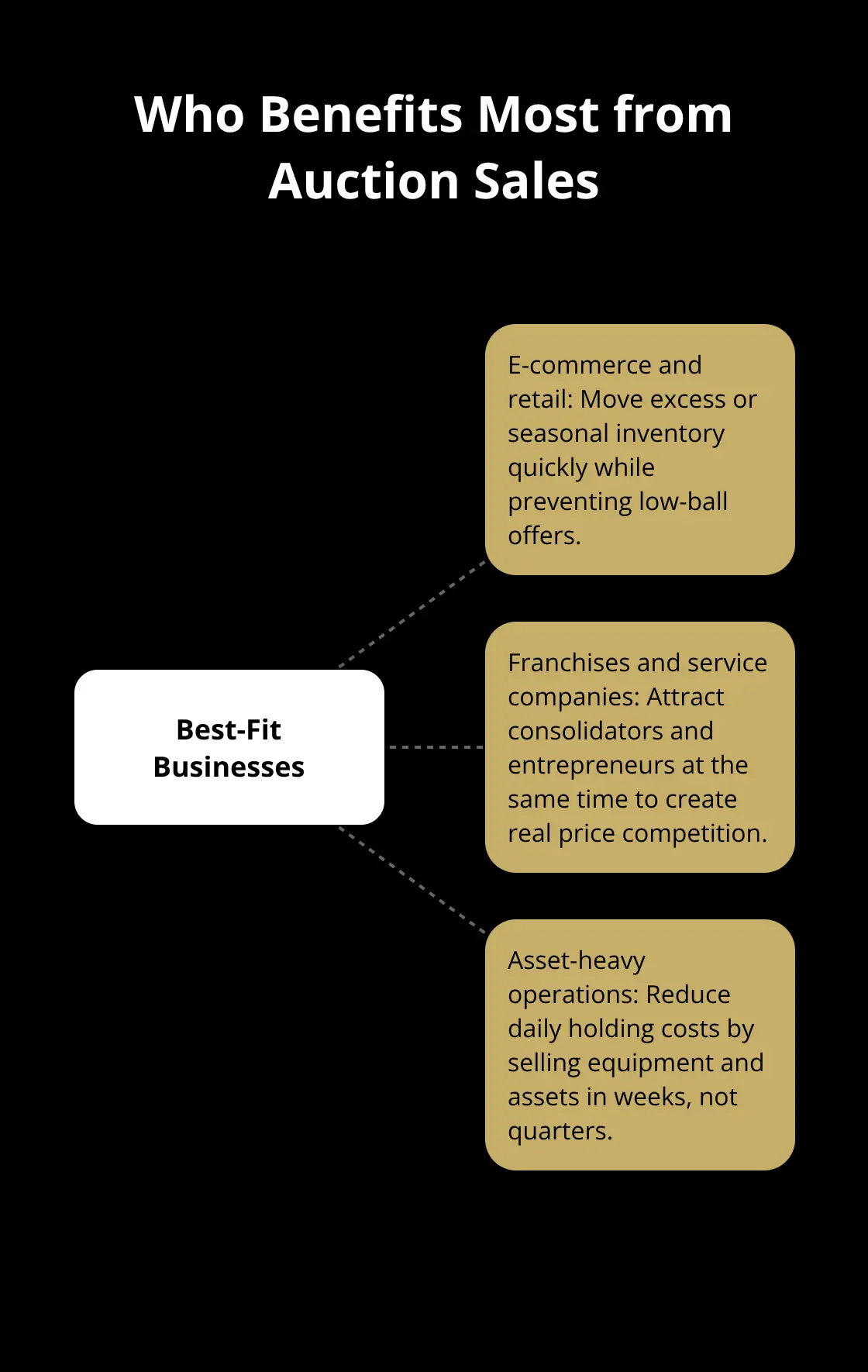
E-commerce and retail businesses face constant inventory pressure, making auction-style sales ideal for rapid liquidation. When an online retailer carries excess stock or needs to close a location, traditional broker sales stretch timelines while inventory depreciates daily. Auction platforms compress this window to weeks, letting multiple buyers compete for bulk inventory, fixtures, and customer lists simultaneously. A retail operation with seasonal goods or outdated stock moves faster through competitive bidding than waiting for a single buyer to emerge through broker channels. The competitive environment also prevents low-ball offers from a single acquirer who knows you’re motivated to sell quickly.
Franchises and Service Companies Attract Multiple Buyers
Service-based companies and franchises benefit differently from auction mechanics because their value sits in established workflows, customer relationships, and recurring revenue rather than physical assets. Franchisees operating single units or multi-unit operators looking to exit find that auction platforms attract franchise consolidators and individual entrepreneurs simultaneously, creating genuine price competition that broker-led sales rarely achieve. A franchise owner selling during a competitive market window can reach dozens of qualified buyers in real time rather than waiting months for a broker to surface candidates.
Asset-Heavy Operations Eliminate Daily Holding Costs
Asset-heavy operations like manufacturing facilities, logistics centers, or equipment rental companies face the steepest holding costs, making speed paramount. Daily carrying costs for warehouses, machinery maintenance, utilities, and staff salaries accumulate while traditional sales drag on for months. Auction platforms eliminate this financial drain by moving inventory and assets in weeks rather than quarters, which directly protects your bottom line during the transition period.
Final Thoughts
Auction-style sale platforms deliver what traditional brokers cannot: speed, transparency, and fair market pricing. Real-time bidding forces immediate price discovery, competitive tension drives higher final offers, and compressed timelines eliminate months of waiting while holding costs accumulate. You avoid the five to fifteen percent commissions that brokers extract, and you control your costs upfront with no hidden fees layered in later.
If your business carries inventory that depreciates, operates in seasonal markets, or faces daily holding costs, auction mechanics work in your favor. E-commerce retailers, franchises, and asset-heavy operations see the biggest gains because speed directly protects their bottom line. Traditional broker sales still make sense if you need hands-off guidance and can absorb the timeline and cost structure, but most sellers find that competitive bidding delivers better results faster.
Unbroker offers a modern platform for selling businesses with transparent, low-cost pricing that eliminates high brokerage fees. Unbroker’s Full Service option charges a 6% success fee, paid only when your business sells, so there’s no cost until you get a deal done. Both options include confidentiality, no hidden fees, access to a vast buyer network enhanced by AI-driven processes, premium marketing tools, legal templates, and negotiation assistance.