Selling a business means navigating fees you might not expect. Commission structures, success fees, and hidden charges can quietly reduce what you actually take home.
At Unbroker, we believe a transparent pricing policy isn’t optional-it’s the foundation of a fair sale. This guide walks you through exactly what to ask, what to watch for, and how to protect your proceeds.
How Business Sale Fees Work
Commission-Based vs. Flat-Fee Models
Most business brokers operate under one of two payment structures, and the difference significantly impacts your bottom line. Commission-based models typically charge 5% to 10% of the final sale price, plus an upfront retainer of $5,000 to $25,000. A broker charging 8% on a $1 million sale takes $80,000, while a 5% fee on the same deal costs $50,000. Brokers profit only when you sell and the price climbs higher, so they have skin in the game. The downside emerges with larger deals: commission fees scale upward, meaning sellers of bigger businesses pay disproportionately more in absolute dollars.
Flat-fee brokers charge a fixed amount regardless of sale price. This approach works well if you feel confident about your valuation but creates risk if the actual sale price falls short. You pay the same fee whether your business sells for $500,000 or $2 million, which can feel unfair if the market underperforms your expectations.
Success Fees and Hidden Layers
Beyond the primary fee structure, many brokers layer on success fees that activate only when specific milestones occur. Some charge a separate success fee on top of a base commission, effectively doubling their take. Others embed success fees into their total structure but fail to disclose all the conditions that trigger them.
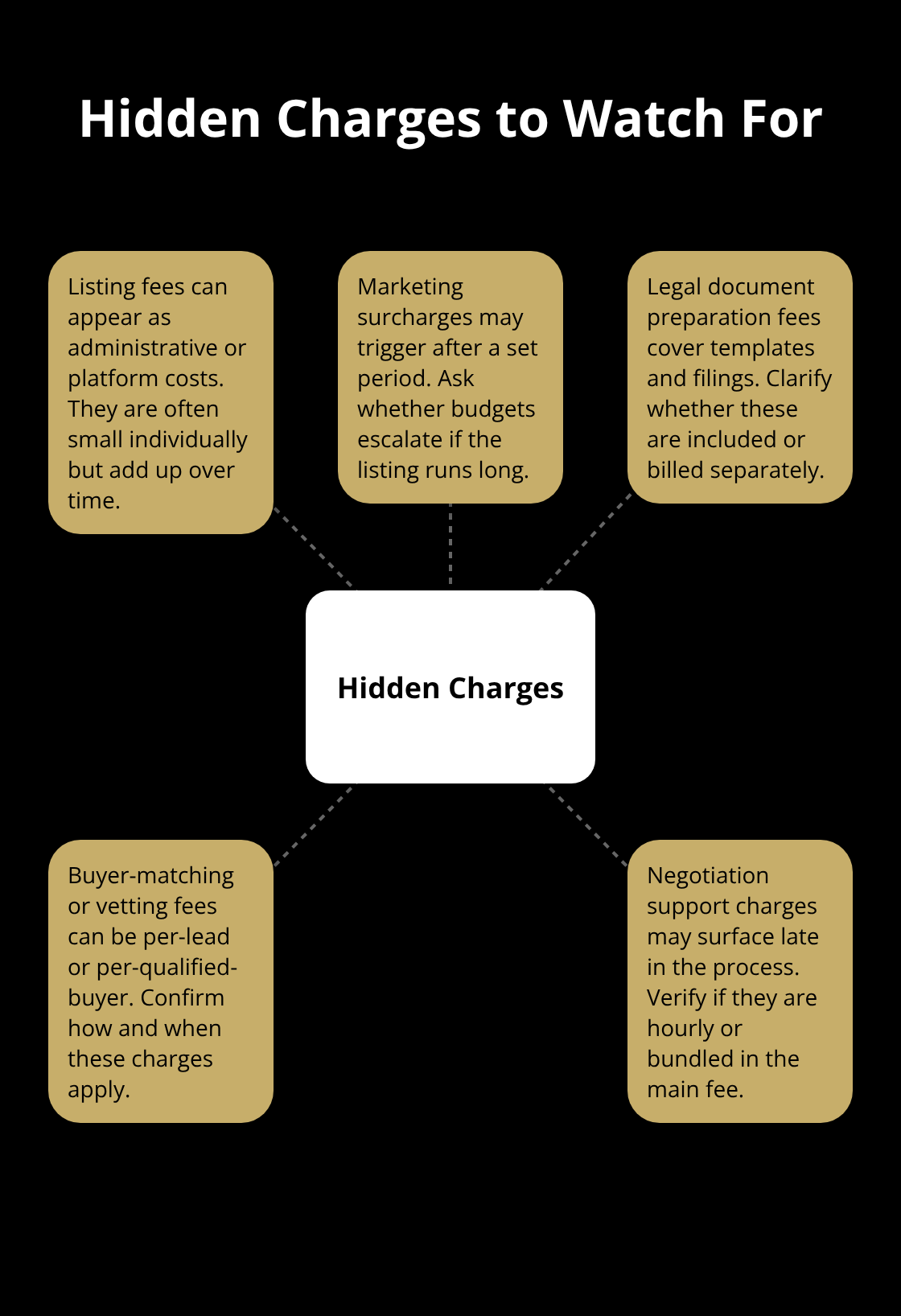
The real cost drain comes from hidden charges: listing fees, marketing surcharges, legal document preparation, buyer-matching fees, and negotiation support charges that appear in fine print or emerge only during the sale process. For a small business valued at $1 million or less, total legal fees are typically between $5,000 and $12,500. Research on pricing transparency in business transactions shows that buyers and sellers who understand the full cost structure upfront make better decisions and experience fewer surprises.
What You Must Ask Upfront
The most dangerous trap is not asking upfront whether additional costs exist beyond the stated fee. Request a complete written breakdown of every possible charge before you sign anything, and specifically ask whether marketing, legal templates, document preparation, and buyer coordination carry separate fees. If a broker hesitates to provide this list or claims costs depend on the specific sale, that’s a red flag worth investigating further.
Understanding these fee structures positions you to compare brokers accurately and protect your proceeds. The next section walks you through the specific questions that separate transparent brokers from those hiding costs in their agreements.
What to Ask Before You Sign
The moment a broker hands you a fee agreement, most sellers skim it and sign. That approach costs money. Start by demanding a complete written fee schedule that lists every charge, not just the primary commission or flat fee. Ask the broker to itemize marketing costs, buyer coordination fees, legal document preparation, transaction support, and any success bonuses tied to sale price or timing. If the broker resists providing this in writing or says costs vary by deal, walk away. Transparent brokers provide this breakdown without hesitation because they have nothing to hide.
Request Specific Numbers in Writing
Request specific numbers: What is the exact percentage or dollar amount for each fee? Does the marketing budget increase if your business doesn’t sell in the first 90 days? Are there separate charges for legal templates, document filing, or buyer communication? Write down every answer and ask the broker to confirm it in email. This creates accountability and prevents the classic defense that you misunderstood a verbal conversation.
Calculate Total Cost Across Brokers
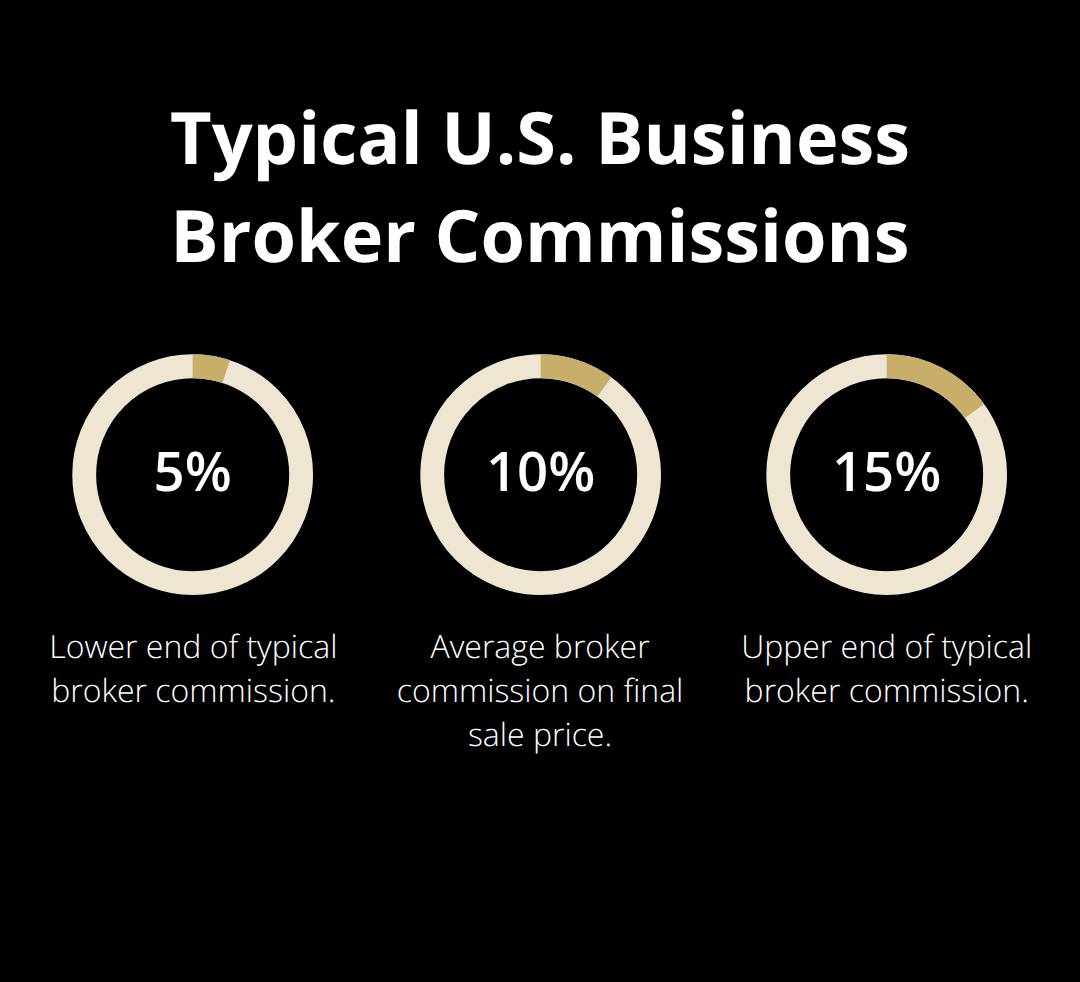
Comparing brokers requires more than checking their headline fee rate. Business brokers typically charge 5% to 15% commission, with an average around 10% of the final sale price.
A broker charging 5% commission plus $15,000 in hidden marketing and legal fees is often more expensive than one charging 6% with no additional costs. Calculate the total cost for a realistic sale price based on your business valuation, then compare that number across brokers, not just their advertised rate.
If Broker A charges 6% with no hidden fees and Broker B charges 5% plus $20,000 in additional charges, Broker A costs less on a $1 million sale ($60,000 versus $70,000). Request written proposals from at least three brokers and verify that each proposal covers the same scope of services. Watch for brokers who quote lower fees but exclude buyer marketing, negotiation support, or legal assistance, then upsell these services later. Ask each broker directly: What happens if the sale takes longer than expected? Do fees increase? Are there monthly holding charges? How do you charge if a deal falls through? These questions reveal which brokers build surprises into their agreements.
Identify Red Flags in Fee Structures
Brokers who quote fees verbally without providing written documentation should raise immediate concern. If a broker mentions success fees but buries the details in a 20-page contract, that’s intentional. Pricing agreements that reference “market rates” or “standard fees” without specifying exact numbers give the broker flexibility to charge more later.
A broker who claims their fee structure depends on your industry, sale timeline, or buyer type is hiding something, because transparent pricing works the same way for all clients. If a broker requires an upfront retainer but won’t guarantee it applies toward the final fee, you’re essentially prepaying for services without protection. The strongest red flag appears when a broker resists putting their fee agreement in writing before you sign the engagement letter. Legitimate brokers understand that clear written terms protect both parties and reduce disputes.
Conversely, brokers offering unusually low fees compared to competitors often make up the difference through hidden charges or poor service quality. Request references from their last five sellers and specifically ask those sellers about unexpected costs or fees that appeared after closing. Most will tell you the truth about whether they felt surprised.
Now that you understand what questions to ask and which red flags to watch for, the next section covers the specific mistakes sellers make when they fail to negotiate these terms upfront and how those mistakes compound throughout the sale process.
Where Sellers Leave Money on the Table
The Hidden Cost Trap
Most sellers make their first pricing mistake before they even meet a broker. They assume that if a broker quotes a fee, that’s the only cost they’ll pay. This assumption costs them thousands. When a broker says they charge 8% commission, sellers hear a complete price. What they miss are the marketing surcharges that activate after 60 days, the legal document preparation fees that weren’t mentioned during the initial call, the buyer coordination charges that appear in the fine print, and the success bonuses that trigger when the sale closes above a certain threshold.
A seller in California discovered that their broker’s stated 7% commission came with $18,000 in additional charges for marketing materials, buyer vetting, and transaction coordination. The broker had listed these services in the engagement letter, but buried them across three separate pages. The seller paid $68,000 in total fees on a $1 million sale instead of the $70,000 they expected from a 7% rate, but only after calculating backward from the final bill. At that point, negotiating was impossible.
Comparing Brokers the Wrong Way
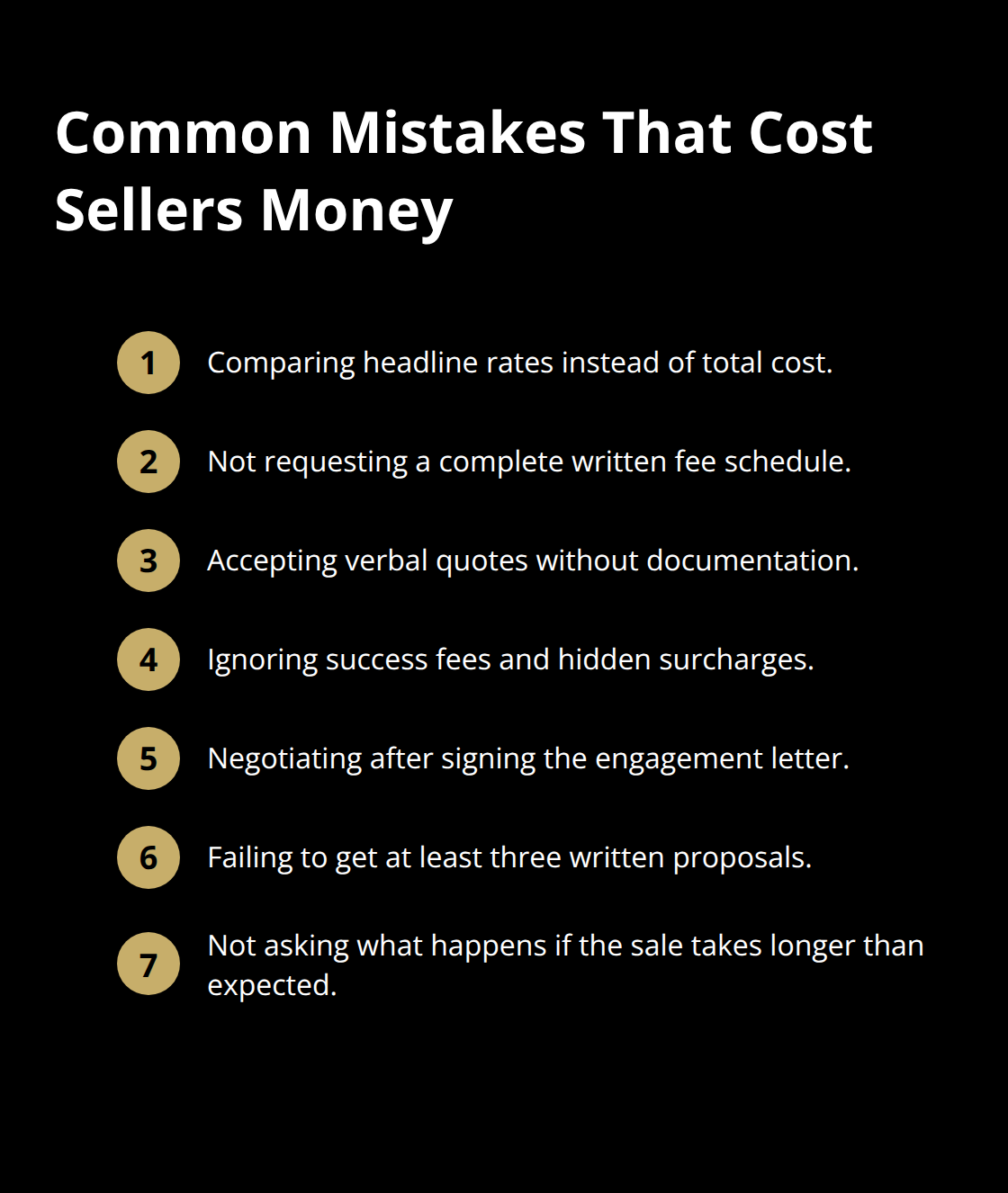
The second mistake emerges from poor comparison methodology. Sellers contact three brokers, write down their headline fee rates, and pick the lowest number. A broker charging 5% appears cheaper than one charging 6%, so the seller signs with them. Then the sale process begins, and the 5% broker starts requesting additional payments.
The 6% broker, meanwhile, handles everything within their quoted fee. The seller with the cheaper broker has paid more in absolute dollars and received worse service.
This happens because sellers fail to request written fee schedules before comparing brokers. When you ask a broker for their complete written fee structure and they hesitate, delay, or claim it depends on your specific situation, that broker operates without transparent pricing. They’re preserving flexibility to charge you more later. The strongest sellers request proposals from at least three brokers, calculate the total cost for a realistic sale price on each proposal, then compare those totals, not the advertised rates. A broker charging 6% with zero hidden fees costs less than one charging 5% plus additional charges on a $1 million sale. The math is simple once you have the actual numbers.
Negotiating at the Right Time
The third mistake is negotiating too late. Most sellers wait until they’ve already signed the engagement letter before asking about fee flexibility. At that point, they’ve surrendered their leverage. The time to negotiate is before you sign. Many brokers build flexibility into their fee structures but won’t offer it unless you ask. Some will reduce their commission rate if you commit to a longer exclusive period. Others will waive certain service charges if you handle your own buyer introductions. A few will negotiate success fees based on sale price milestones. You won’t know these options exist unless you explicitly ask during the initial conversation and request written confirmation of any negotiated terms.
Sellers who negotiate upfront often reduce their total costs by 10% to 20%. Those who wait until after signing rarely get meaningful concessions because the broker has already committed resources to your deal. Unbroker charges a 6% success fee with no hidden fees, meaning what you see is what you pay. This approach removes the negotiation burden and lets you focus on selling your business rather than deciphering fee structures.
Final Thoughts
Transparent pricing policy separates brokers worth trusting from those protecting their margins at your expense. The sellers who walk away with the most money aren’t the ones who negotiate hardest at closing-they’re the ones who asked the right questions upfront and compared total costs across multiple brokers before signing anything. Your bottom line depends on three concrete actions: request written fee schedules from every broker you consider and calculate the total cost for a realistic sale price on each proposal, ask brokers directly about every possible charge (marketing surcharges, buyer coordination fees, legal document preparation, success bonuses, and what happens if your sale takes longer than expected), and negotiate before you sign the engagement letter, not after.
The cost of getting this wrong is substantial. A seller who fails to compare total costs across brokers might pay $15,000 to $30,000 more than necessary on a $1 million sale, and that money comes directly from your proceeds and never comes back. Conversely, sellers who demand transparency and compare proposals accurately often reduce their total costs by 10% to 20% compared to those who pick a broker based on advertised rates alone. Many brokers will reduce fees or waive certain charges if you ask during the initial conversation, but they won’t offer flexibility once you’ve committed.
We at Unbroker built our platform around this principle. Our Full Service Business Sale charges a 6% success fee with no hidden costs, meaning you know exactly what you’ll pay before you list. Visit Unbroker to see how transparent pricing works in practice and get a clear picture of what your sale will actually cost.