Selling a private business quietly is one of the hardest parts of the transaction. News travels fast, and one leak can derail months of planning.
We at Unbroker have seen deals fall apart because employees panicked, competitors circled, or customers got nervous. That’s why private business sale tips matter so much-they’re the difference between a smooth close and chaos.
Why Confidentiality Keeps Deals Alive
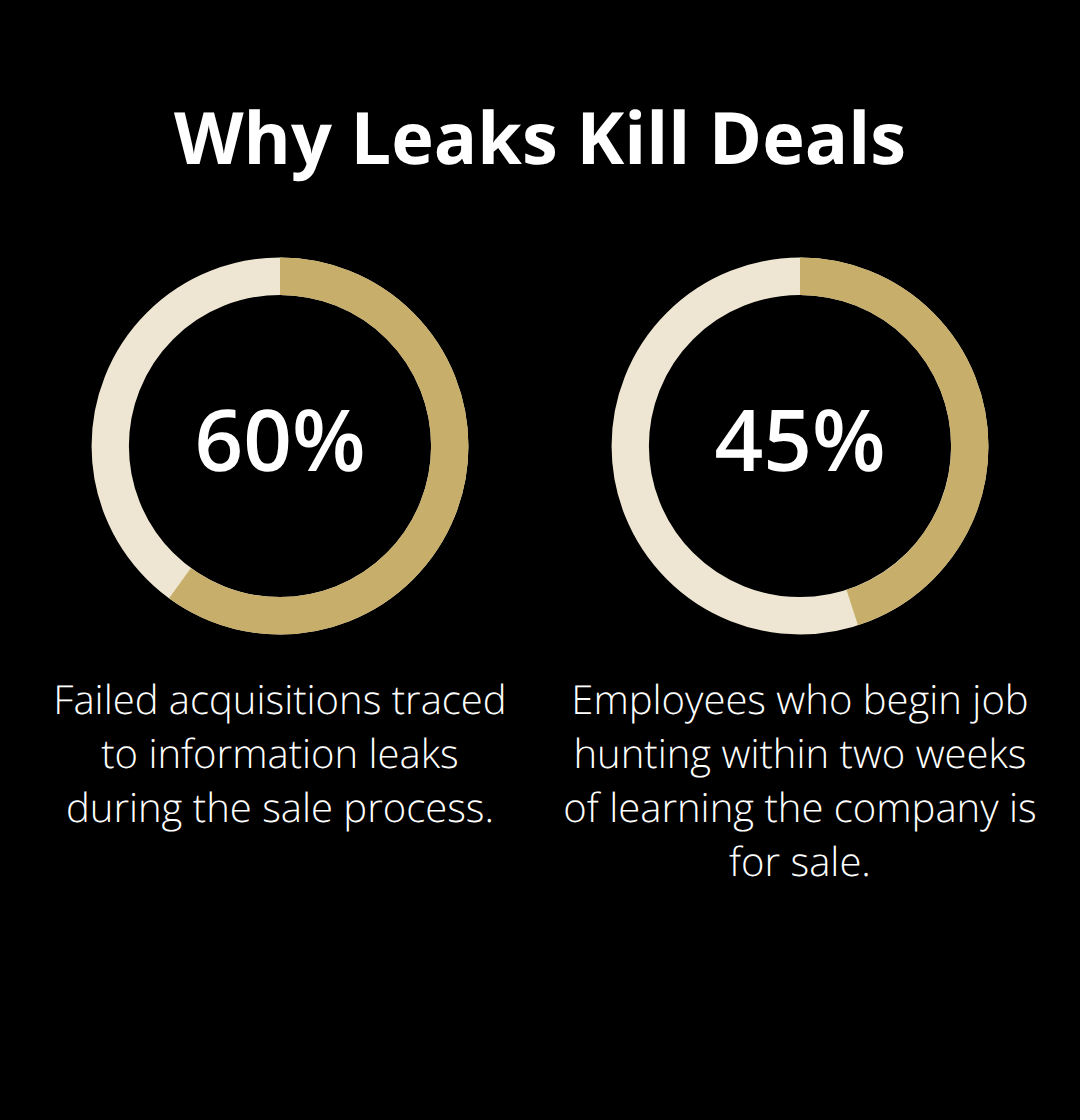
Losing control of your sale narrative tanks deals faster than bad financials. Information leaks destroy months of work, and the damage extends far beyond the negotiation room. When word leaks that you’re selling, three immediate problems surface: your team updates LinkedIn, your biggest customers call competitors to hedge their bets, and your market position weakens before you’ve even closed. Research from Harvard Business School found that 60% of failed business acquisitions trace back to information leaks during the sale process, not valuation disagreements.
Your competitive advantages-proprietary systems, customer lists, pricing strategies, supplier relationships-become worthless the moment competitors know you’re distracted by a sale.
Employees Won’t Abandon Ship If They Don’t Know It’s Sinking
Confidentiality protects your operational stability during the most vulnerable period. The moment your team learns about a potential sale, key people start interviewing elsewhere. A study by the Society for Human Resource Management showed that 45% of employees begin job hunting within two weeks of learning their company is for sale. Your sales reps stop closing deals. Your product developers slow down. Your customer service team loses focus. The buyer walks away because revenue drops and headcount becomes unstable. Keeping the sale confidential means your business runs at full capacity, which makes it more attractive and valuable to serious buyers. You maintain employee retention, operational momentum, and the financial metrics that matter most during due diligence.
Your Customers and Suppliers Stay Loyal When They’re Not Worried
Customer relationships evaporate when uncertainty spreads. Suppliers tighten payment terms. Long-term contracts suddenly feel risky to your counterparties. A confidential sale process lets you maintain these critical relationships without triggering defensive behavior. Your largest customers won’t start exploring alternatives if they don’t know your ownership is changing. Your suppliers won’t demand prepayment or new credit agreements. Once the sale closes and you announce it publicly, these relationships transfer to the new owner intact. This continuity directly impacts the purchase price-buyers pay more for businesses with stable customer bases and established supplier networks than for ones where relationships fracture before closing.
Competitive Advantages Stay Hidden Until You Control the Announcement
Your market position strengthens when you control the timing and narrative. Competitors can’t poach your strategies, customers, or talent if they don’t know you’re selling. Confidentiality gives you leverage in negotiations because buyers know they’re getting a business operating at peak performance (not one already damaged by market knowledge). The sale process moves faster when fewer people know about it-fewer rumors circulate, fewer stakeholders demand answers, and fewer complications arise. This speed matters because every week of extended negotiations increases the risk of a leak.
Structure Matters More Than You Think
How you manage information flow determines whether confidentiality holds. The next section covers the specific structures and processes that keep sales truly private.
How to Structure a Confidential Sale Process
NDAs sound straightforward until you realize most sellers use weak versions that fail when tested. We recommend a tiered NDA approach: standard agreements for initial inquiries, enhanced NDAs with specific confidentiality windows for serious buyers who receive financial statements, and purchase agreement confidentiality clauses that extend protection through closing. The difference matters because courts in Delaware and New York enforce NDAs differently when they specify what information is protected, how long protection lasts, and what penalties apply for breaches. A vague NDA stating only that information is confidential fails in litigation. Instead, your NDA should list protected categories: customer lists, revenue figures, supplier contracts, technology, pricing models, and employee information. Set a defined protection period (typically 2-3 years post-sale) and include liquidated damages clauses stating exact dollar amounts for breaches rather than relying on courts to determine damages later. Most importantly, require buyers to sign before you share anything beyond basic company description and industry overview. This single step stops tire-kickers and filters for serious, qualified buyers willing to commit to confidentiality.
Compartmentalize Information Across Buyer Stages
Information compartmentalization separates tire-kickers from real buyers faster than any other mechanism. Stage one involves only you, your legal advisor, and potentially a broker or investment banker if you use one. They sign confidentiality agreements before learning you’re selling. Stage two brings in qualified buyers identified through your network or broker’s buyer database who have signed NDAs and meet your criteria (financial capacity, strategic fit, industry experience).
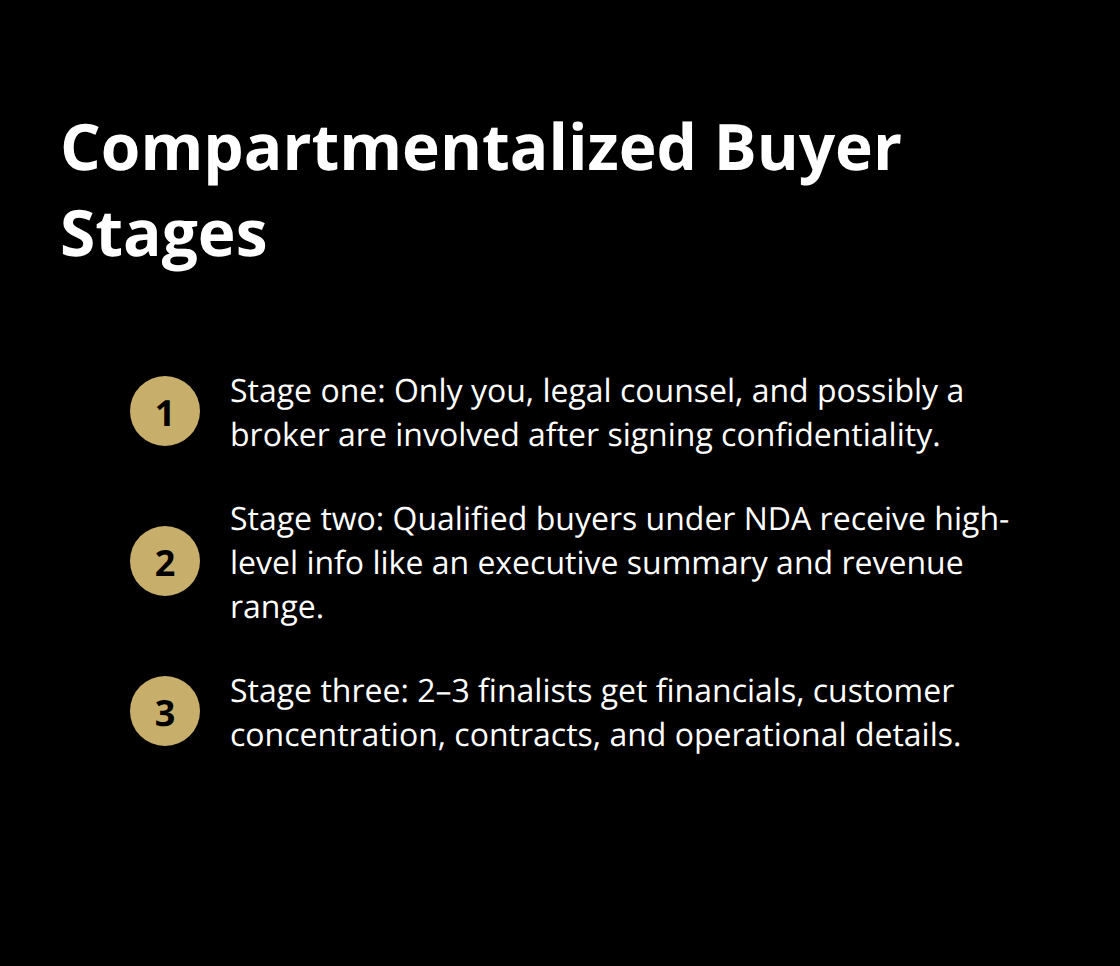
These buyers receive basic information: executive summary, industry position, revenue range (not exact figures), and general business description. Stage three, reserved for finalists-typically 2-3 buyers maximum-includes financial statements, customer concentration analysis, supplier contracts, and operational details. The key principle: never show your full hand to anyone except the buyer you’re actually negotiating with. Most sellers make the mistake of sharing everything with every interested party, which multiplies leak risk exponentially.
Secure Your Digital Communications
Digital communication channels create permanent records that leak during disputes or inadvertently through forwarded emails. Limit financial discussions to in-person meetings or encrypted video calls with call recording disabled. Email should handle only logistical coordination and formal documents, never sensitive figures or strategic information. Use a secure data room for document sharing, which lets you track who viewed what, when they accessed it, and revoke access instantly if negotiations fall apart. This matters because data rooms create an audit trail protecting you legally if a buyer later claims they never saw certain information or if confidentiality gets breached. Set automatic access expiration dates in your data room so documents disappear after a defined period. Require password changes for each access session. Disable printing and downloading where possible, forcing buyers to review documents in the data room itself. These technical controls sound excessive until a competitor somehow obtains your customer list three months into negotiations and you need to prove exactly who had access and when.
Choose Your Advisors Carefully
Your legal team and broker shape how tightly you control information flow. Select advisors with M&A experience who understand confidentiality requirements specific to your industry. Ask potential advisors how they’ve handled information leaks in past deals and what systems they use to prevent them. Verify they maintain separate data rooms for each transaction and don’t share buyer lists across multiple sellers. A broker or investment banker with a strong reputation protects your sale better than one focused solely on volume. They screen buyers more rigorously, which reduces exposure to unqualified prospects who might leak information. Interview multiple advisors and ask directly about their confidentiality protocols before hiring anyone.
Prepare for the Buyer Screening Conversation
Serious buyers expect confidentiality requirements and respect them. When you first contact qualified prospects, explain your confidentiality process upfront rather than treating it as a surprise. Tell them you’ll share basic information first, then progressively reveal more as they advance through stages. This transparency actually builds trust because buyers see you’re protecting your business professionally. Unqualified buyers often balk at strict NDAs or data room access restrictions-that’s exactly the signal you want. Qualified buyers with serious acquisition experience sign NDAs without hesitation and follow your information protocols without complaint. This filtering happens naturally when you structure your process correctly, leaving you negotiating only with buyers who respect confidentiality from the start.
The mechanics of confidentiality protect your business during the sale, but your choice of advisors determines whether those mechanics actually work. The next section covers how to identify and work with the right team to execute a truly private sale.
Who Should You Trust With Your Sale
The advisors you select determine whether your confidentiality strategy actually holds or crumbles under pressure. Most business owners make this decision based on referrals or convenience, which is exactly backward. You need advisors with specific M&A experience who have managed confidential sales in your industry and understand the mechanics of information control. When interviewing potential legal counsel or brokers, ask directly: How many confidential business sales have you closed in the past three years? What specific systems do you use to prevent information leaks? Can you name a deal where confidentiality was tested and how you handled it? Vague answers disqualify them immediately.
Evaluate Your Advisor’s Infrastructure
A quality advisor walks you through their data room protocols, explains how they screen buyers before introducing them to you, and shows you exactly which team members touch your information at each stage. They also maintain separate buyer networks for each transaction rather than recycling the same prospects across multiple seller clients. This separation matters because a broker who shops your deal to the same 50 buyers they contact for every other client multiplies leak risk exponentially. The quality of your advisor’s buyer network directly impacts both confidentiality and deal success because serious, qualified buyers respect confidentiality protocols while unqualified prospects frequently disregard them or leak information inadvertently through their own networks.
Screen Buyers Before Sharing Information
Screening buyers before information sharing separates professionals from amateurs. Require every prospect to complete a buyer questionnaire covering their acquisition experience, funding sources, industry background, and timeline. This document forces self-selection because real buyers complete it without complaint while unqualified prospects ghost or provide vague answers. Only after reviewing responses and verifying basic facts should you send an NDA. This sequence matters because sending NDAs to everyone who expresses interest wastes legal resources and creates excessive confidentiality agreements that become difficult to track.
Control Access Through Technical Safeguards
Once a buyer signs, grant them access to your data room with password-protected login credentials that expire after 30 days unless renewed. Track every document they view, when they accessed it, and how long they spent reviewing materials. This audit trail protects you legally if information surfaces later and you need to prove who had access. Disable printing on financial statements and customer lists within your data room, forcing buyers to take notes rather than creating exportable documents. One buyer printing your customer list and forwarding it to a competitor destroys months of work, so technical controls matter more than trust.
Protect Sensitive Conversations
Set up a secure video call platform for sensitive discussions and disable recording capabilities so conversations remain ephemeral. Avoid email entirely for numbers, strategy, or competitive information.
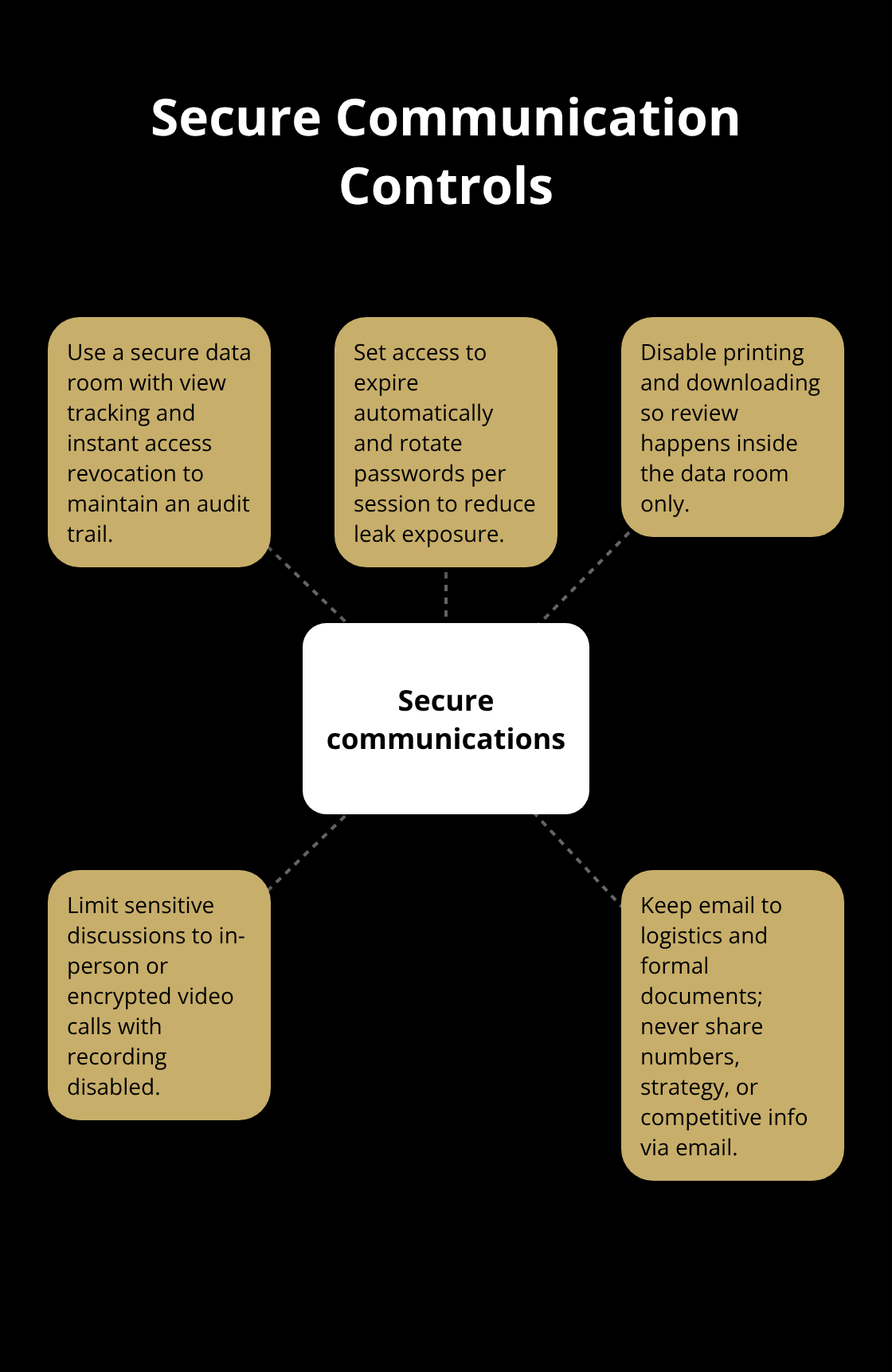
When you do communicate via email, use generic language that reveals nothing if the message gets forwarded. Instead of writing “customer concentration is 40% with three accounts,” write “concentration data available in data room.” These specific practices sound paranoid until an employee at a buyer firm forwards your financial statements to their CEO’s friend who runs a competitor, which happens more often than most sellers realize.
Final Thoughts
Confidentiality in a private business sale isn’t optional-it’s the foundation of a successful transaction. Tiered NDAs filter serious buyers from tire-kickers, compartmentalized information access limits exposure, secure data rooms create audit trails, and careful advisor selection ensures experienced management of your process. These private business sale tips aren’t theoretical best practices; they’re concrete steps that separate deals closing smoothly from ones collapsing under preventable leaks.
Consistency makes confidentiality work throughout your entire sale. You can’t restrict customer lists from early-stage prospects while sharing them freely with finalists. You can’t maintain strict protocols with one buyer and abandon them with another. The moment you break your own rules, information control fails and your team, advisors, and buyers all sense that confidentiality no longer matters. Businesses sold confidentially maintain stronger customer relationships, retain key employees through transition, and transfer to new owners with operational momentum intact.
Buyers pay premiums for businesses that haven’t suffered damage from market knowledge or competitive positioning. We at Unbroker understand that selling privately requires systems, experienced advisors, and disciplined execution rather than good intentions alone. Explore Unbroker to discover how our platform combines expert guidance with secure processes designed specifically for confidential sales.