Selling a business is one of the biggest financial decisions you’ll make. The difference between selling at the right moment and waiting too long can mean hundreds of thousands of dollars.
At Unbroker, we’ve seen countless founders miss their window because they didn’t recognize the exit timing clues that signal peak opportunity. This guide shows you exactly what to watch for.
When Your Business Hits the Right Conditions
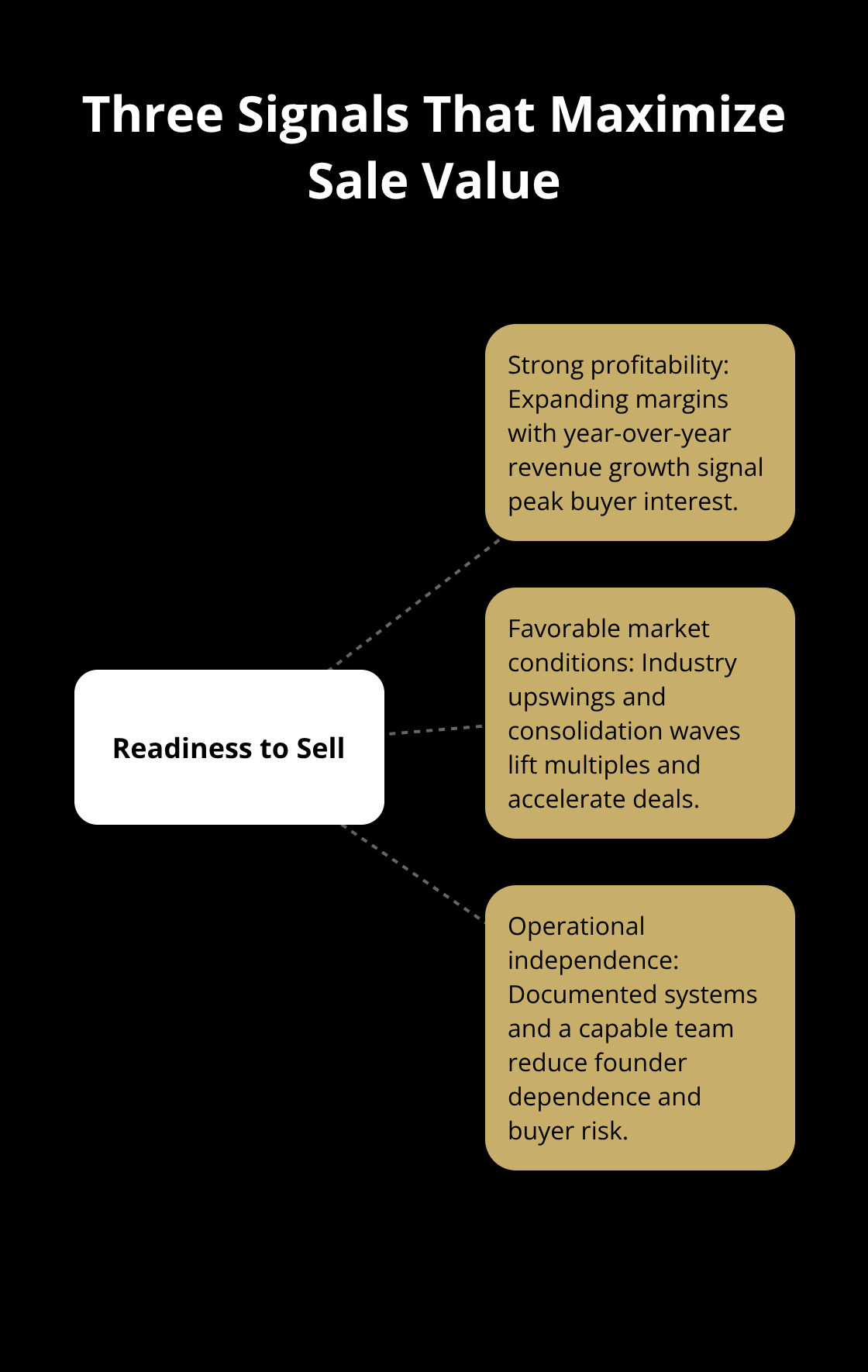
Profitability Signals Peak Value
Most founders know their business performs well but confuse steady performance with readiness to sell. A critical difference exists between the two. A business trading at 3x revenue does not equal one trading at 5x or 6x. According to data from Axial, median valuation multiples for small to mid-market businesses range from 4x to 6x EBITDA depending on industry, growth rate, and profitability trajectory. If your business grows revenue year-over-year and your profit margins expand rather than hold steady, you operate in the window where buyers pay premium prices.
Profitability matters far more than revenue alone. A $2 million revenue business with 30% net profit commands significantly higher value than a $5 million revenue business with 5% net profit. Sellers often underestimate their value because they focus on top-line numbers instead of what actually drives purchase price. The buyer cares about what your business keeps, not what it generates.
Market Conditions Create Windows
Your industry’s market conditions matter as much as your internal metrics. Real estate brokerages saw valuations compress when interest rates rose in 2023, while healthcare service providers remained hot. SaaS companies with net revenue retention above 100% commanded premium multiples even during market corrections. If your industry experiences consolidation, that signals a buying opportunity. Strategic acquirers move quickly when they spot fragmented markets they can roll up.
Timing your exit during an industry upswing versus a downturn can mean the difference between a 4x multiple and a 6x multiple on the same business. The market window often closes faster than founders expect.
Operations Without You
The third signal is operational. When your business runs on documented systems rather than your personal involvement, it attracts a broader buyer pool. Private equity firms specifically seek businesses where the founder steps away and operations continue unchanged. If you still close every deal, manage key client relationships, or make critical operational decisions, buyers discount the purchase price because they acquire execution risk along with the business.
The moment you build a team that handles these functions reliably, your business transitions from founder-dependent to business-dependent (which increases value substantially). This operational independence represents the final piece of the readiness puzzle. Once all three signals align-strong profitability, favorable market conditions, and systems that function without you-the path forward becomes clear.
When Sellers Lose the Sale
Waiting Too Long Destroys Value
The most expensive mistake founders make happens not when they decide poorly, but when they decide too late. Founders who wait for perfect conditions often watch their window close entirely. A founder with a business generating $1 million in annual profit might reasonably expect a 5x multiple when market conditions favor their industry. That same business, six months later during a market correction, trades at 3.5x. The difference is $1.5 million in lost value. Waiting for absolute certainty costs far more than moving decisively when conditions align.
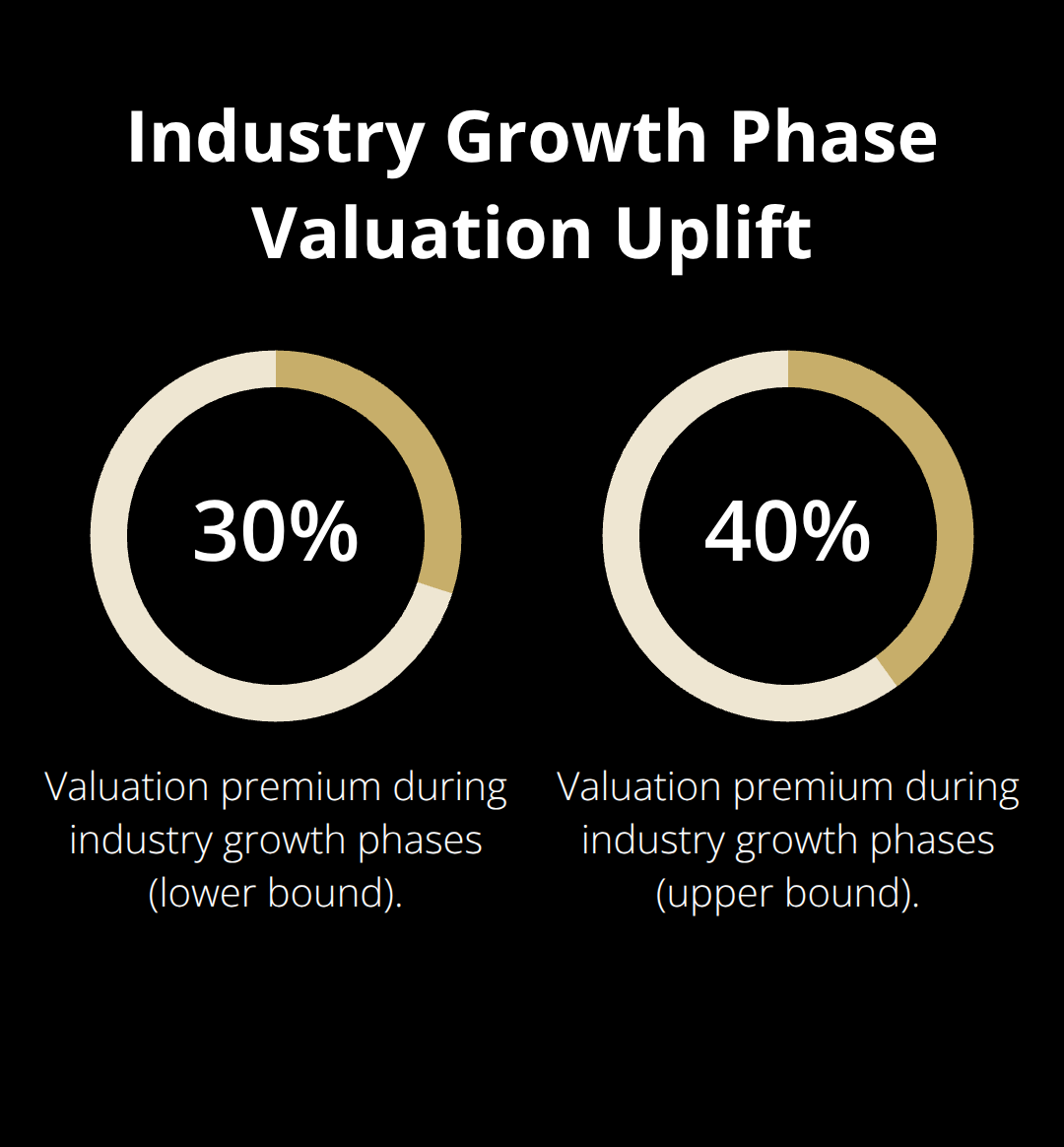
Businesses sold during industry growth phases command 30% to 40% higher valuations than identical businesses sold during contraction. Founders often rationalize delay by telling themselves revenue will grow another 20%, margins will improve, or they’ll clean up one more operational loose end.
Each delay compounds the risk. Market momentum shifts faster than most founders anticipate.
Buyer Interest Disappears Quickly
A buyer who expresses serious interest today might move to a competitor’s business next quarter if you don’t move forward. The energy and capital allocated to your business gets redirected elsewhere. When a strategic acquirer approaches with genuine interest or when you receive multiple inbound inquiries within months, that signals market appetite. Founders frequently dismiss these signals as one-off opportunities rather than recognizing them as evidence of peak demand.
The buyer reaching out today has capital allocated and a timeline. That same buyer’s priorities shift next quarter. We’ve watched founders turn down preliminary offers in the 4x to 5x range, convinced they’ll achieve 6x if they wait. Eighteen months later, no other buyers appear and the original acquirer has moved forward. The cost of ignoring that signal often exceeds the difference between multiples.
Selling Into Weakness Requires Honest Assessment
Selling during a market downturn presents a different problem with the same outcome: destroyed value. When interest rates rose sharply in 2023, service businesses dependent on client financing suddenly looked riskier to acquirers. Those founders who waited hoped conditions would recover before listing. Many are still waiting.
A founder facing a market downturn should evaluate whether their business fundamentals remain strong despite external headwinds. If cash flow stays positive and customer retention holds, selling into weakness often beats waiting for recovery that may take years. The market window rarely reopens at the same valuation level.
The Real Cost of Hesitation
The pattern repeats across industries and founder profiles. A founder with strong profitability and documented operations possesses everything needed to attract buyers. Adding another quarter of revenue growth or another operational refinement rarely justifies the risk of missing peak market conditions. The variables you can’t control (interest rates, buyer capital availability, industry consolidation activity) shift faster than the variables you can (revenue, margins, systems).
Your business reaches a point where it’s ready to sell. That readiness doesn’t last indefinitely. The question isn’t whether conditions will improve further-it’s whether the market will reward that improvement or whether external factors will compress valuations before you capture it. Understanding this distinction separates founders who maximize value from those who watch it slip away.
Preparing Your Business for Sale
Buyers purchase based on what your financial records, operational documentation, and legal standing prove-not on what you tell them. The preparation phase separates founders who sell quickly at strong valuations from those who face buyer skepticism and extended due diligence.
Most founders underestimate how thoroughly acquirers scrutinize a business before committing capital. A disorganized financial history, missing operational documentation, or unresolved legal issues don’t just slow the process-they destroy negotiating power and reduce final offer prices by 10% to 20% according to transaction data from business sale platforms.
Financial Records Must Tell a Clear Story
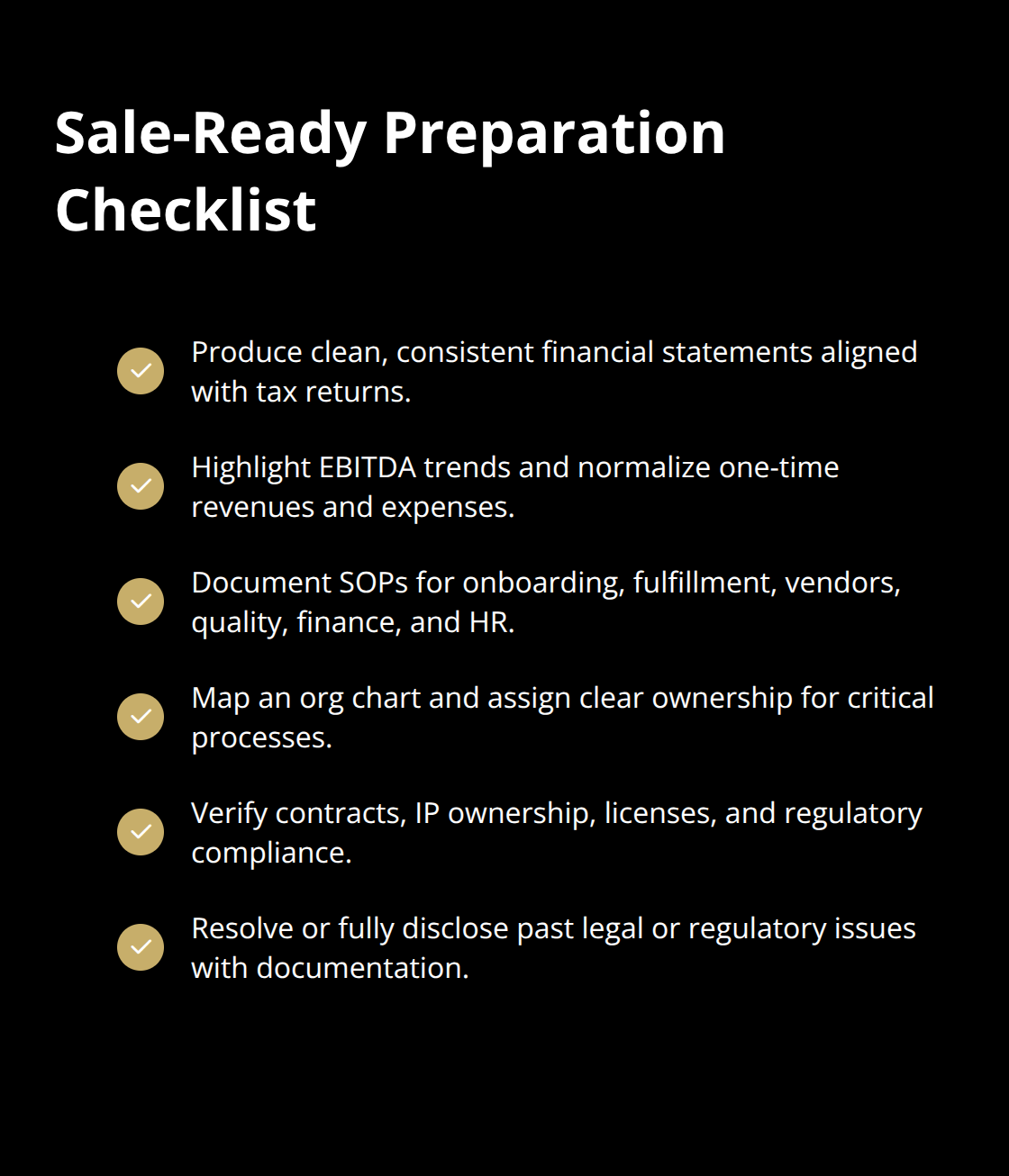
Your accounting needs to demonstrate consistent profitability and predictable cash flow, not just top-line revenue. Buyers specifically analyze EBITDA trends because that metric shows what the business actually generates for an owner. If your records show revenue growing but EBITDA flat or declining, buyers assume operational inefficiency or hidden costs. More critically, inconsistent accounting practices raise red flags about data reliability.
A buyer encountering financial records that don’t reconcile with tax returns will demand a discount to account for the risk that other numbers are equally questionable. Ensure your accountant prepares financial statements using consistent methods year over year and that those statements align precisely with your tax filings. Discrepancies between what you report to the IRS and what you present to a buyer create immediate credibility damage. If your business uses multiple bank accounts, payment processors, or accounting systems, consolidate and reconcile everything before marketing begins.
Buyers want to see clean, auditable records that require minimal investigation. Additionally, document any non-recurring expenses or one-time revenue spikes because buyers will normalize these items when calculating valuation multiples. A buyer needs to understand which revenue streams repeat reliably and which don’t, which expenses are structural and which are temporary.
Operations Documentation Proves Business Independence
The operational documentation phase is where most founders fail. Having systems is worthless if a buyer can’t verify they actually exist and function without founder involvement. Document every critical process-customer onboarding, order fulfillment, vendor management, quality control, financial reporting, and employee management. Write these processes as if a new manager with no prior knowledge of your business needs to execute them tomorrow.
Vague descriptions like “we handle customer service well” mean nothing. Specific documentation states which platforms you use, which team members own each responsibility, what metrics indicate success, and what happens when problems arise. Create an organizational chart showing reporting relationships and key employee roles. Identify which employees are essential to buyer confidence and which positions could transition to the buyer’s existing team.
If your business depends on specific customer relationships that only you maintain, document exactly how those relationships function and create a transition plan showing how the buyer will maintain them. Clear SOPs and role definitions show buyers the business is stable and can operate independently. Eliminating single points of failure before sale dramatically increases buyer confidence and valuation multiples.
Legal and Liability Exposure Requires Honest Assessment
Unresolved legal issues will surface during due diligence, and they’ll surface at the worst possible moment-when you’re close to closing. Address these problems proactively rather than hoping a buyer doesn’t notice. Review all contracts with customers, vendors, and employees to identify terms that might concern a buyer. Long-term customer contracts with price locks or unfavorable terms need acknowledgment. Vendor relationships dependent on your personal involvement require transition plans.
Employment agreements, non-competes, and confidentiality arrangements need to be in order and clearly documented. Intellectual property ownership must be verifiable-if you’ve built software, created processes, or developed customer lists, ensure your business legally owns these assets and that no former contractors or employees have claims. Environmental compliance, industry licensing, and regulatory standing should be current and documented.
If your business has faced litigation or regulatory investigations in the past, gather complete documentation showing how issues were resolved. Hiding these problems doesn’t protect your sale-it guarantees the buyer will discover them, demand a price reduction, and potentially walk away entirely. Transparency about challenges you’ve already overcome is far preferable to a buyer discovering problems you concealed.
Final Thoughts
Your business reaches a moment where the exit timing clues align and selling makes financial sense, but that moment doesn’t last forever. Strong profitability, favorable market conditions, and operational independence converge at the point where buyers pay premium prices. Miss that window and you negotiate from weakness instead of strength.
Founders often overthink the decision to sell by waiting for absolute certainty that conditions will improve further or that one more quarter of growth will justify holding on. This hesitation costs real money-the difference between selling at 5x EBITDA and 3.5x EBITDA on a million-dollar profit business is $1.5 million in lost value. That’s not theoretical; that’s the actual cost of waiting too long.
We at Unbroker help founders navigate this exact decision by connecting you with qualified buyers and guiding you through preparation and negotiation. Our platform charges a 6% success fee, paid only when your business sells. Explore Unbroker to capture peak value when conditions are right.