Selling a small business is one of the biggest financial decisions you’ll make as an owner. Most business owners underestimate how much preparation is needed to maximize profit and avoid costly mistakes.
At Unbroker, we’ve seen what separates successful exits from disappointing ones. This guide walks you through the entire process, from getting your finances ready to closing the deal.
Ready Your Business for Sale
Rushing the preparation phase costs most owners 15-30% of potential sale value, according to data from the Harvard Business Review. The preparation phase typically takes three to six months, and owners who invest this time see measurably better outcomes. Treat your business like a product that needs to be presented to buyers. This means fixing operational weaknesses, organizing financial documentation, and building systems that work without you constantly managing them.
Financial records that buyers actually trust
Buyers want to see clean, auditable financial statements covering the last three to five years. This is not about making numbers look good-it is about showing consistent, verifiable revenue and profit trends. Start by reconciling your bank accounts, credit card statements, and accounting software. If you use QuickBooks or similar platforms, run a full audit to catch categorization errors and missing transactions.
Buyers will hire their own accountants to verify everything, so any discrepancies you leave behind will be discovered and used against your asking price. Document all major expenses separately, including owner draws, personal expenses paid through the business, and one-time costs. Real buyers understand that some expenses disappear after acquisition, but you need to show them clearly what those are.
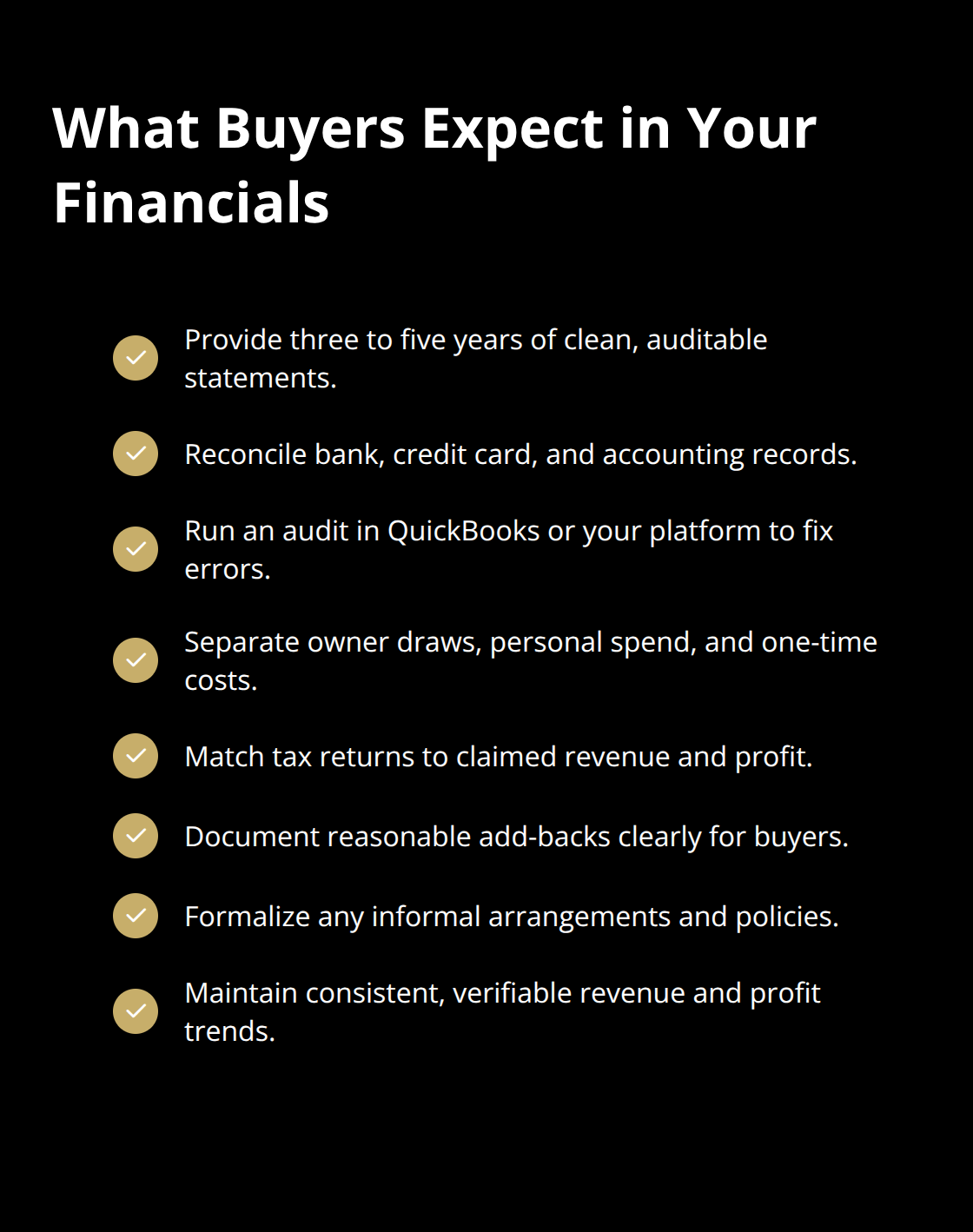
Tax returns matter more than internal reports because they are official documents. If your tax returns do not match your claimed revenue, you have a credibility problem that no explanation will fix. Formalize everything now if you have been running the business informally.
Systems and operations that run without you
Buyers pay more for businesses that do not depend entirely on the owner’s personal relationships or expertise. Document every repeating process in your business, from customer onboarding to invoicing to vendor management. Create written procedures for your top ten revenue-generating activities.
If your business relies on you closing sales, train someone else to do it and prove they can do it consistently for at least three months before the sale. A business where the owner is replaceable is worth significantly more than one where the owner is irreplaceable. Build a management team or identify key employees who understand the business operations and can stay on after the sale.
Buyers typically want to retain existing staff to maintain customer relationships and operational continuity. If your top employees leave after you sell, the buyer will hold you responsible and may renegotiate the purchase price downward. Create an organizational chart showing who does what and how decisions flow through your company. If you are the only person who knows how things work, your business is not ready to sell-and buyers will price it accordingly.
With your operations documented and your finances in order, you are ready to determine what your business is actually worth.
Finding the Right Buyer and Negotiating Terms
Calculate what your business is actually worth
Owners make their first major mistake when they value their business incorrectly. Many rely on arbitrary multiples or compare themselves to businesses in completely different markets. The reality is that small business valuations depend on cash flow, growth rate, customer concentration, and industry benchmarks specific to your sector. The SBA reports that small businesses typically sell for two to four times EBITDA, but this varies wildly by industry. A software company might command five to six times EBITDA while a service business might only reach two to three times.
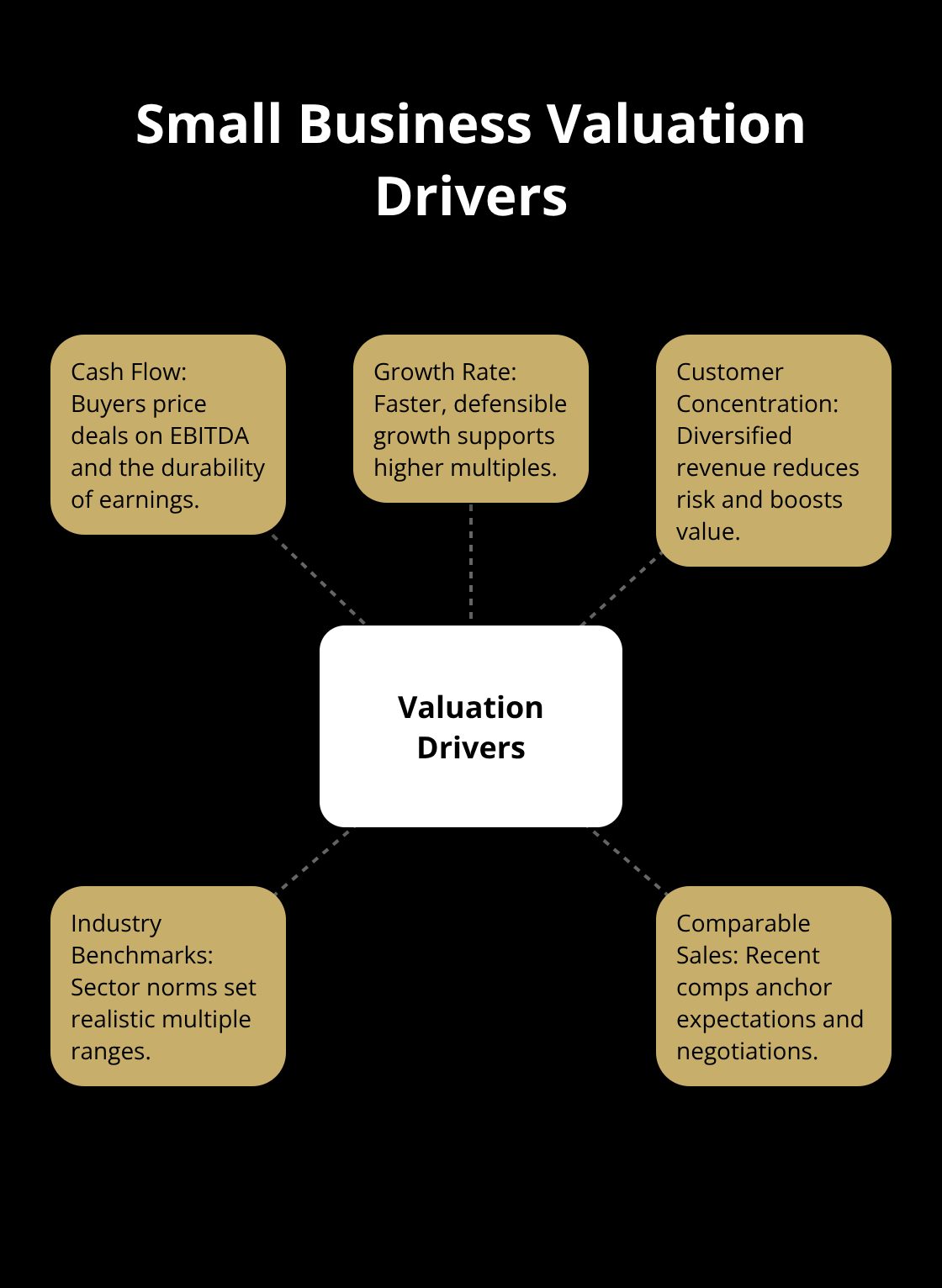
Calculate your EBITDA by taking your net profit and adding back owner compensation, depreciation, interest, and taxes. This number matters because buyers use it to assess how quickly they’ll recover their investment. Once you have this figure, research what similar businesses in your industry actually sold for. Industry associations, business brokers, and M&A databases provide this data. If you cannot find comparable sales, hire a professional appraiser who specializes in your industry. The cost runs $2,000 to $5,000 but prevents you from leaving hundreds of thousands on the table through mispricing.
Market your business strategically
Most owners want to blast listings everywhere, but this kills deal value by alerting competitors and spooking employees. Instead, create a one-page executive summary that highlights revenue, profit, growth rate, and competitive advantages without revealing your company name. Share this with qualified buyers through targeted channels like industry-specific buyer networks, acquisition firms, and strategic acquirers in adjacent markets.
Brokers and M&A advisors have access to serious buyers actively looking for acquisitions. If you work with an advisor, they handle buyer outreach and initial screening. Set clear boundaries on what information you’ll share and when. Use a non-disclosure agreement to protect your data.
Negotiate from a position of strength
When offers come in, compare them on total value, not just purchase price. A lower price with less contingency might be better than a higher offer loaded with conditions. Negotiate earnouts carefully because they require you to stay involved after the sale. Many owners regret earnouts because they create ongoing obligations and disputes. Try to secure as much cash at closing as possible.
During final negotiations, have a lawyer review all documents before signing. Legal fees for purchase agreements typically run $1,500 to $3,000 but prevent costly mistakes in the contract terms. Expect buyers to request financial statements, tax returns, customer lists, and operational details-this is standard due diligence.
With your valuation locked in and your negotiation strategy clear, the next phase tests your ability to handle the legal and tax complexities that separate successful exits from problematic ones.
Common Mistakes to Avoid When Selling a Business
Overpricing kills momentum and attracts no serious buyers
Overpricing your business is the fastest way to waste months without attracting serious buyers. Owners often anchor their asking price to what they think the business should be worth rather than what actual buyers will pay. The gap between expectation and reality kills deals before they start. If your asking price sits 20-30% above market comparables, qualified buyers simply move on to other opportunities. This is not negotiation room-this is delusion.
Pricing your business at fair market value ensures you attract serious buyers and maintain momentum. You can always negotiate up from a realistic baseline, but you cannot negotiate down from an inflated one without damaging buyer confidence.
Legal and tax problems cost you tens of thousands in concessions
Neglecting legal and tax preparation before sale is where owners hand money directly to their buyer. Many small business owners operate with minimal documentation, informal arrangements with employees, and tax returns that do not reflect actual business performance. When a buyer’s attorney reviews your contracts, they discover missing non-compete agreements, undocumented customer relationships, or employees with unclear roles.
These gaps create liability that the buyer will deduct from their offer or use as reasons to walk away entirely. You need a business attorney to review your operating agreements, customer contracts, employee agreements, and any outstanding litigation before you go to market. Legal review costs $1,500 to $3,000 but prevents buyers from discovering problems that cost you $50,000 or more in concessions. Tax preparation matters equally. If your personal tax returns show different income than your business tax returns, you have credibility damage that no explanation fixes. Work with a CPA to reconcile everything and create a narrative around any discrepancies. A buyer who discovers you reported lower income to the IRS than you claimed to them will assume you are hiding other problems.
Confidentiality breaches destroy deal momentum and tank valuation
Confidentiality breaches during sale process destroy deal momentum and tank your valuation. When employees, competitors, or vendors learn your business is for sale, everything changes. Employees start updating their resumes and looking for new jobs. Customers wonder if the new owner will honor their contracts. Suppliers may demand new terms or refuse to extend credit. Competitors try to poach your customers before the deal closes.
This chaos gives your buyer leverage to renegotiate downward or walk away.
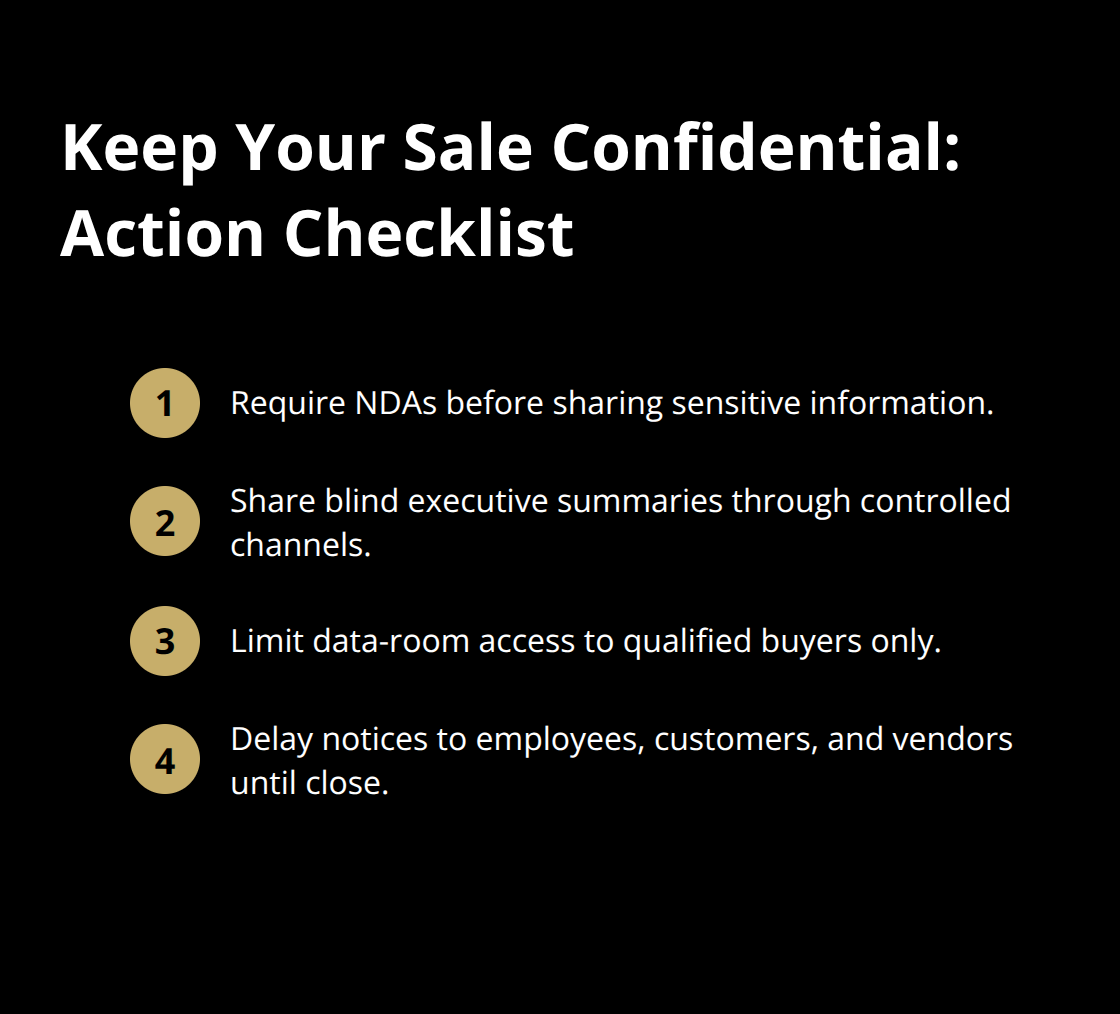
Keep the sale confidential by sharing information only with qualified buyers who have signed non-disclosure agreements. Do not tell employees, customers, or vendors until the deal is close to closing. Share your executive summary with potential buyers only through formal channels-business brokers, M&A advisors, or confidential buyer networks. If you handle the sale yourself, use a non-disclosure agreement template from your attorney before sharing any sensitive information. The cost of a basic NDA is minimal compared to the cost of a leaked sale process.
Final Thoughts
Selling a small business requires discipline across three critical areas: preparation, valuation, and execution. Owners who invest time in organizing finances, documenting operations, and building a management team consistently achieve 15-30% higher sale prices than those who rush. Your business is worth what buyers will actually pay, not what you think it should be worth.
The mistakes that cost owners the most money are entirely preventable. Overpricing attracts no serious buyers and wastes months. Neglecting legal and tax preparation hands your buyer leverage to renegotiate downward. Confidentiality breaches destroy deal momentum the moment employees or competitors learn your business is for sale. Each of these problems costs tens of thousands in concessions or lost value.
When you sell a small business, you manage a complex transaction with legal, financial, and operational dimensions. Professional guidance matters-a business attorney reviewing your contracts costs $1,500 to $3,000 and prevents problems worth far more. We at Unbroker built our platform specifically for this process, combining expert advisors, AI-driven buyer matching, and national marketing to handle the complexity of your exit. Visit Unbroker to learn how our Full Service Business Sale works with a 6% success fee paid only when your business sells.