Small business valuations used to take weeks and cost thousands. At Unbroker, we’ve seen how AI valuation tools are changing that equation entirely.
These tools deliver accurate valuations in hours, not weeks, while cutting costs dramatically. If you’re selling a small business, this shift matters more than you might think.
How AI Valuation Tools Actually Work
Machine Learning Models Analyze Real Transaction Data
AI valuation tools process business data through machine learning models trained on thousands of real transactions. These systems ingest your financial statements, tax returns, and operational metrics, then cross-reference them against comparable sales in your industry and region. The algorithm identifies patterns that human analysts might miss-seasonal revenue fluctuations, customer concentration risks, or margin trends that signal business health.
Speed and Consistency Beat Traditional Methods
What separates AI from traditional appraisals is speed and consistency. A conventional valuation takes weeks because accountants manually compile data, research comparables, and apply various methodologies. AI completes this work in hours by running simultaneous analyses across multiple valuation approaches, all standardized to the same framework. This standardization matters because it removes the subjective judgment that can vary wildly between different appraisers.
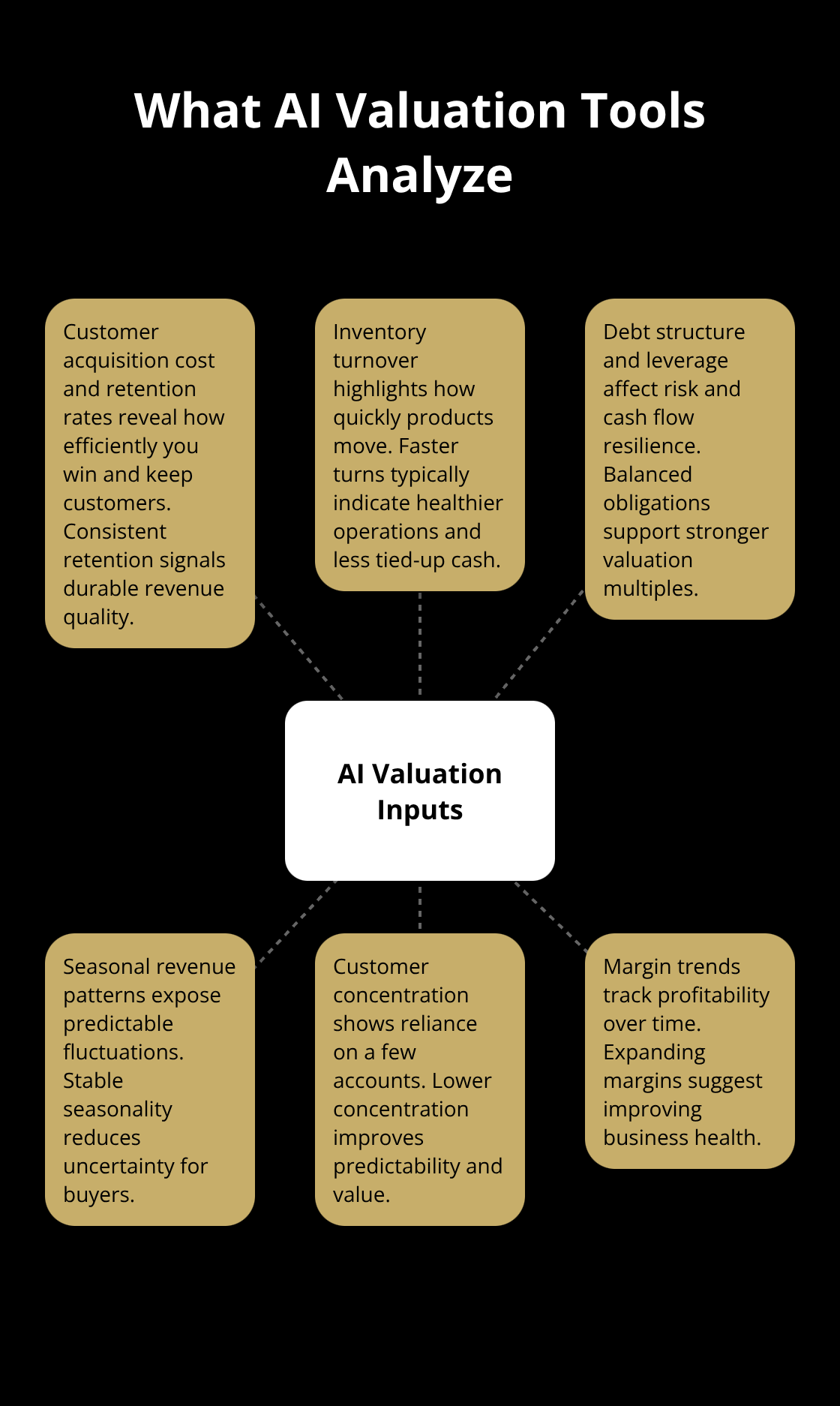
Beyond Revenue: What AI Actually Measures
The real power emerges when you understand what these tools actually measure. They don’t just look at revenue or profit; modern systems analyze customer acquisition costs and retention rates, inventory turnover, and debt structures. A business selling for $500,000 might have very different value depending on whether 80% of revenue comes from one customer or spread across 200 accounts. AI catches these nuances automatically.
Flagging Anomalies and Transparency
The tool flags data anomalies and accounting changes-which would require hours of manual investigation. This transparency helps sellers understand exactly why their business valued at a specific number, not just accept a figure handed down by an appraiser. You can identify what actually drives your valuation and potentially improve it before selling.
What This Means for Your Valuation Strategy
Understanding these mechanics shifts how you approach a sale. When you know which metrics the algorithm weighs most heavily, you can address weaknesses before listing your business.
Why AI Valuations Take Hours Instead of Weeks
Traditional business valuations demand manual labor at every stage. An accountant spends days gathering your financial records, tax returns, and operational data. Then they research comparable sales, often making phone calls or combing through industry databases. Finally, they apply valuation formulas and write a report. The entire process consumes 3-6 weeks and costs $2,000-$5,000 for a small business. AI tools eliminate these delays by processing everything simultaneously. The system ingests your data, identifies comparables, runs multiple valuation approaches, and produces a comprehensive report in 4-8 hours. For sellers who want to move quickly, this speed difference determines whether a deal closes in months or stretches into a year.
Standardized Methodology Removes Subjective Judgment
Two appraisers valuing the same business often reach different conclusions because subjective judgment creeps in at critical moments. One appraiser weights revenue heavily; another emphasizes profit margins. One applies a 4x multiple; another uses 5.5x. AI eliminates this variability because it applies the same standardized framework to every business. The algorithm doesn’t have a bad day or personal preference about what matters most. It measures customer concentration, cash flow stability, and growth trajectory using identical criteria every single time. This consistency protects you because buyers can’t argue the valuation is inflated when the methodology is transparent and repeatable.
AI Identifies Red Flags Instantly
The real advantage emerges when AI flags financial anomalies that slow traditional appraisals. If your revenue jumped 40% in one quarter but you can’t explain why, a human appraiser might spend hours investigating. An AI tool identifies this immediately and highlights it for review. You then address the issue upfront rather than having a buyer question it during negotiations months later.
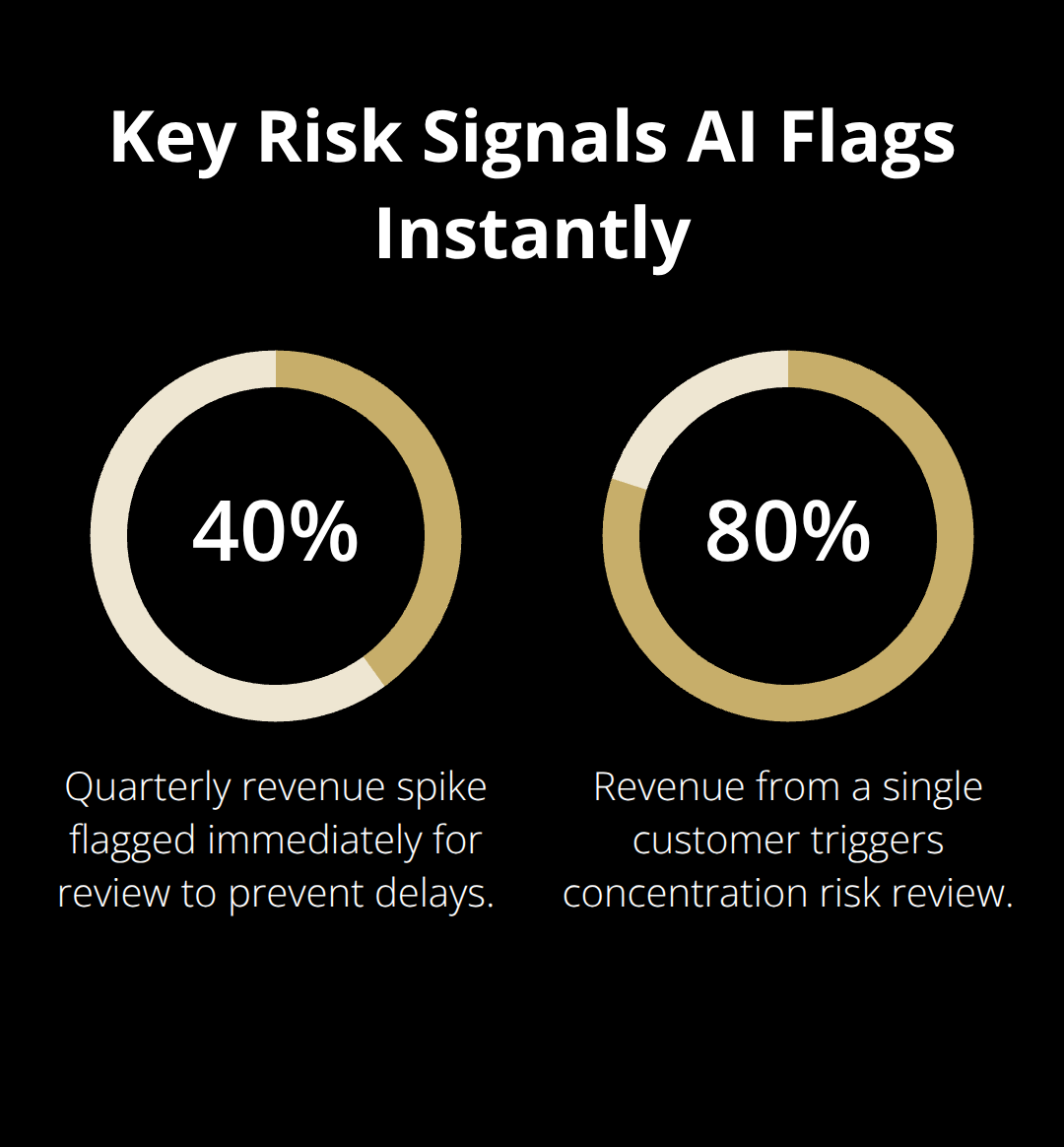
Similarly, AI catches accounting inconsistencies, unusual expense patterns, or customer concentration risks automatically. These findings give you weeks to strengthen your position before presenting the valuation to potential buyers. You know exactly which metrics matter most and can focus improvement efforts there.
What Happens Next in Your Sale Timeline
Once you have an accurate, AI-generated valuation, the real selling process begins. Buyers want confidence that your valuation reflects reality, not inflated expectations. An AI-backed assessment gives them that confidence because the methodology is transparent and repeatable. This foundation transforms how negotiations unfold and what price you ultimately achieve.
Who Benefits Most From AI Valuations
Small business owners operating with limited budgets face a stark reality: professional valuations cost thousands and consume weeks they don’t have. A business owner selling a $2 million company pays $3,000-$5,000 for a traditional appraisal and waits 4-6 weeks for results. An AI valuation delivers the same accuracy in hours for a fraction of the cost, often under $500. This price difference matters enormously when you’re already absorbing transaction costs. The owner selling a $500,000 business saves between $2,000-$4,000 by using AI instead of hiring a traditional appraiser. That’s money staying in your pocket at closing.
Speed Transforms Your Negotiating Power
The speed advantage compounds your negotiating position significantly. When you present a valuation within 48 hours of deciding to sell, you signal confidence and preparedness to buyers. Traditional appraisals force you to wait weeks before you can even list properly, during which market conditions shift and buyer interest cools. AI eliminates this friction entirely.
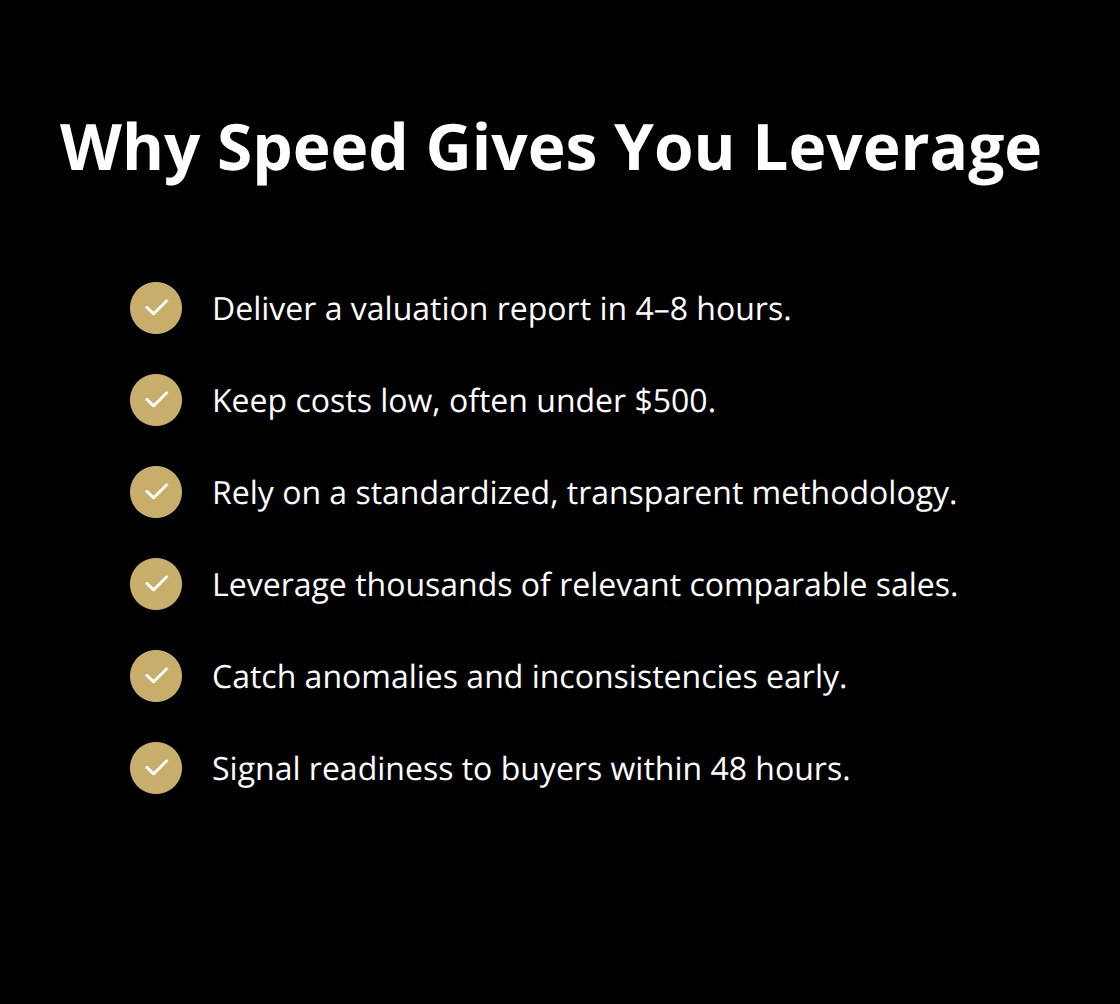
You move faster than competitors who still rely on manual appraisals, and that speed advantage matters when multiple buyers compete for your business.
Transparent Methodology Wins Buyer Confidence
Buyers scrutinize valuations aggressively because they’re committing significant capital. An AI-generated valuation backed by transparent methodology and real market data stands up to this scrutiny far better than a subjective appraisal. The algorithm analyzed thousands of comparable sales, identified your business’s specific risk factors, and weighted each metric consistently. When a buyer questions your $1.2 million valuation, you can explain exactly why customer retention rates and inventory turnover metrics drove that number. You’re not defending an appraiser’s gut feeling; you’re defending mathematics. This transparency shifts negotiations in your favor because buyers can’t easily argue the valuation is inflated when the logic is visible and repeatable.
Identify Weaknesses Before Buyers Do
AI valuations expose weaknesses weeks before buyers discover them during due diligence. The system flags that your business relies on one customer for a significant portion of revenue, or that your expenses spiked unexpectedly in Q3, or that your inventory sits for longer than industry benchmarks. One customer dependency risk can materially impact your business’s predictability and value. Armed with this information, you can address problems proactively. Hire a second sales person to diversify your customer base. Explain the Q3 expense spike as a one-time marketing investment. Reduce excess inventory. When buyers conduct their own analysis, they find a business you’ve already strengthened, not a business full of surprises. This approach eliminates the most common deal-killer: buyer discovery of issues that lower your price at the last moment. You control the narrative (and your valuation) by identifying and fixing problems first.
Final Thoughts
AI valuation tools have fundamentally changed how small business sales work. What once required weeks of waiting and thousands in appraisal fees now happens in hours for a fraction of the cost. Sellers who embrace this shift gain a real advantage: they move faster than competitors, present valuations buyers actually trust, and identify weaknesses before negotiations begin.
The numbers speak clearly. A traditional appraisal costs $2,000–$5,000 and takes 4–6 weeks, while AI delivers comparable accuracy in 4–8 hours for under $500. That’s not just a time savings; it’s a fundamental change in how you approach selling your business. Speed matters because buyer interest doesn’t wait, market conditions shift, and competing sellers move forward. When you have your valuation ready in 48 hours, you control the timeline instead of watching it slip away.
At Unbroker, we’ve built our platform around this reality. We combine AI-driven valuation processes with transparent, low-cost selling options so you keep more money at closing. Whether you choose our Full Service Business Sale or work with our Assisted Business Sale, you get access to modern tools that eliminate the friction traditional brokers create.