Selling a business is one of the biggest financial decisions you’ll make. Yet many sellers get trapped by brokers who hide fees, pressure them into bad deals, or lack real buyer networks.
At Unbroker, we believe ethical broker standards should be the baseline, not the exception. This post shows you what to demand from any broker and how to spot the ones cutting corners.
What Ethical Broker Standards Actually Demand
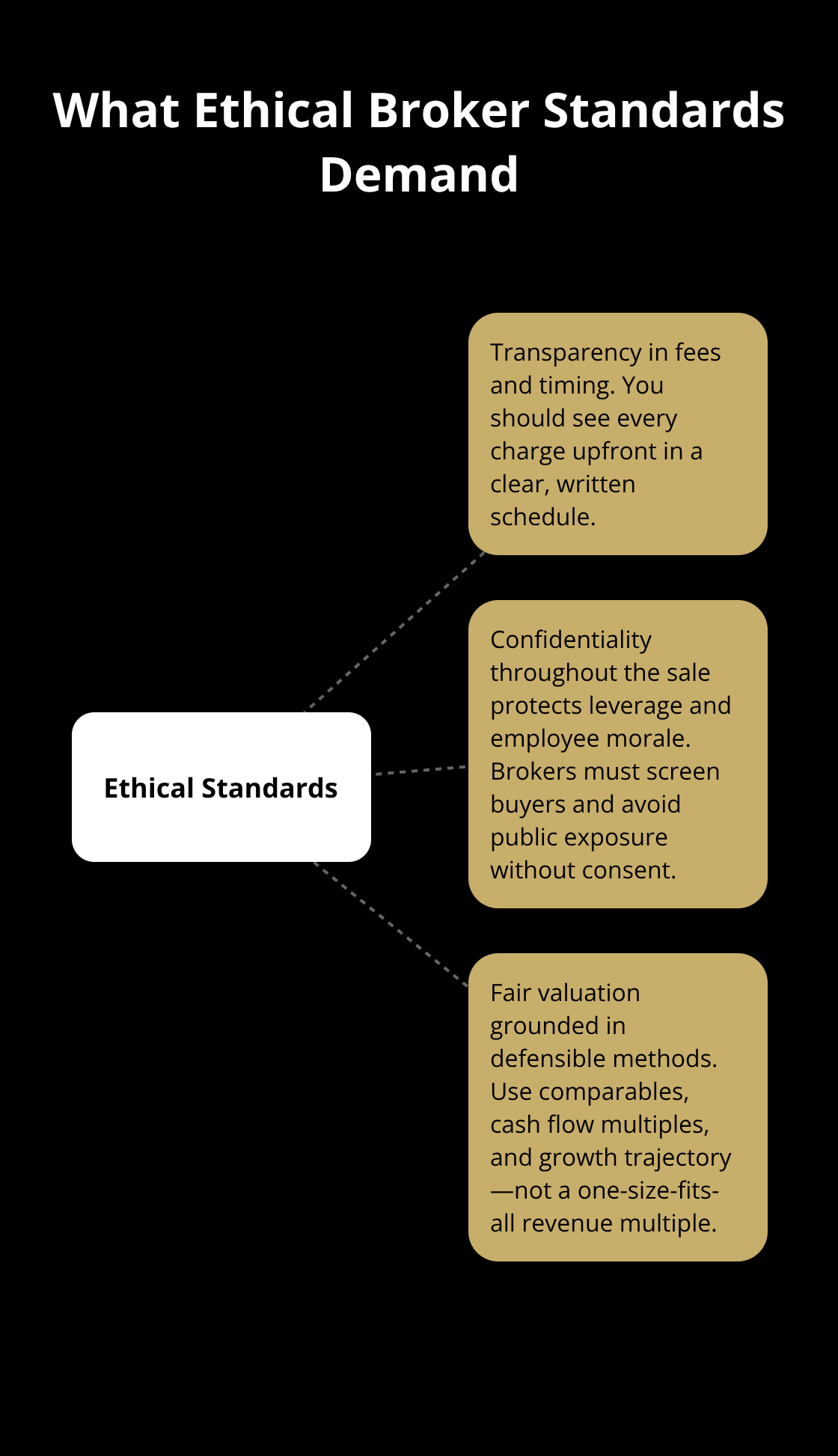
Transparency in Fees and Commissions
Ethical broker standards rest on three concrete practices that separate trustworthy operators from those cutting corners. First, transparency means you see exactly what you’re paying and when. Traditional brokers typically charge between 5% and 15% commission on the sale price, which can amount to hundreds of thousands of dollars on a mid-market business. Many bury additional fees for escrow, marketing, or transaction management in fine print, so the actual cost stays hidden until closing. You should demand a written fee schedule before signing anything, broken down by service and timing.
Confidentiality and Fair Valuation
Second, confidentiality protects your competitive position and employee morale while the sale happens. A broker who mentions your business to competitors, posts it on public boards without your consent, or fails to screen buyers properly exposes you to unnecessary risk. Third, fair valuation means the broker uses defensible methods rather than inflating or deflating value to push a quick sale. The Merger & Acquisition industry standard involves comparing your business to recent sales of similar companies, analyzing cash flow multiples, and considering growth trajectory, not just applying a one-size-fits-all multiple to revenue.
How Fee Structure Shapes Broker Behavior
The real test comes when a broker faces pressure to close quickly. A broker earning 10% commission might push you toward a lowball offer because their payment depends on speed and every dollar of sale price matters less to them than closing fast. A broker charging a modern 6% success fee-paid only when your business actually sells-has a far smaller incentive to rush you into a bad deal, since their fee scales with getting you a fair price rather than just getting a deal done. This structural difference matters more than any promise a broker makes in a pitch meeting. You also need a broker who can verify buyers are serious-not tire kickers wasting weeks of your time. Ask directly: How many active buyers are in your network right now? How do you qualify them before introducing them to me? If you get vague answers, walk away.
The gap between what traditional brokers charge and what modern platforms offer has widened significantly. Most brokers charge a success fee between 5% and 15% of the final sale price for small businesses, while transparent platforms like Unbroker charge a straightforward 6% success fee, paid only when your business sells, eliminating the conflict between your interests and theirs. This shift exposes why so many sellers feel burned after working with conventional brokers-the economics reward speed over strategy.
Why Commission-Based Brokers Push Bad Deals
The Math That Works Against You
Commission-based pricing creates a mathematical incentive that works against you. When a broker earns 10% of the sale price, they make $100,000 on a $1 million deal and $50,000 on a $500,000 deal. Speed matters more than outcome. A broker who closes in three months at a lower valuation earns their commission faster than one who spends six months negotiating better terms.
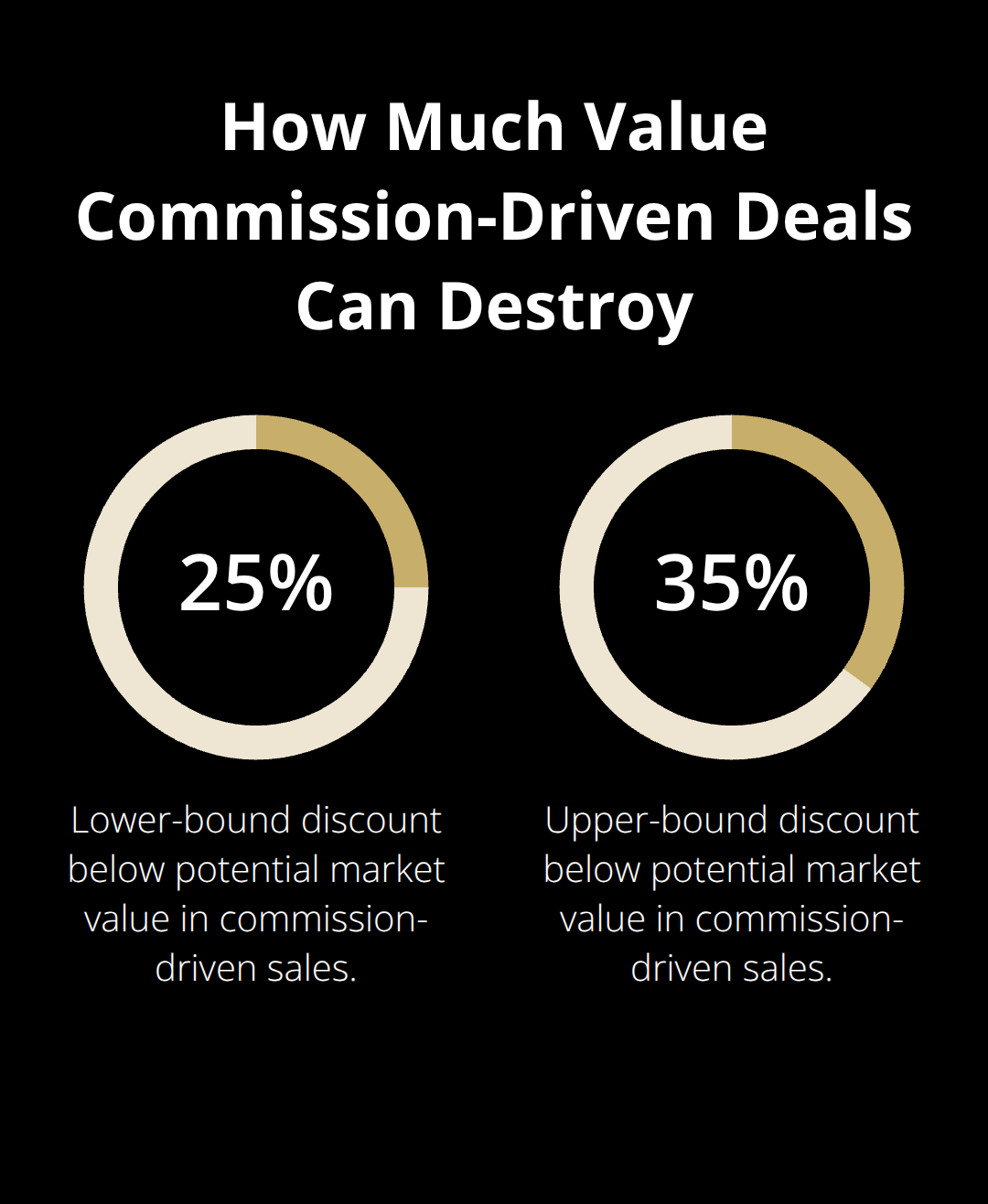
Research shows that businesses sold through commission-based brokers often close 25% to 35% below their potential market value because brokers prioritize velocity over strategy. You’re essentially paying someone whose financial interests directly conflict with yours.
Hidden Fees That Appear at Closing
Hidden fees compound this problem significantly. Traditional brokers typically charge between 5% and 10% of the final sale price, plus potential retainer fees and monthly marketing costs. These charges appear in closing statements after you’ve already committed emotionally to a deal. You have little leverage to negotiate once you’ve invested months in the sales process.
How Aligned Success Fees Realign Incentives
Success-fee models paid only at closing eliminate this trickery entirely. With a straightforward 6% success fee, the broker succeeds only when you do, and they have every incentive to help you get the highest price rather than rush you into accepting lowball offers. The math stays transparent from day one. When the fee is tied to your outcome, brokers stop pressuring you to accept the first reasonable offer and start helping you maximize value.
Better Outcomes for Both Sides
Buyers also benefit because they know the broker isn’t artificially inflating asking prices to pad their commission. This alignment creates better deals for both sides of the transaction. The broker focuses on finding the right match rather than the fastest close. Your business gets properly marketed to qualified buyers who can actually afford it, not just anyone willing to make an offer. This structural change shifts the entire dynamic of the negotiation from a race to the finish line into a genuine partnership focused on fair value.
Red Flags to Watch When Choosing a Business Broker
When you sit down with a broker, most will sound professional and trustworthy. They’ll mention their years of experience, their network, and their track record. But words mean nothing without concrete evidence backing them up. The brokers who hide their true costs, rush you toward mediocre offers, or refuse to answer basic questions about their buyer network are the ones you need to reject immediately. These red flags appear early if you know what questions to ask and what answers should concern you.
Pricing That Changes at Closing
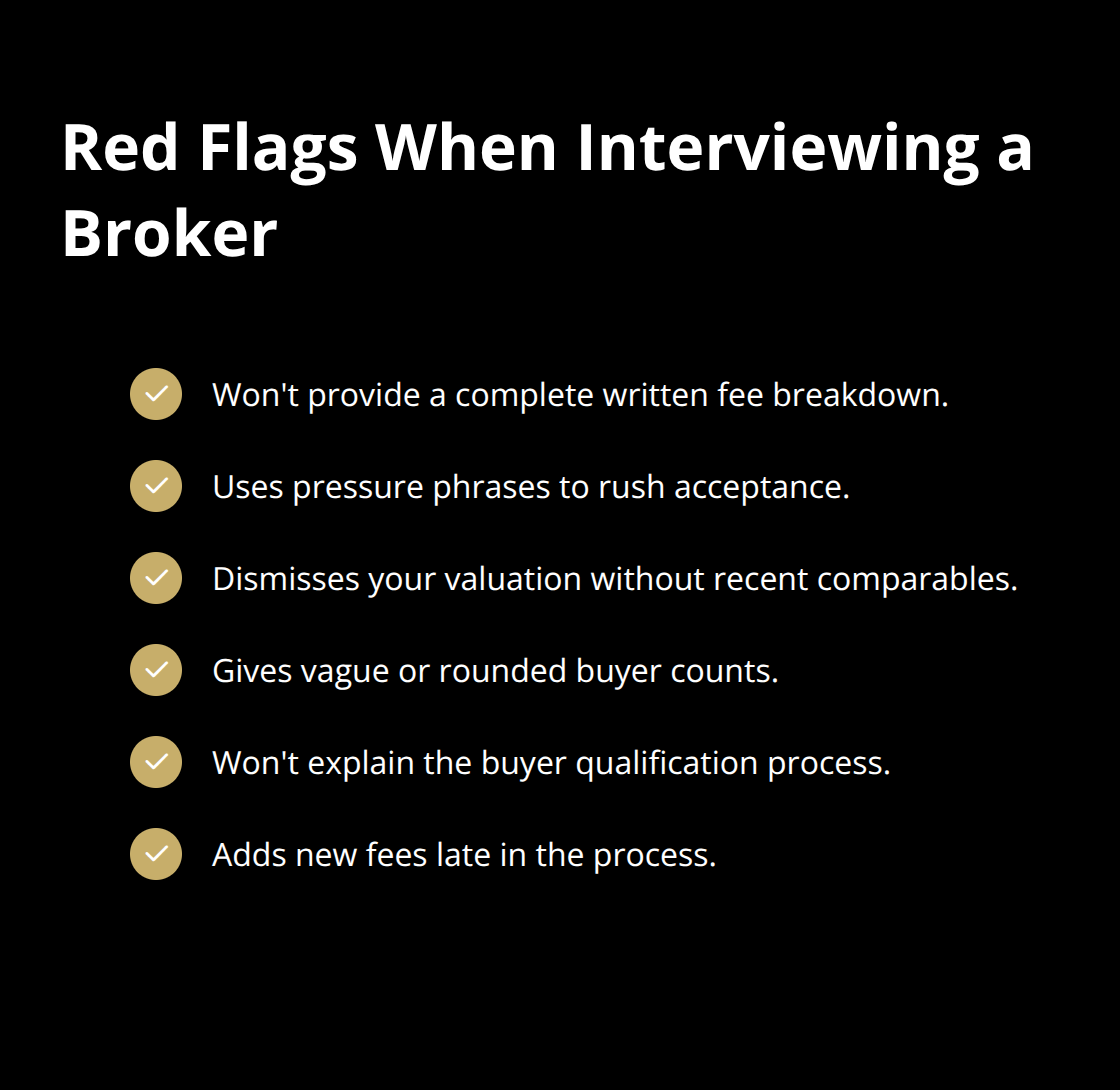
A broker who can’t explain their fee structure in a single conversation is hiding something. Ask for a written breakdown of every cost before you sign anything: the upfront fee, the success fee if one exists, and any additional charges for escrow, legal review, or transaction management. If they say the fee structure depends on the sale price or the complexity of the deal, push back. A legitimate broker quotes a clear number or formula.
Many traditional brokers quote a percentage commission but then add hidden fees that appear during the selling process. Some charge separate fees for due diligence support, buyer qualification, or document preparation. These incremental costs add up quickly when combined with the base commission. If a broker hesitates to provide a complete fee schedule in writing before you engage them, that hesitation tells you everything. They’re counting on you not reading the fine print until you’re emotionally invested in the sale.
Pressure Tactics That Signal a Bad Fit
A broker who pushes you to accept an offer quickly, especially one below your asking price, prioritizes their commission over your outcome. Listen for phrases like “we should move fast on this” or “this buyer won’t wait around.” These statements reveal that the broker fears losing their payday, not that the offer is genuinely exceptional. Real brokers explain why a specific offer makes sense based on market comparables and your business fundamentals.
They don’t manufacture urgency.
If a broker dismisses your valuation concerns or suggests your asking price is unrealistic without showing you comparable recent sales, they’re likely trying to lower expectations to close faster. Request the comparable transactions they’re referencing. Legitimate brokers have a list of similar businesses sold in your market within the past 12 months, with sale prices and key metrics. If they can’t provide that, they’re guessing.
Vague Answers About Buyer Quality
Ask your broker directly: How many qualified buyers contacted you about businesses like mine in the past 90 days? If they give you a round number like “hundreds” or a range like “50 to 100,” they’re not tracking specifics. Serious brokers know their numbers. They should tell you exactly how many active buyers match your business profile and what their average purchase price is.
Ask how they qualify buyers before introducing them to you. Do they verify funding? Do they conduct background checks? Do they disqualify tire kickers who aren’t serious? A broker who shows your business to anyone willing to sign an NDA wastes your time and risks confidentiality. Request a sample of recent buyer inquiries they’ve received, with enough detail to confirm they’re legitimate prospects. If the broker resists sharing this information or acts offended by the question, walk away. You’re not asking for anything unreasonable. This is your business and your financial future.
Final Thoughts
The business sale market shifts away from traditional commission-based brokers toward platforms that prioritize your interests over speed. This change happens because sellers demand better, not because brokers suddenly became more ethical. When you understand how commission structures create conflicts of interest, you stop accepting vague promises and start asking hard questions about fees, buyer networks, and valuation methods.
Ethical broker standards eliminate the pressure to close quickly and remove the financial incentive for brokers to push you toward lowball offers. Modern platforms like Unbroker operate on a transparent 6% success fee paid only when your business sells, publish their pricing upfront, and build buyer networks through technology rather than relationships. Taking control of your business sale means rejecting brokers who can’t answer basic questions about their costs, their buyers, or their process-and demanding written fee schedules before you commit.
We at Unbroker built our platform around these principles, offering transparent pricing with no hidden fees or percentage commissions. Explore how Unbroker can help you sell on your terms and achieve fair value for your business.